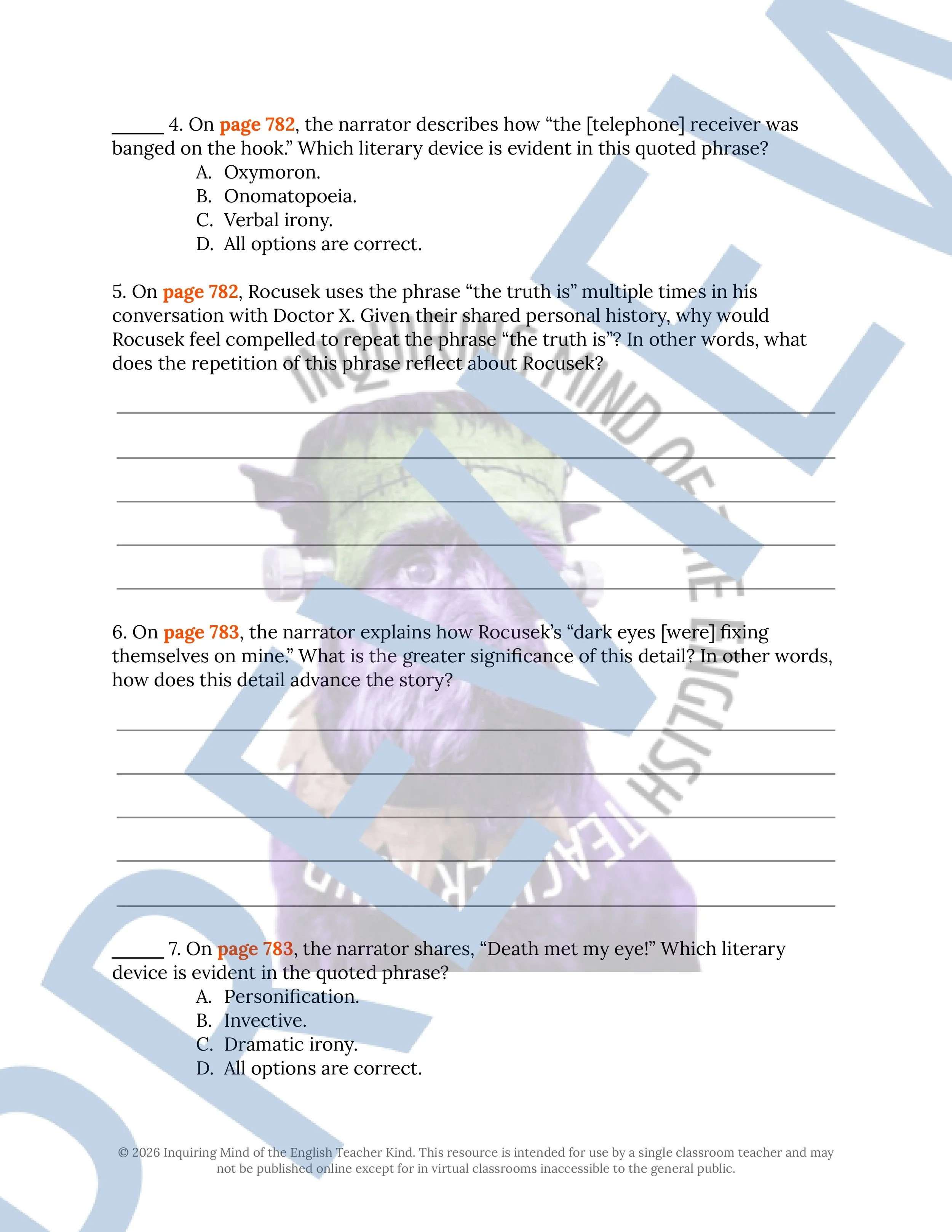
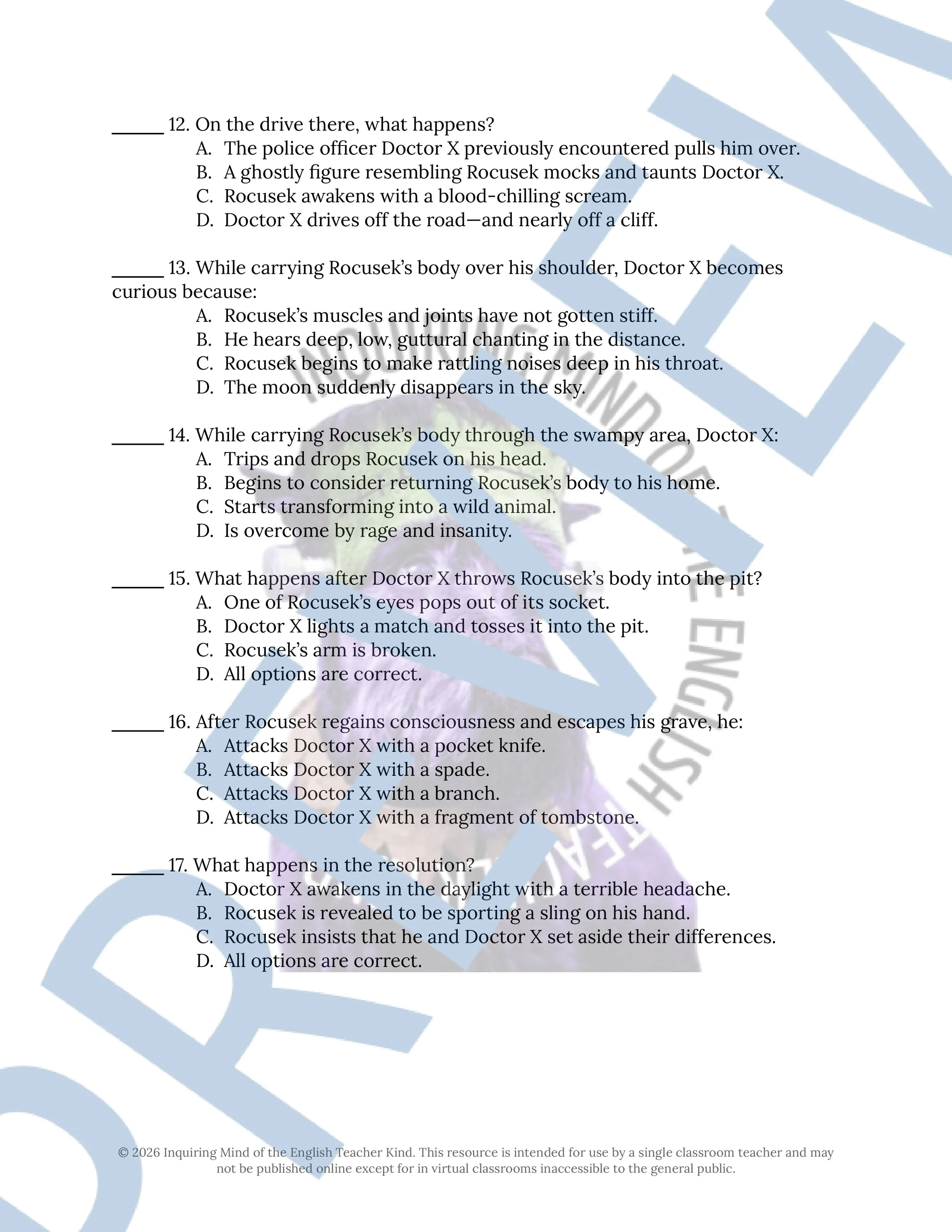
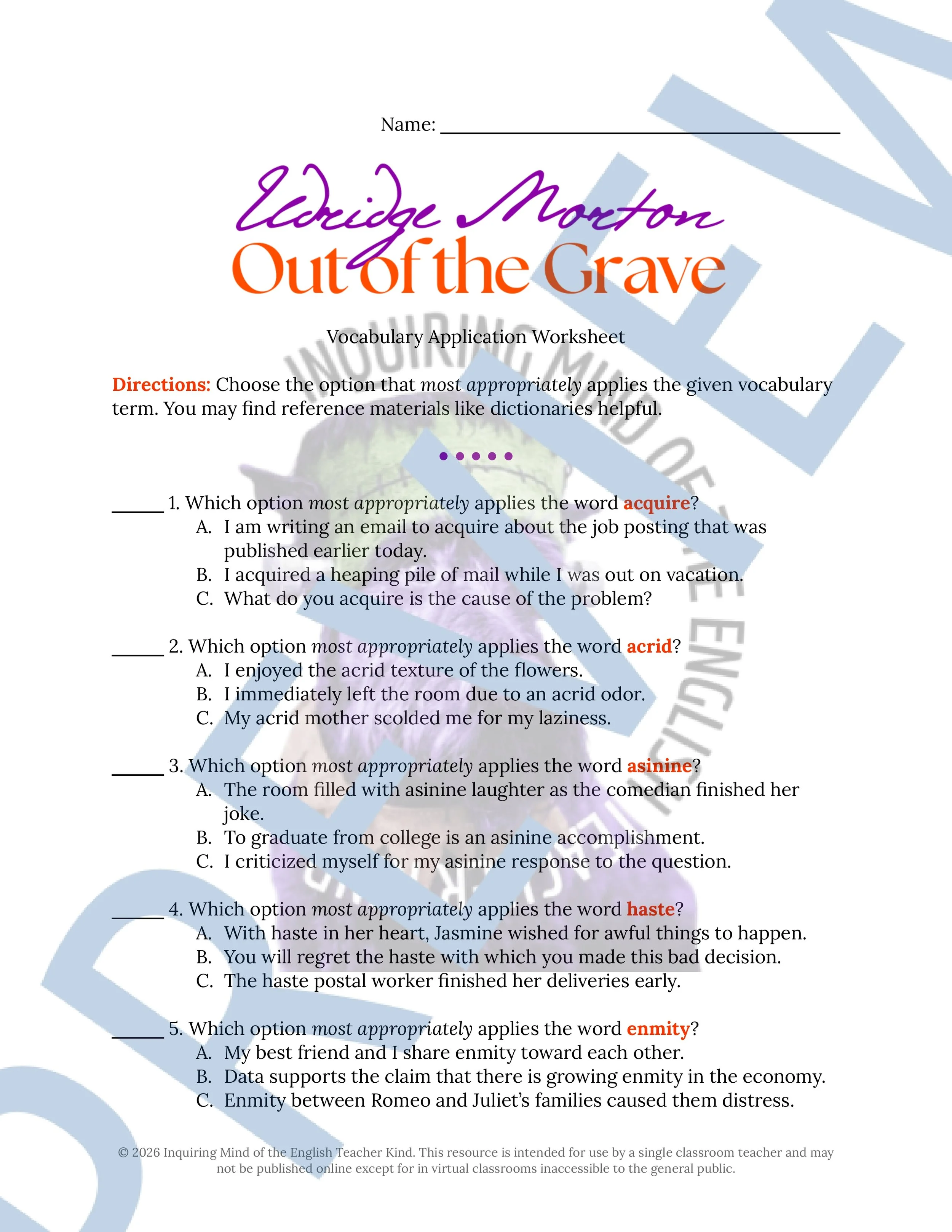
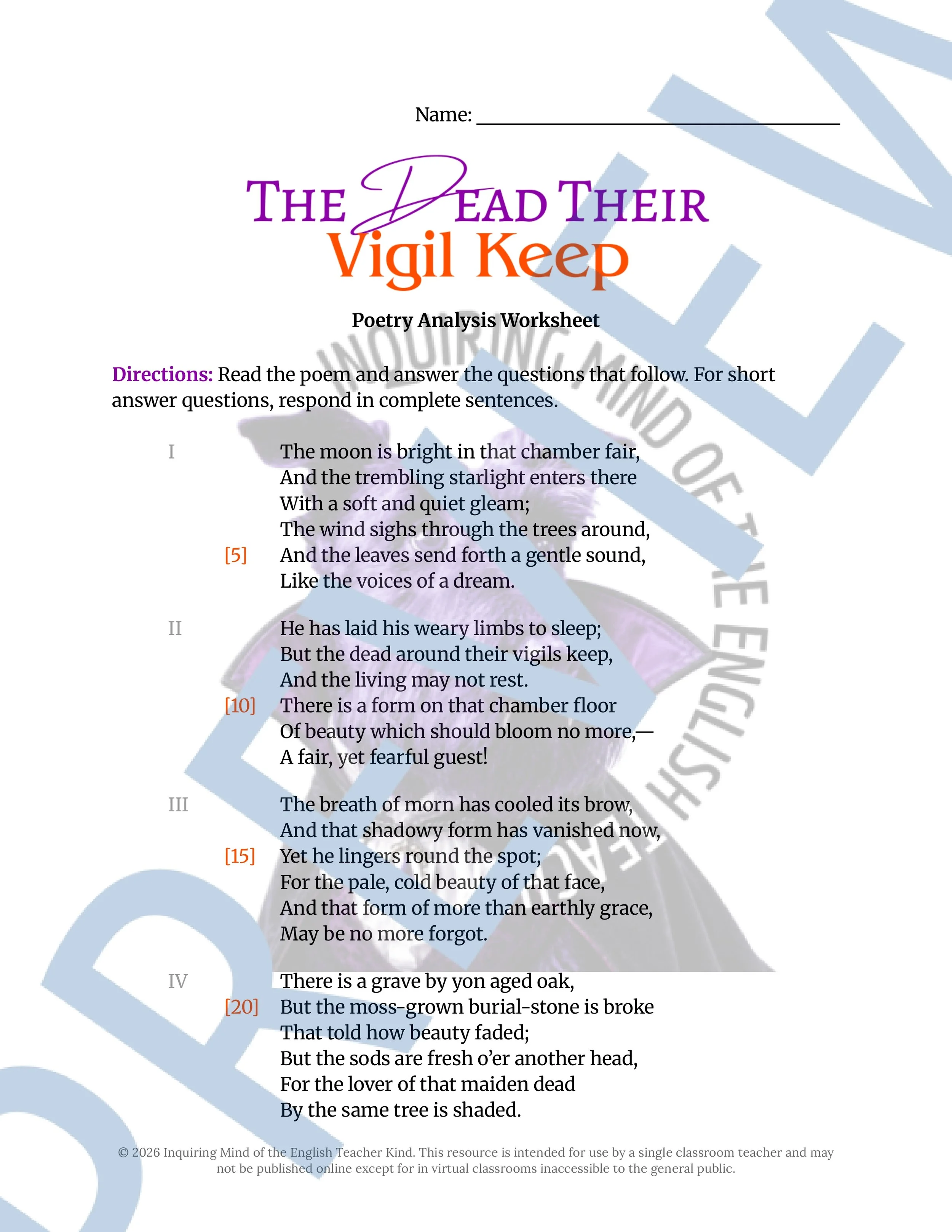
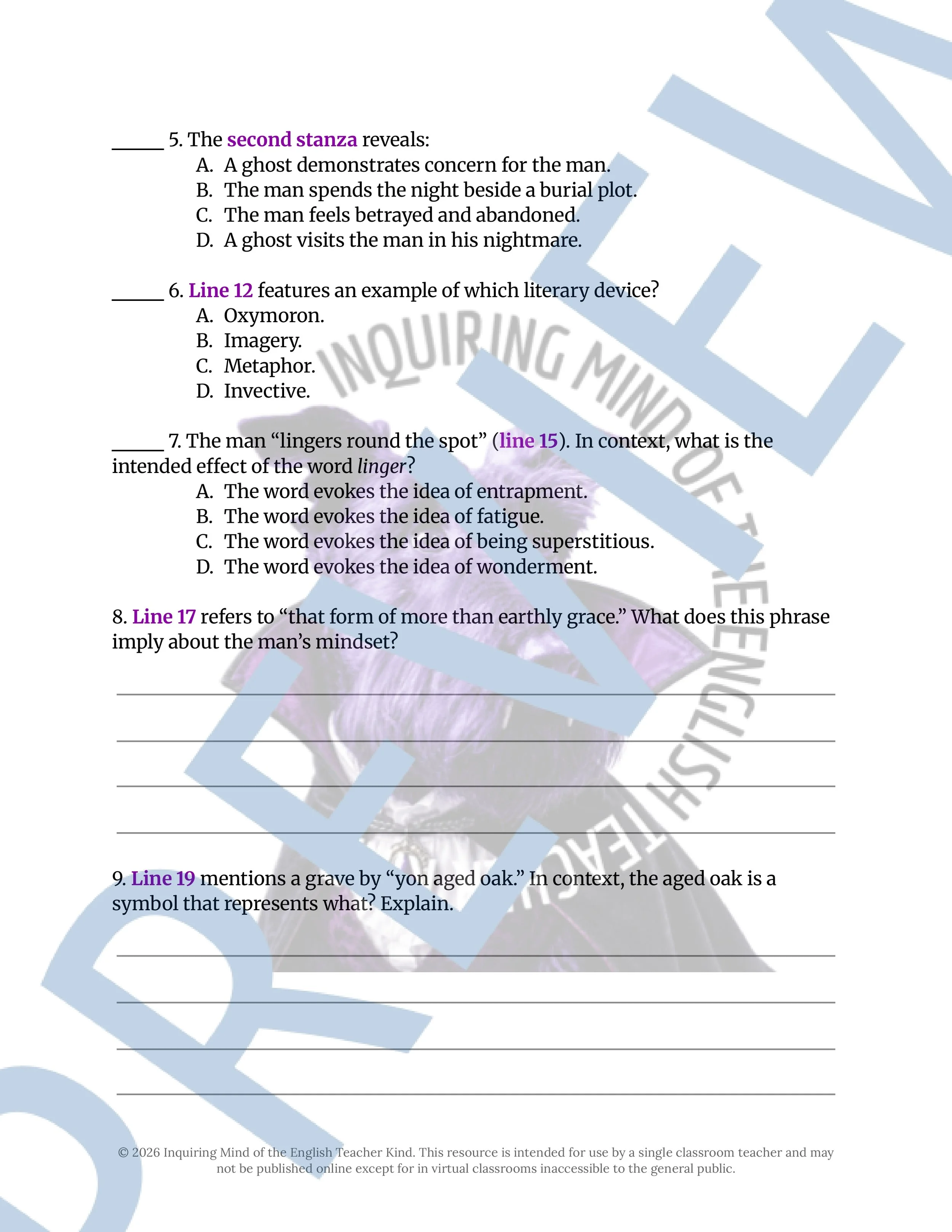
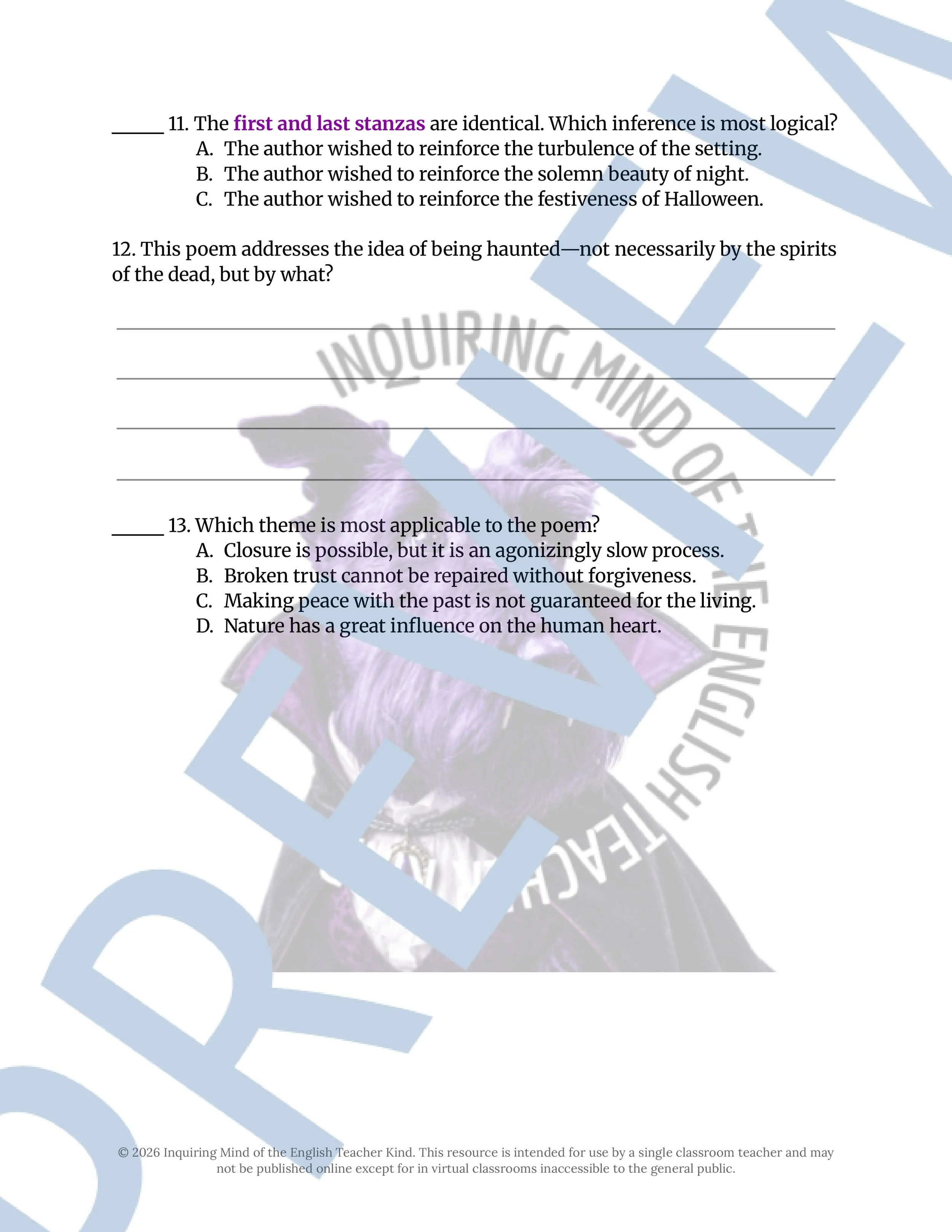
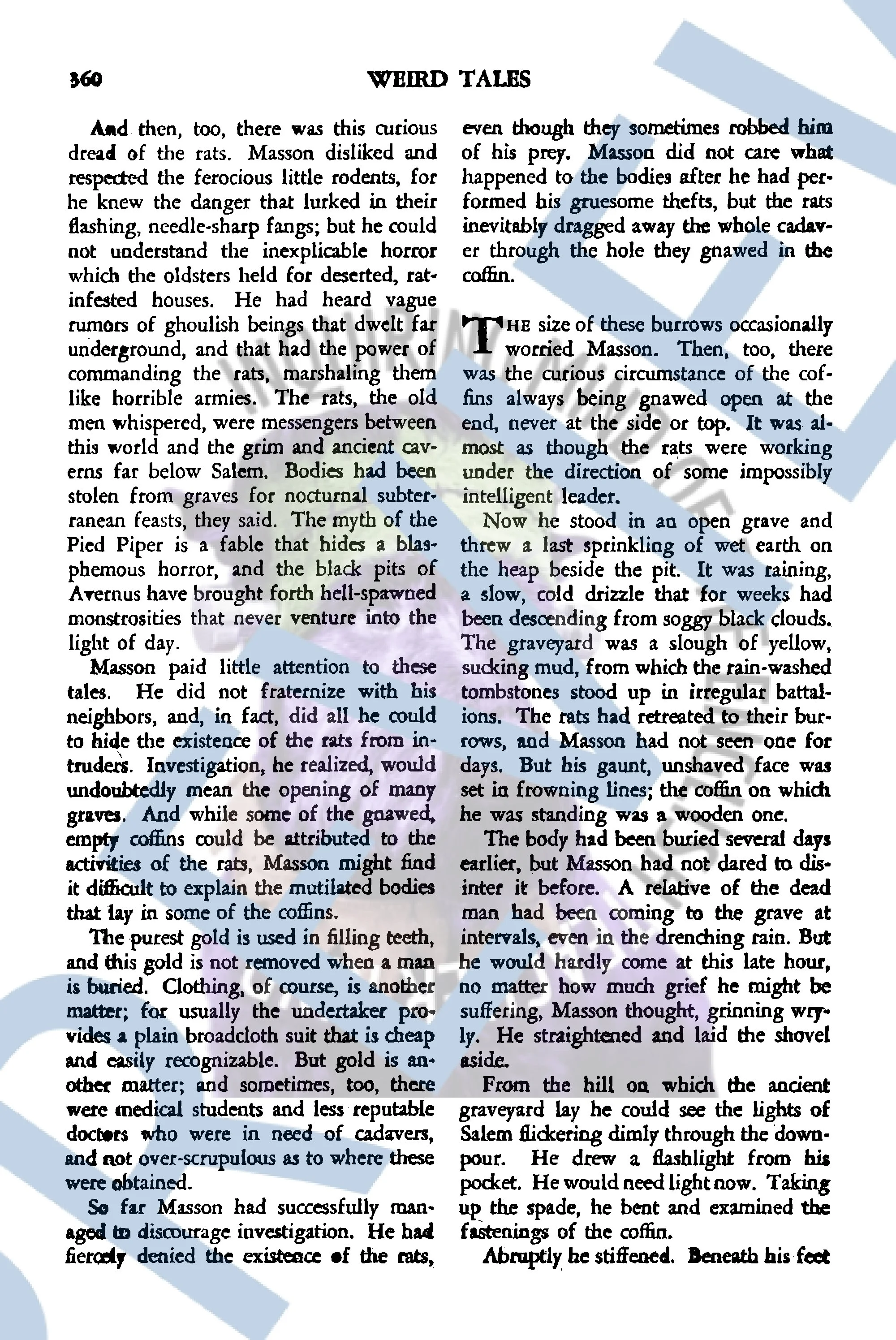
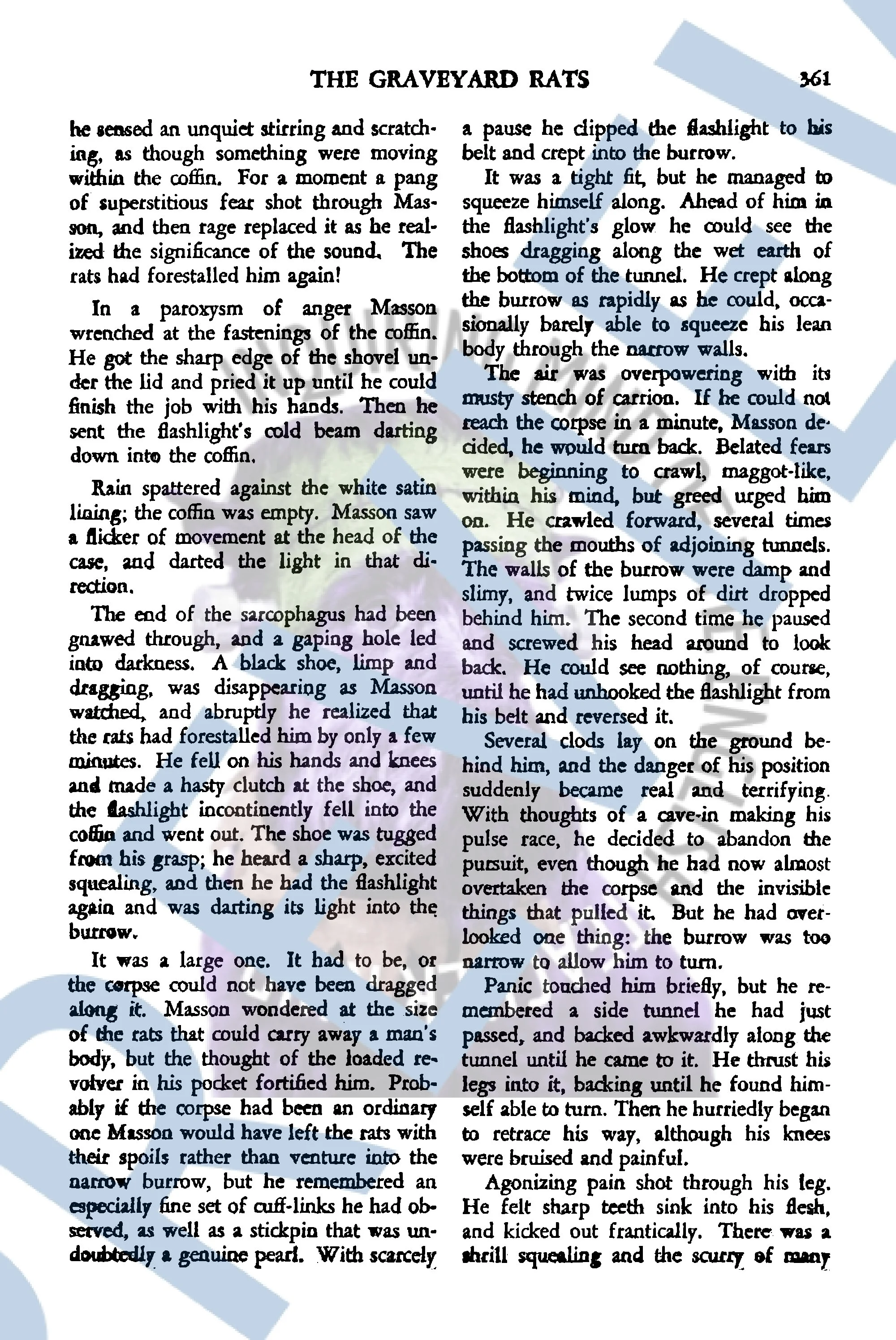
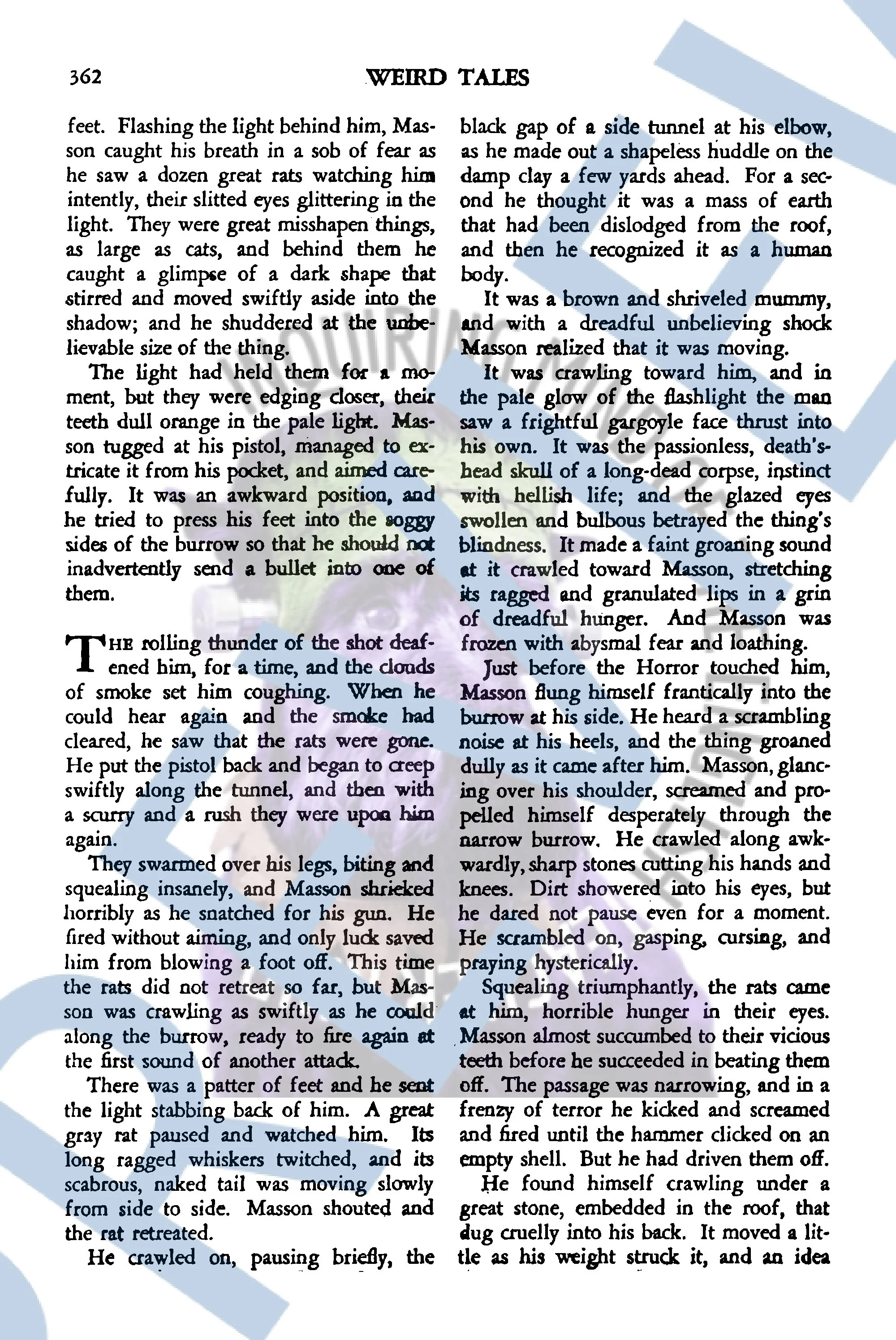
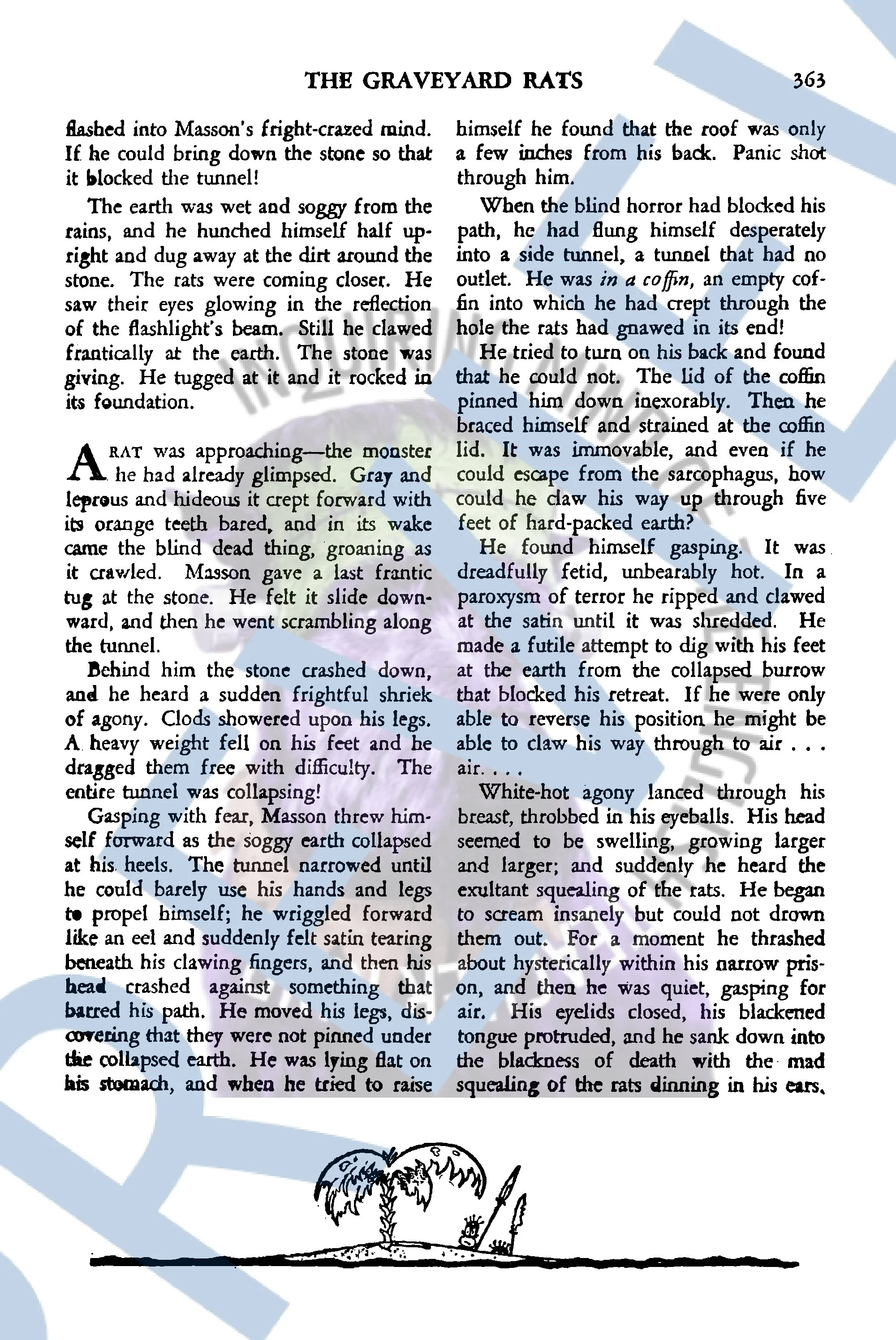
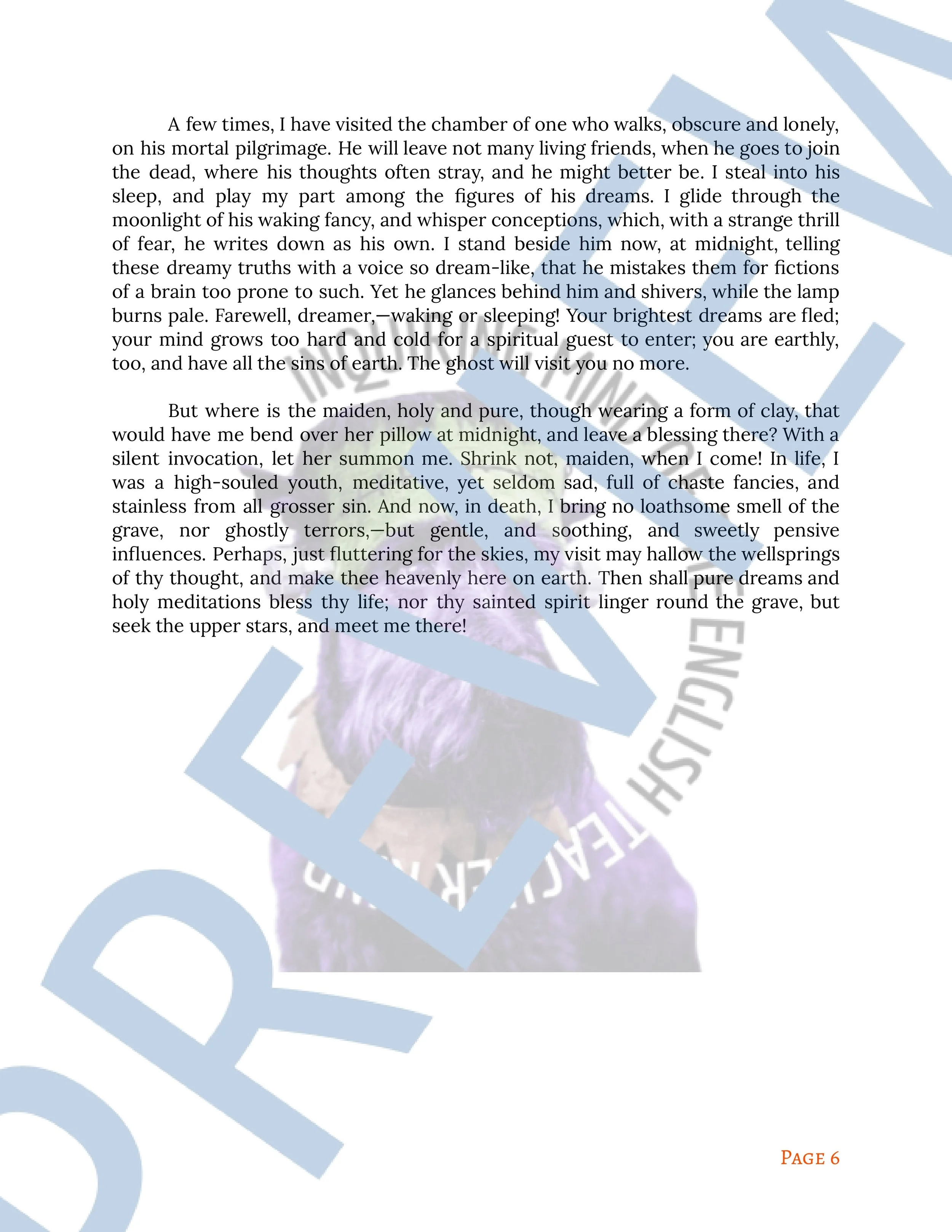
Ideal for short poetry units covering Gothic horror and supernatural poems (especially around Halloween), this analysis worksheet helps high school readers interpret "Corpse Candle" by Edward C. Jenkins, which addresses the perils of being enticed by curiosity and incorporates dark and swampy imagery that evokes the concepts of isolation and perdition. An answer key is included. By engaging with this poetry activity, students will:
Define words as they are used in the poem (e.g., congeal).
Navigate connotative associations of words (e.g., beckon).
Apply knowledge of literary devices (e.g., allusion, personification, situational irony, and more).
Interpret metaphorical language in context (e.g., "the passing-bell").
Articulate the irony associated with the poem.
Conduct research to answer clarification questions (e.g., will-o'-the-wisp).
Make evidence-based inferences (e.g., what the phrase "blue ghostly light" implies in context).
Infer the author's intent (e.g., the cautionary nature of the poem).
Support claims and inferences with sound reasoning and relevant evidence.
Materials are delivered in editable Word Document and printable PDF formats. (Alternatively, a Google option is available.)
More Weird Tales resources for the Halloween season are available:
Ideal for short poetry units covering Gothic horror and supernatural poems (especially around Halloween), this analysis worksheet helps high school readers interpret "Corpse Candle" by Edward C. Jenkins, which addresses the perils of being enticed by curiosity and incorporates dark and swampy imagery that evokes the concepts of isolation and perdition. An answer key is included. By engaging with this poetry activity, students will:
Define words as they are used in the poem (e.g., congeal).
Navigate connotative associations of words (e.g., beckon).
Apply knowledge of literary devices (e.g., allusion, personification, situational irony, and more).
Interpret metaphorical language in context (e.g., "the passing-bell").
Articulate the irony associated with the poem.
Conduct research to answer clarification questions (e.g., will-o'-the-wisp).
Make evidence-based inferences (e.g., what the phrase "blue ghostly light" implies in context).
Infer the author's intent (e.g., the cautionary nature of the poem).
Support claims and inferences with sound reasoning and relevant evidence.
Materials are delivered in editable Word Document and printable PDF formats. (Alternatively, a Google option is available.)
More Weird Tales resources for the Halloween season are available:

 Image 1 of 5
 Image 2 of 5
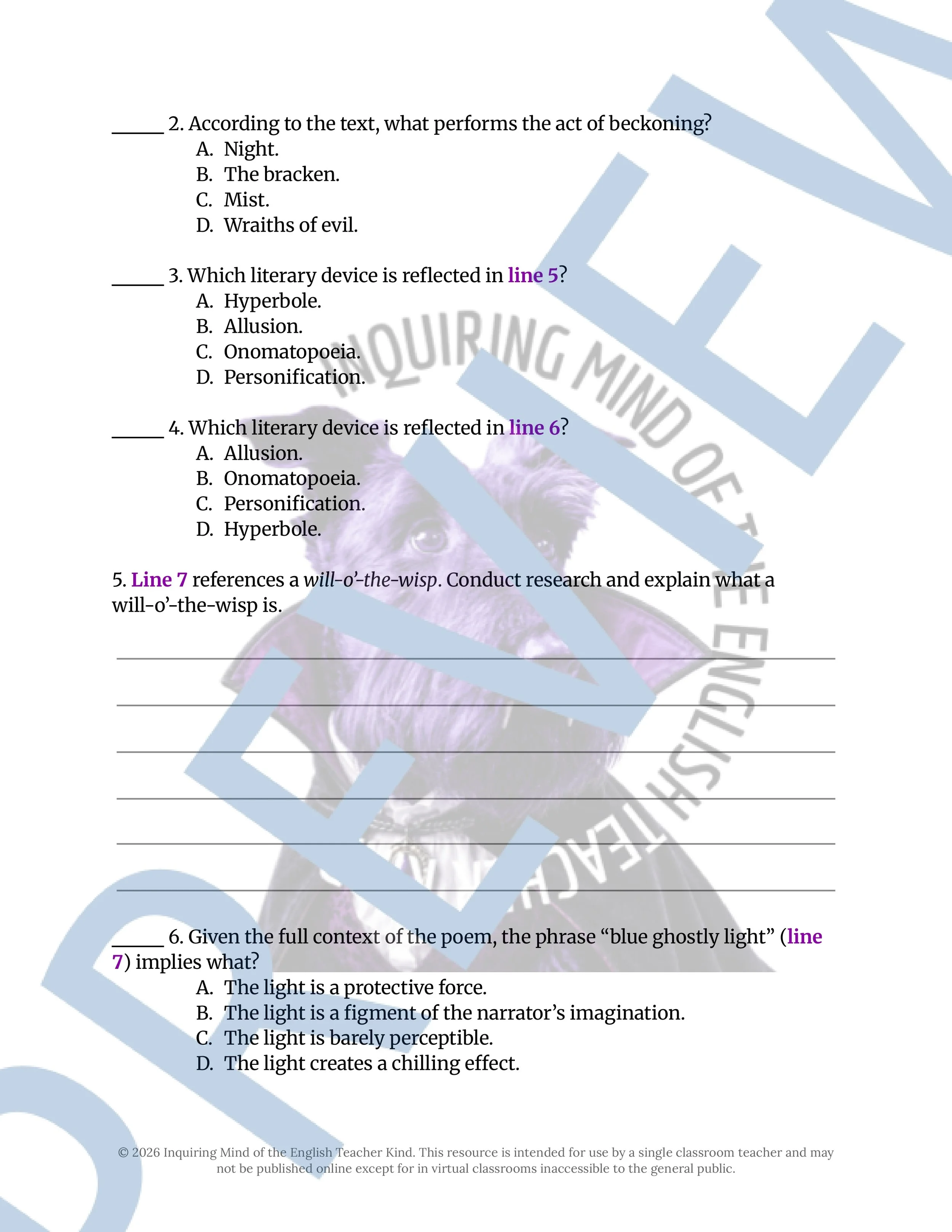 Image 3 of 5
 Image 4 of 5
 Image 5 of 5