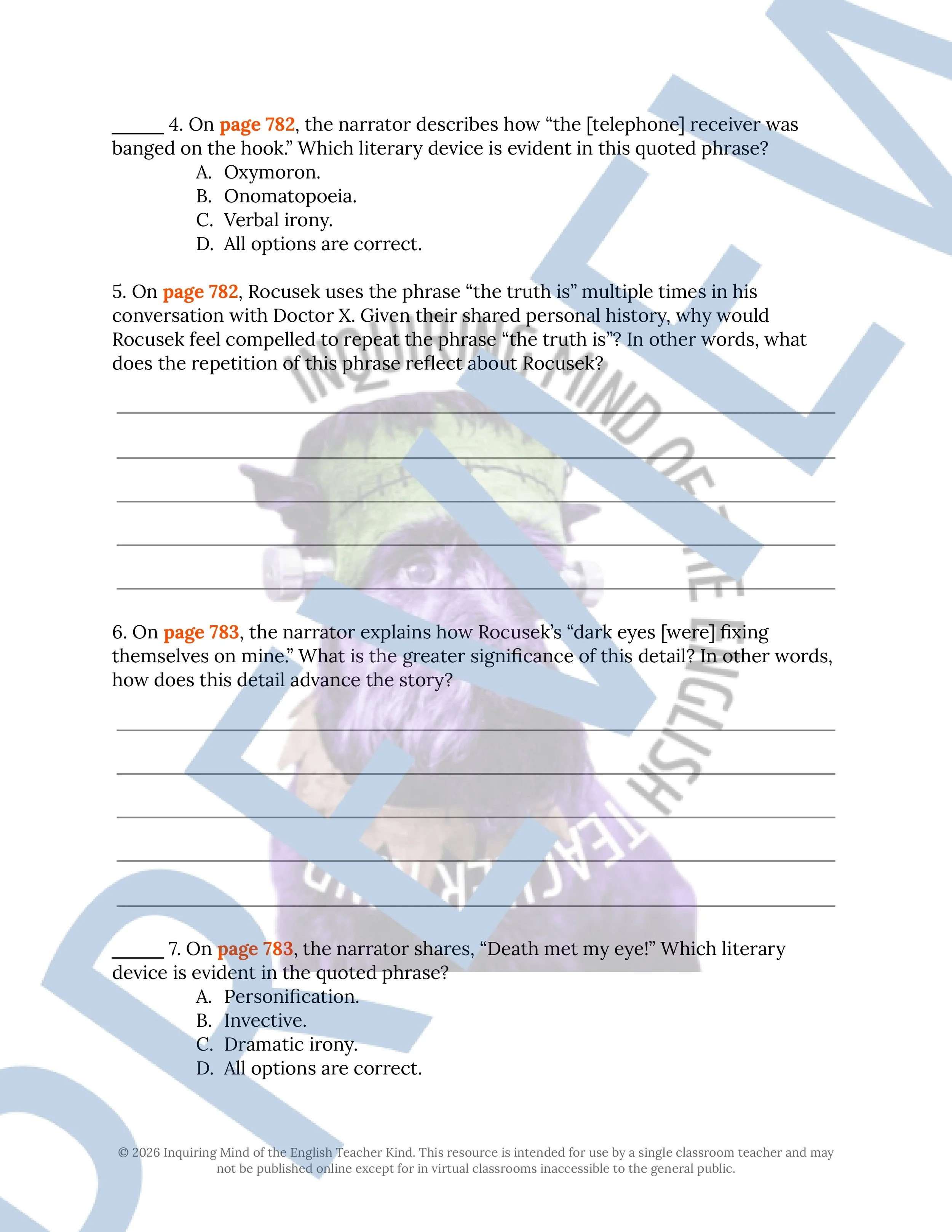
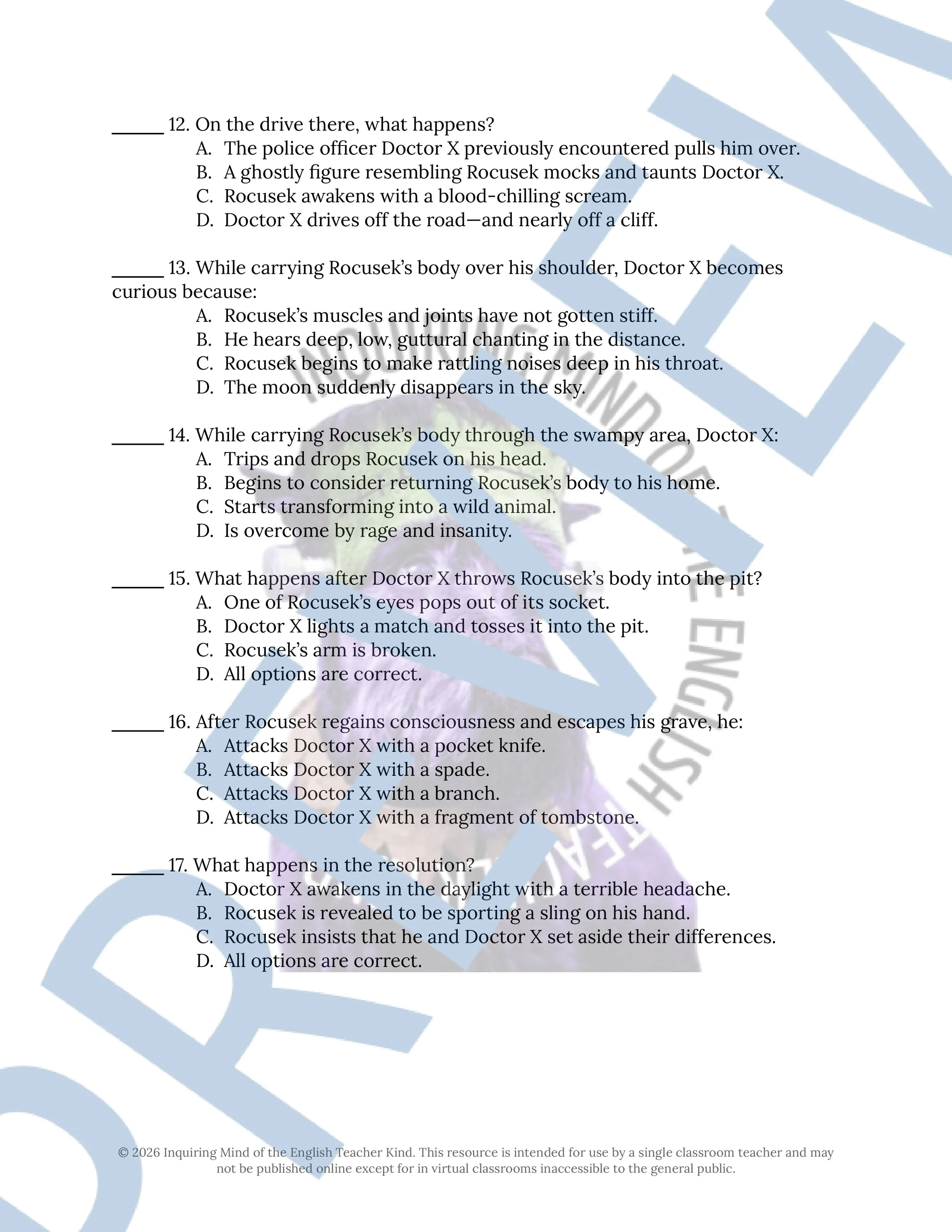
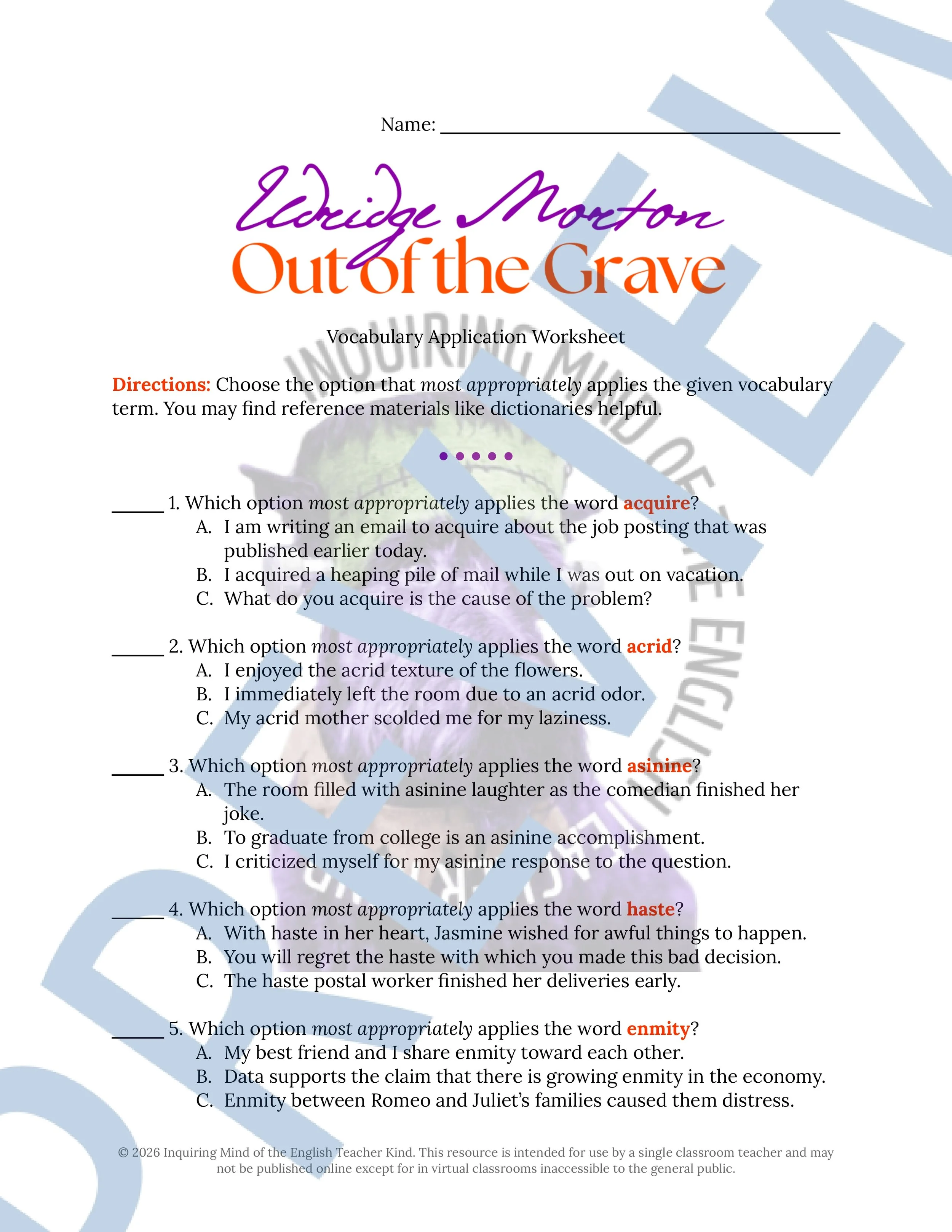
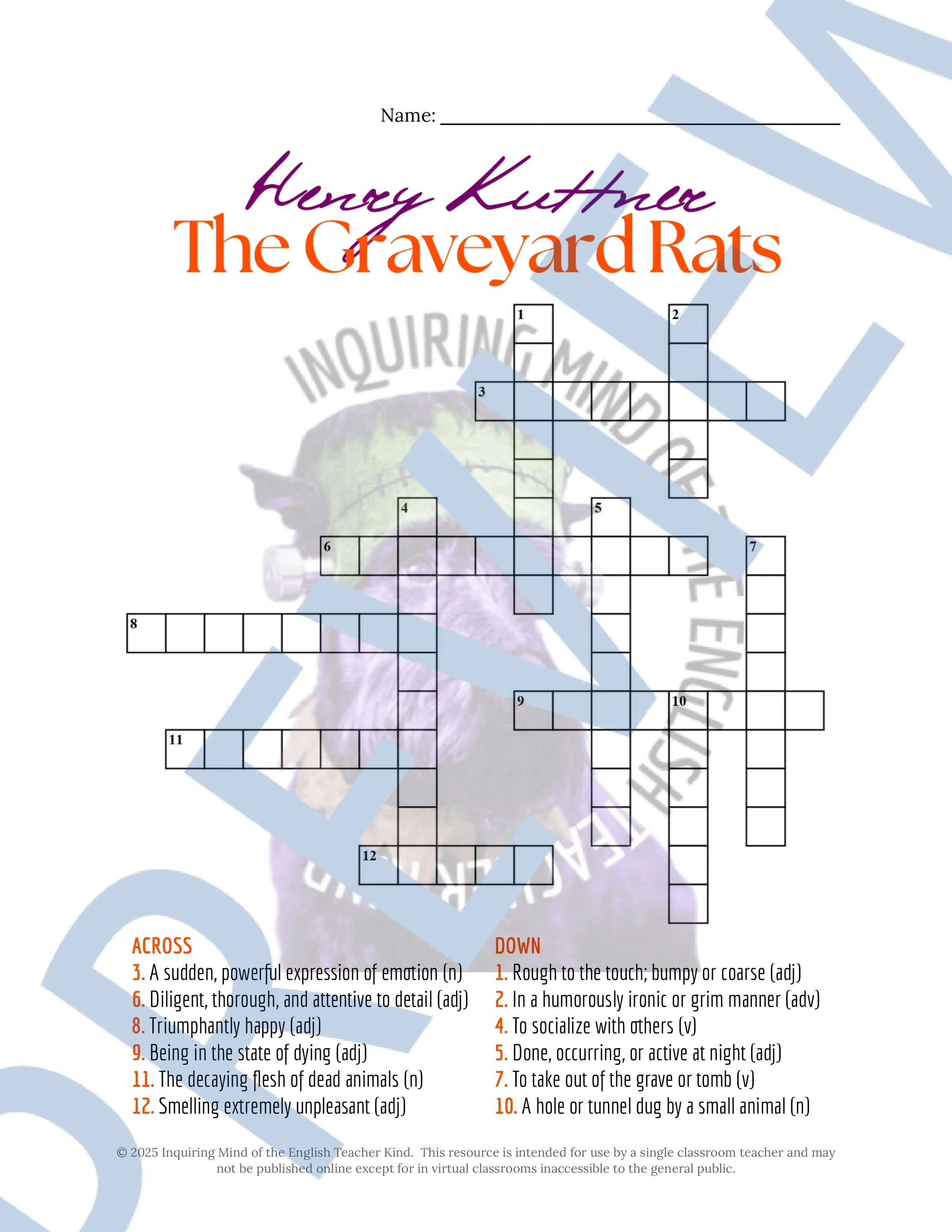
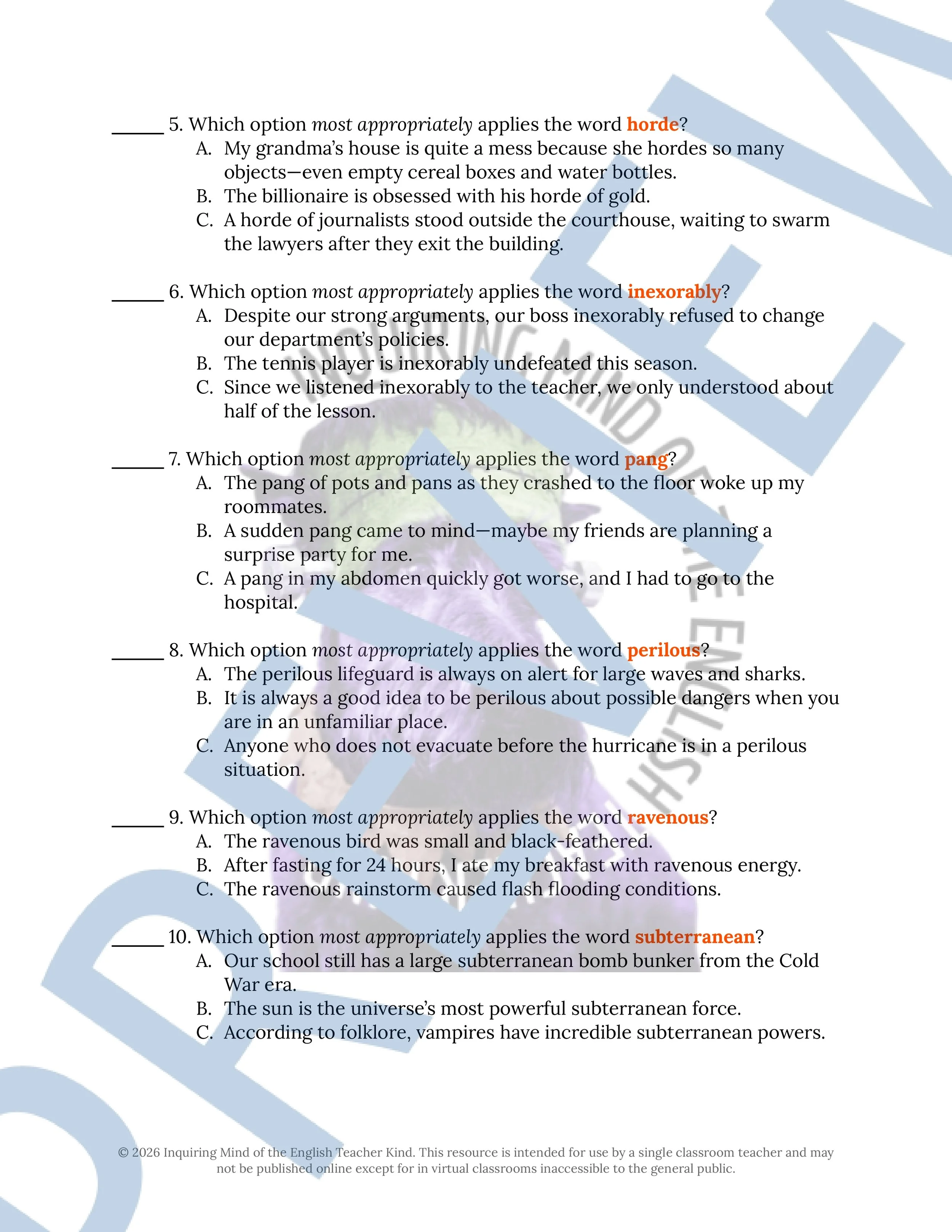
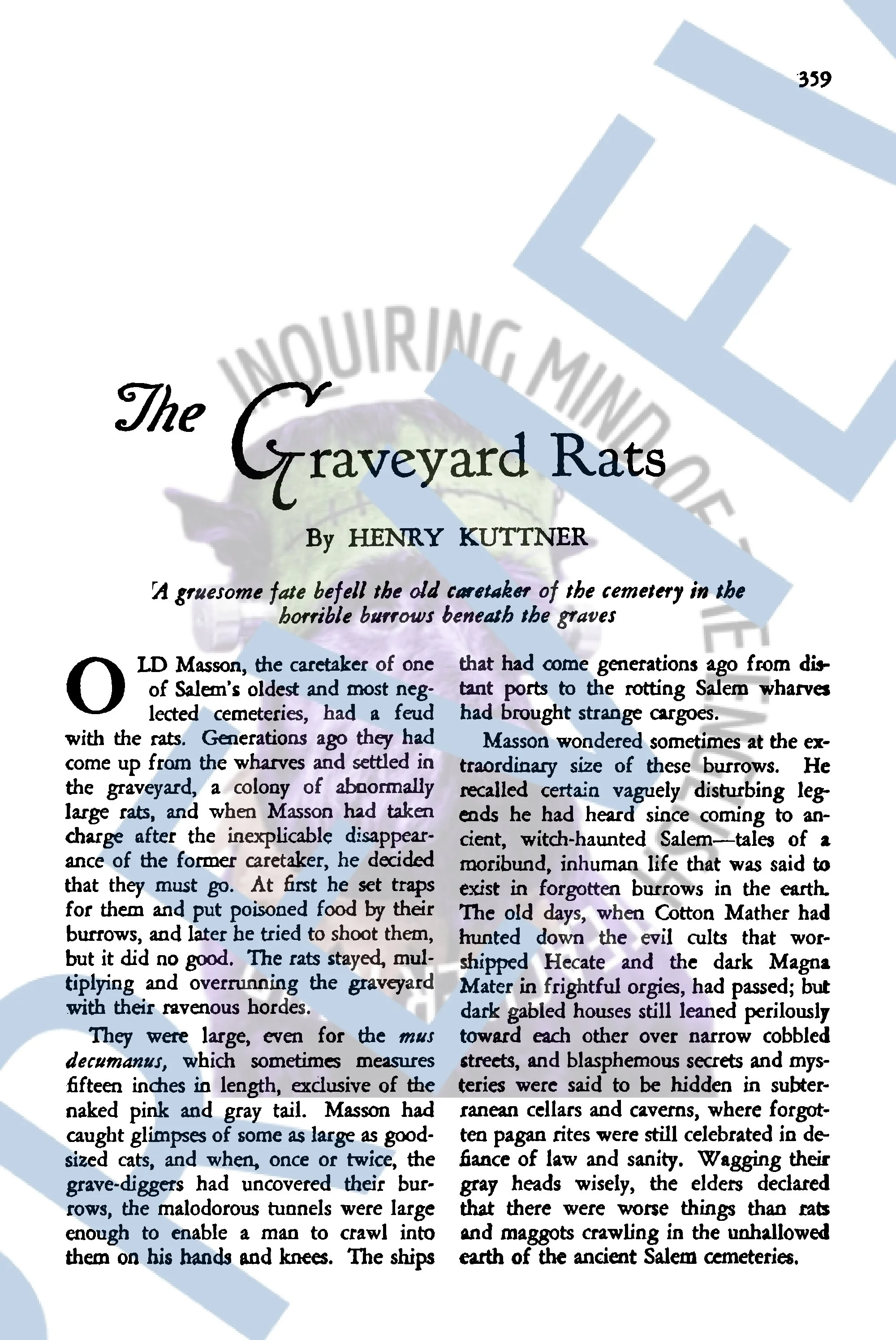
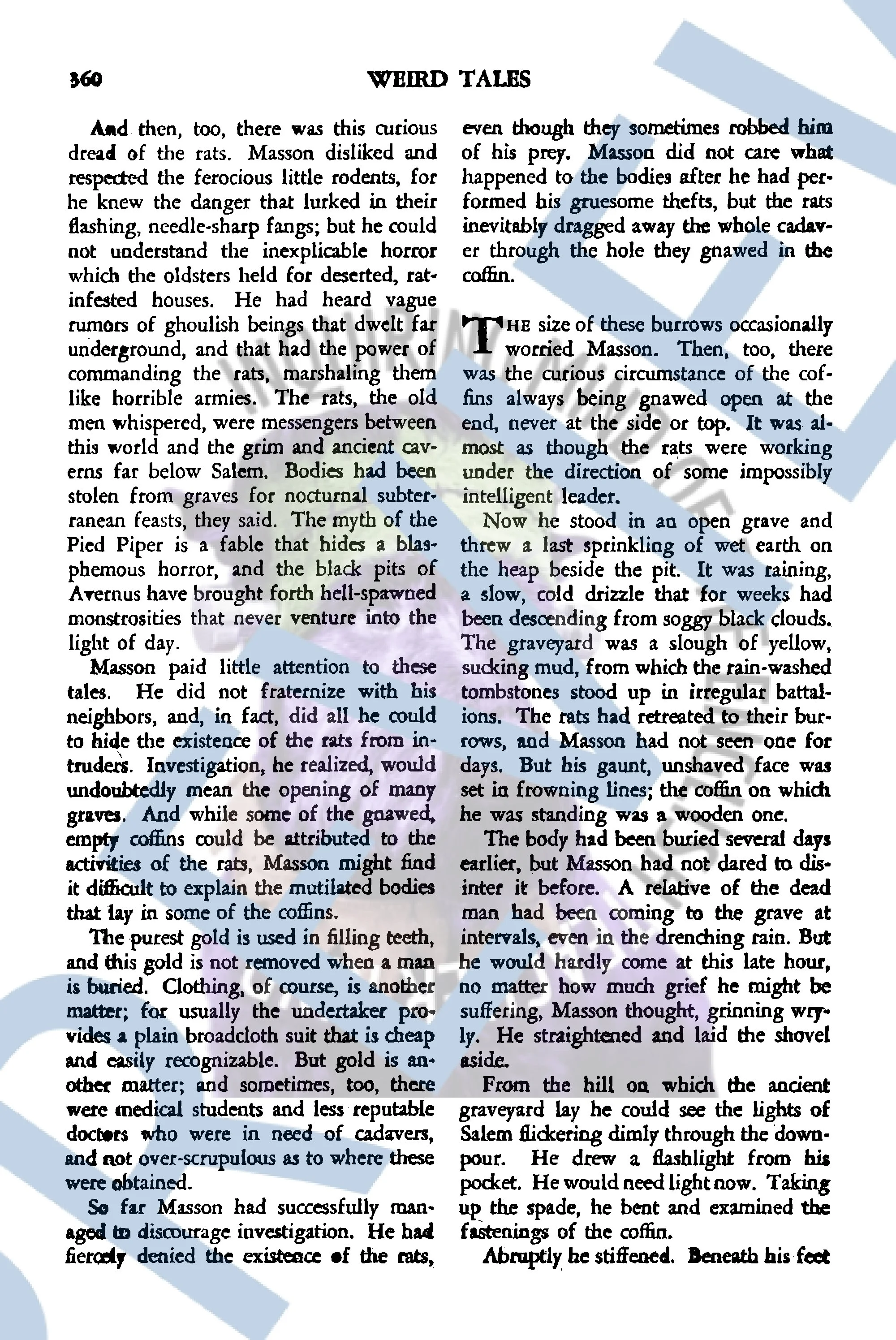
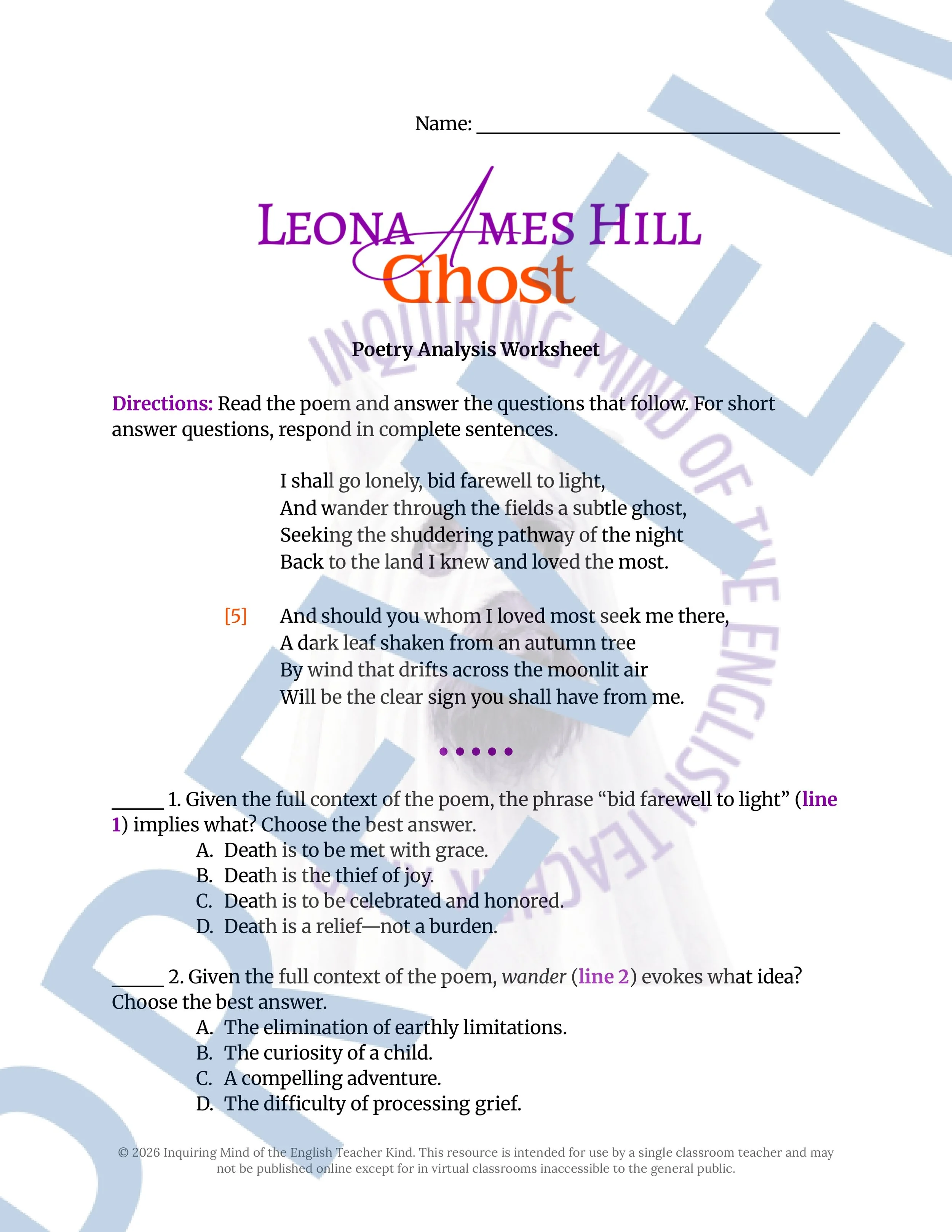
Ideal for American Literature classes, short poetry units, and the fall and Halloween seasons, this poetry analysis worksheet helps high school ELA students explore the werewolf-themed poem "Lycanthropus" by C. Edgar Bolen (originally published in Weird Tales in 1936). An answer key is included. This ominous poem centers on the narrator's transformation from human into beast, addressing the notion that inside all humans lives a primitive monster. By engaging with this poetry activity, students will:
Demonstrate awareness of the poem's structure.
Explain the shift in focus between two stanzas.
Articulate the dual interpretations of the poem's final line.
Discern the intended effects of the author's word choices (e.g., miry and slink) and phrases (e.g., jellied night).
Explore themes in context (e.g., the relationship between Nature and the supernatural).
Apply knowledge of literary devices (e.g., alliteration, allusion, assonance, consonance, onomatopoeia, oxymoron, and more).
Support claims and inferences with sound reasoning and relevant evidence.
Materials are delivered in editable Word Document and printable PDF formats. (Alternatively, a Google option is available.)
More Weird Tales resources for the Halloween season are available:
Ideal for American Literature classes, short poetry units, and the fall and Halloween seasons, this poetry analysis worksheet helps high school ELA students explore the werewolf-themed poem "Lycanthropus" by C. Edgar Bolen (originally published in Weird Tales in 1936). An answer key is included. This ominous poem centers on the narrator's transformation from human into beast, addressing the notion that inside all humans lives a primitive monster. By engaging with this poetry activity, students will:
Demonstrate awareness of the poem's structure.
Explain the shift in focus between two stanzas.
Articulate the dual interpretations of the poem's final line.
Discern the intended effects of the author's word choices (e.g., miry and slink) and phrases (e.g., jellied night).
Explore themes in context (e.g., the relationship between Nature and the supernatural).
Apply knowledge of literary devices (e.g., alliteration, allusion, assonance, consonance, onomatopoeia, oxymoron, and more).
Support claims and inferences with sound reasoning and relevant evidence.
Materials are delivered in editable Word Document and printable PDF formats. (Alternatively, a Google option is available.)
More Weird Tales resources for the Halloween season are available:

 Image 1 of 5
 Image 2 of 5
 Image 3 of 5
 Image 4 of 5
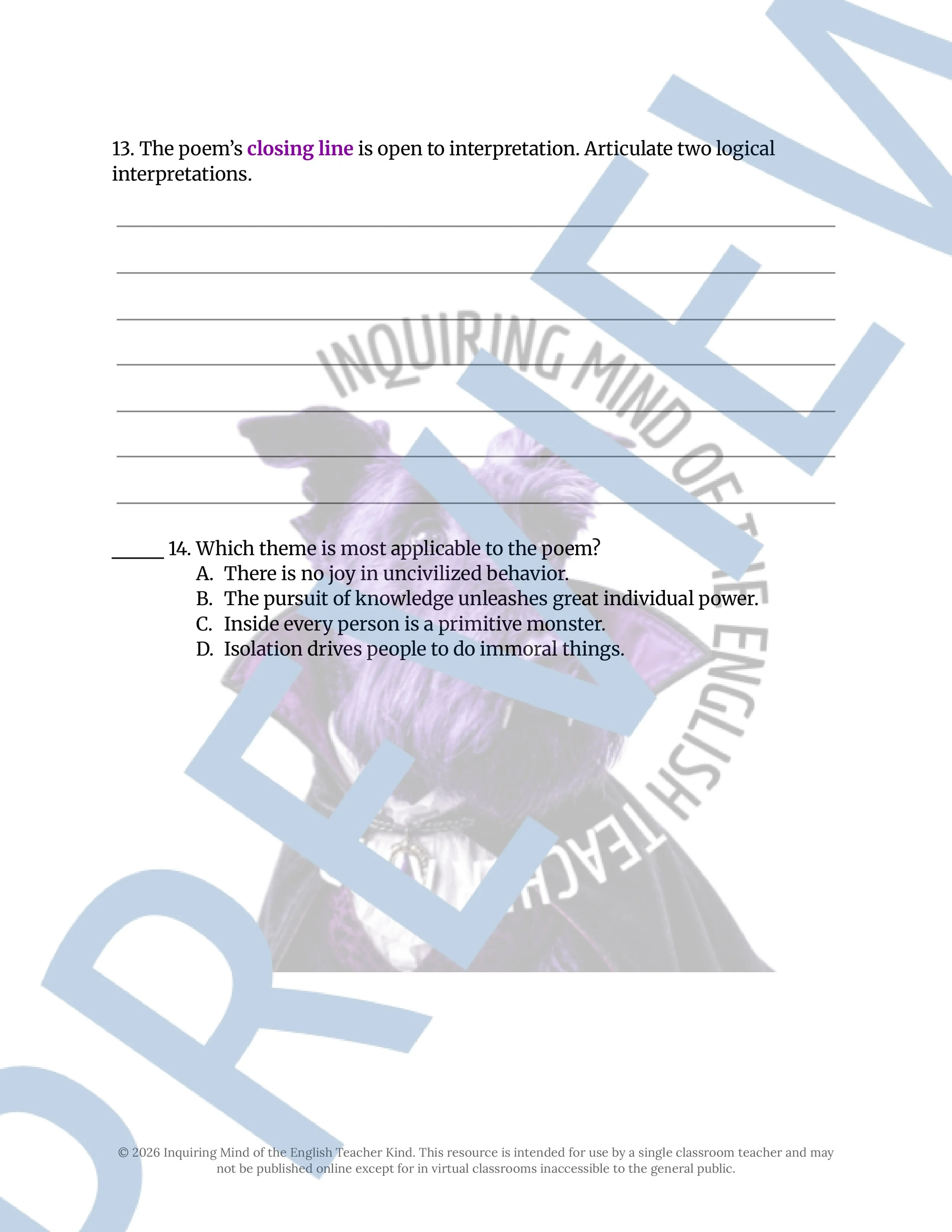 Image 5 of 5