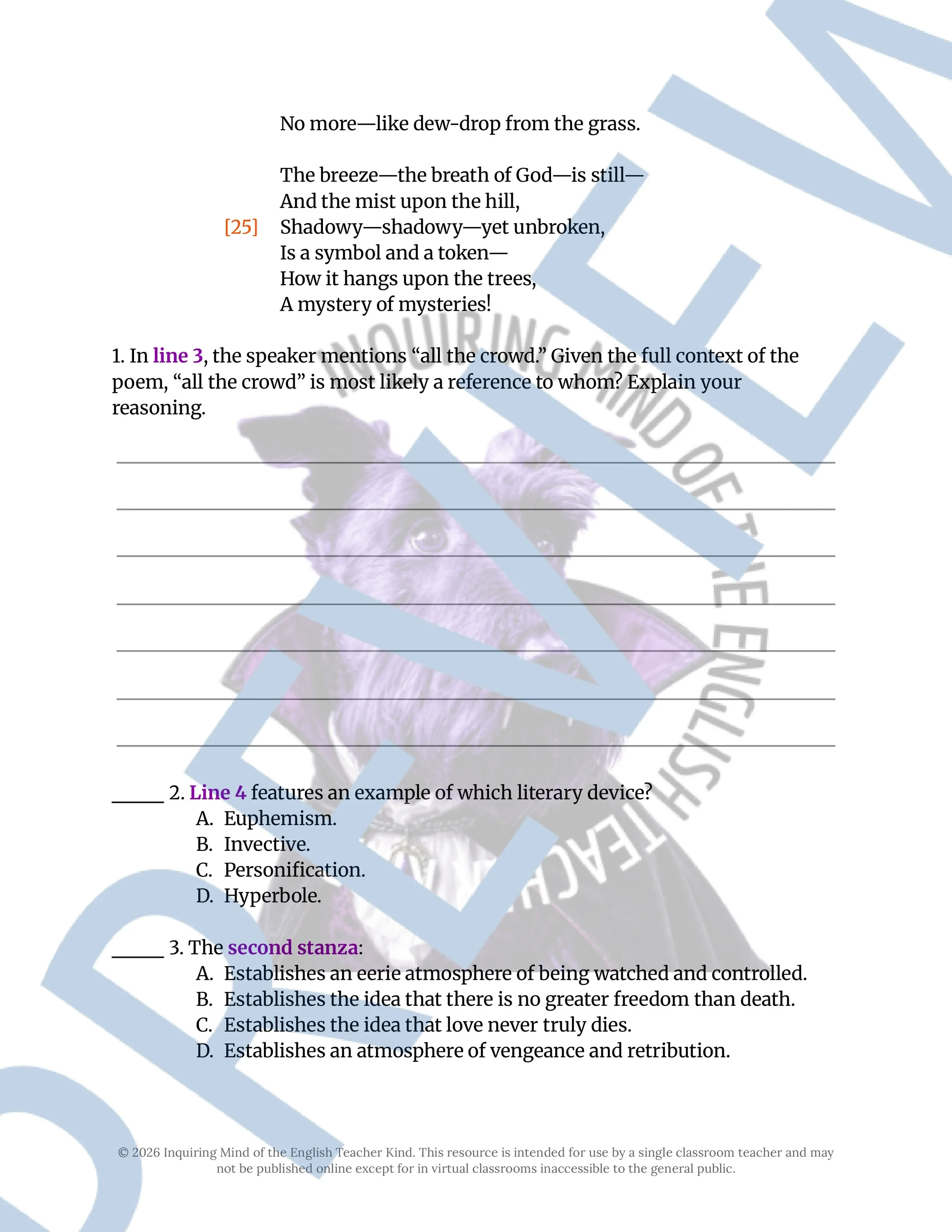
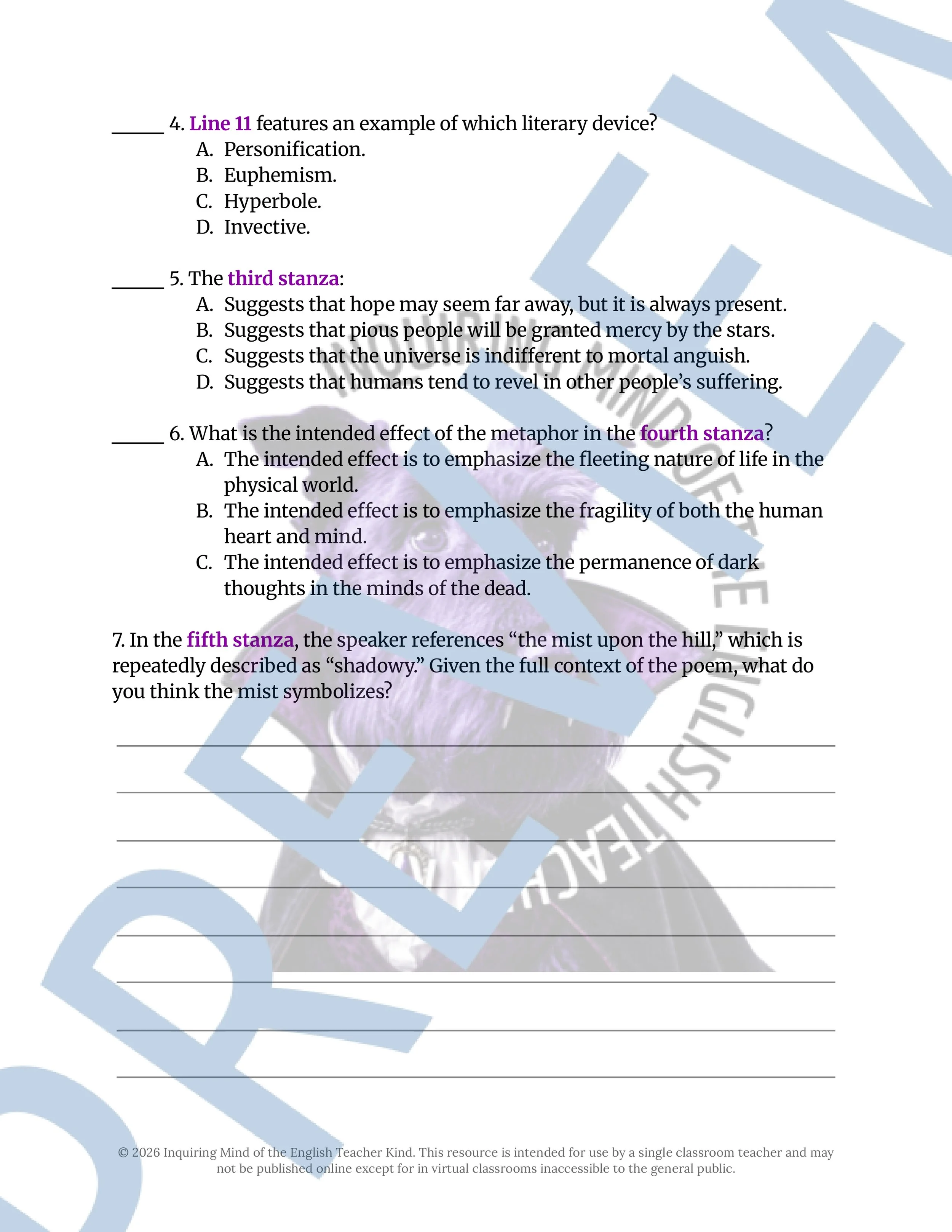
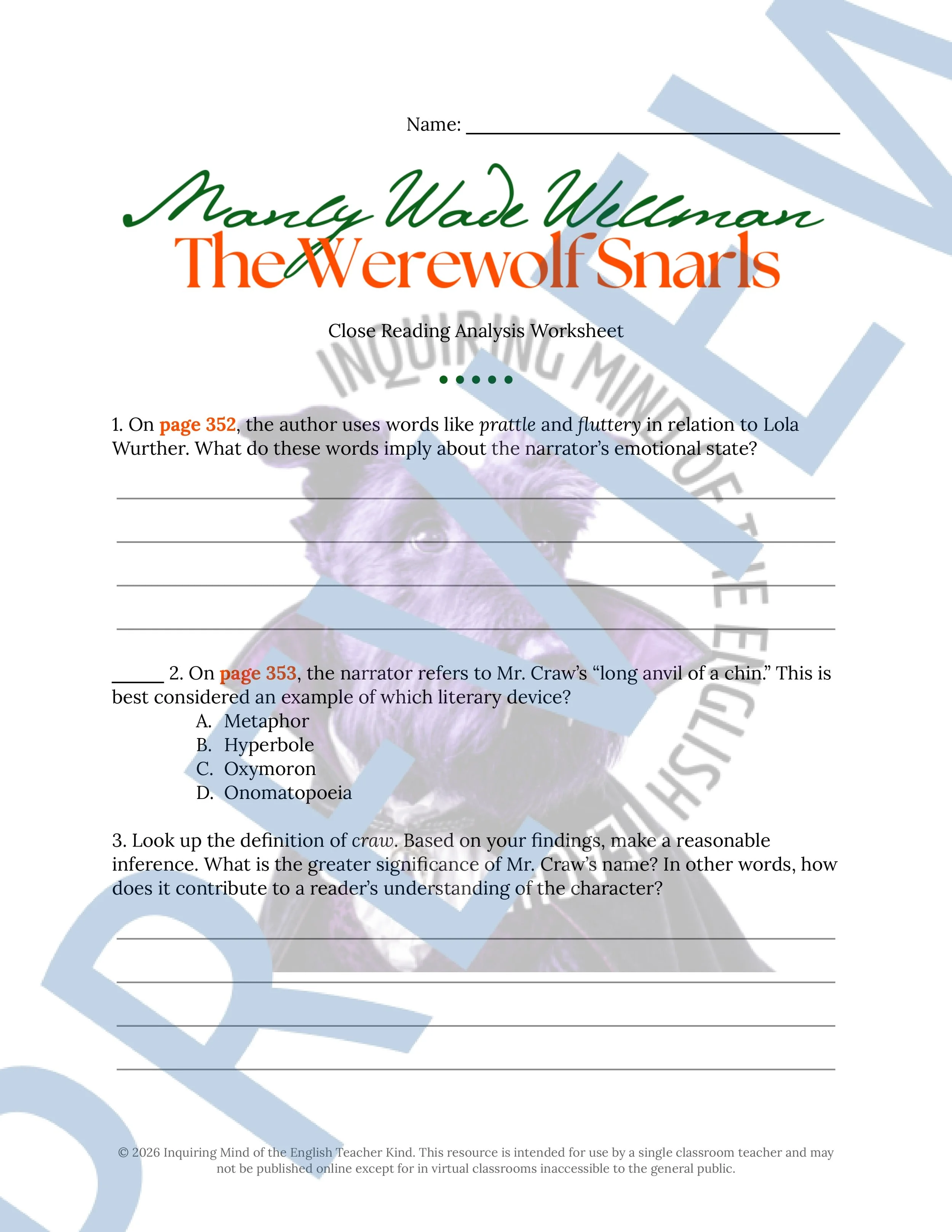
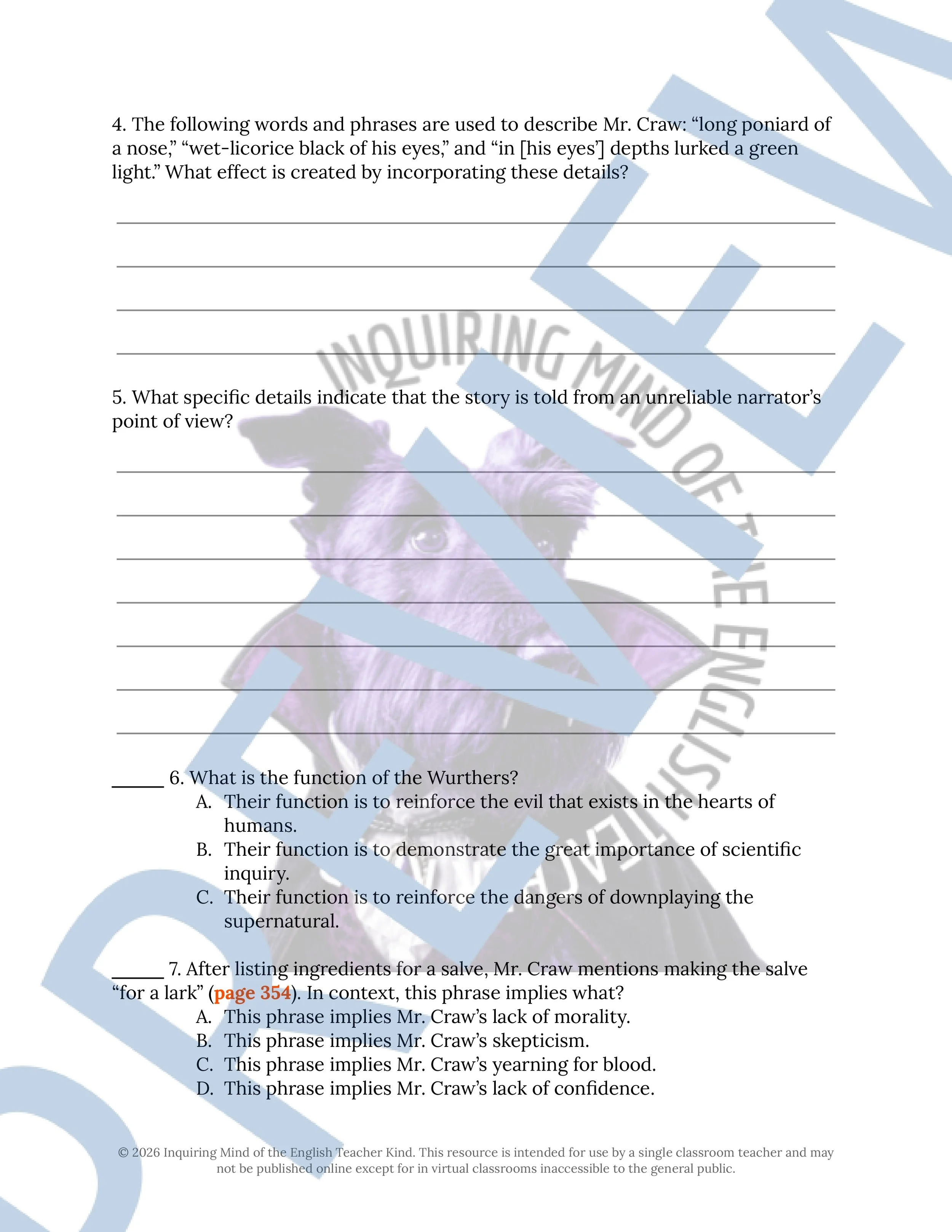
Perfect for British Literature classes, Victorian poetry units, dark humor lessons, and the Halloween season, this analysis worksheet covers Thomas Hardy's poem "Ah, Are You Digging on My Grave?" and includes an answer key. The poem incorporates surrealism, situational irony, and ambiguity and explores humanity's tendency to be unfaithful and self-interested. By engaging with this poetry activity, students will:
Apply knowledge of literary/poetic devices (e.g., alliteration, personification, pun, etc.).
Infer the intended effects of the poet's language (e.g., "planting rue," "prodding sly," etc.).
Make evidence-based inferences about the narrator's motivations.
Conduct brief online research as needed to answer questions about language (e.g., "Death's gin").
Explore how imagery is reinforced from one stanza to another.
Consider themes in context.
Articulate why the author may have chosen to incorporate a talking dog into the poem.
Evaluate whether the talking dog demonstrates virtuousness.
Support claims and inferences with sound reasoning and relevant evidence.
Materials are delivered in editable Word Document and printable PDF formats. (Alternatively, a Google option is available.)
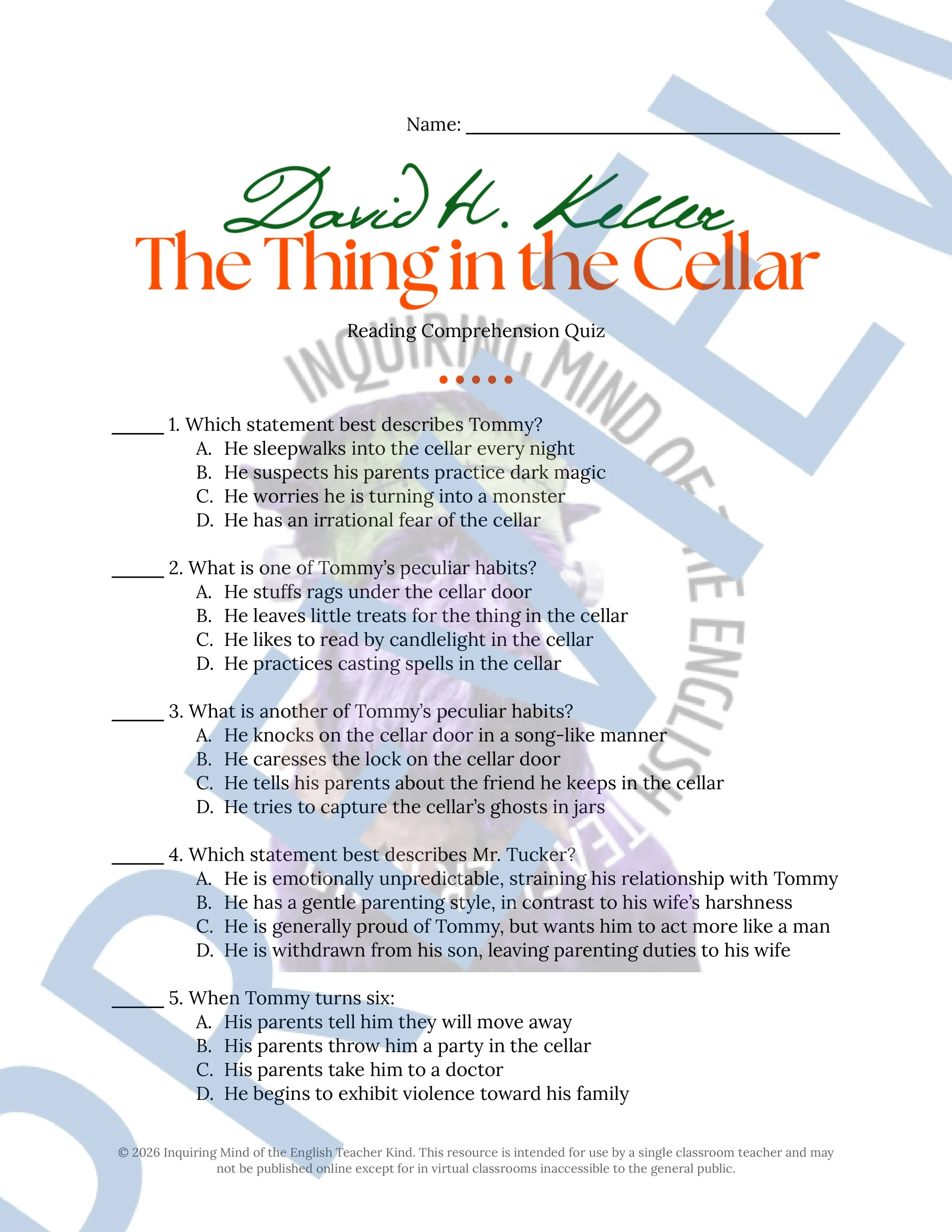
More resources for the Halloween season are available:
Perfect for British Literature classes, Victorian poetry units, dark humor lessons, and the Halloween season, this analysis worksheet covers Thomas Hardy's poem "Ah, Are You Digging on My Grave?" and includes an answer key. The poem incorporates surrealism, situational irony, and ambiguity and explores humanity's tendency to be unfaithful and self-interested. By engaging with this poetry activity, students will:
Apply knowledge of literary/poetic devices (e.g., alliteration, personification, pun, etc.).
Infer the intended effects of the poet's language (e.g., "planting rue," "prodding sly," etc.).
Make evidence-based inferences about the narrator's motivations.
Conduct brief online research as needed to answer questions about language (e.g., "Death's gin").
Explore how imagery is reinforced from one stanza to another.
Consider themes in context.
Articulate why the author may have chosen to incorporate a talking dog into the poem.
Evaluate whether the talking dog demonstrates virtuousness.
Support claims and inferences with sound reasoning and relevant evidence.
Materials are delivered in editable Word Document and printable PDF formats. (Alternatively, a Google option is available.)
More resources for the Halloween season are available:

 Image 1 of 5
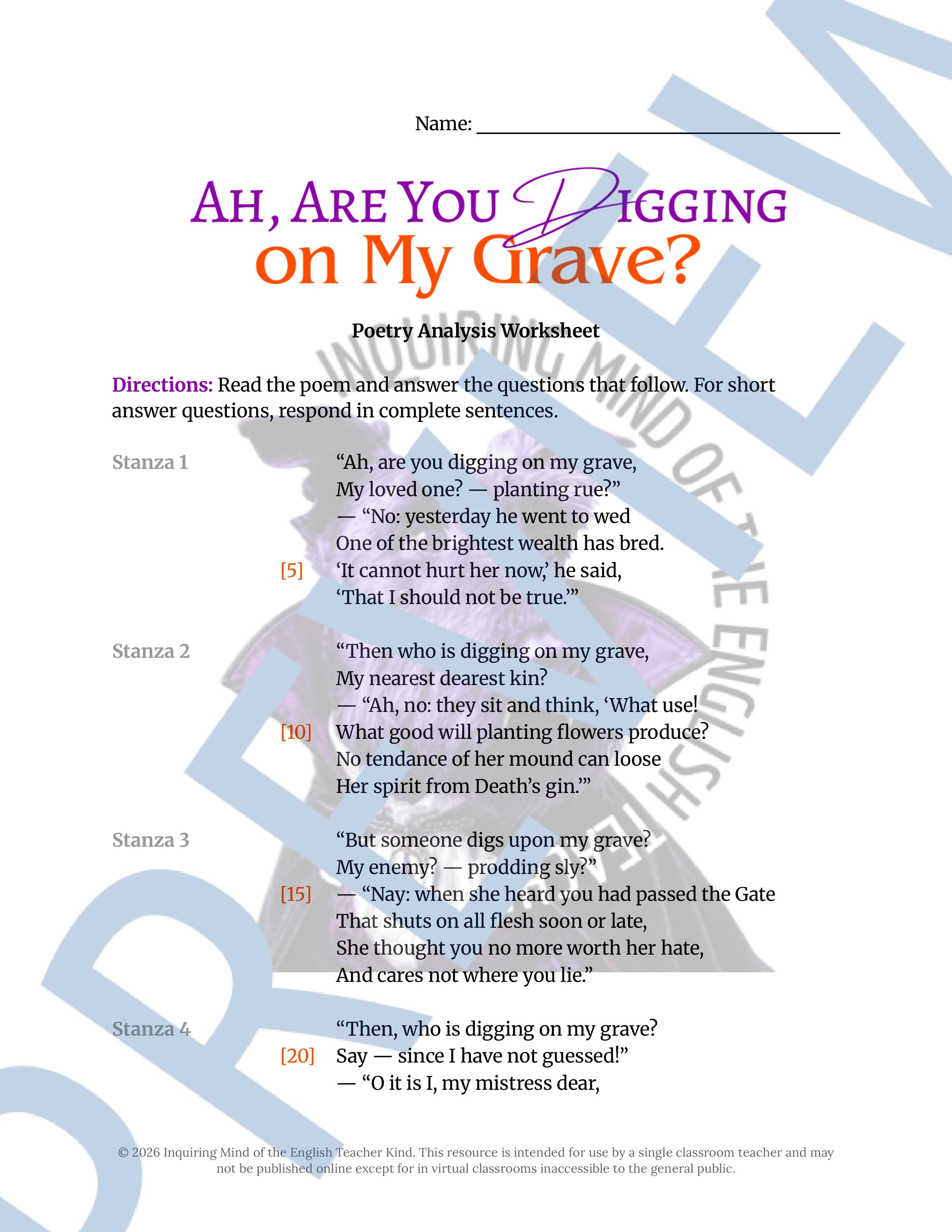 Image 2 of 5
 Image 3 of 5
 Image 4 of 5
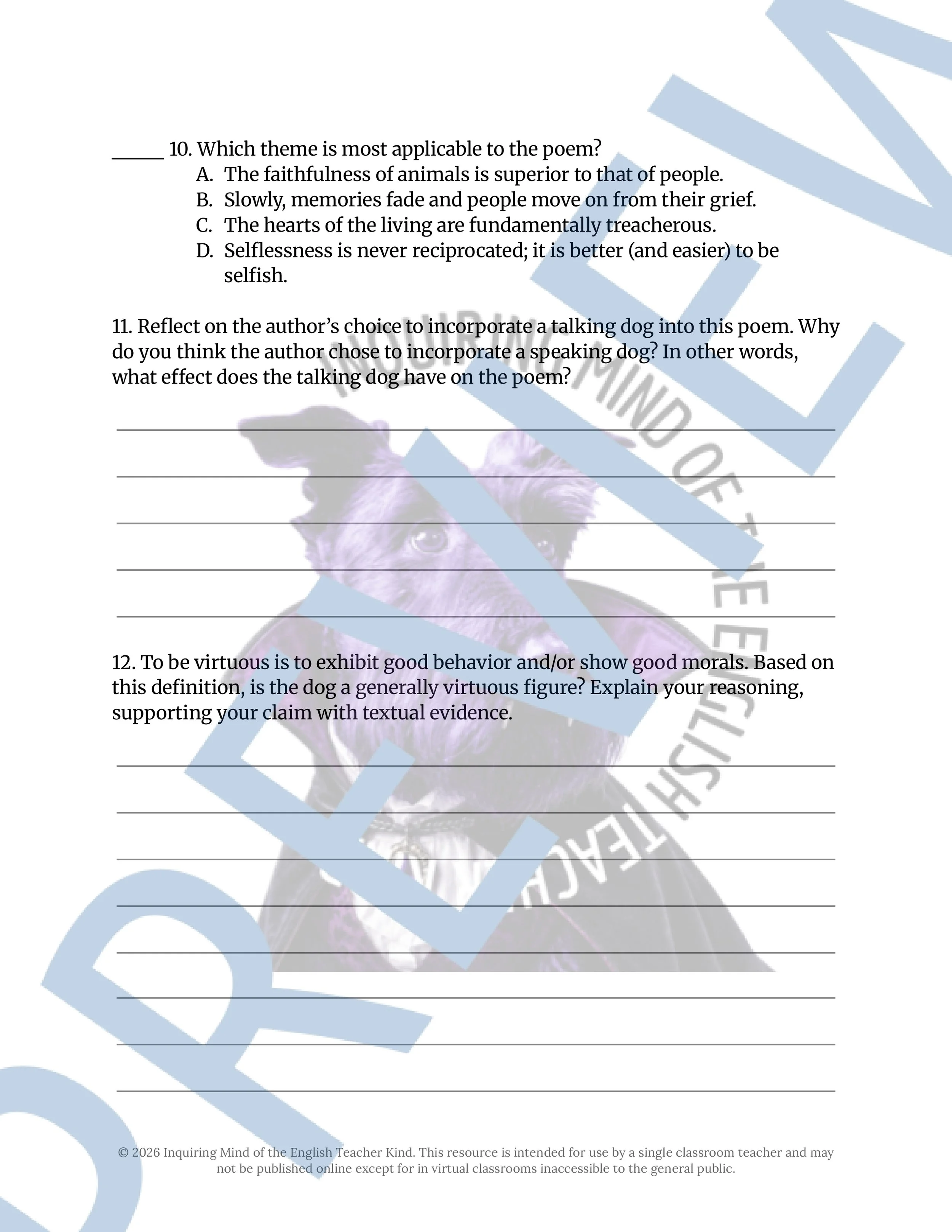 Image 5 of 5