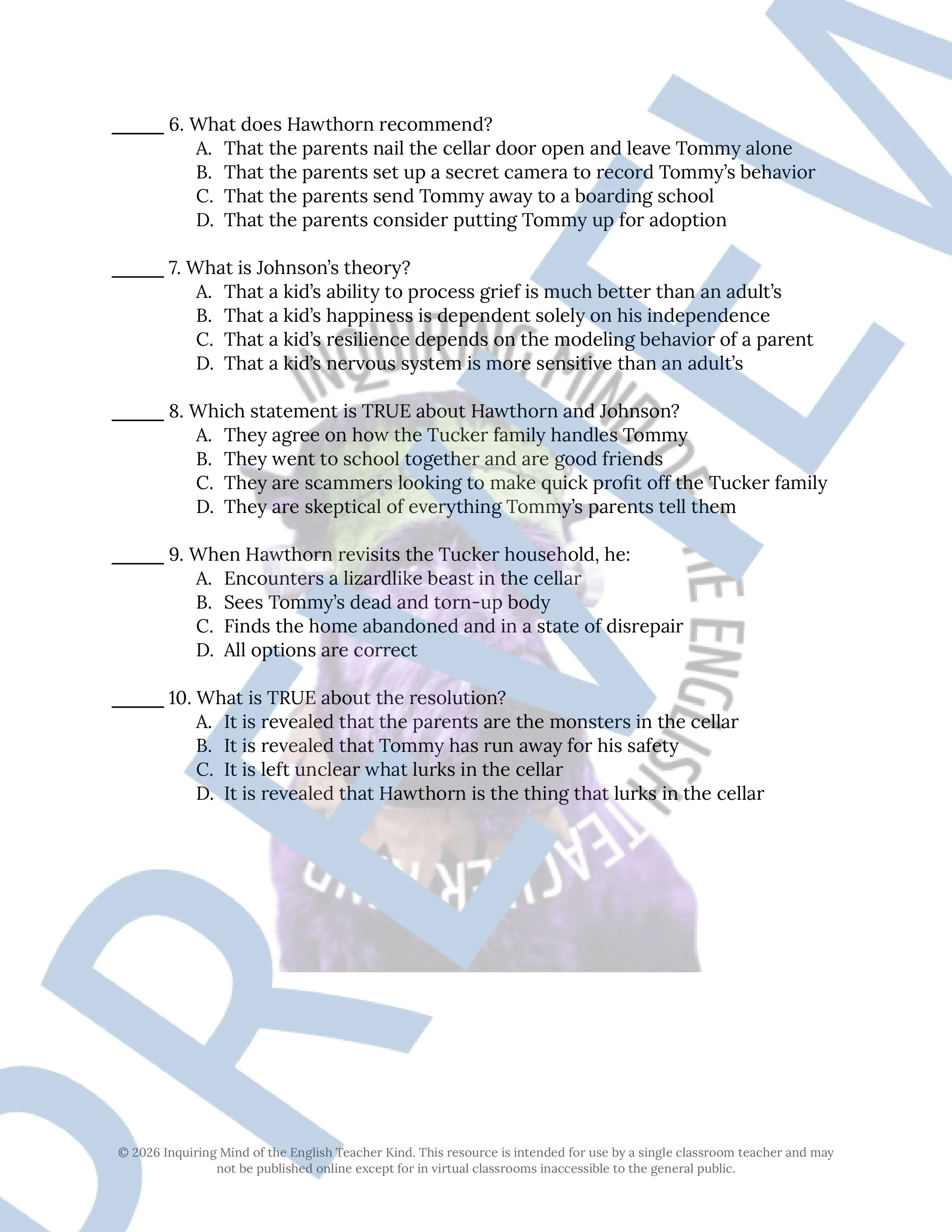
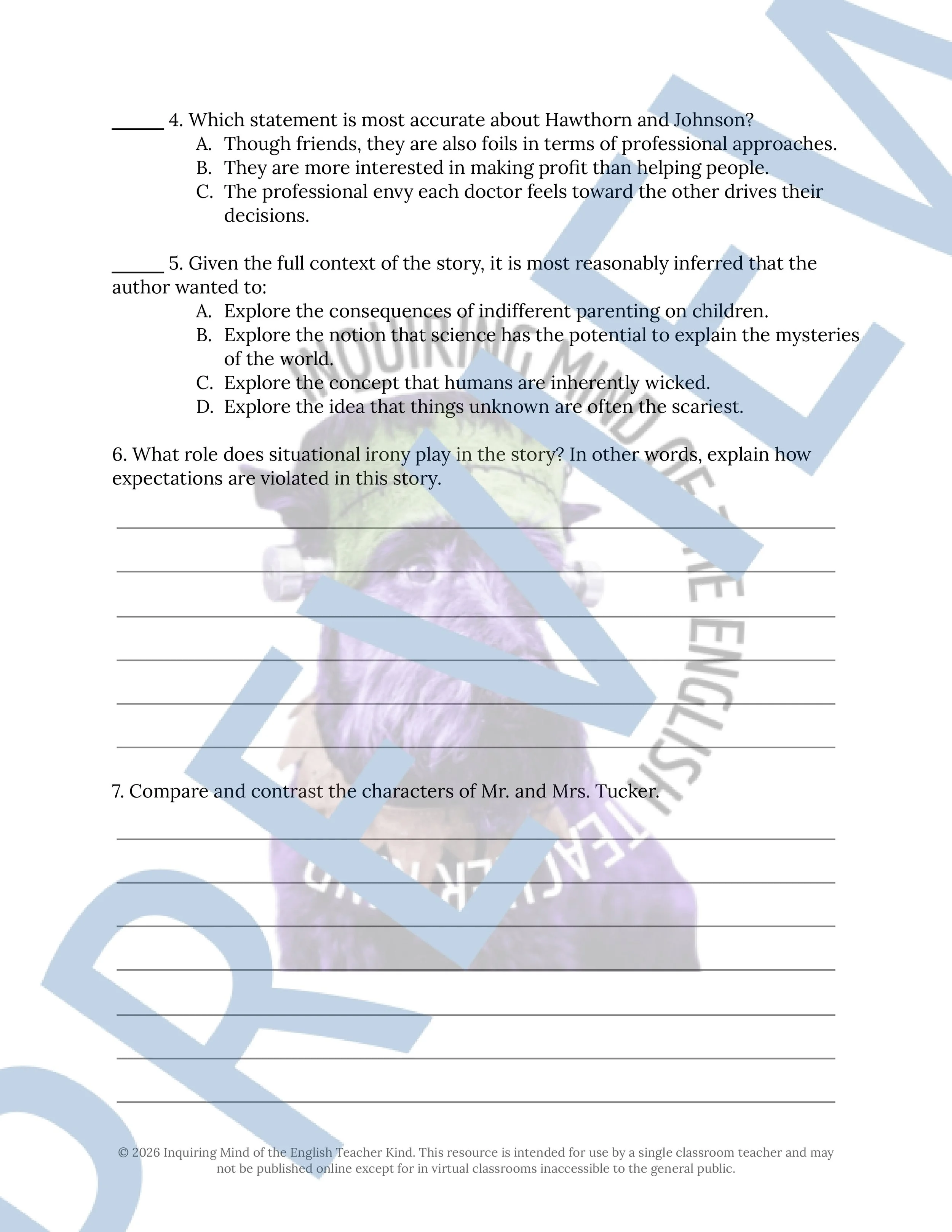
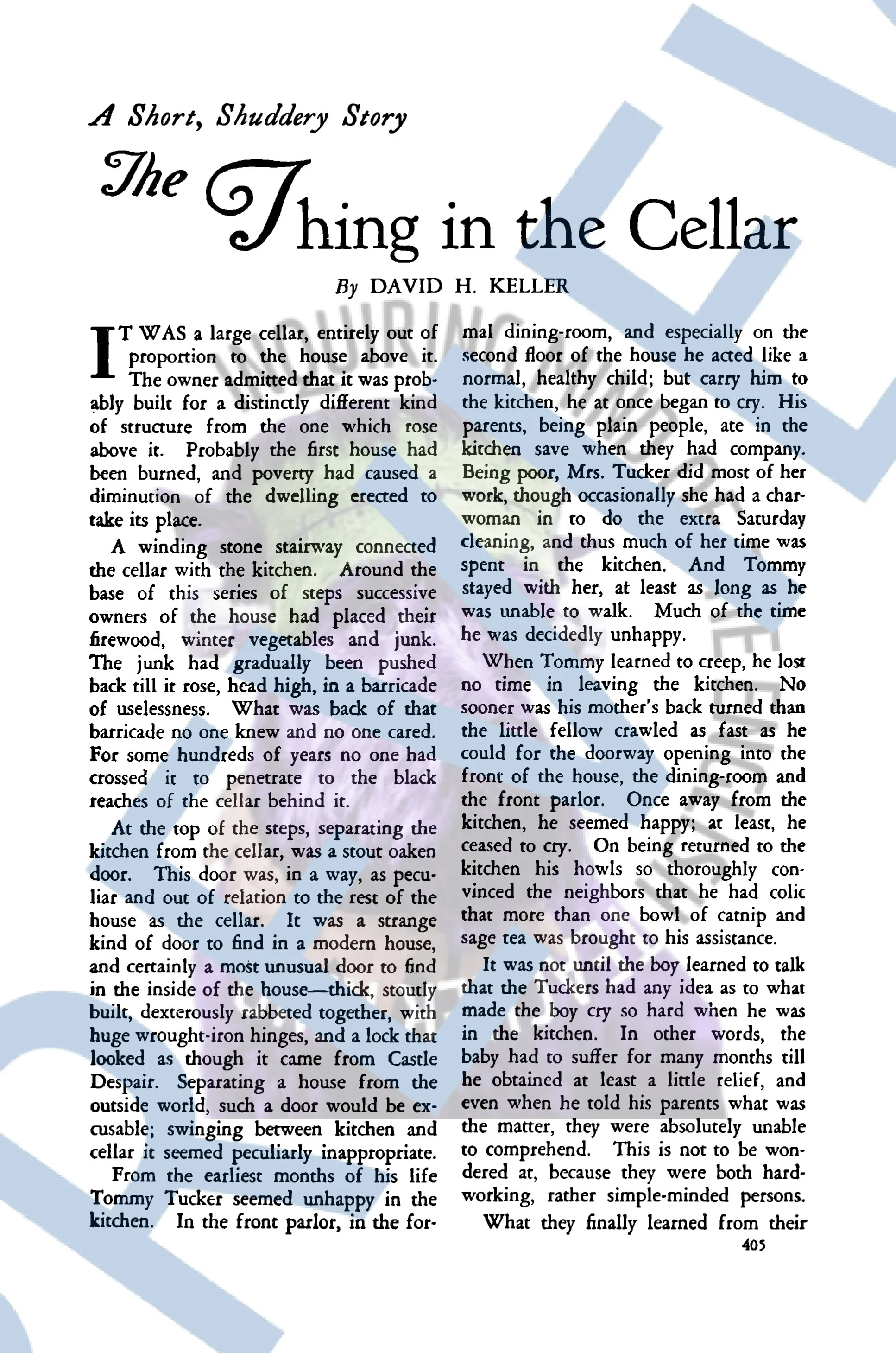
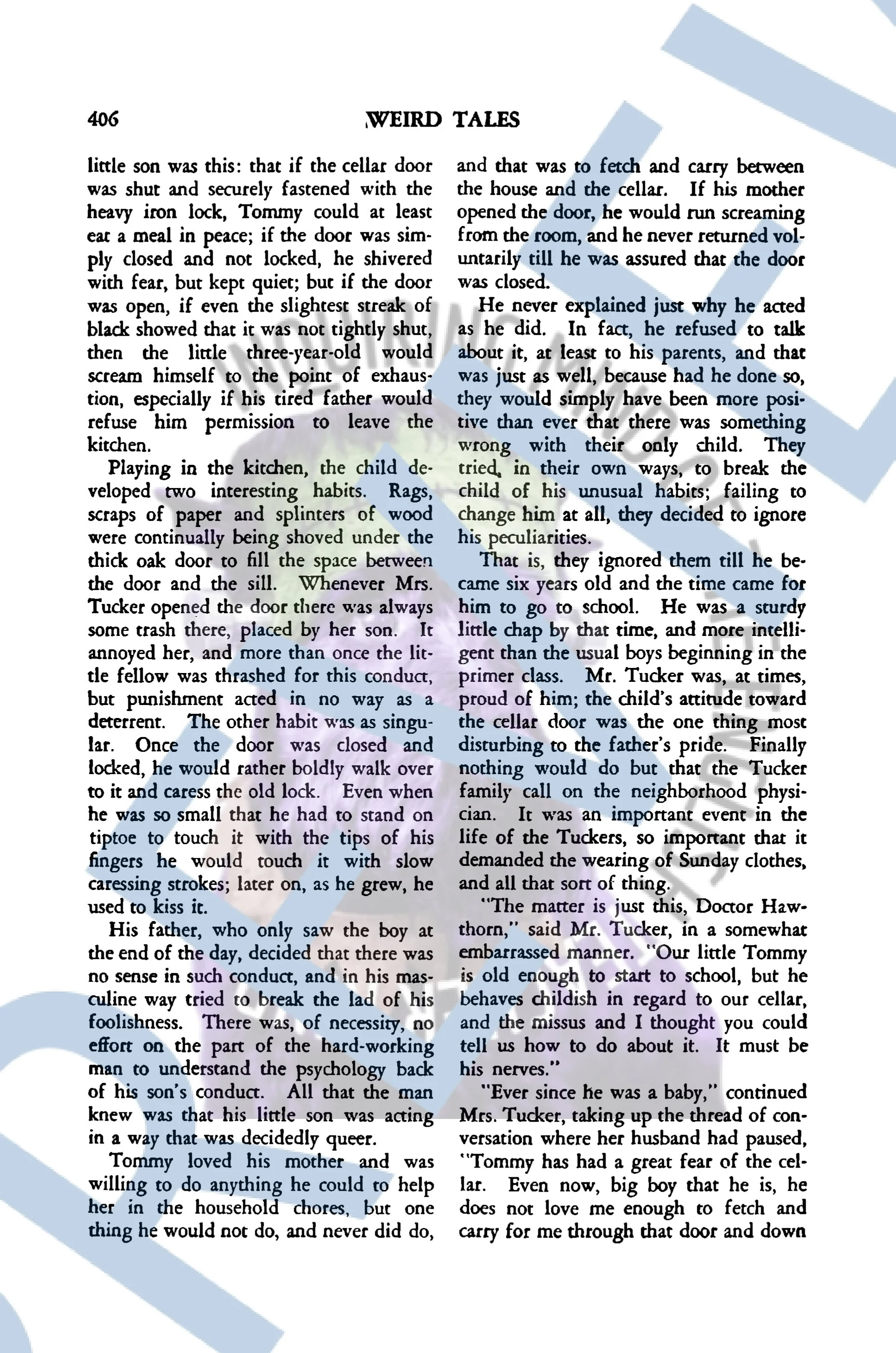
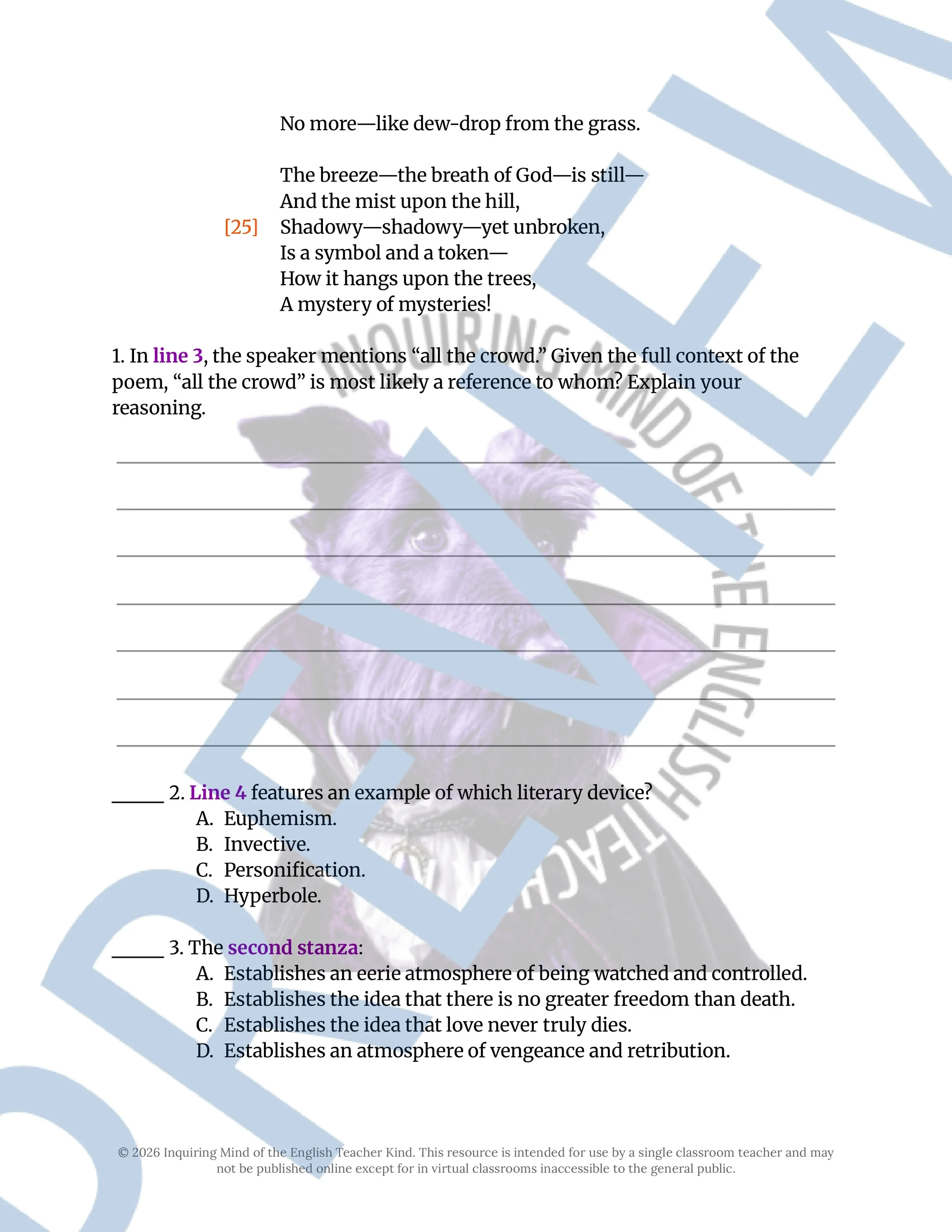
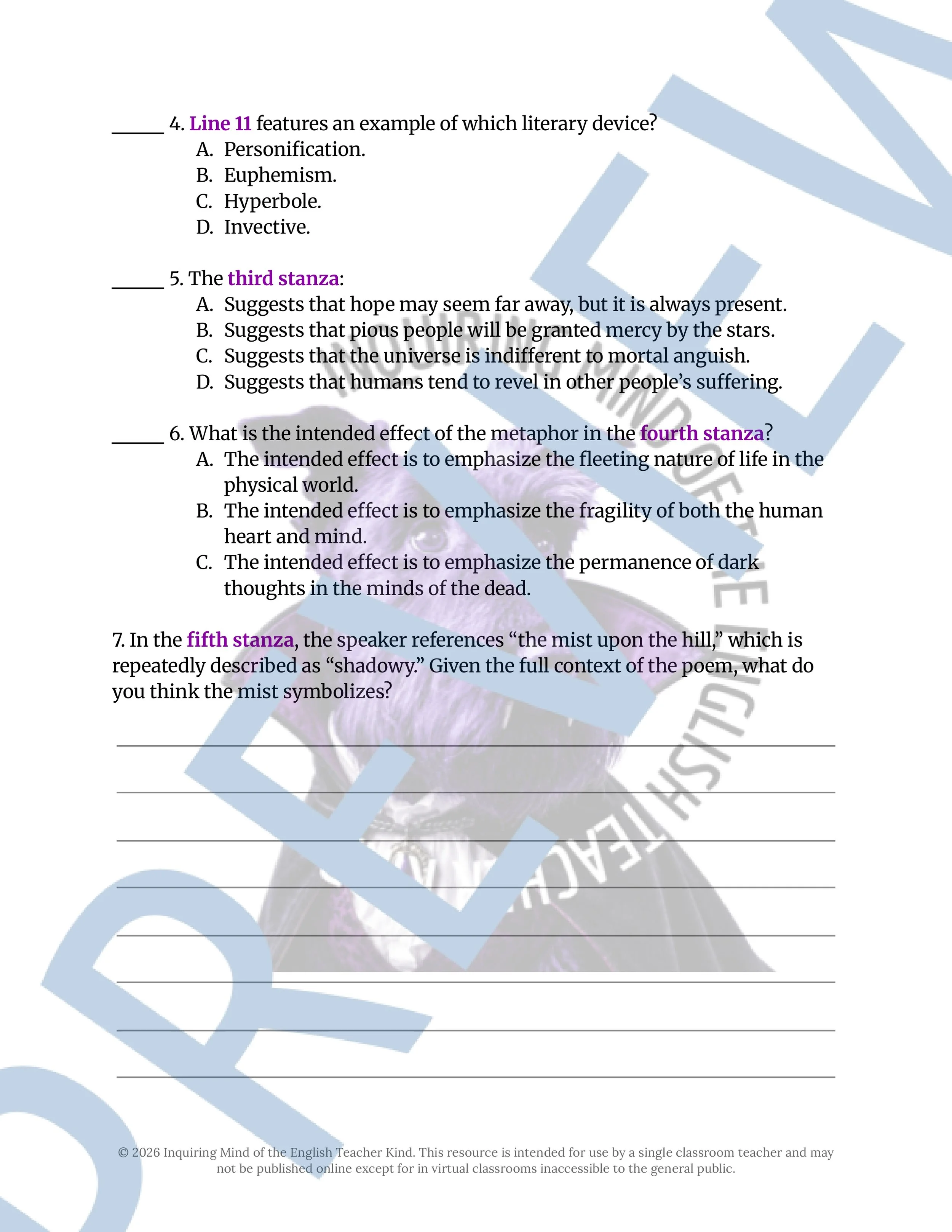
Use this worksheet to help high school English students analyze poetry for the Halloween and back-to-school seasons: "Old Ghosts" by Maud E. Uschold (originally published in Weird Tales). An answer key is included. This brief poem addresses the relationship between physical locations and human emotions, as well as the perceived unreachability of the past. The brevity of the piece makes it an appropriate selection for bell ringer activities. By engaging with this poetry activity, students will:
Interpret the deeper meaning of the poem's title.
Trace the poem's rhyme scheme.
Demonstrate understanding of various quatrain forms (e.g., enclosed, ballad, interlaced, etc.).
Identify the line that best illustrates the convergence of joy and sorrow.
Apply knowledge of literary devices (e.g., alliteration, assonance, personification, sibilance, etc.).
Articulate the symbolic meaning associated with blossoms in the context of the poem.
Reflect on the poem's tone.
Consider themes in context.
Materials are delivered in editable Word Document and printable PDF formats. (Alternatively, a Google option is available.)
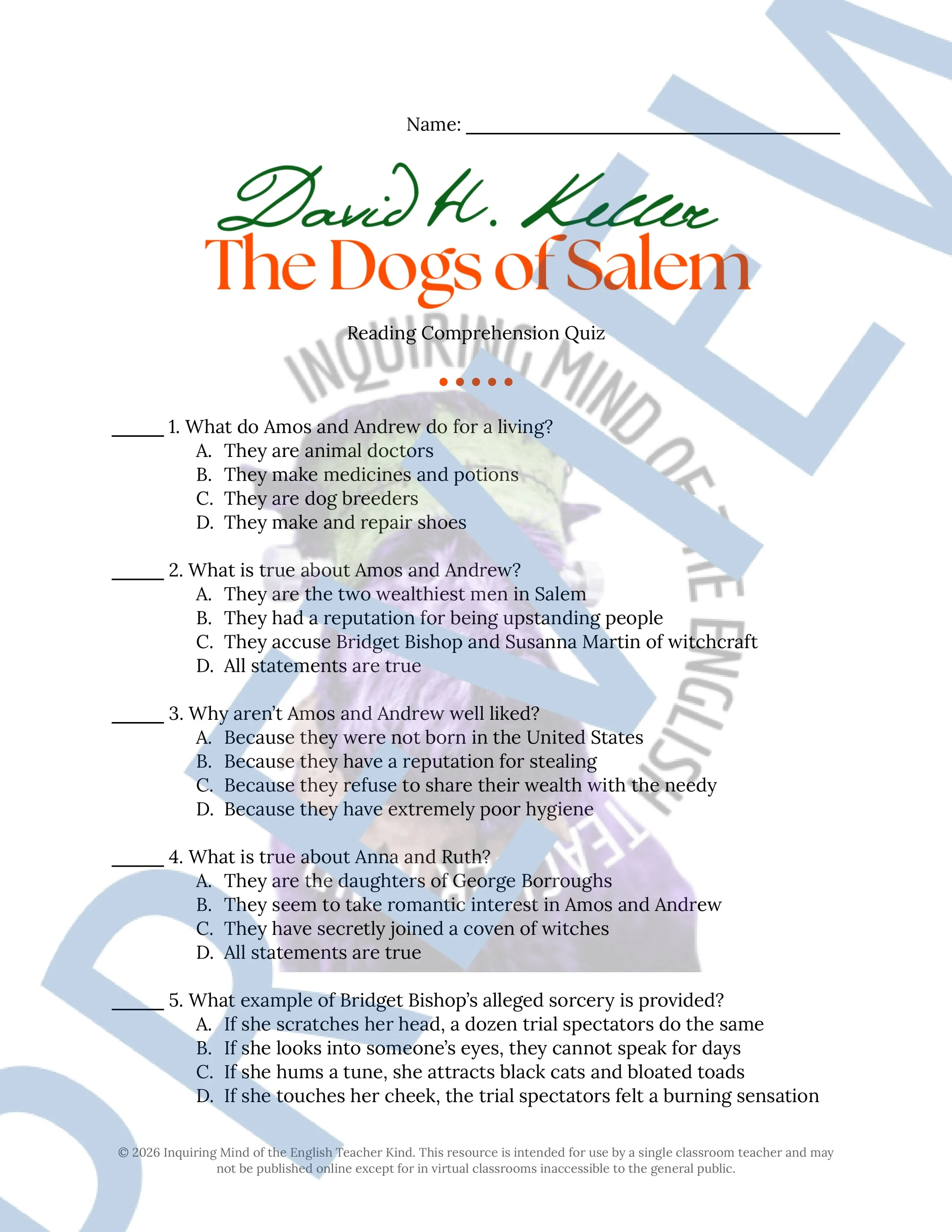
More Weird Tales resources for the Halloween season are available:
Use this worksheet to help high school English students analyze poetry for the Halloween and back-to-school seasons: "Old Ghosts" by Maud E. Uschold (originally published in Weird Tales). An answer key is included. This brief poem addresses the relationship between physical locations and human emotions, as well as the perceived unreachability of the past. The brevity of the piece makes it an appropriate selection for bell ringer activities. By engaging with this poetry activity, students will:
Interpret the deeper meaning of the poem's title.
Trace the poem's rhyme scheme.
Demonstrate understanding of various quatrain forms (e.g., enclosed, ballad, interlaced, etc.).
Identify the line that best illustrates the convergence of joy and sorrow.
Apply knowledge of literary devices (e.g., alliteration, assonance, personification, sibilance, etc.).
Articulate the symbolic meaning associated with blossoms in the context of the poem.
Reflect on the poem's tone.
Consider themes in context.
Materials are delivered in editable Word Document and printable PDF formats. (Alternatively, a Google option is available.)
More Weird Tales resources for the Halloween season are available:

 Image 1 of 4
 Image 2 of 4
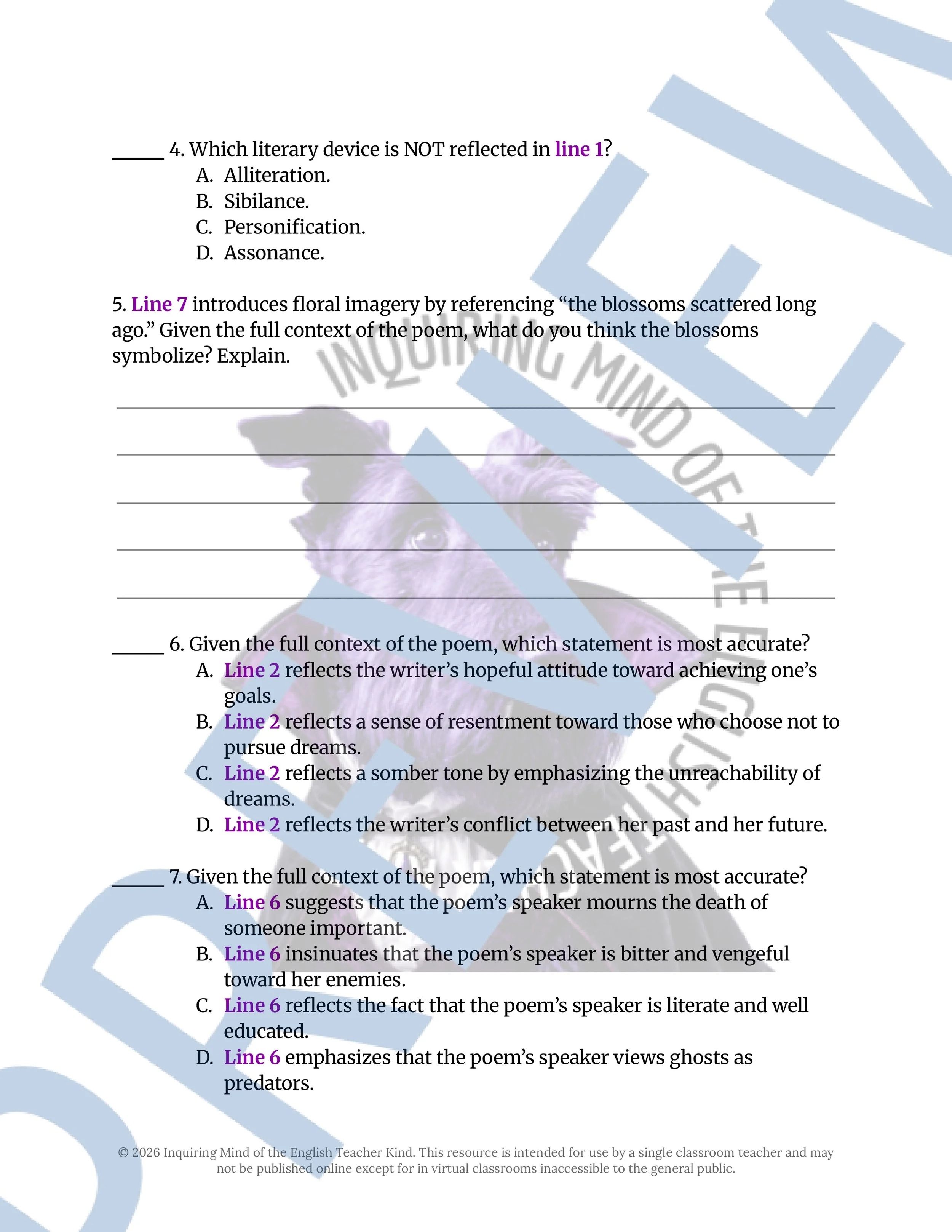 Image 3 of 4
 Image 4 of 4