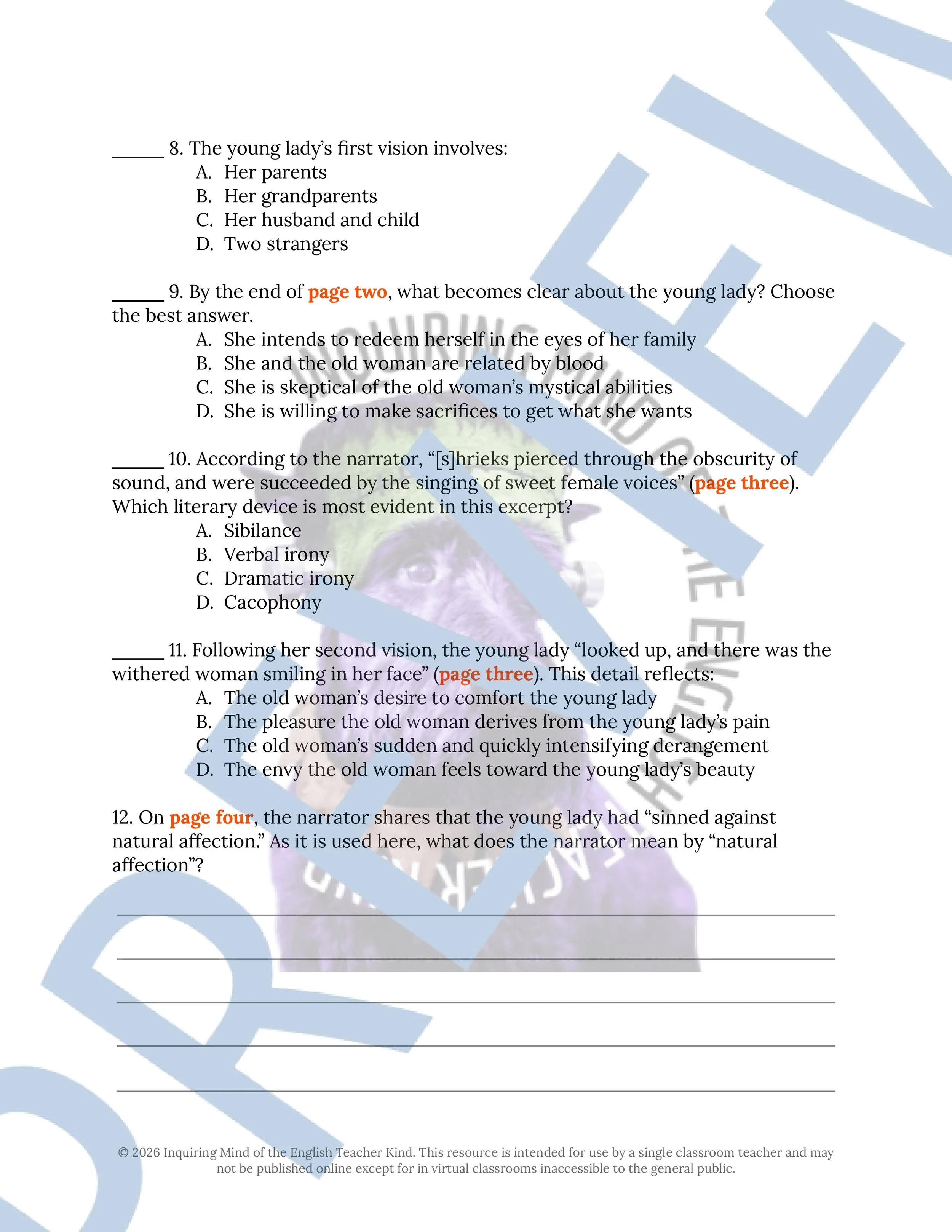
Image 1 of 11
Image 2 of 11
Image 3 of 11
Image 4 of 11
Image 5 of 11
Image 6 of 11
Image 7 of 11
Image 8 of 11
Image 9 of 11
Image 10 of 11
Image 11 of 11
"My Life as a Bat" by Margaret Atwood Quiz, Analysis Worksheet, and Vocabulary Activities
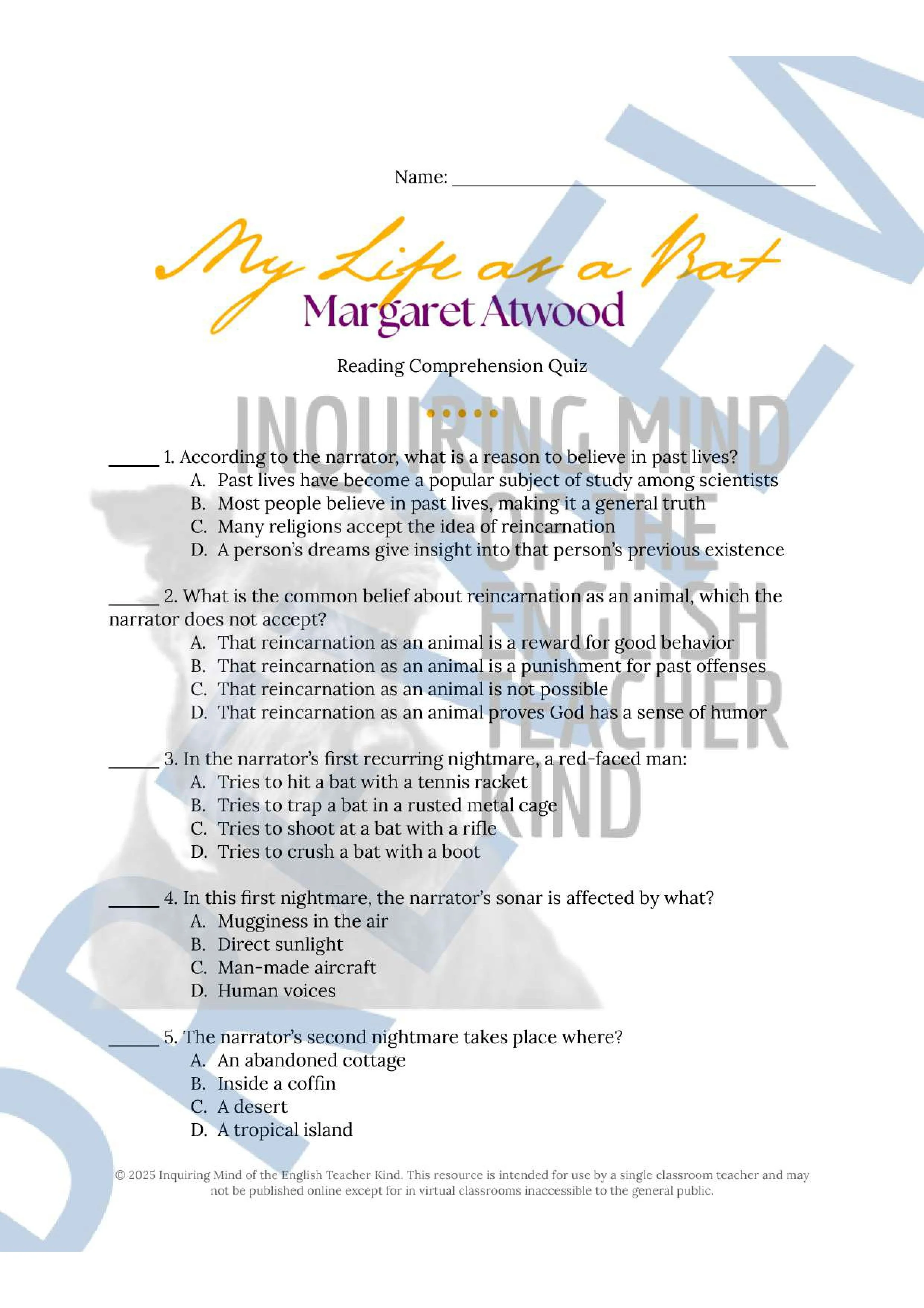
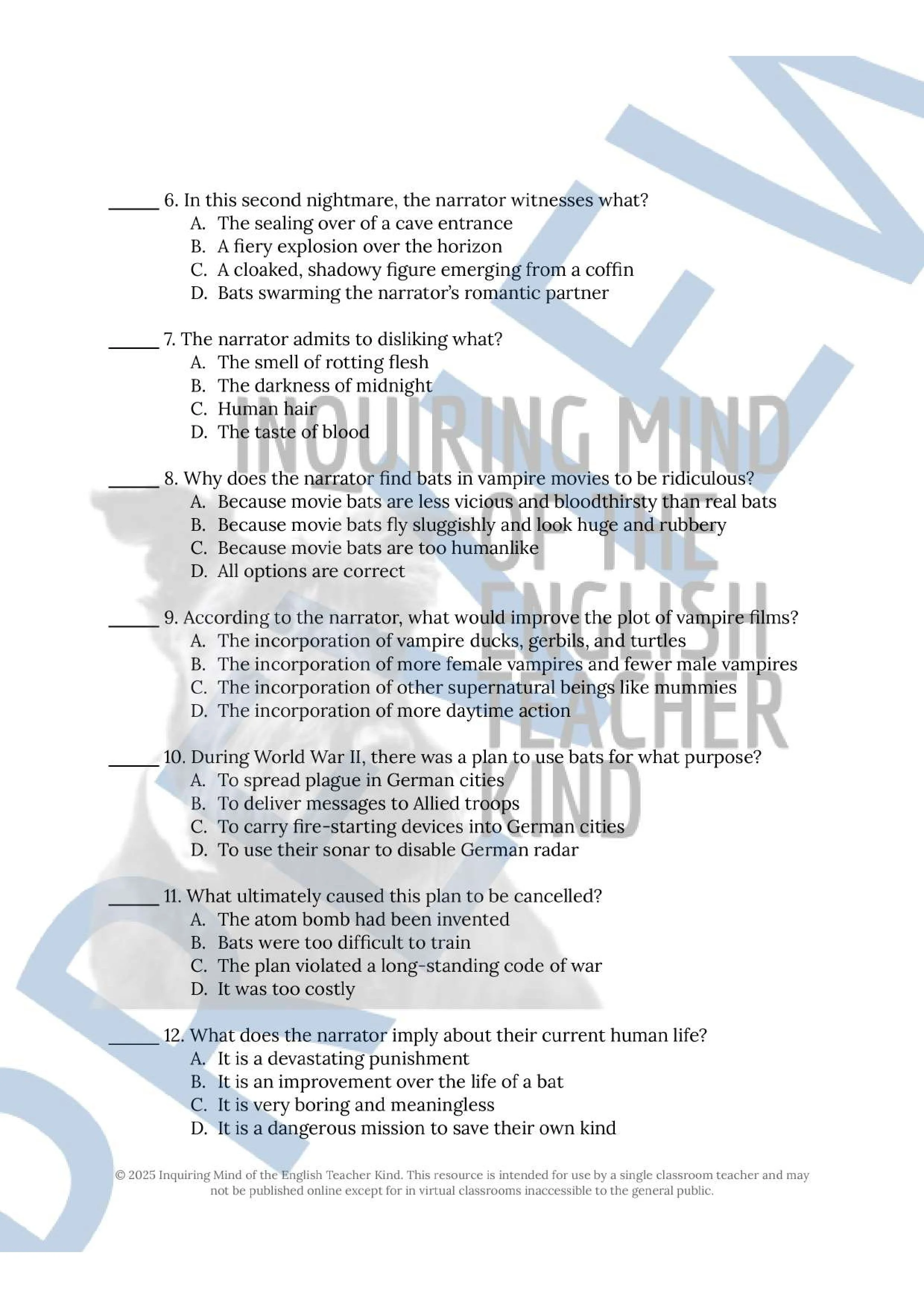
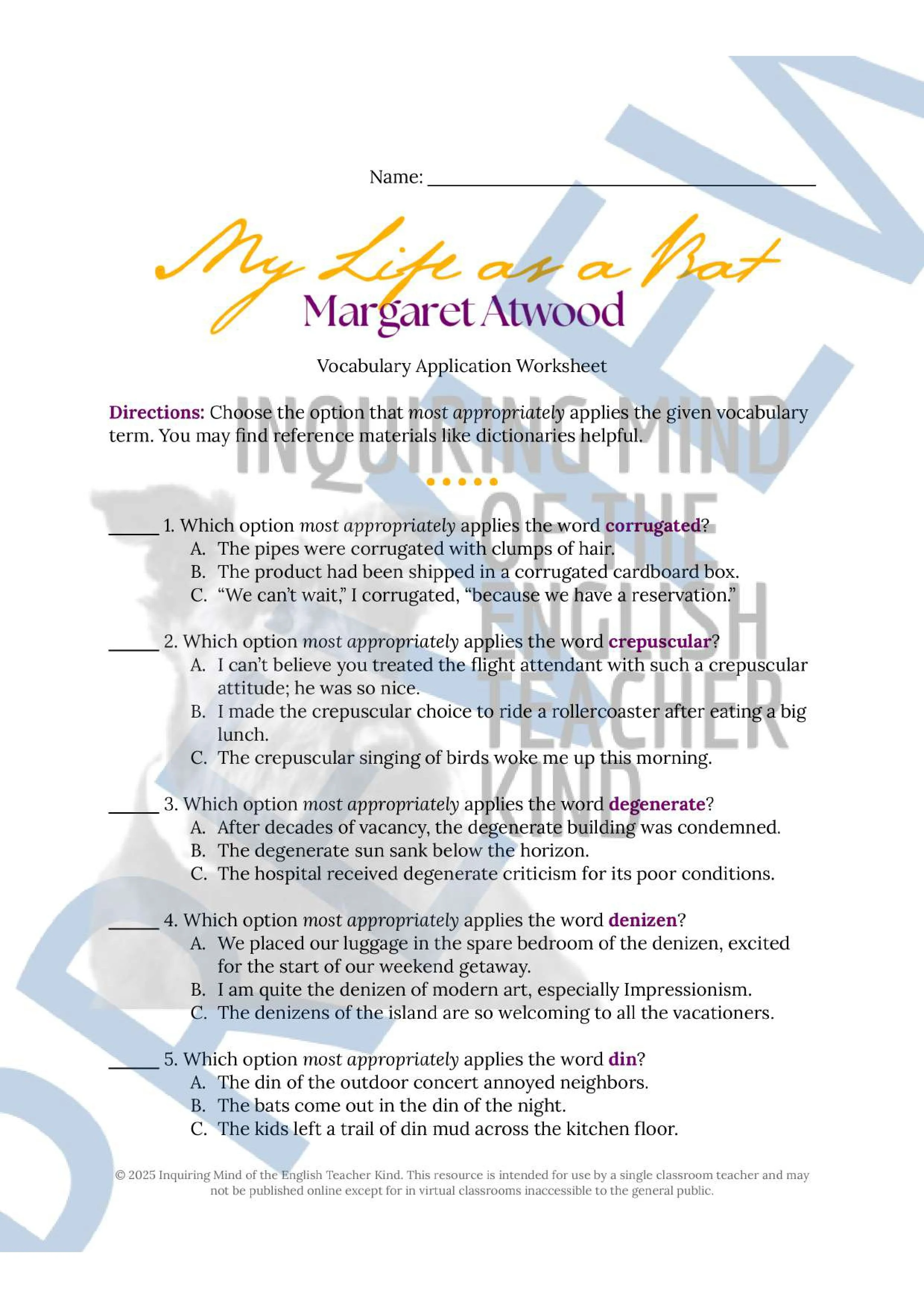
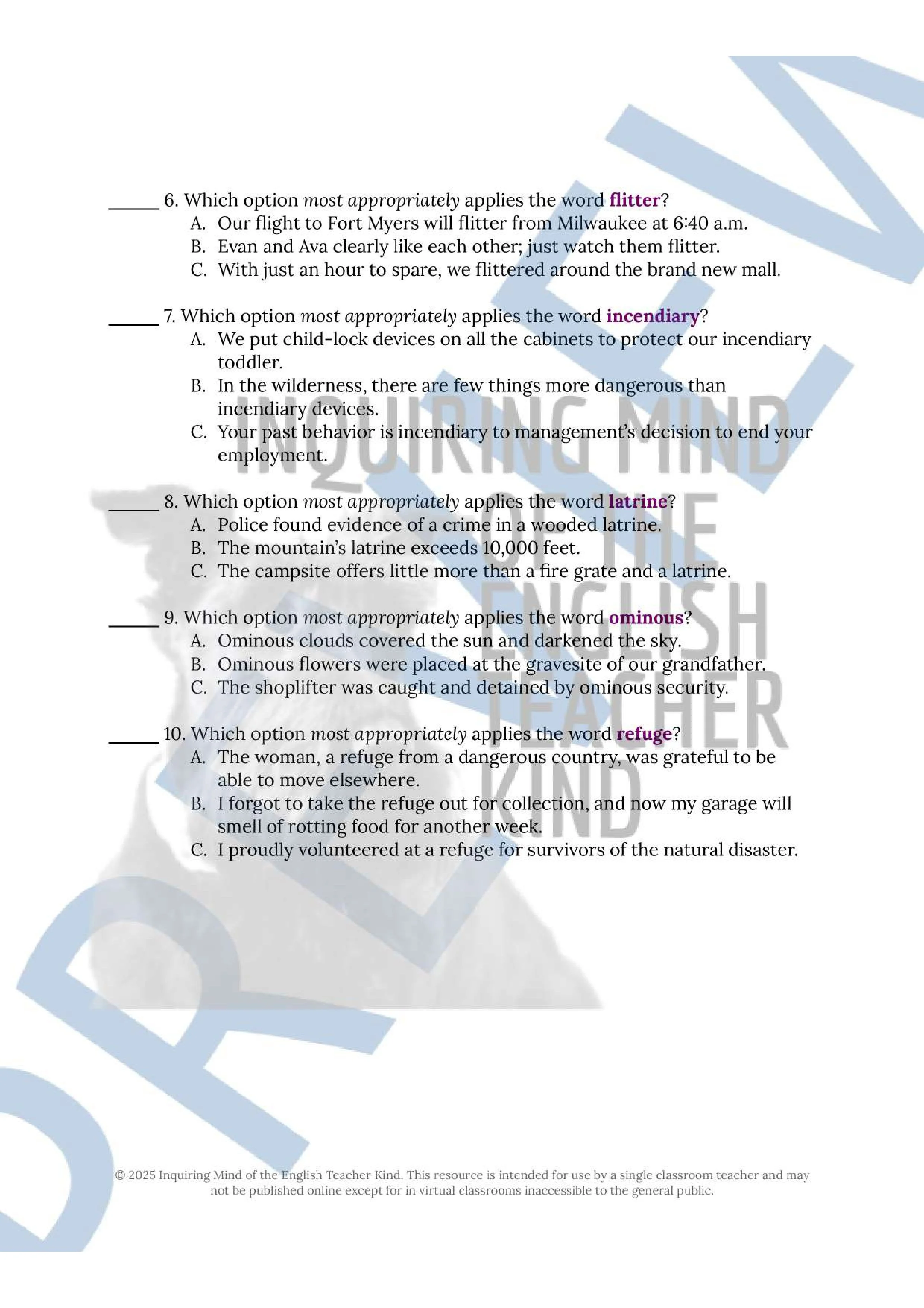
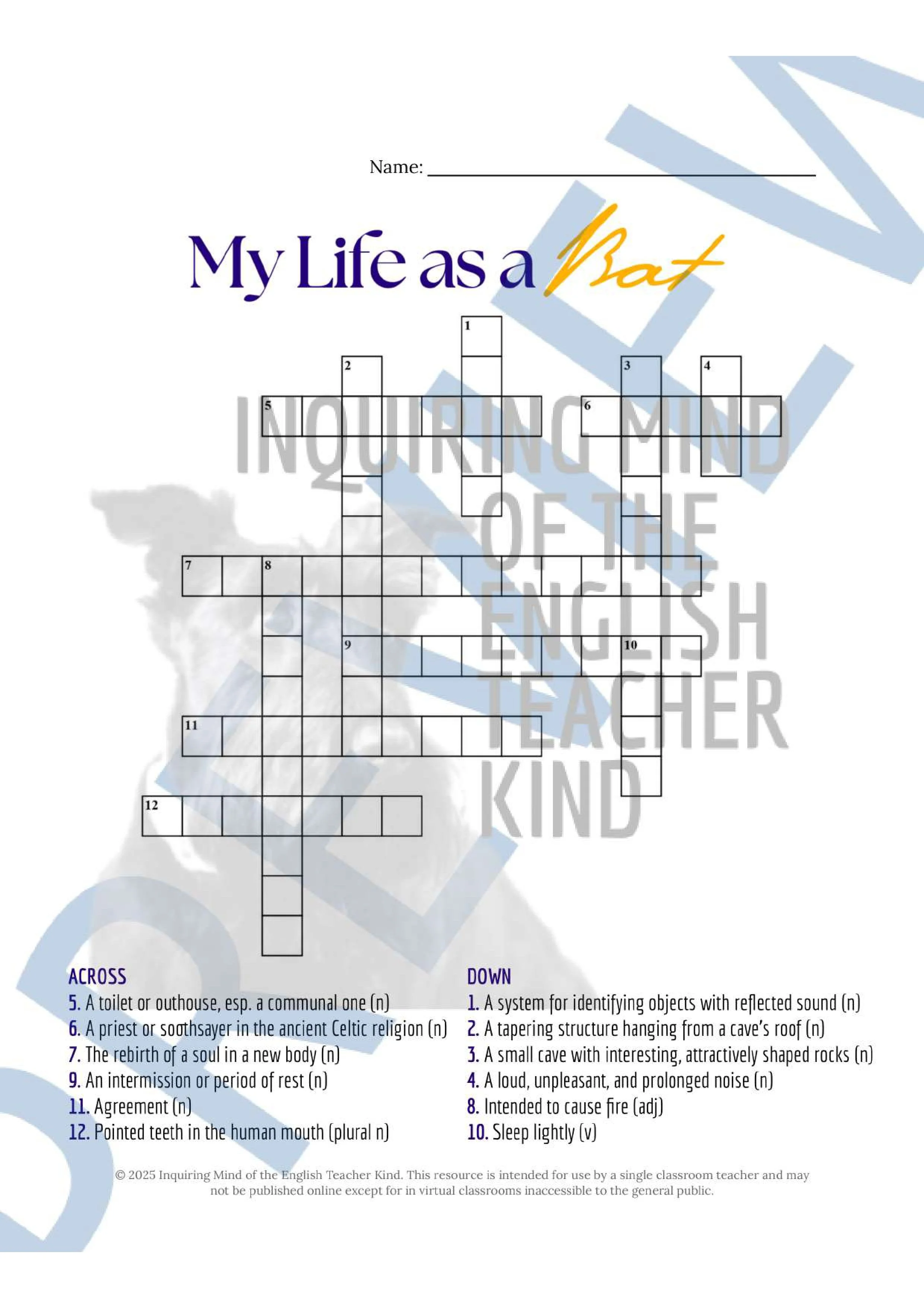
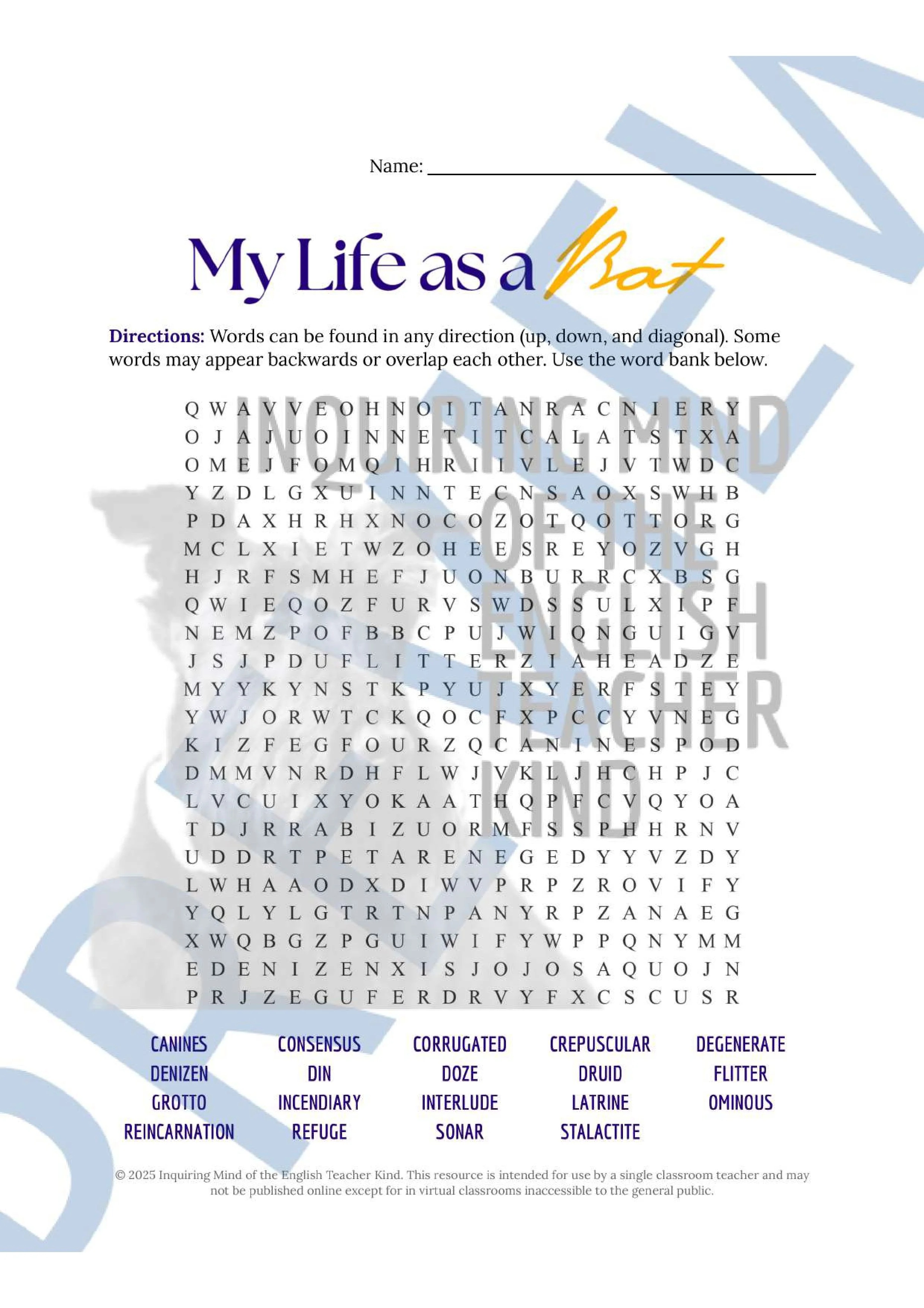
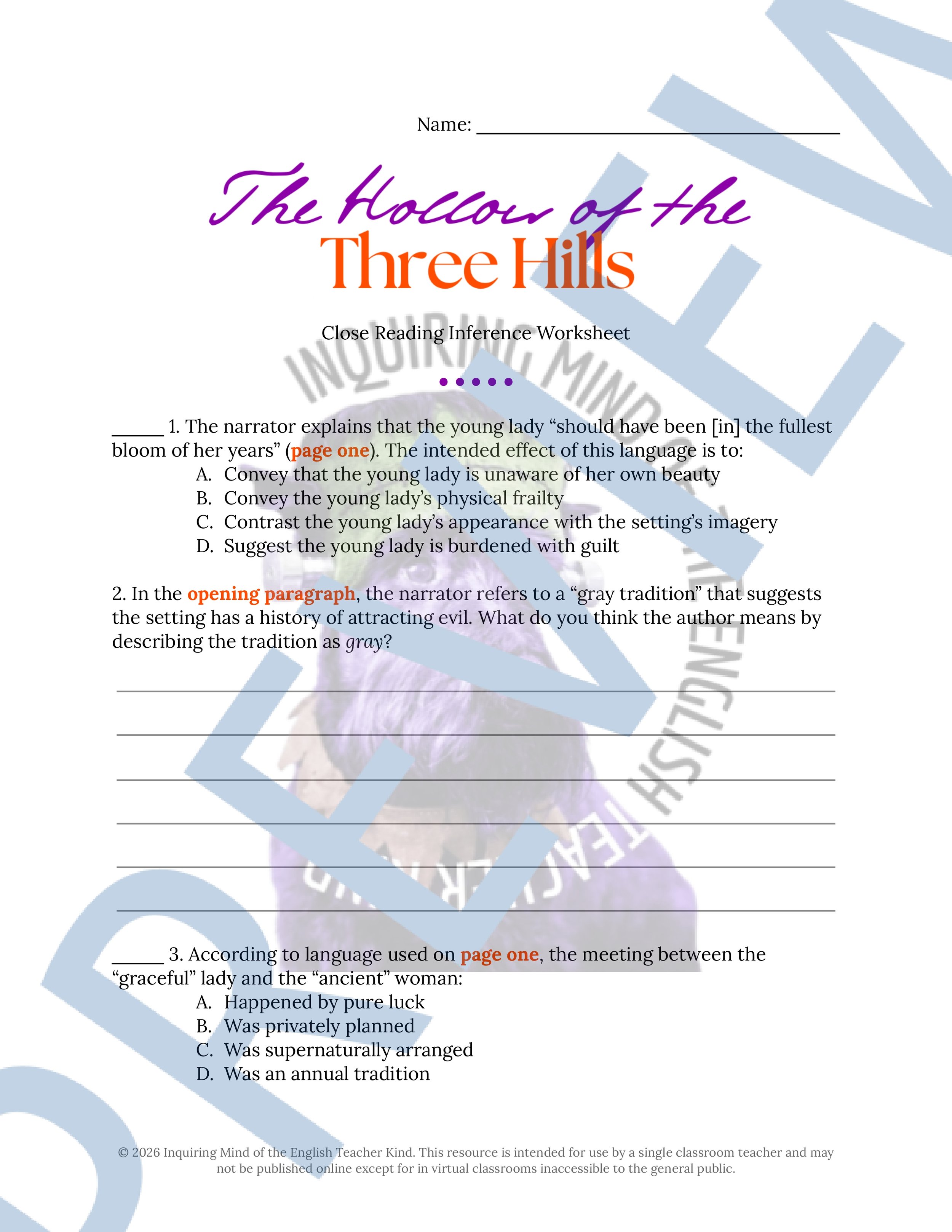
Assess reading comprehension, support vocabulary development, and facilitate analytical thinking with these activities covering Margaret Atwood's "My Life as a Bat." A plot-based quiz, a close reading analysis worksheet, a vocabulary application activity, a crossword puzzle, a word search game, and answer keys are provided. Materials are delivered in editable Word Document and printable PDF formats. (Alternatively, a Google Drive bundle option is available.) By engaging with these materials, students will:
Bolster vocabulary skills.
Articulate how the author incorporates satire into a particular passage.
Identify the main purpose of a given passage.
Interpret phrases as they are used in context (e.g., "[animals] are immune from the curse of pity" and "a glistening hush").
Discern the intended effect of figurative language in context (e.g., "dangling like toxic seaweeds").
Apply knowledge of literary devices (e.g., metaphor).
Describe tone in context.
Explore relevant themes.
Compare the lives of bats and humans based on details provided by the narrator.
Infer the reason the author concluded this piece with the passage titled "Beauty."
Support claims and inferences with relevant textual evidence.
Information about the selection:
"My Life as a Bat" by Margaret Atwood uses a non-traditional narrative structure, arranging incidents and observations in an informative essay format, and incorporates figurative language (metaphors and similes) to create vivid imagery and reinforce tone.
Resources are available for teaching short stories of various genres:
Assess reading comprehension, support vocabulary development, and facilitate analytical thinking with these activities covering Margaret Atwood's "My Life as a Bat." A plot-based quiz, a close reading analysis worksheet, a vocabulary application activity, a crossword puzzle, a word search game, and answer keys are provided. Materials are delivered in editable Word Document and printable PDF formats. (Alternatively, a Google Drive bundle option is available.) By engaging with these materials, students will:
Bolster vocabulary skills.
Articulate how the author incorporates satire into a particular passage.
Identify the main purpose of a given passage.
Interpret phrases as they are used in context (e.g., "[animals] are immune from the curse of pity" and "a glistening hush").
Discern the intended effect of figurative language in context (e.g., "dangling like toxic seaweeds").
Apply knowledge of literary devices (e.g., metaphor).
Describe tone in context.
Explore relevant themes.
Compare the lives of bats and humans based on details provided by the narrator.
Infer the reason the author concluded this piece with the passage titled "Beauty."
Support claims and inferences with relevant textual evidence.
Information about the selection:
"My Life as a Bat" by Margaret Atwood uses a non-traditional narrative structure, arranging incidents and observations in an informative essay format, and incorporates figurative language (metaphors and similes) to create vivid imagery and reinforce tone.
Resources are available for teaching short stories of various genres:
Preview this resource:
Assess reading comprehension, support vocabulary development, and facilitate analytical thinking with these activities covering Margaret Atwood's "My Life as a Bat." A plot-based quiz, a close reading analysis worksheet, a vocabulary application activity, a crossword puzzle, a word search game, and answer keys are provided.