Image 1 of 11
Image 2 of 11
Image 3 of 11
Image 4 of 11
Image 5 of 11
Image 6 of 11
Image 7 of 11
Image 8 of 11
Image 9 of 11
Image 10 of 11
Image 11 of 11
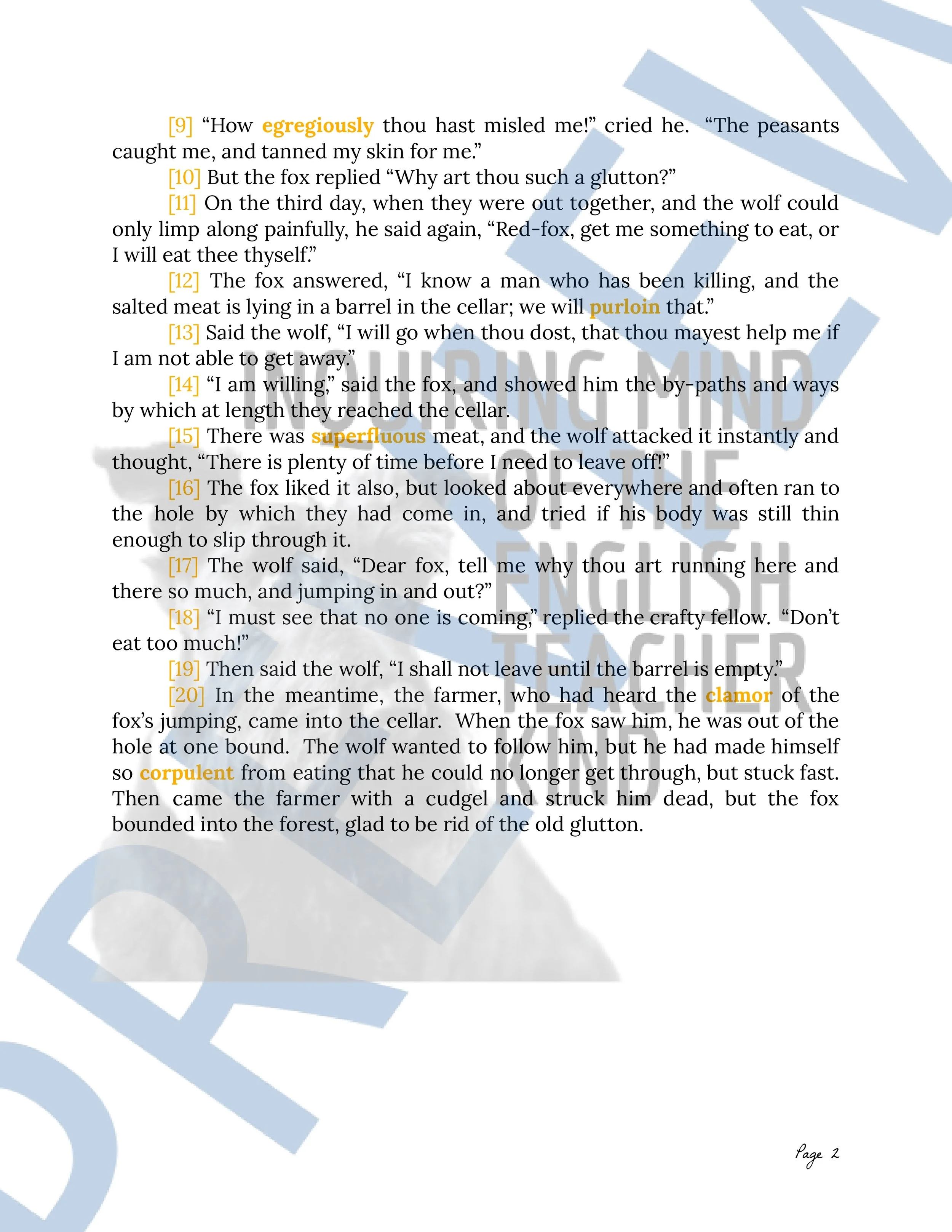
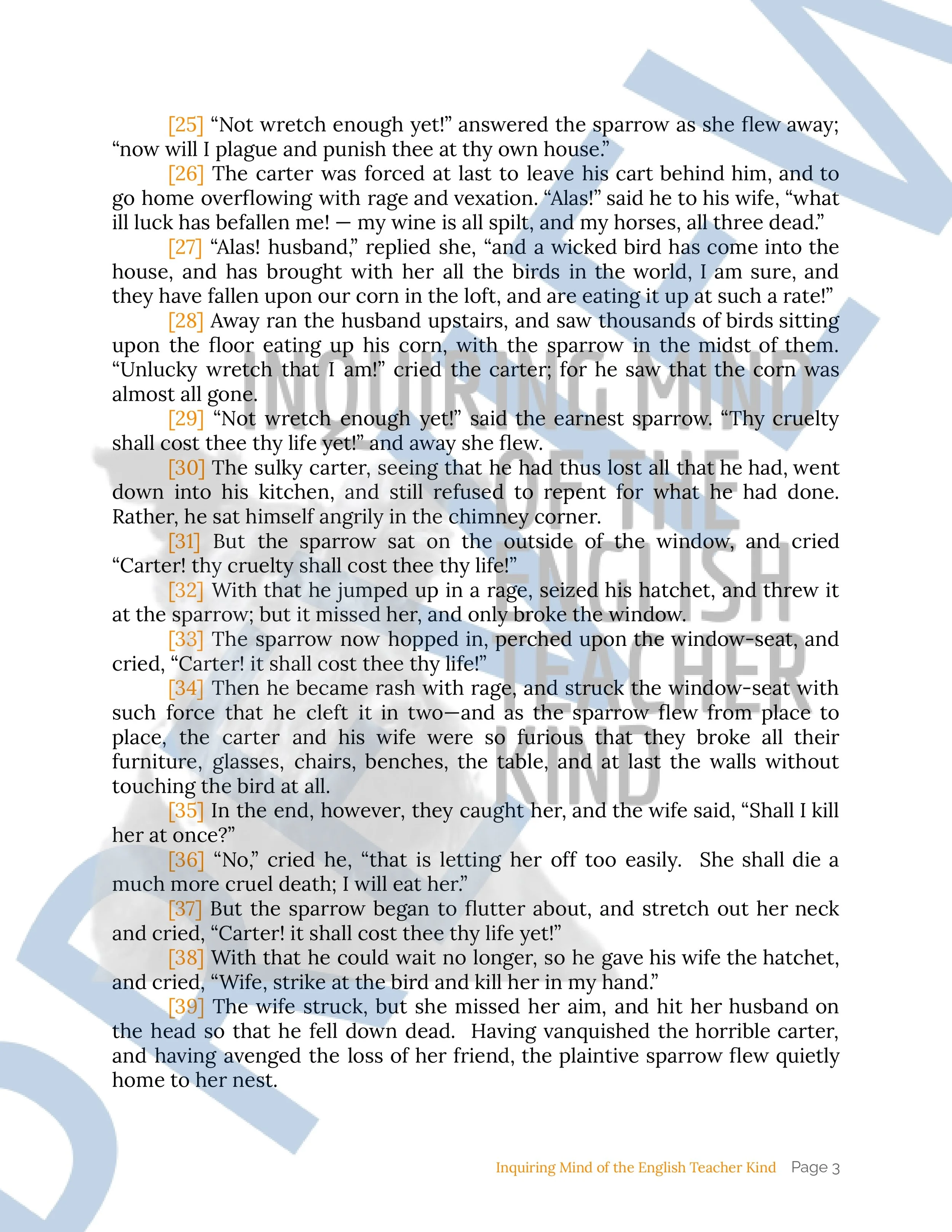
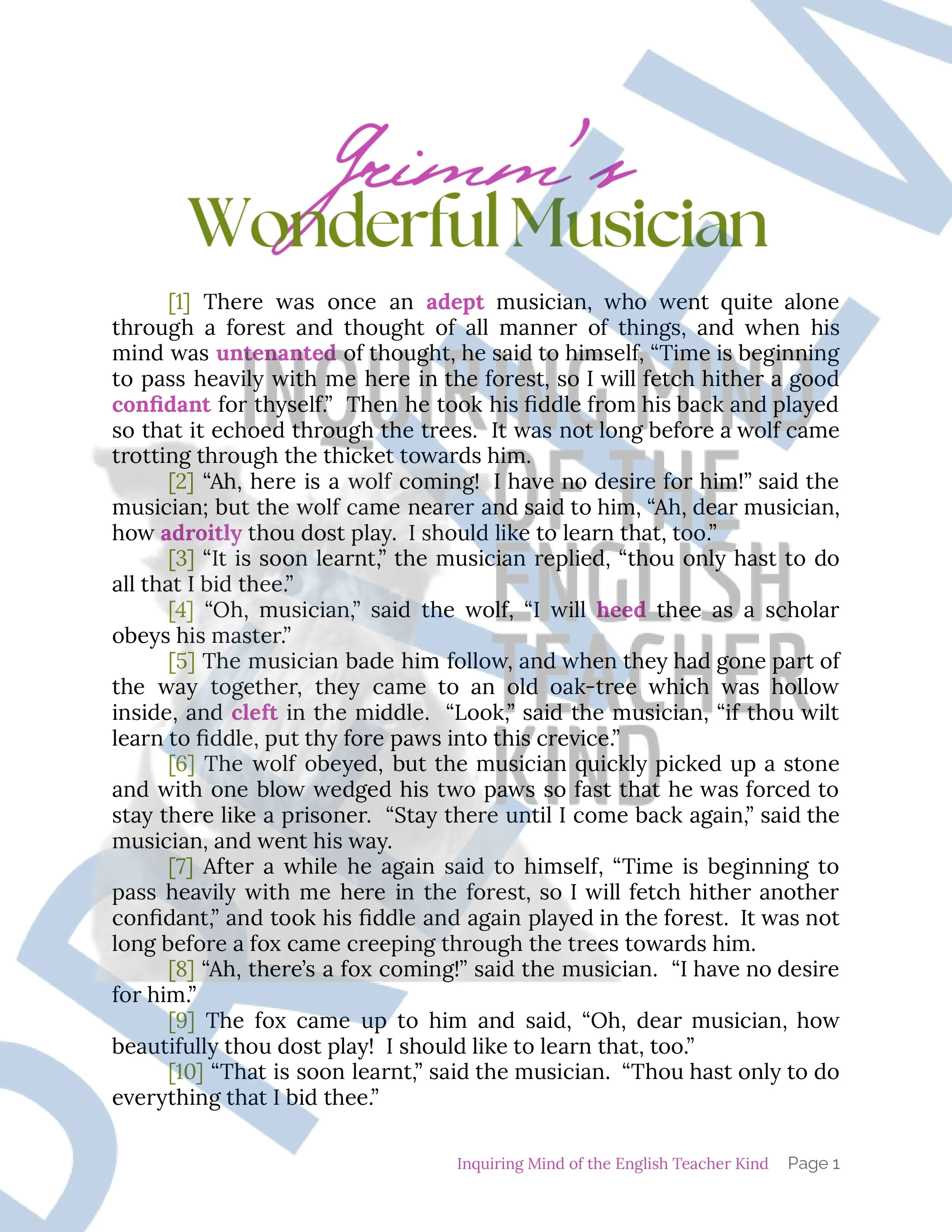
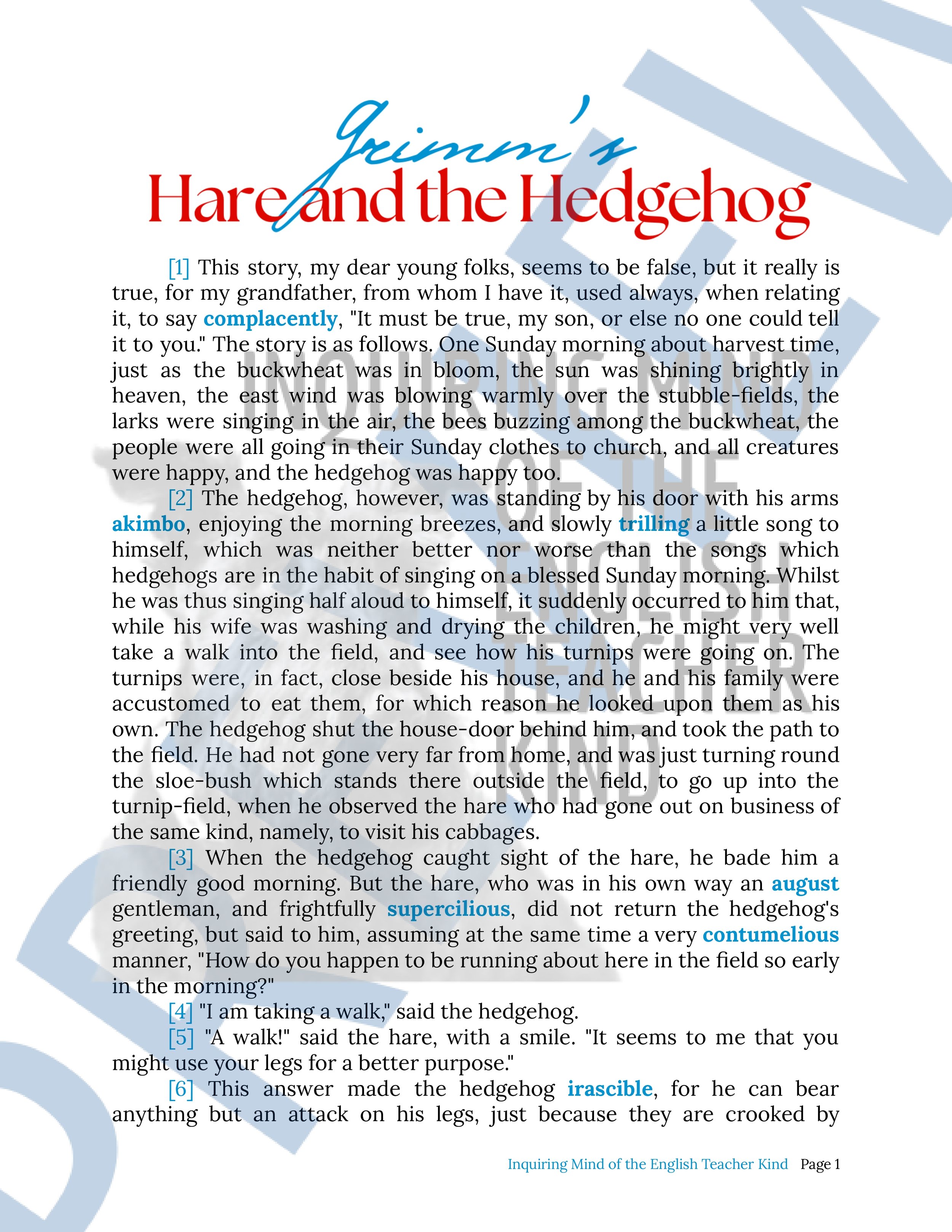
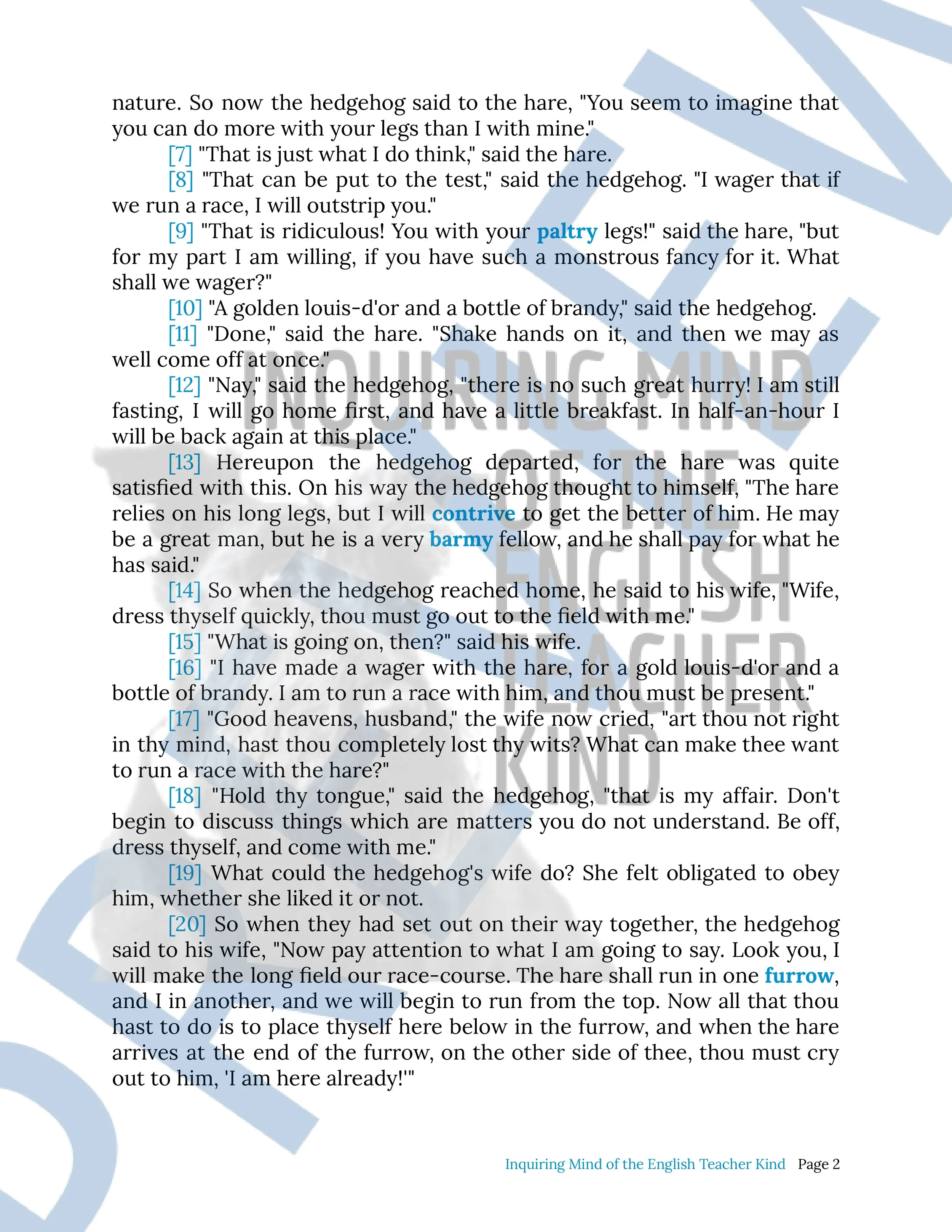
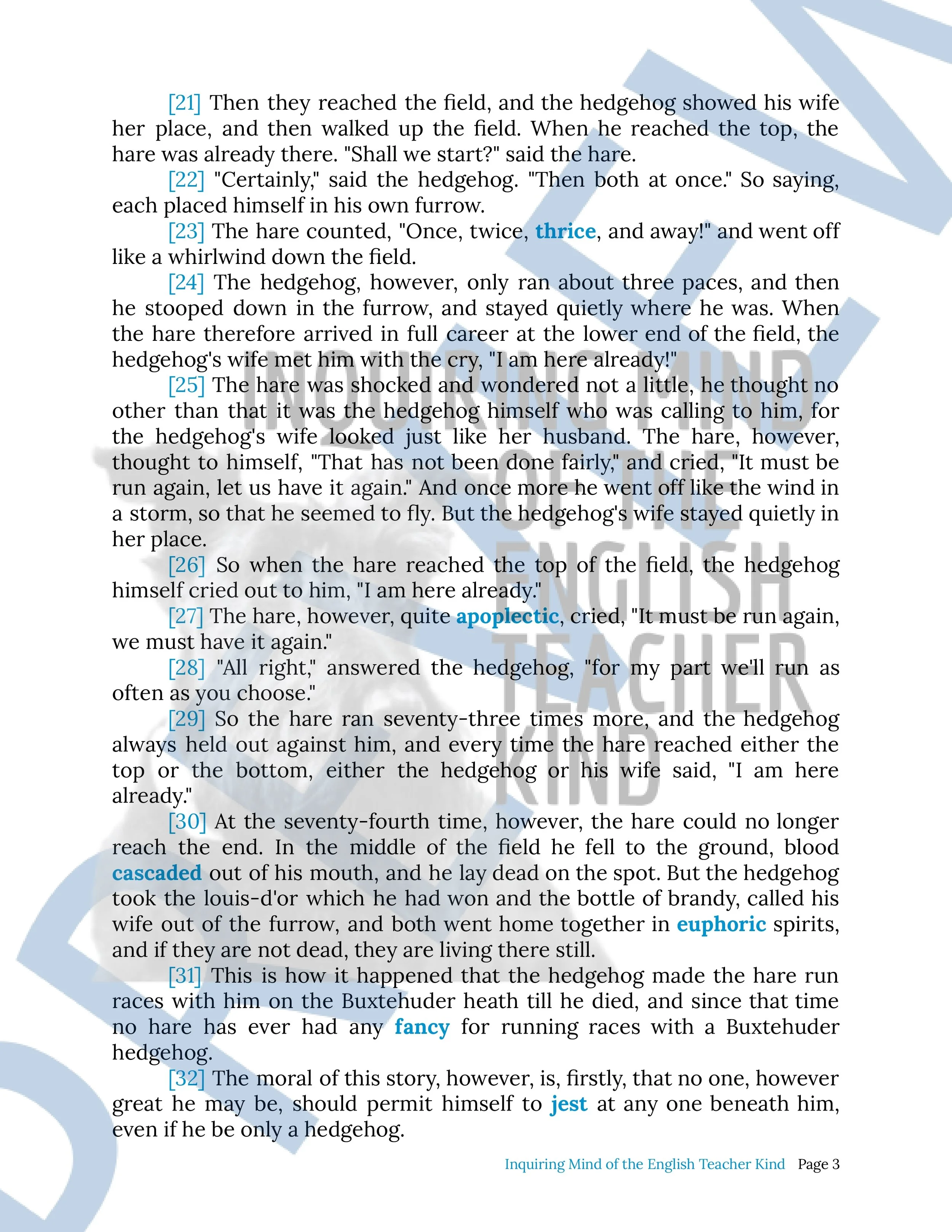
"The Wolf and the Fox" Quiz, Worksheets, and Vocabulary Games | Grimm's Fairy Tale Activities
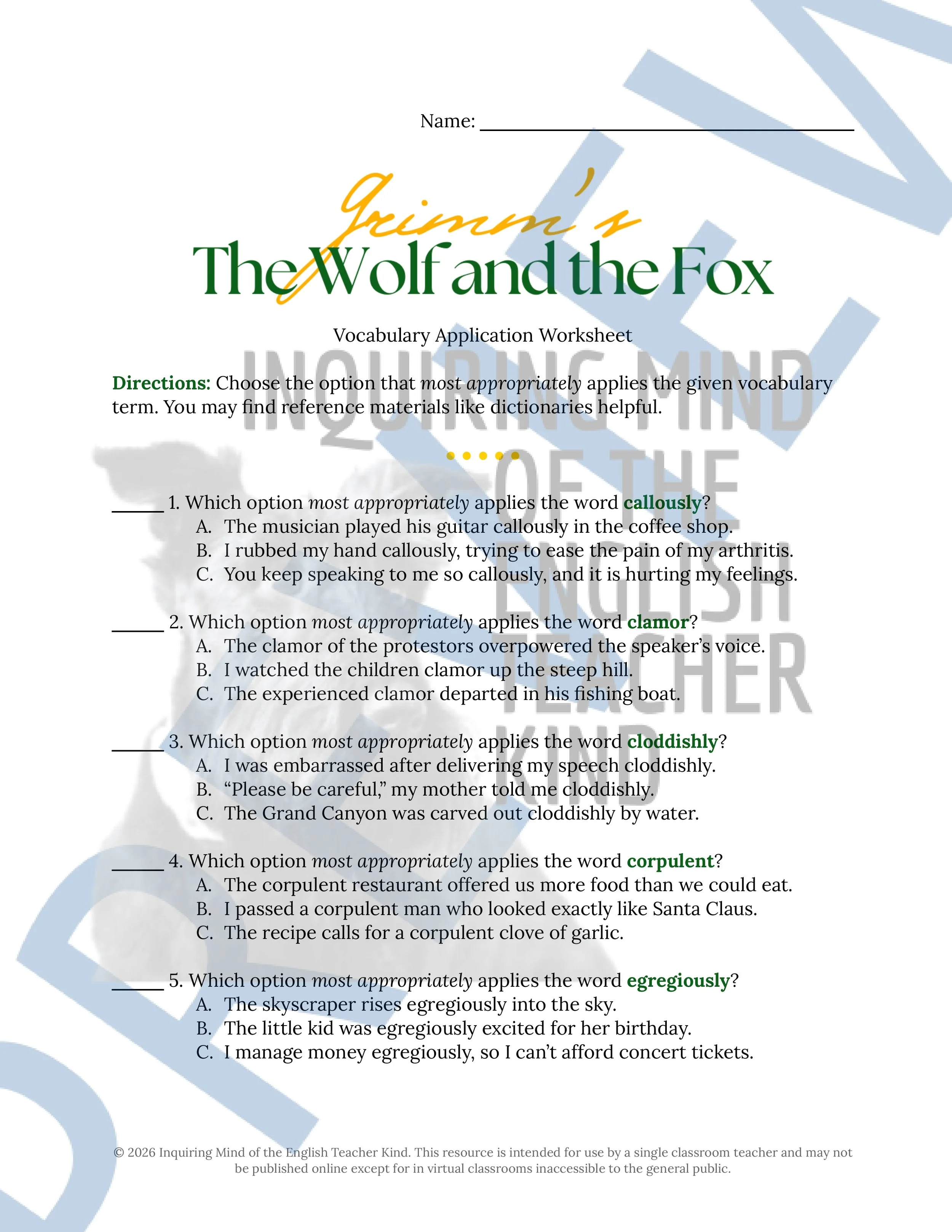
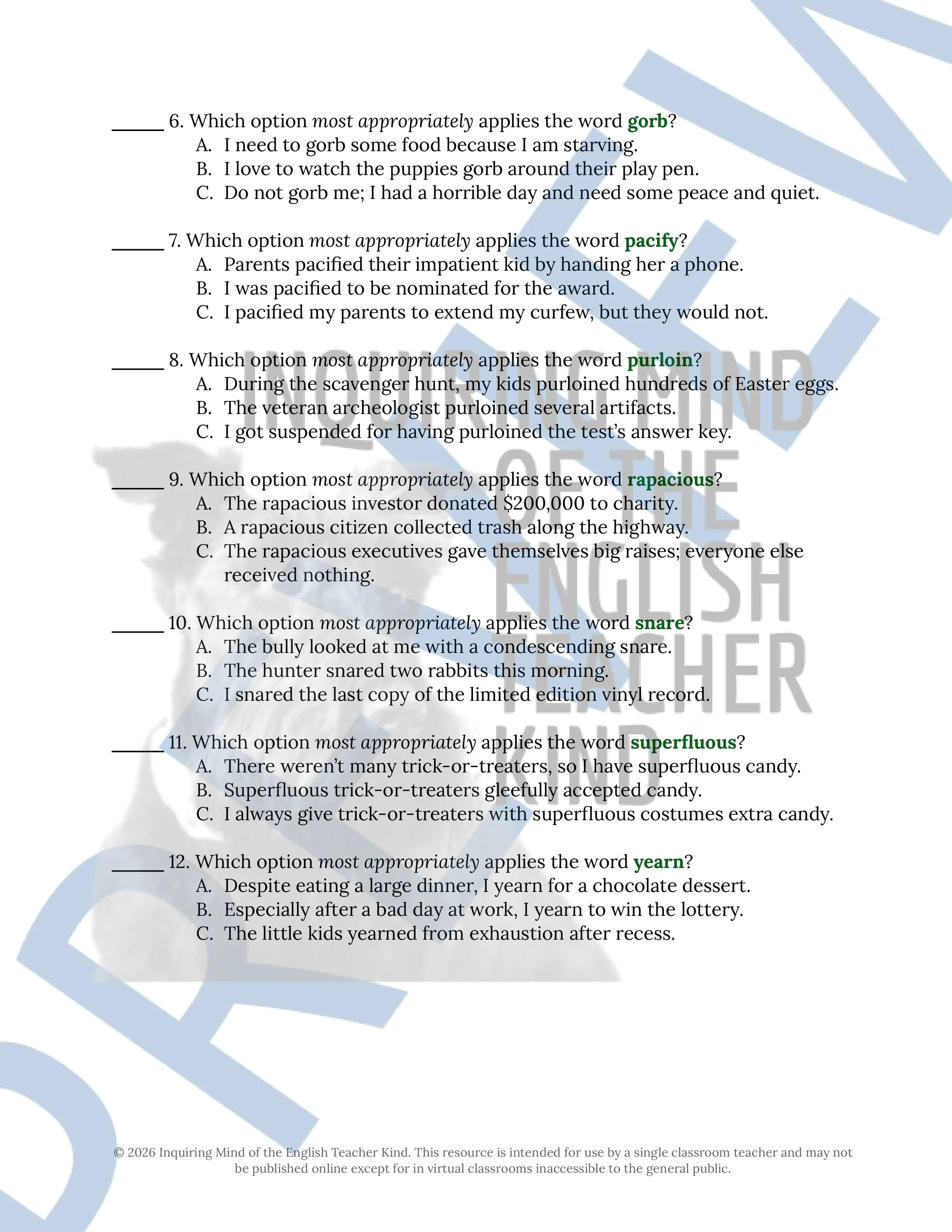
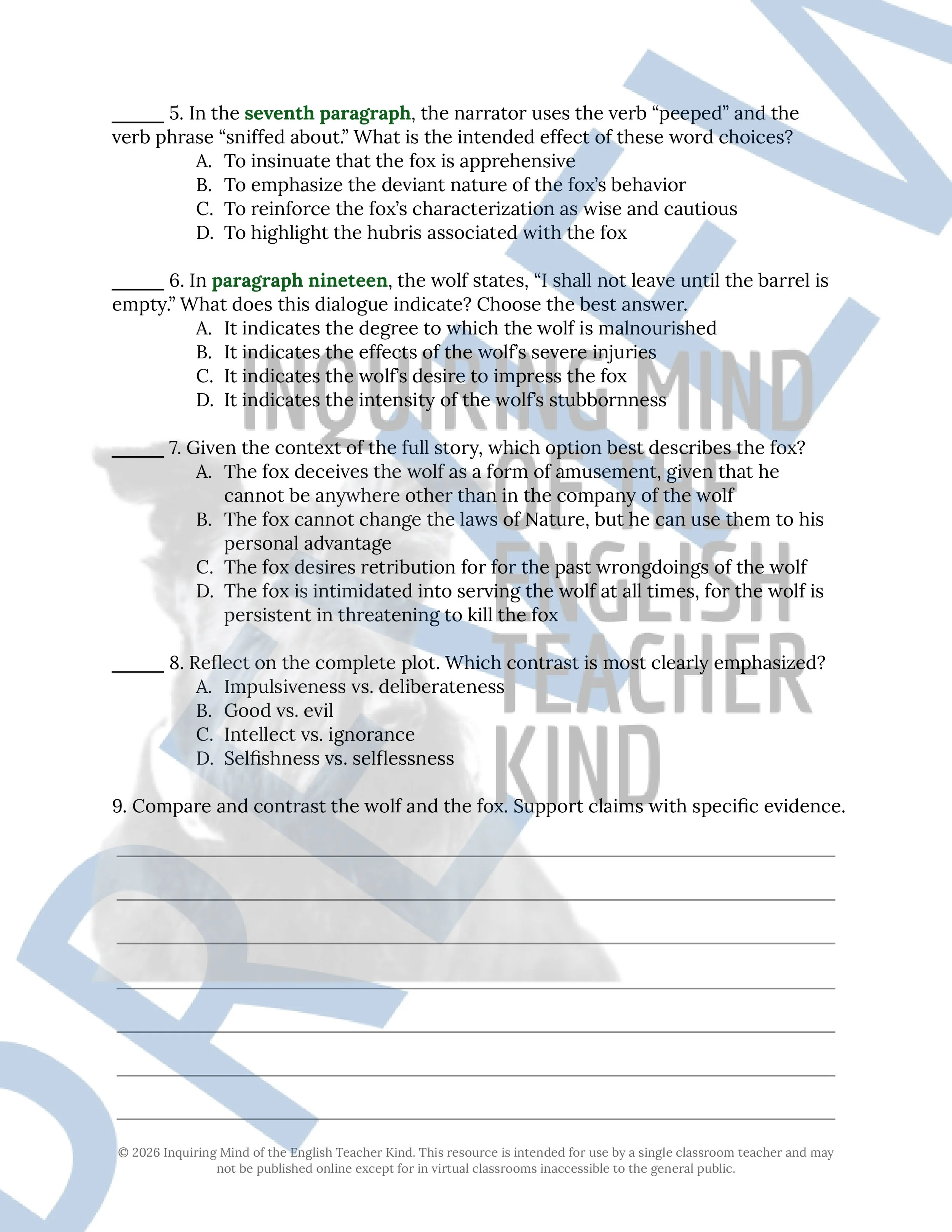
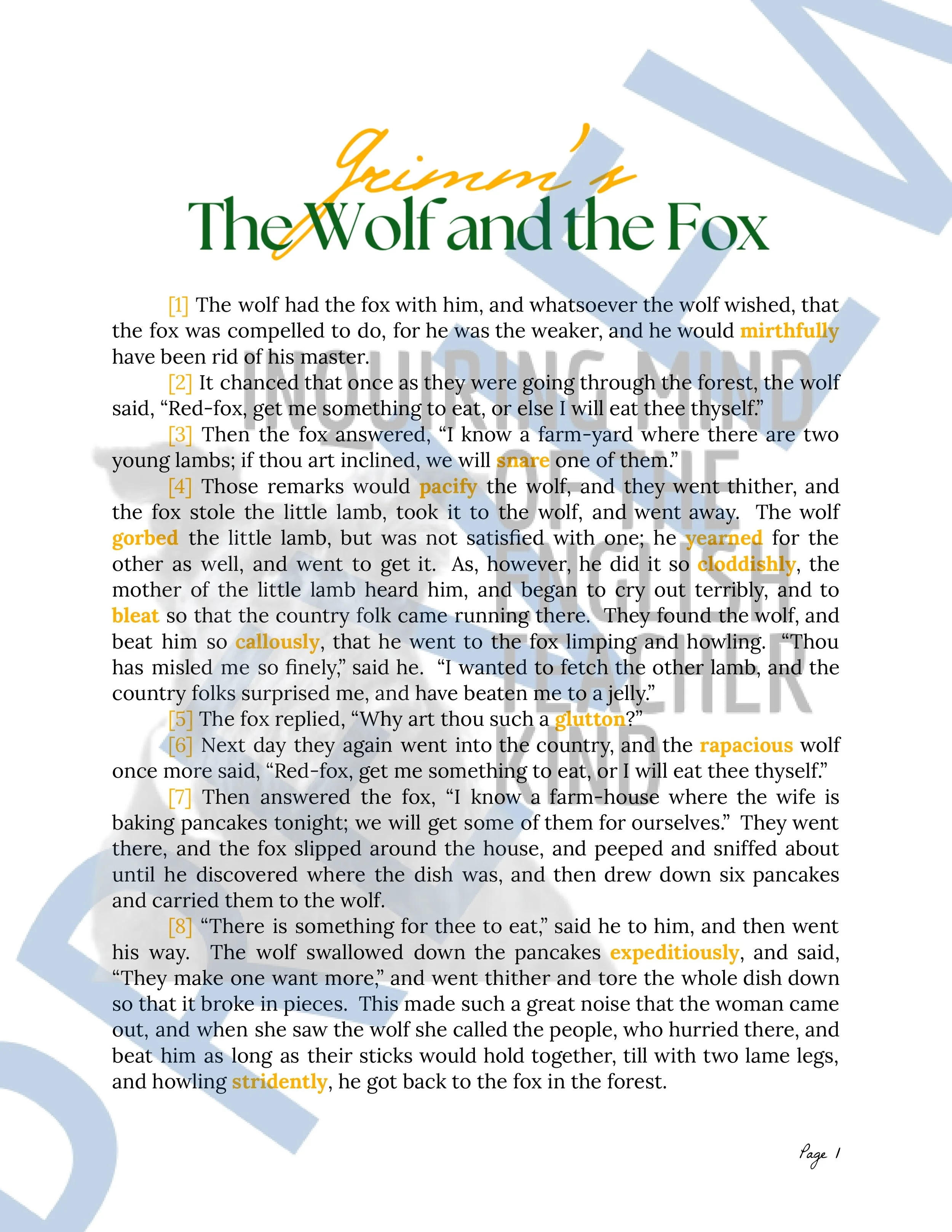
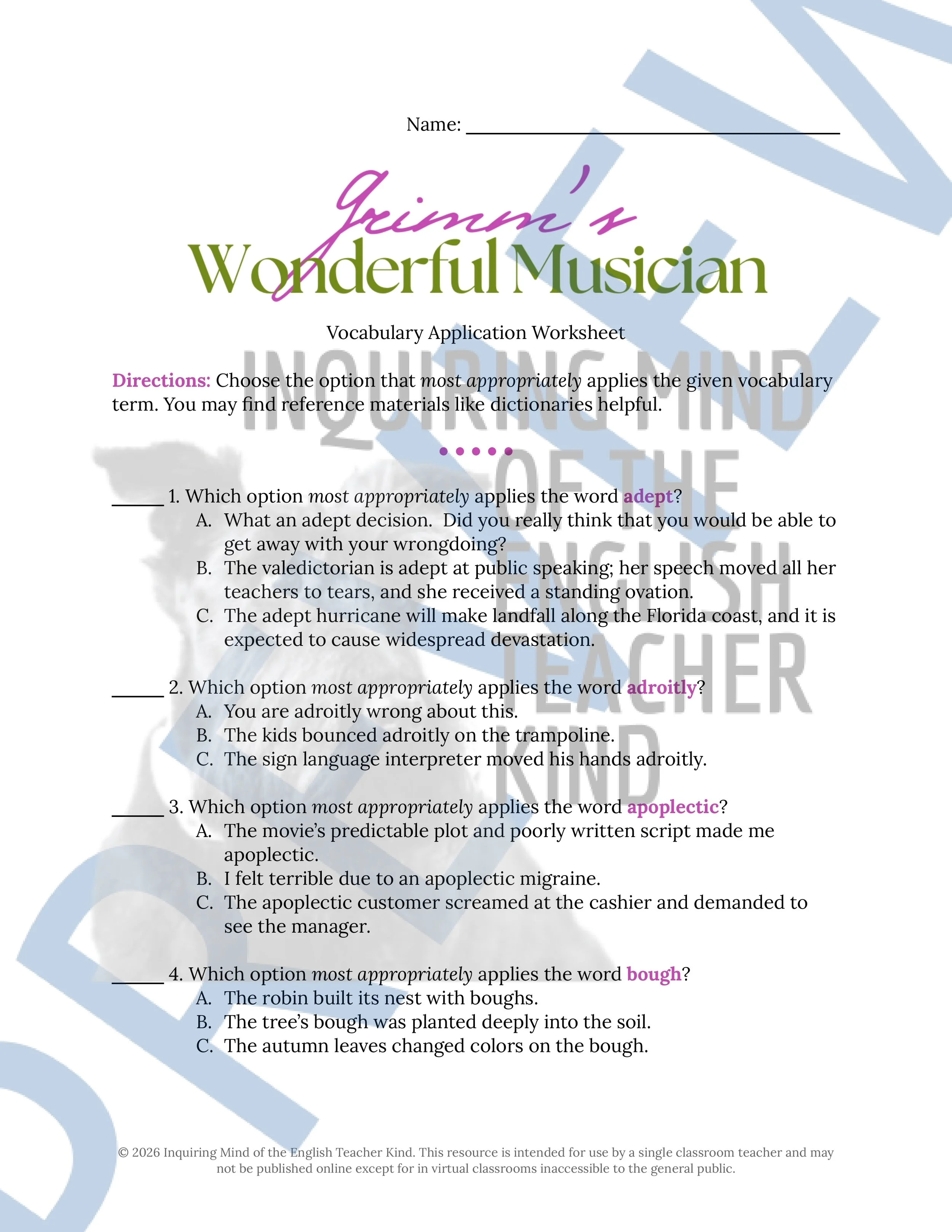
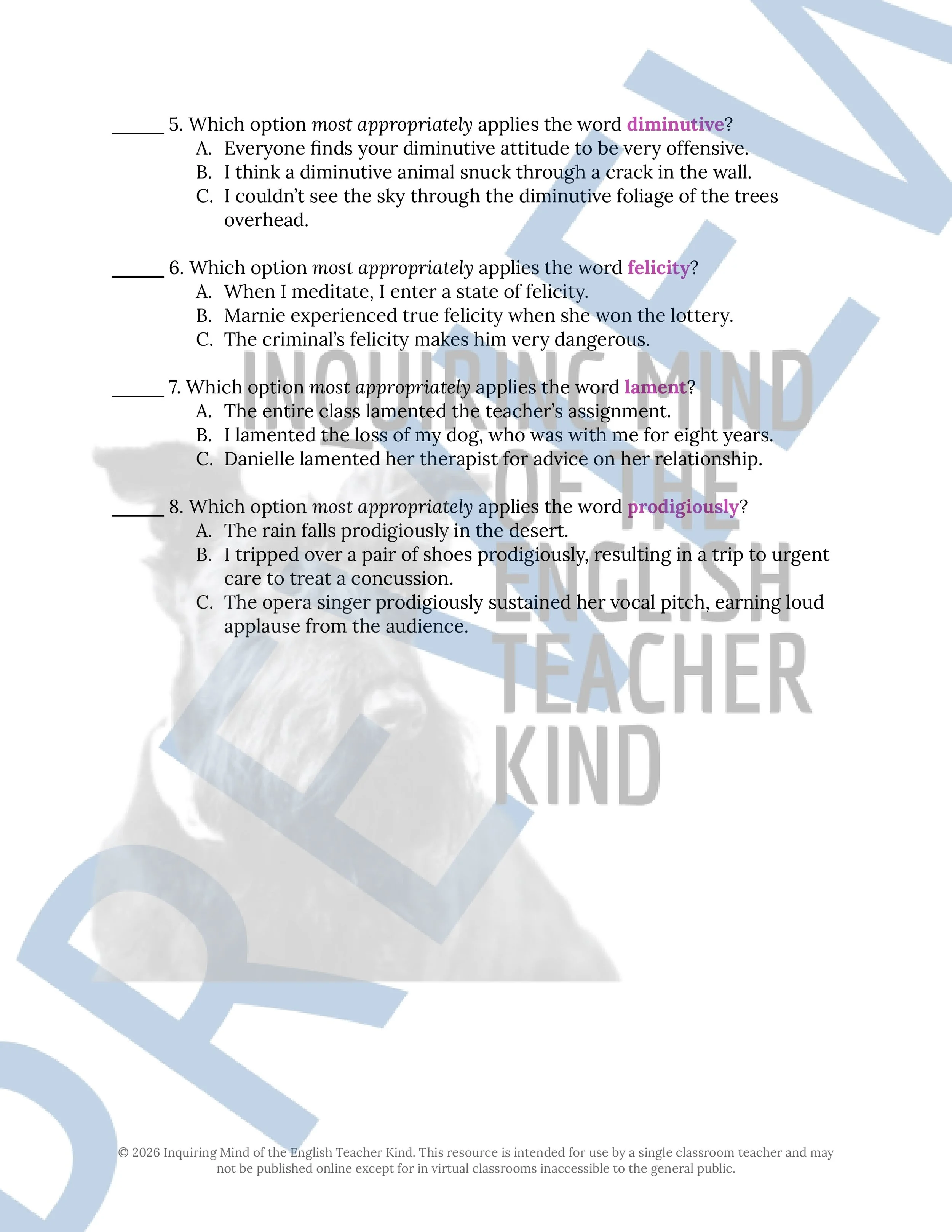
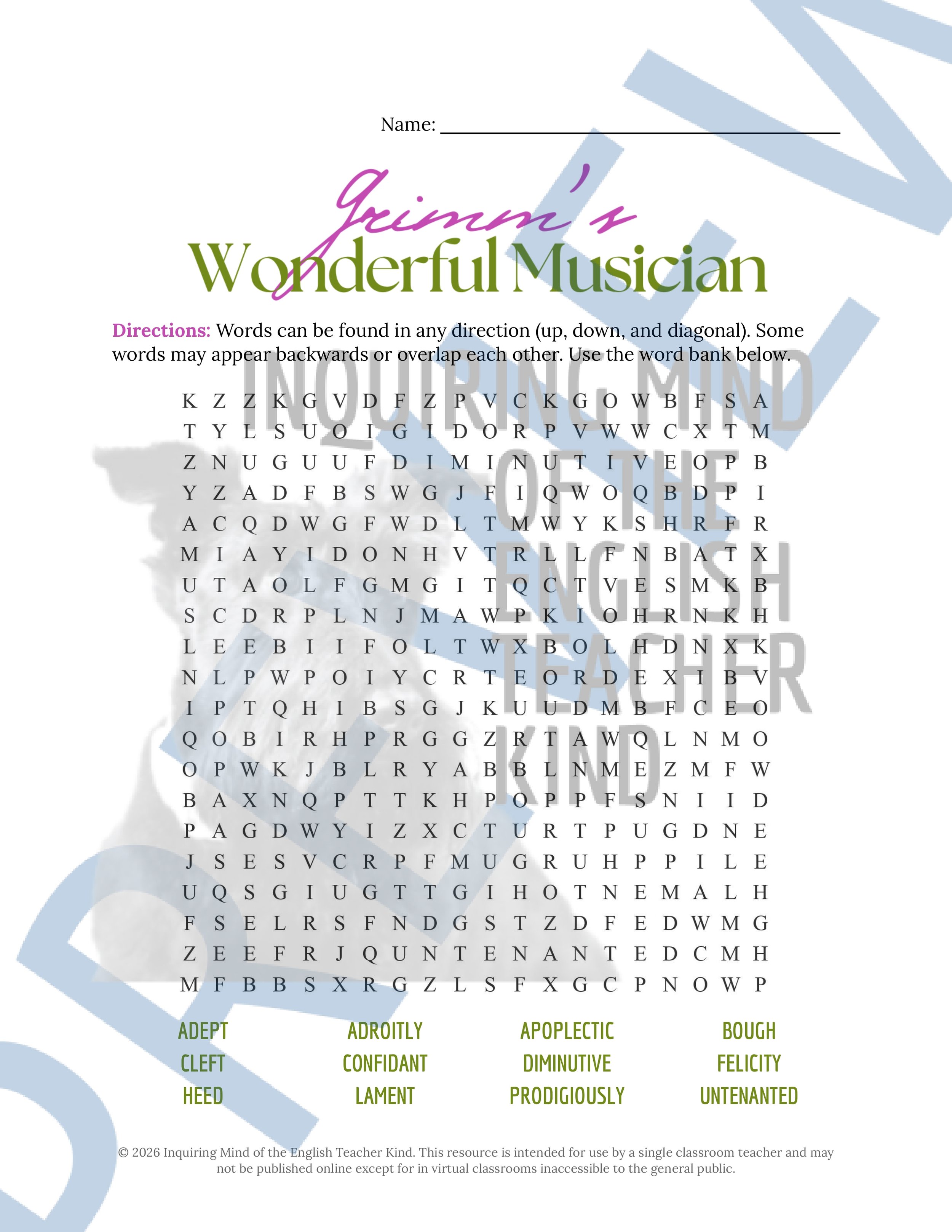
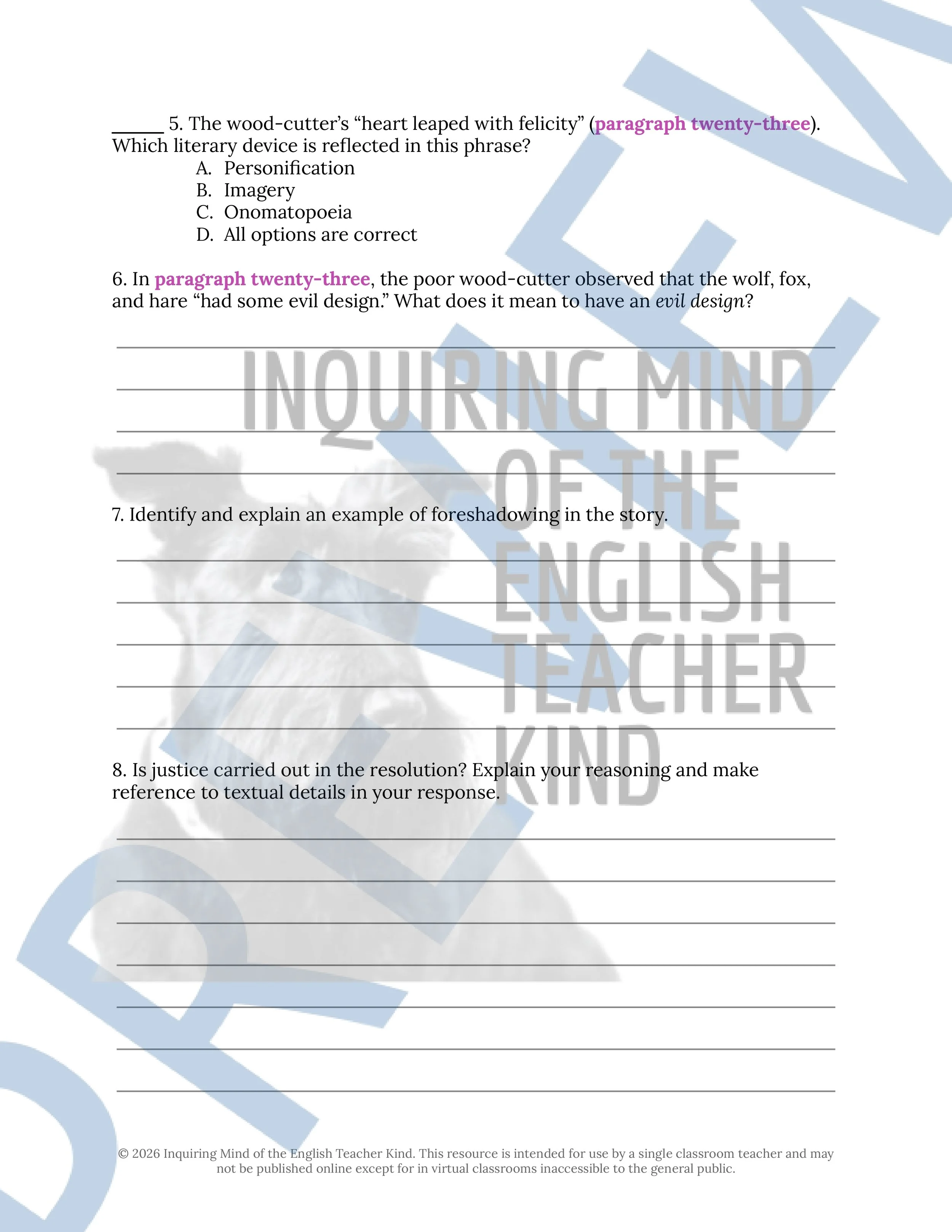
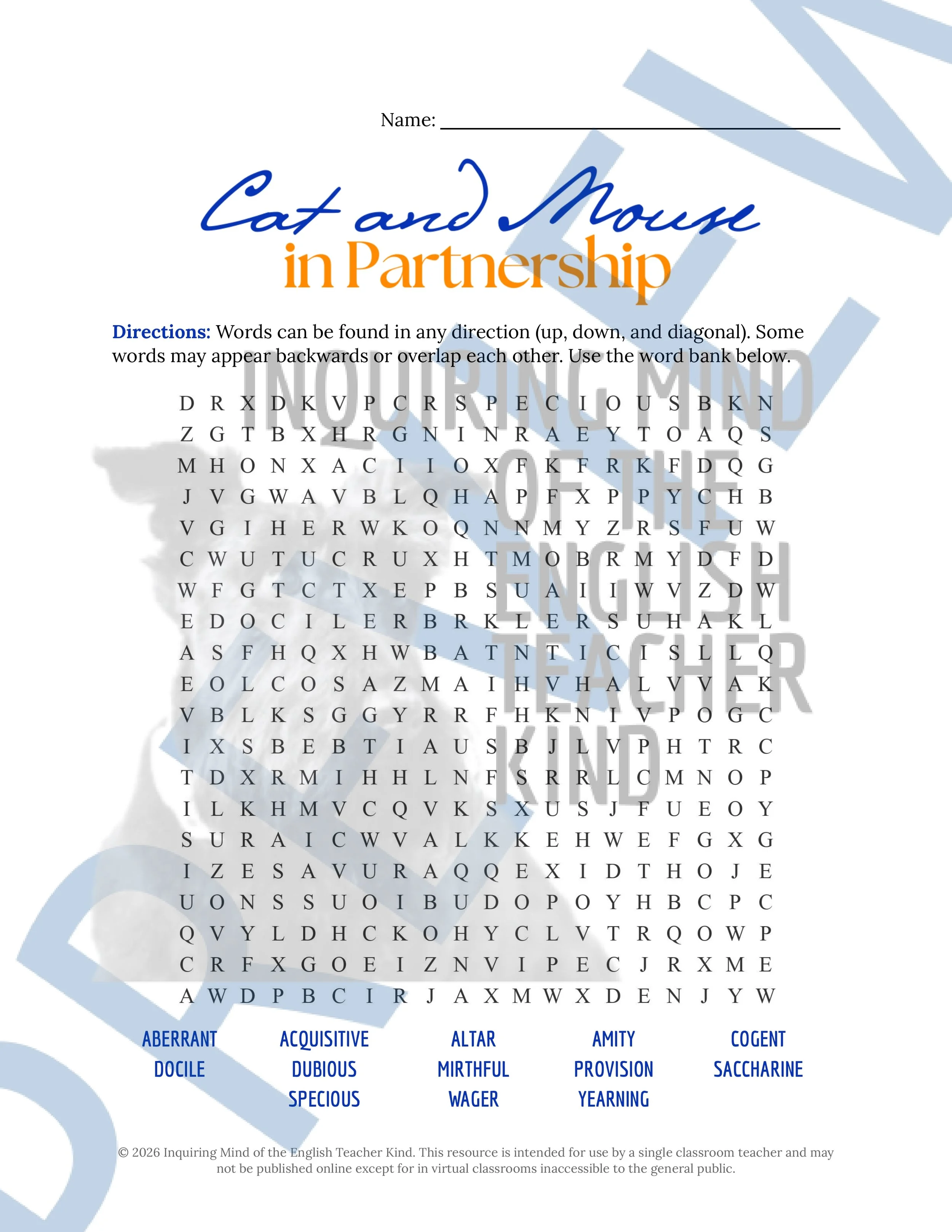
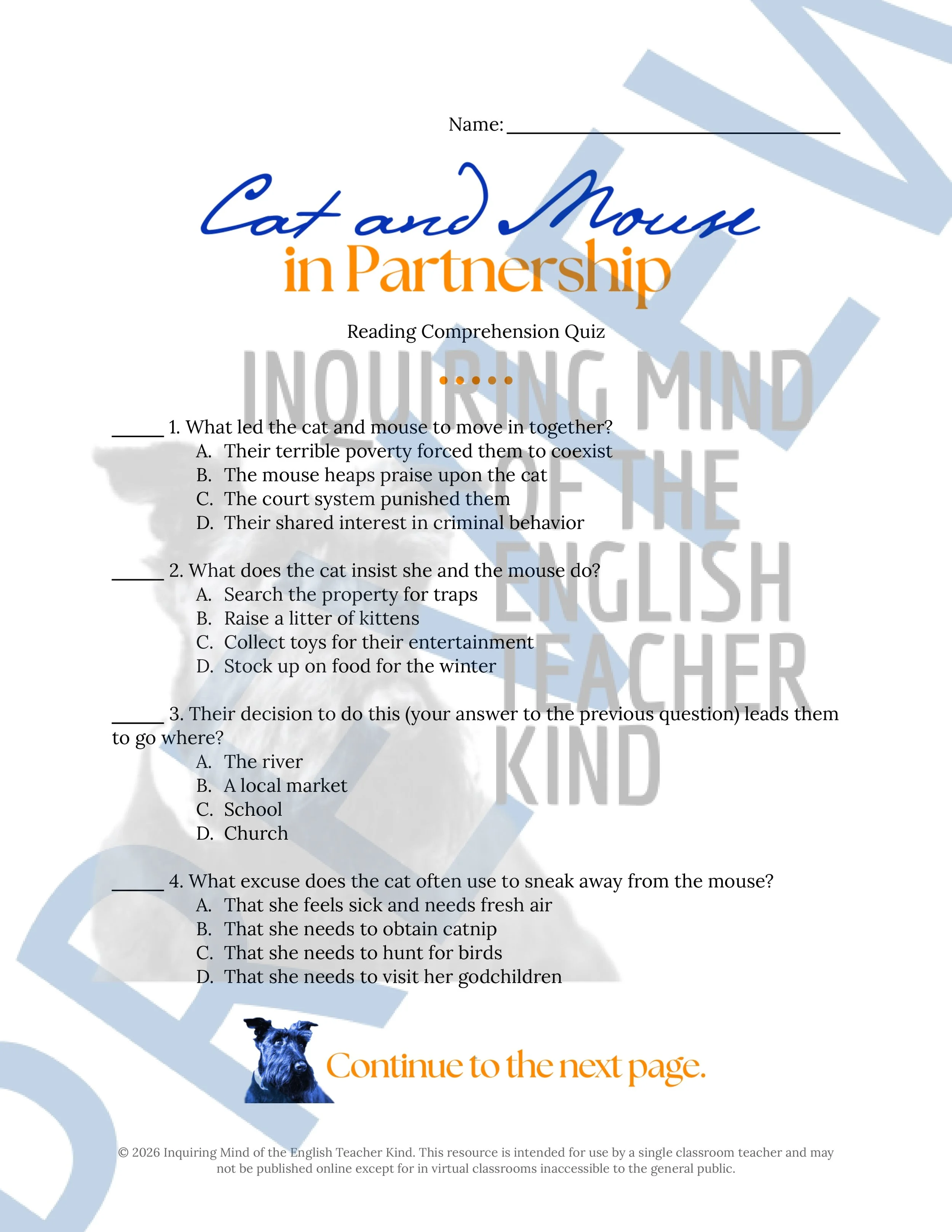
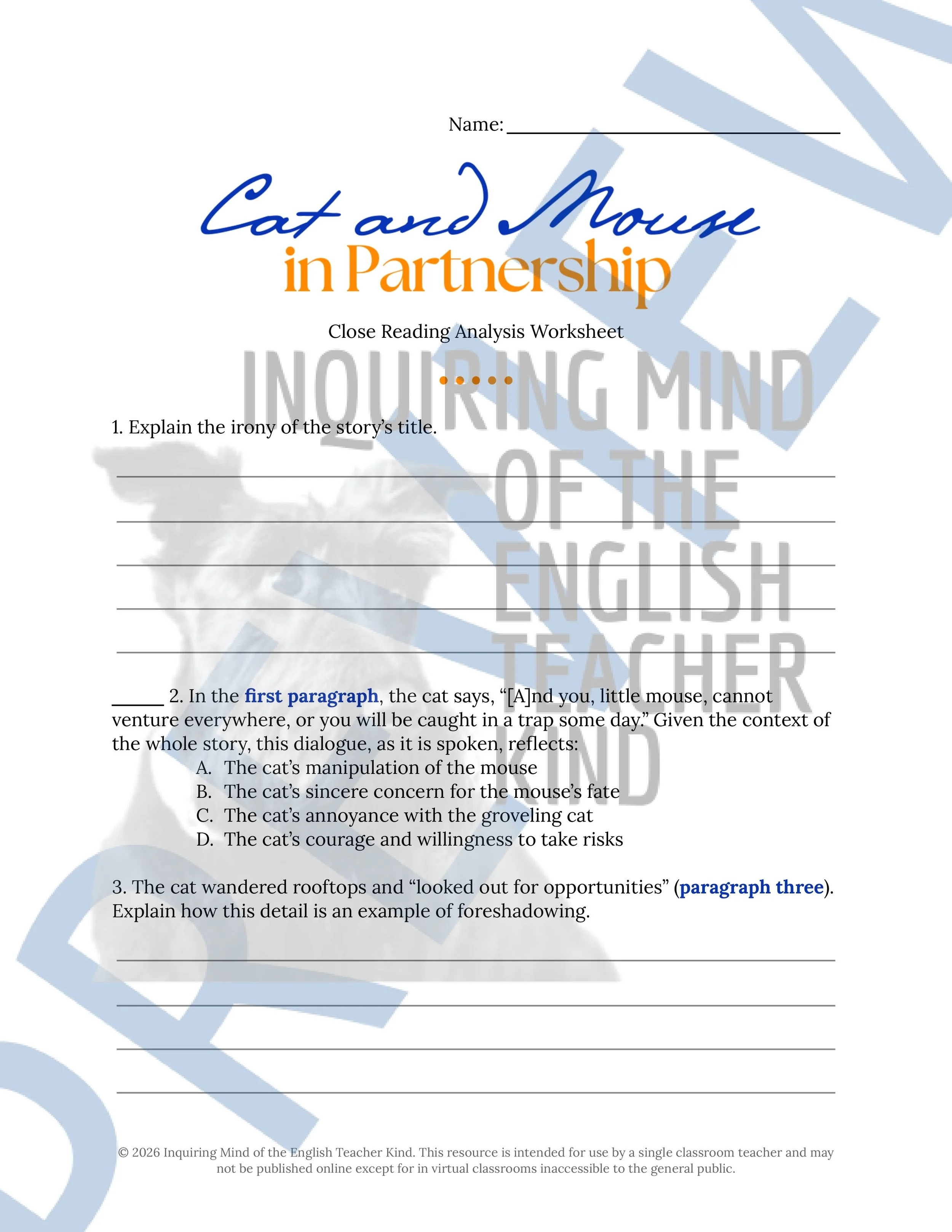
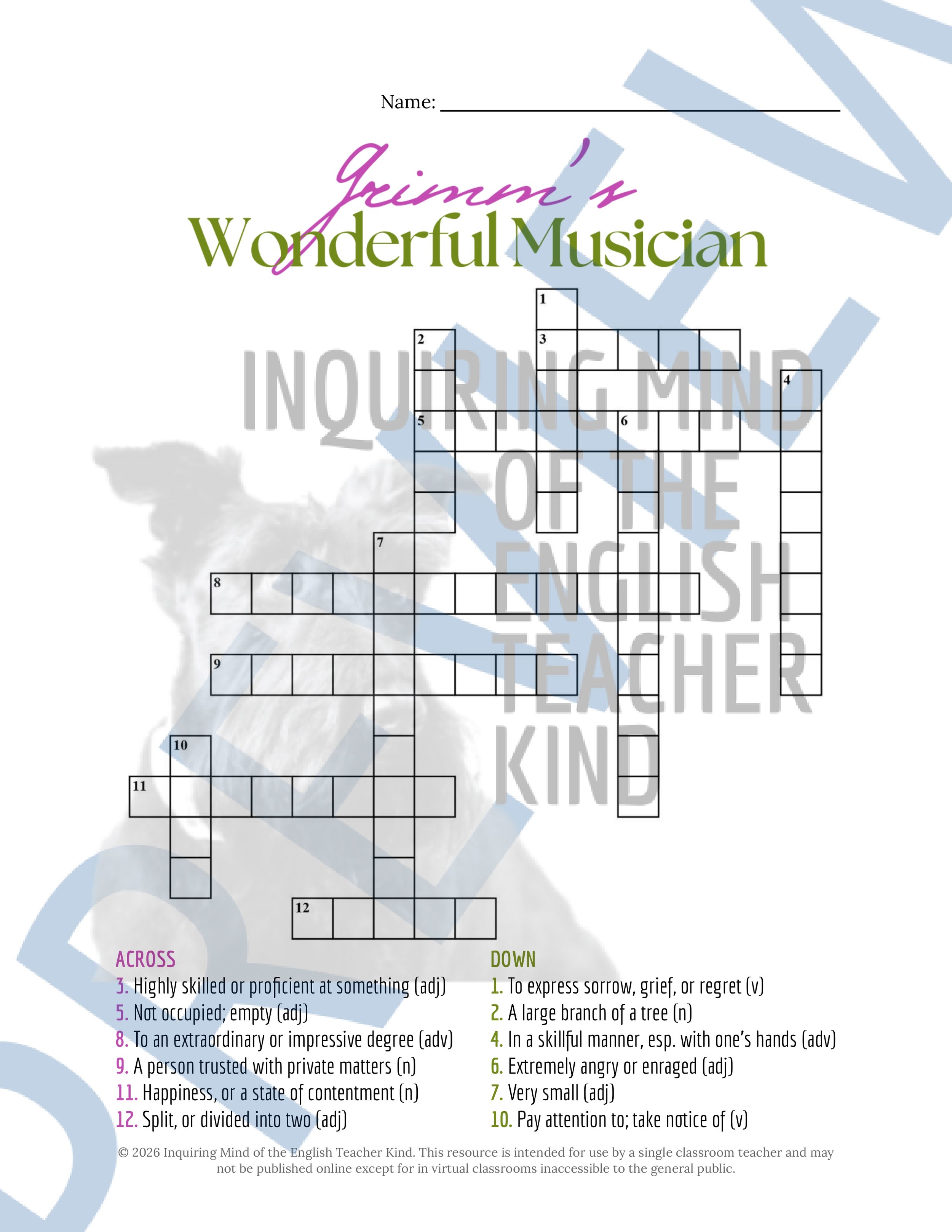
Assess reading comprehension, support vocabulary development, and facilitate analytical thinking with this set of activities covering "The Wolf and the Fox," a cautionary Grimm's fairy tale about the consequences of impulsiveness. A plot-based quiz, a close reading analysis worksheet, a vocabulary application activity, a crossword puzzle, a word search game, and answer keys are provided. Materials are delivered in editable Word Document and printable PDF formats. (Alternatively, a Google Drive bundle option is available.) By engaging with these materials, students will:
Define words as they are used in the text.
Infer the intended effects of words or phrases as they are used in the text (e.g., "beaten me to a jelly," "peeped," and "sniffed about").
Identify the main purpose of the opening paragraph.
Demonstrate awareness of the narrative's dominant conflict.
Articulate how situational irony is present in a given passage.
Compare and contrast two characters (e.g., the wolf and the fox).
Support claims and inferences with relevant textual evidence.
Resources are available for teaching short stories of various genres:
Assess reading comprehension, support vocabulary development, and facilitate analytical thinking with this set of activities covering "The Wolf and the Fox," a cautionary Grimm's fairy tale about the consequences of impulsiveness. A plot-based quiz, a close reading analysis worksheet, a vocabulary application activity, a crossword puzzle, a word search game, and answer keys are provided. Materials are delivered in editable Word Document and printable PDF formats. (Alternatively, a Google Drive bundle option is available.) By engaging with these materials, students will:
Define words as they are used in the text.
Infer the intended effects of words or phrases as they are used in the text (e.g., "beaten me to a jelly," "peeped," and "sniffed about").
Identify the main purpose of the opening paragraph.
Demonstrate awareness of the narrative's dominant conflict.
Articulate how situational irony is present in a given passage.
Compare and contrast two characters (e.g., the wolf and the fox).
Support claims and inferences with relevant textual evidence.
Resources are available for teaching short stories of various genres:
Preview this resource:
Assess reading comprehension, support vocabulary development, and facilitate analytical thinking with this set of activities covering "The Wolf and the Fox," a cautionary Grimm's fairy tale about the consequences of impulsiveness. A plot-based quiz, a close reading analysis worksheet, a vocabulary application activity, a crossword puzzle, a word search game, and answer keys are provided.