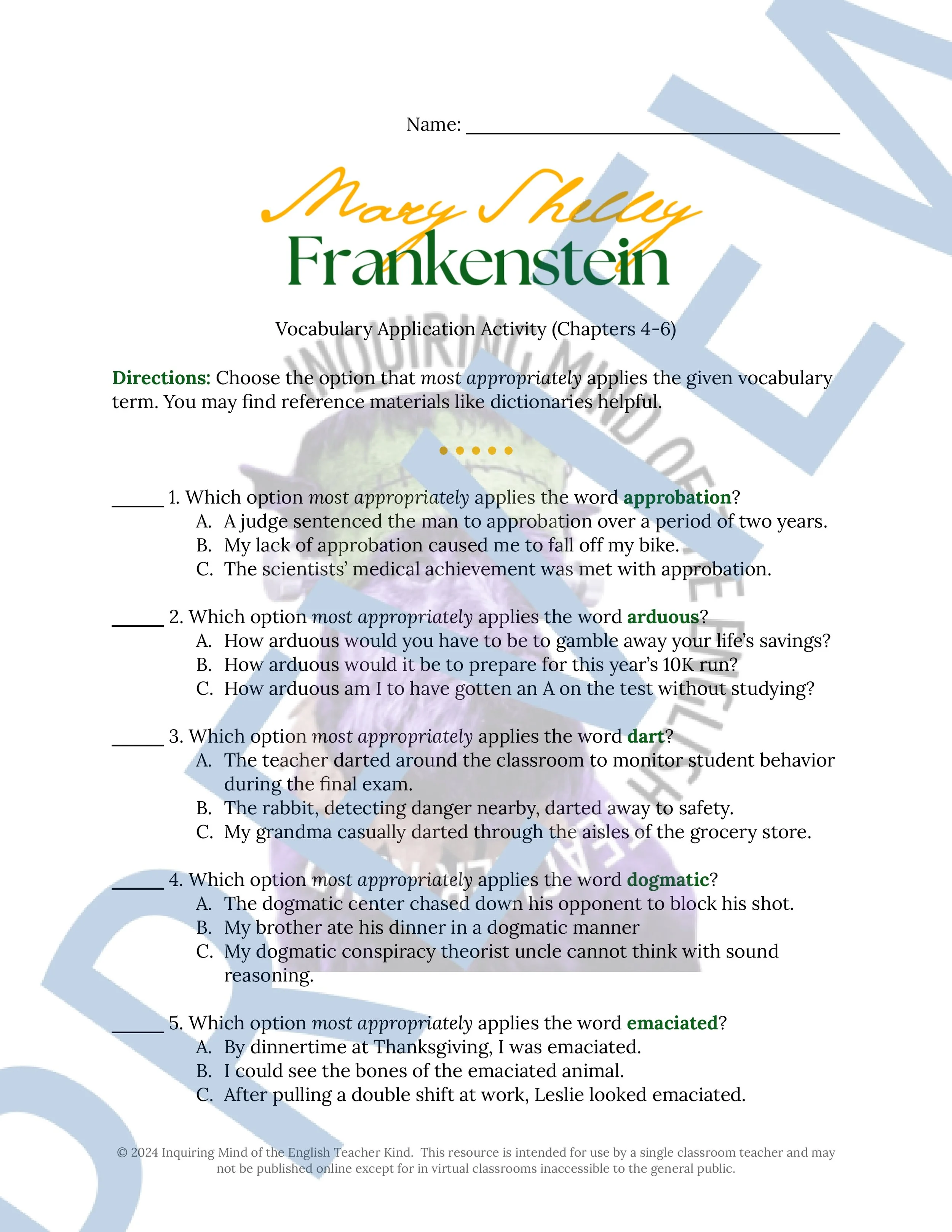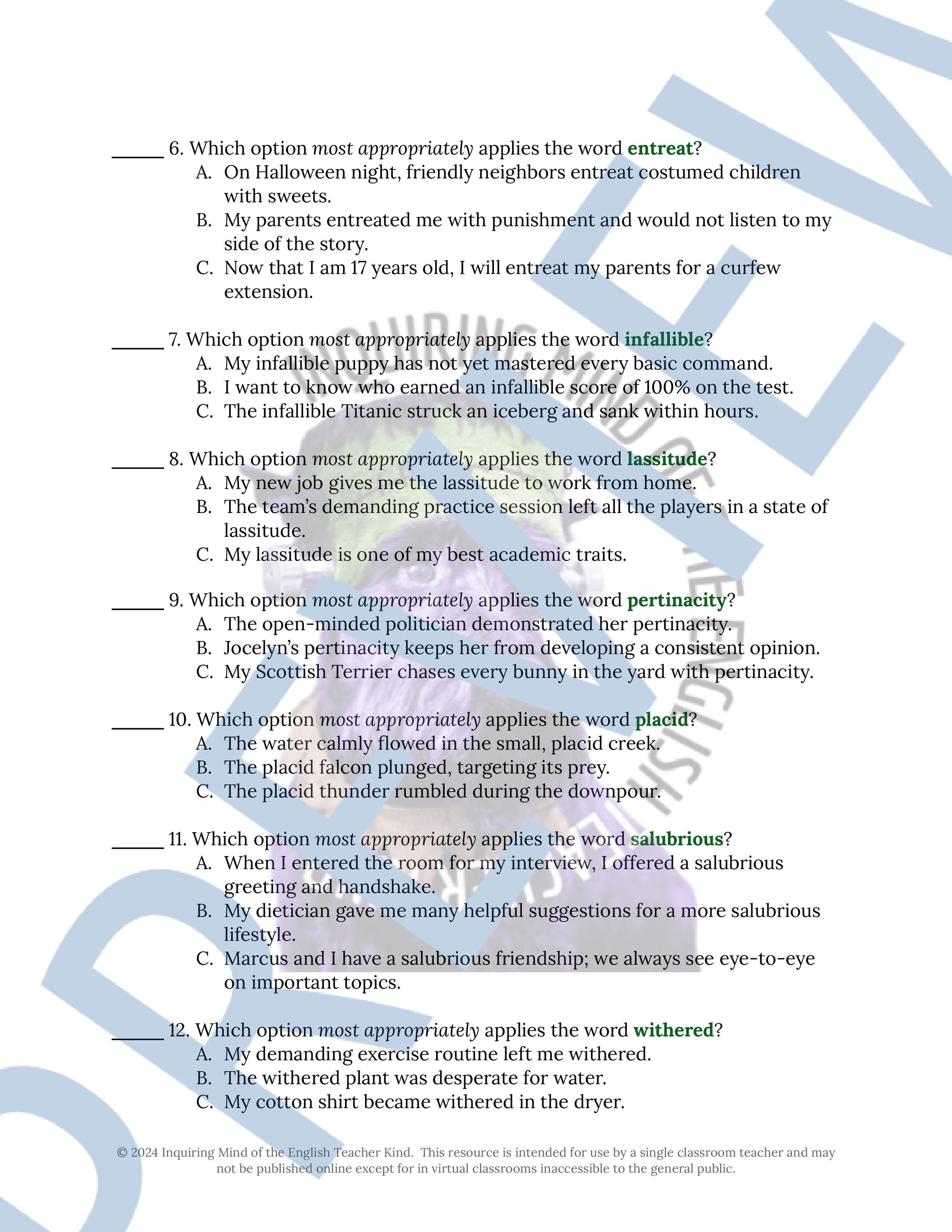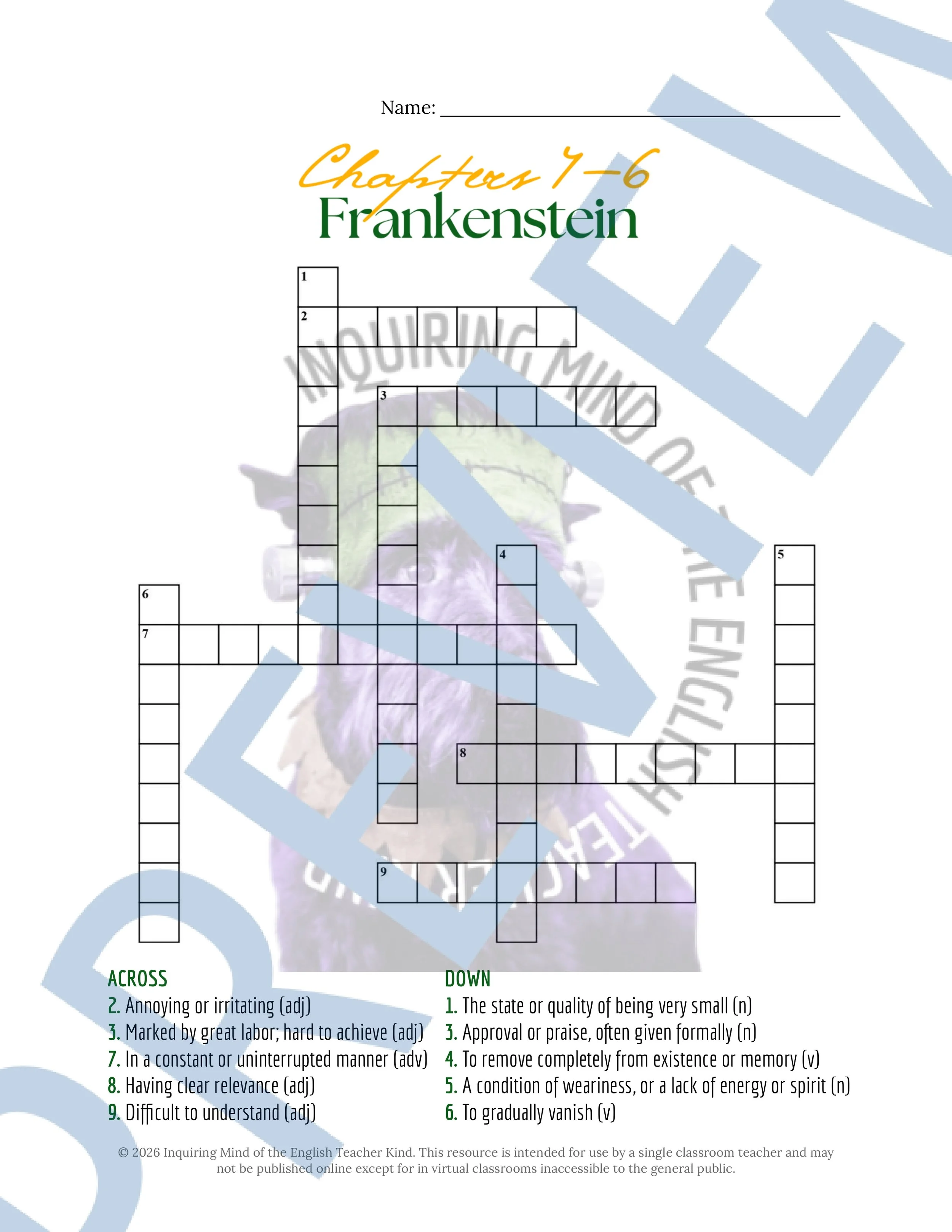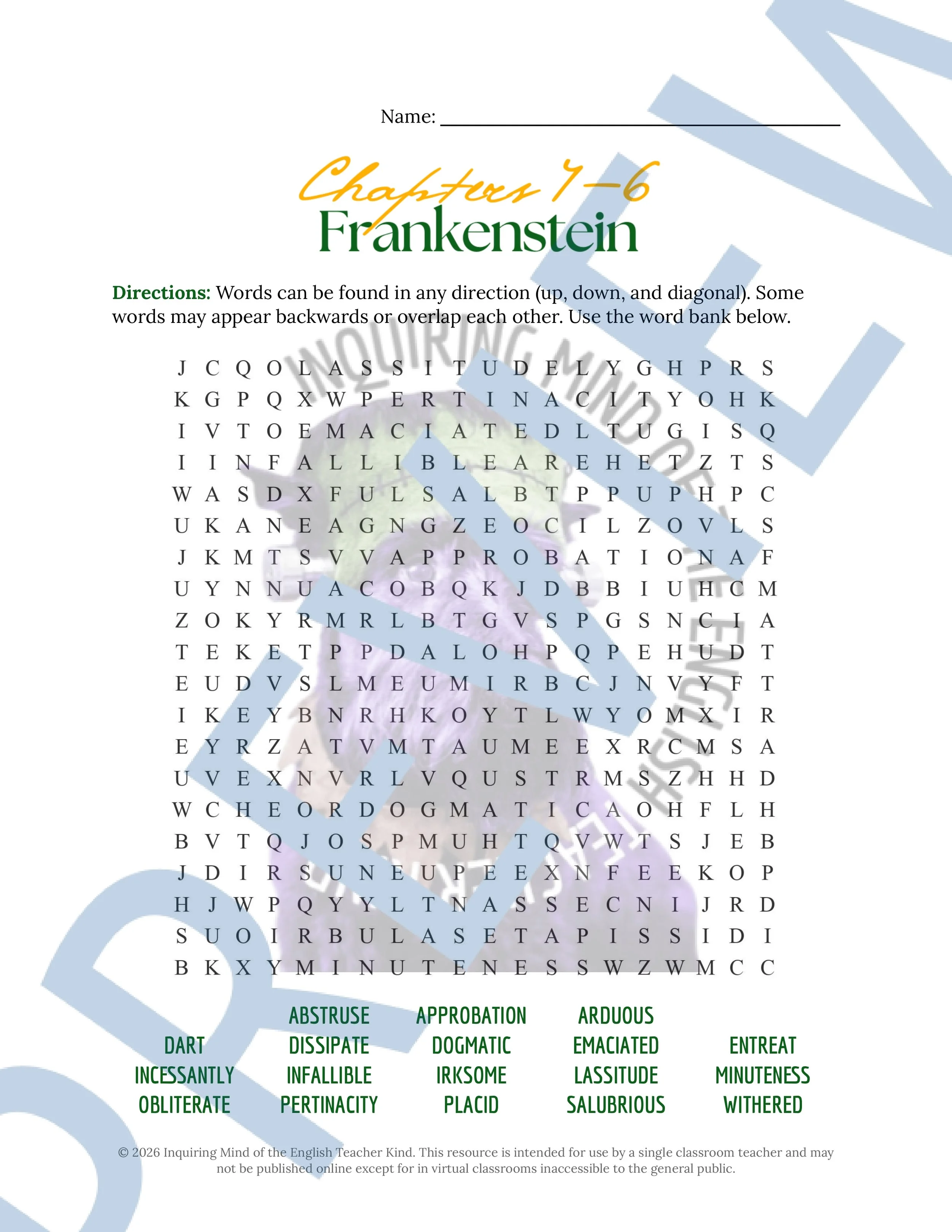
Image 1 of 13
Image 2 of 13
Image 3 of 13
Image 4 of 13
Image 5 of 13
Image 6 of 13
Image 7 of 13
Image 8 of 13
Image 9 of 13
Image 10 of 13
Image 11 of 13
Image 12 of 13
Image 13 of 13
"The Possibility of Evil" by Shirley Jackson Quiz, Analysis Worksheet, and Vocabulary Activities
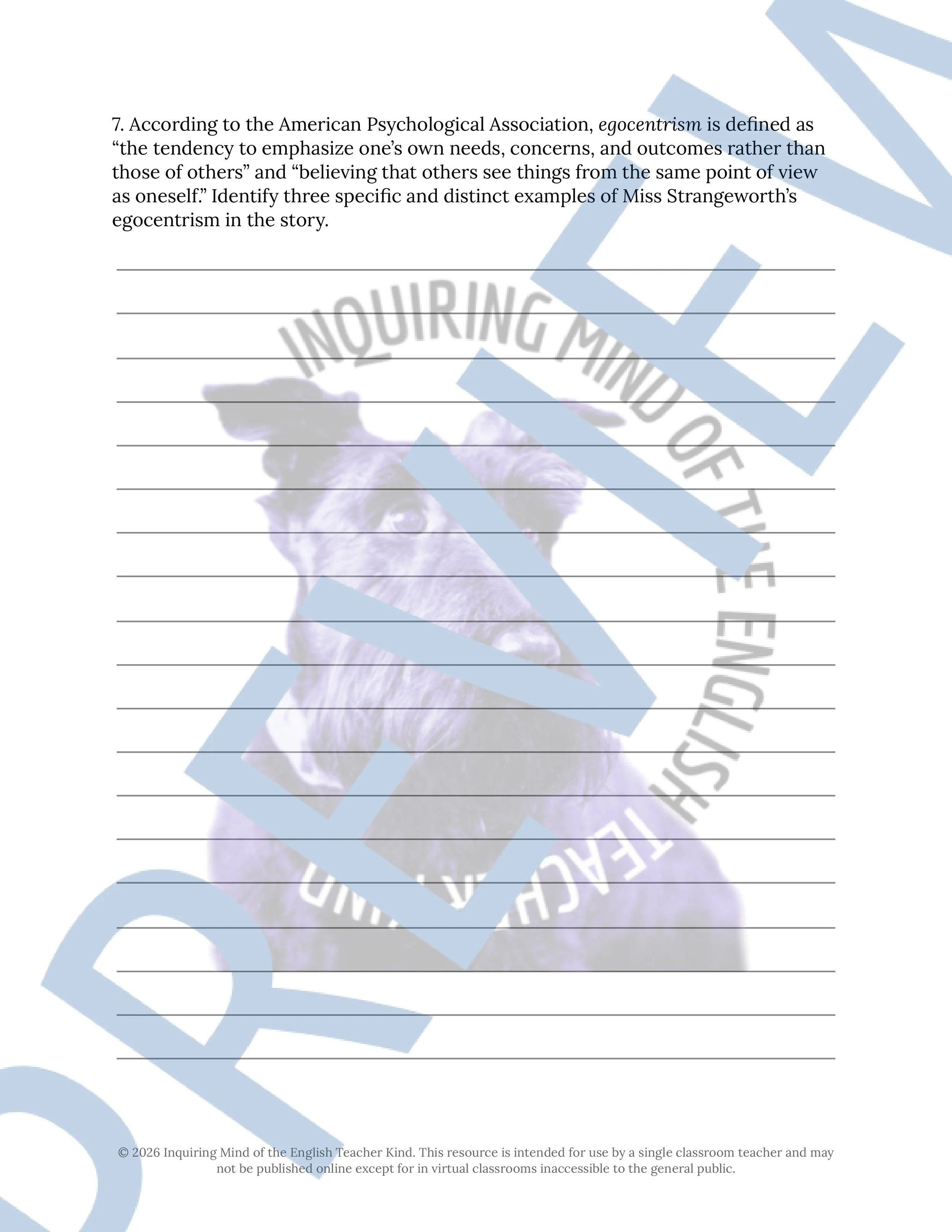
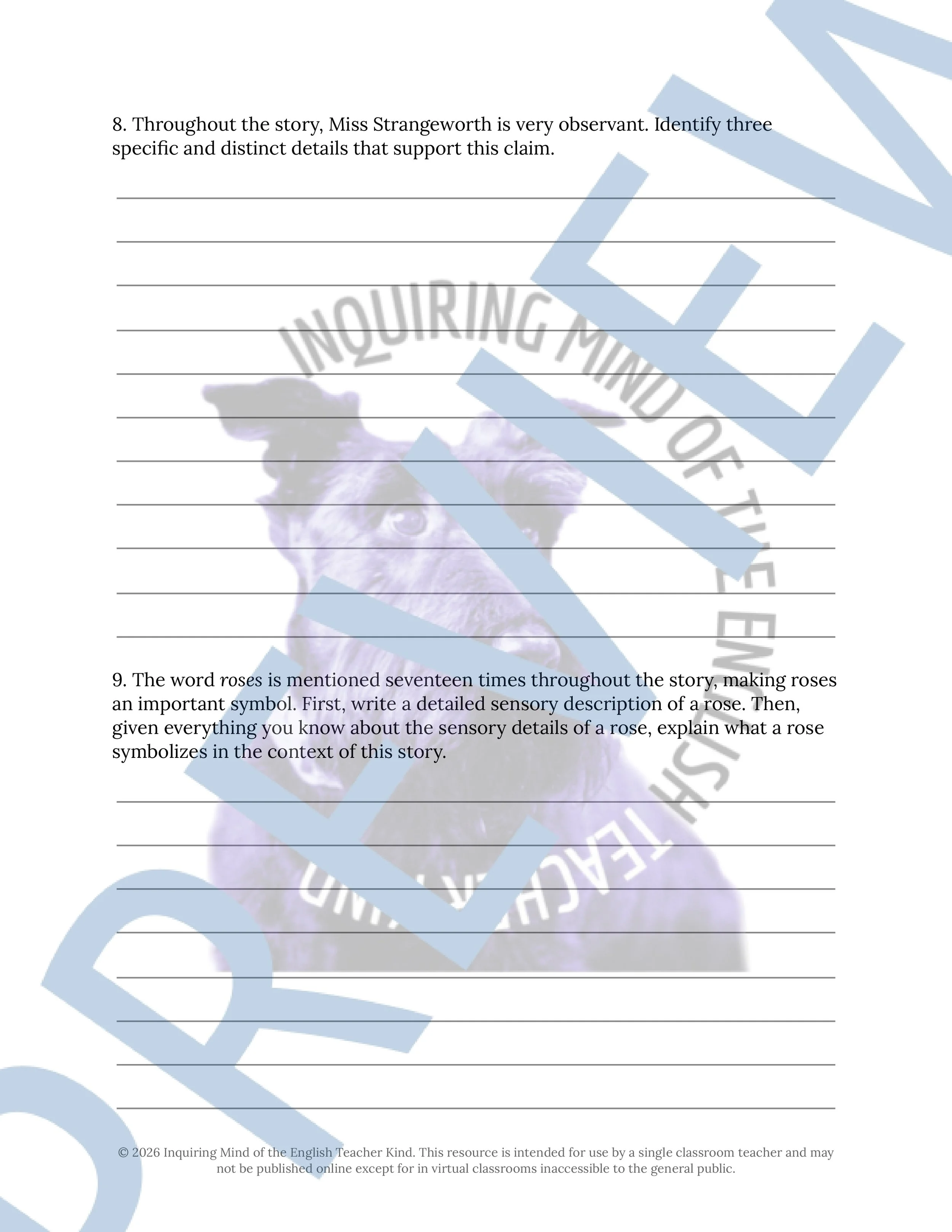
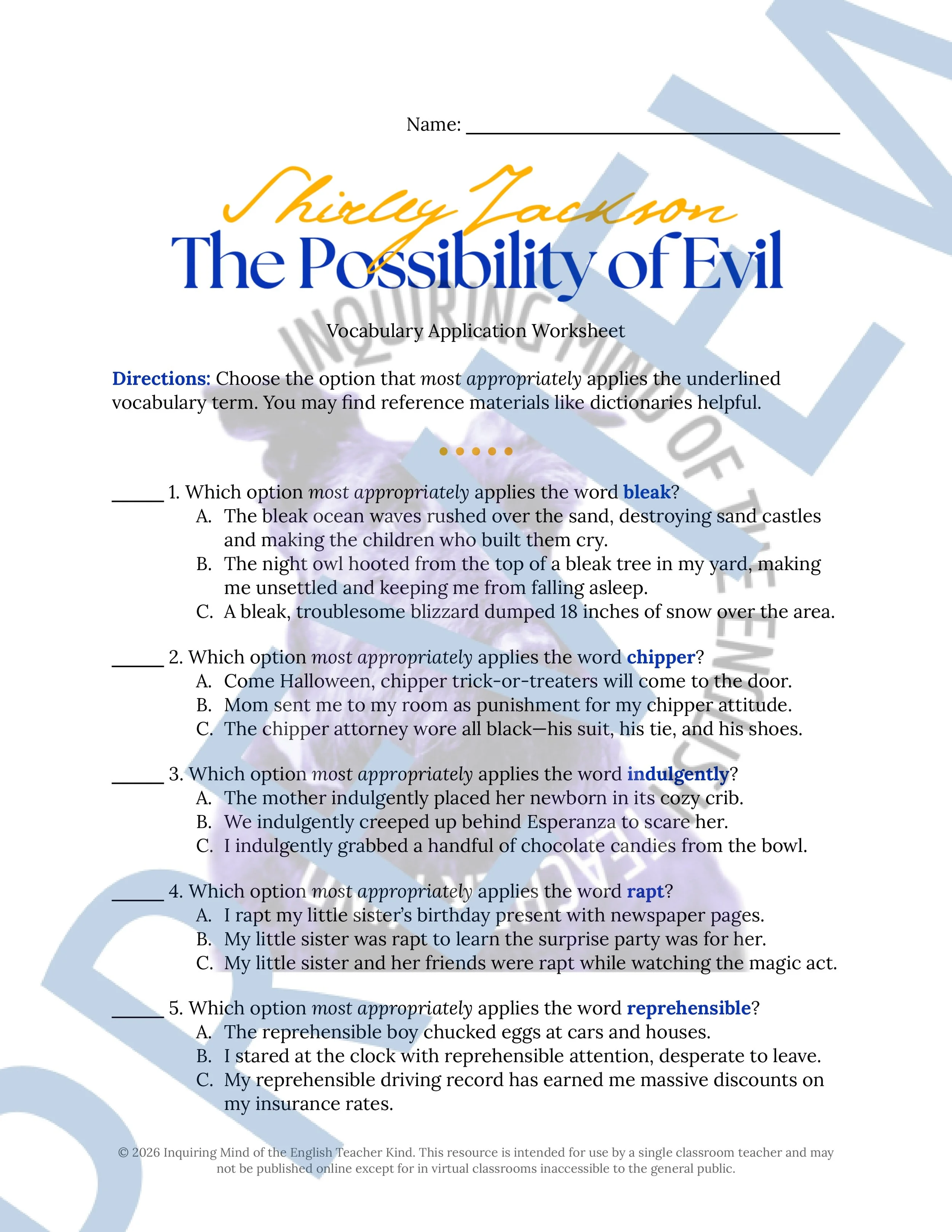
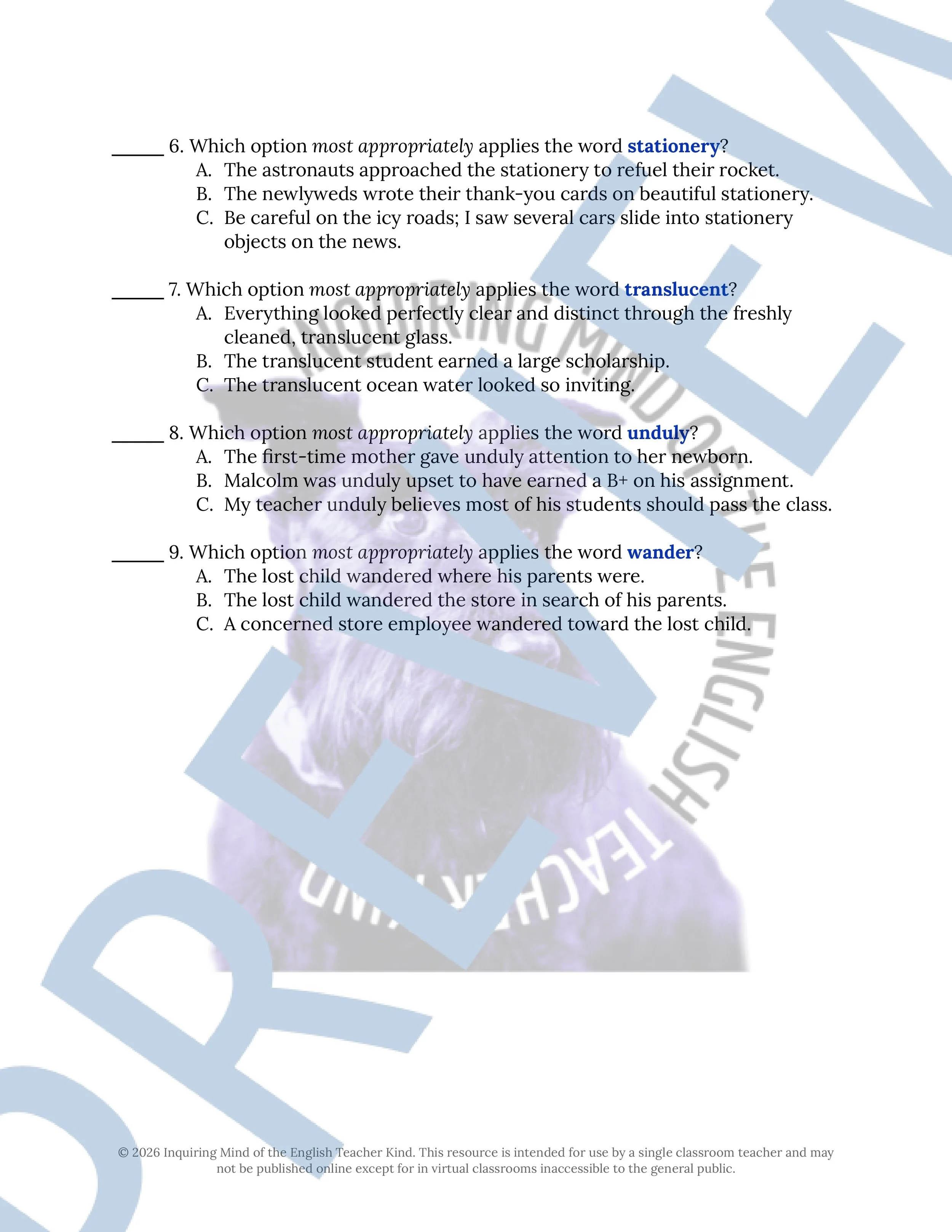
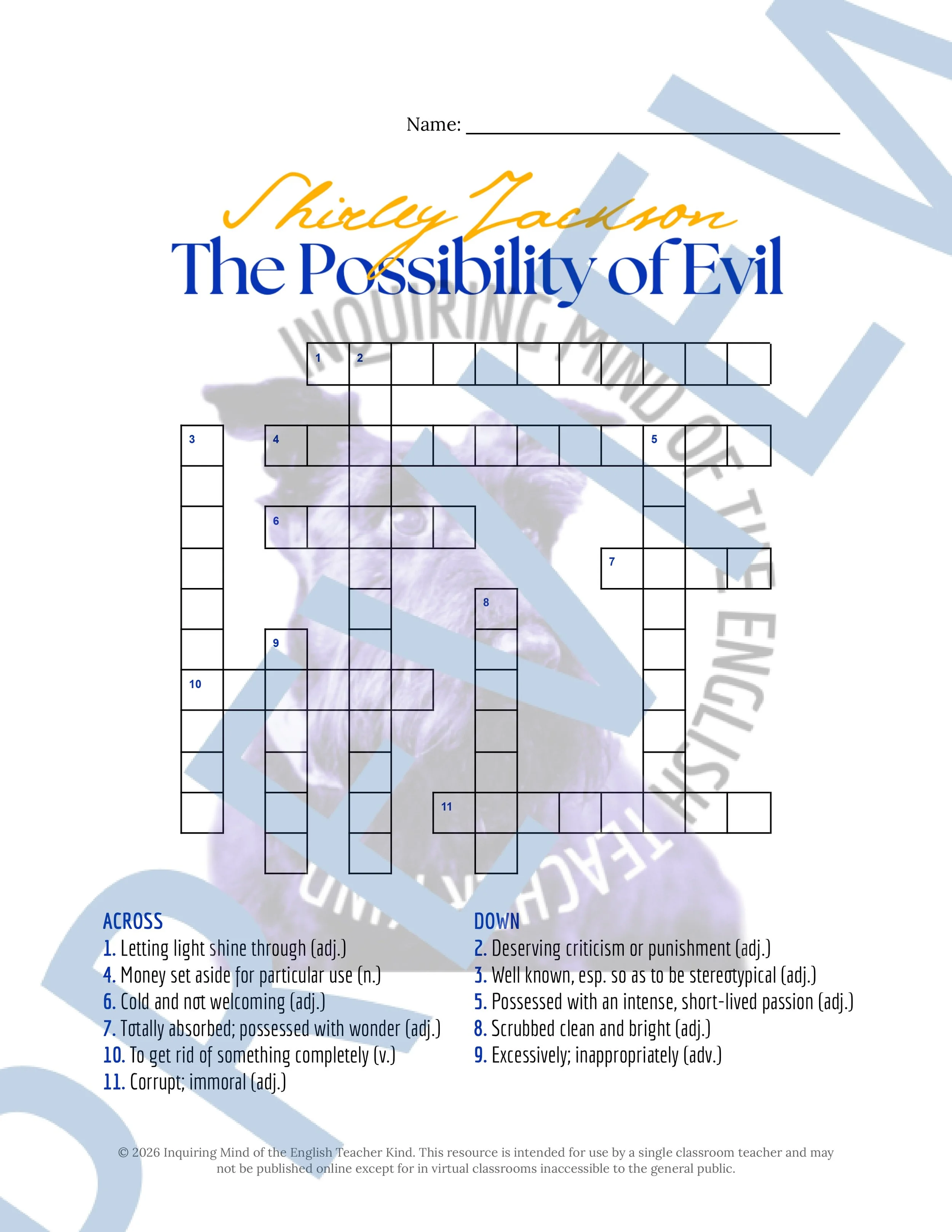
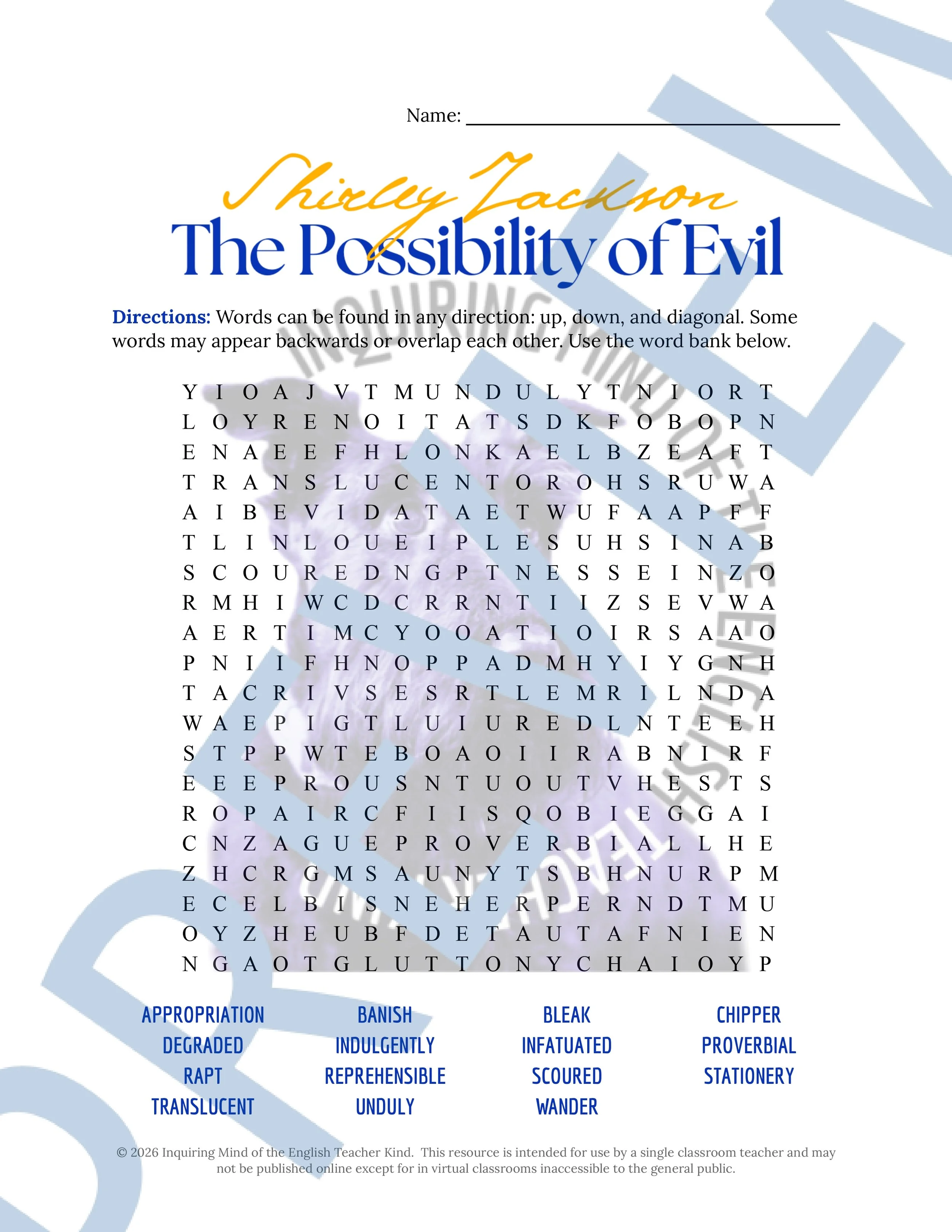
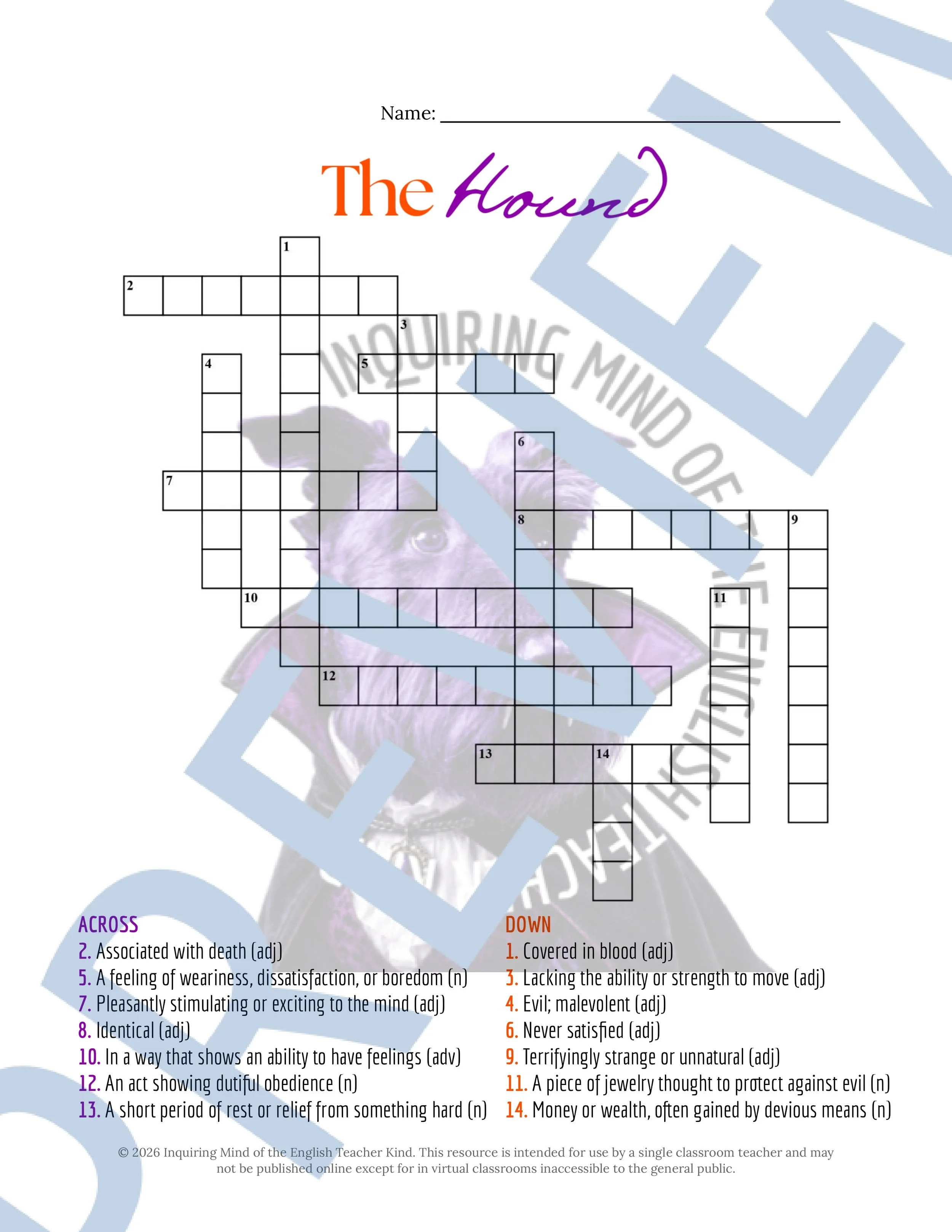
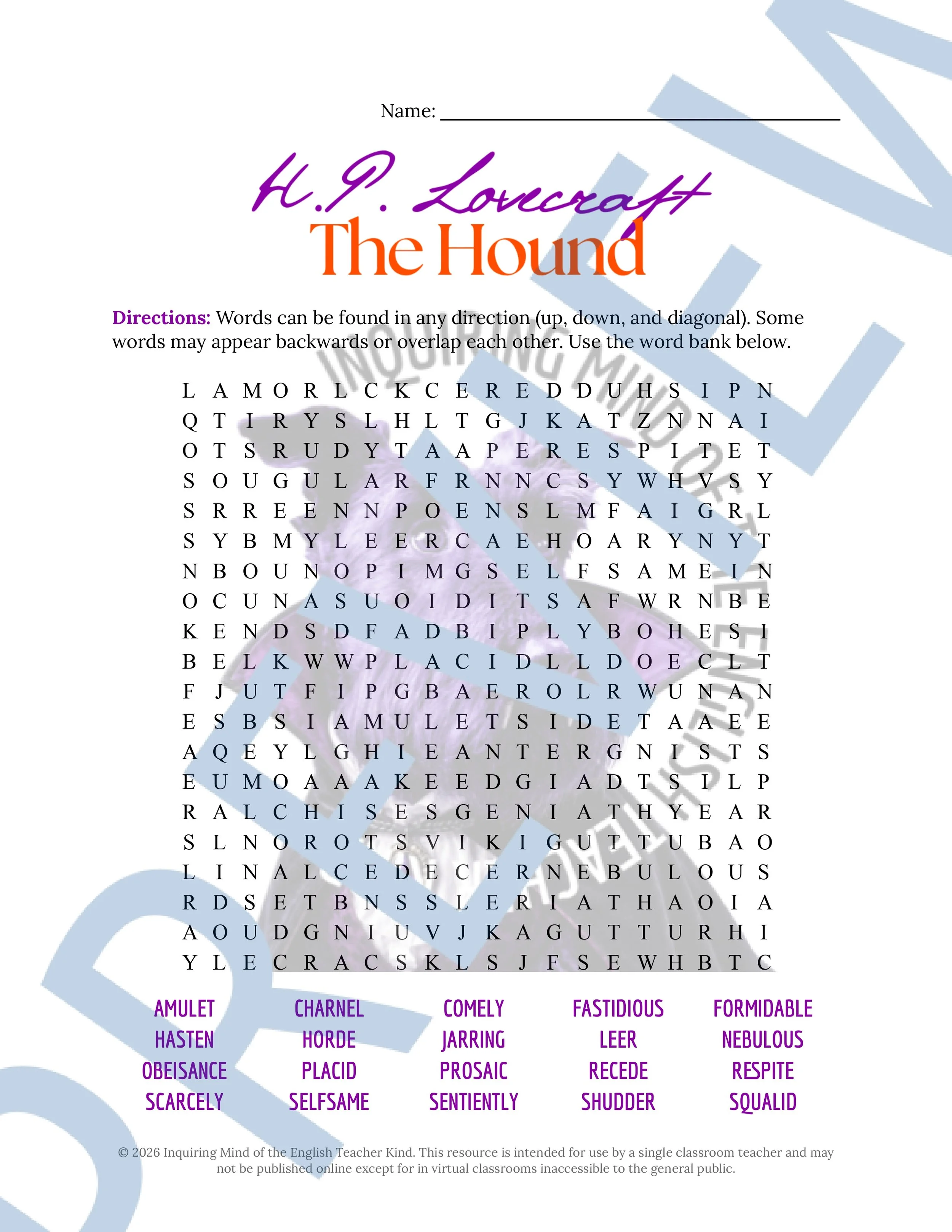
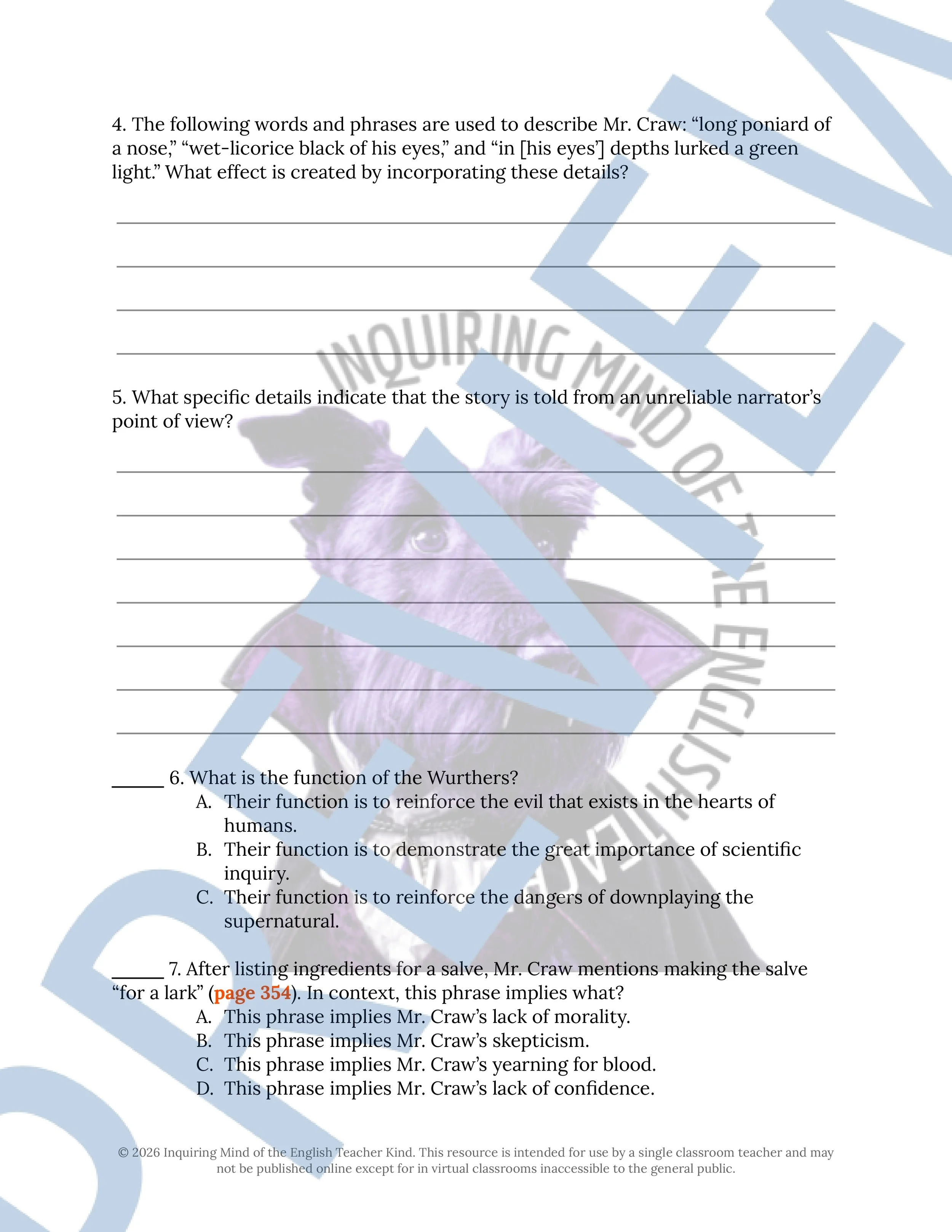
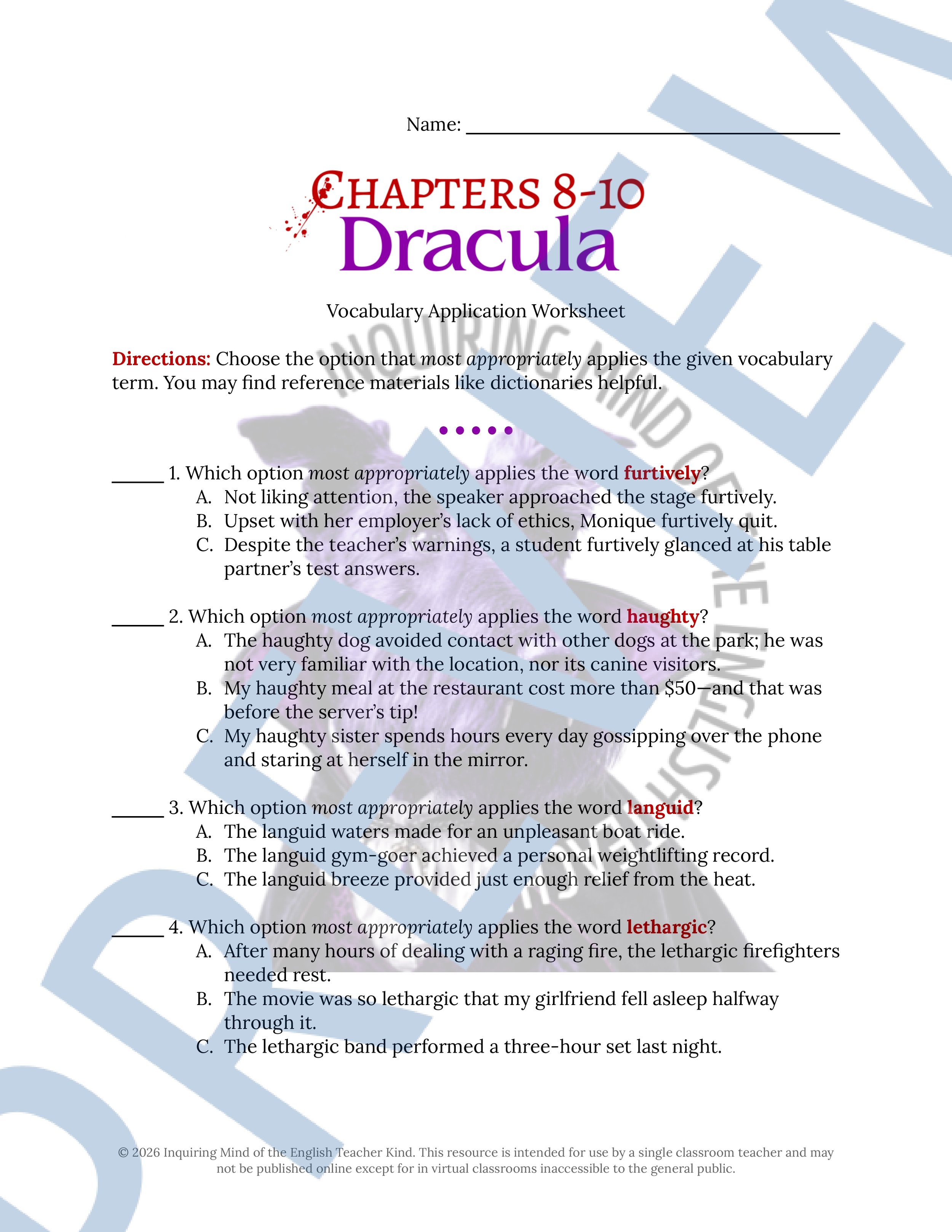
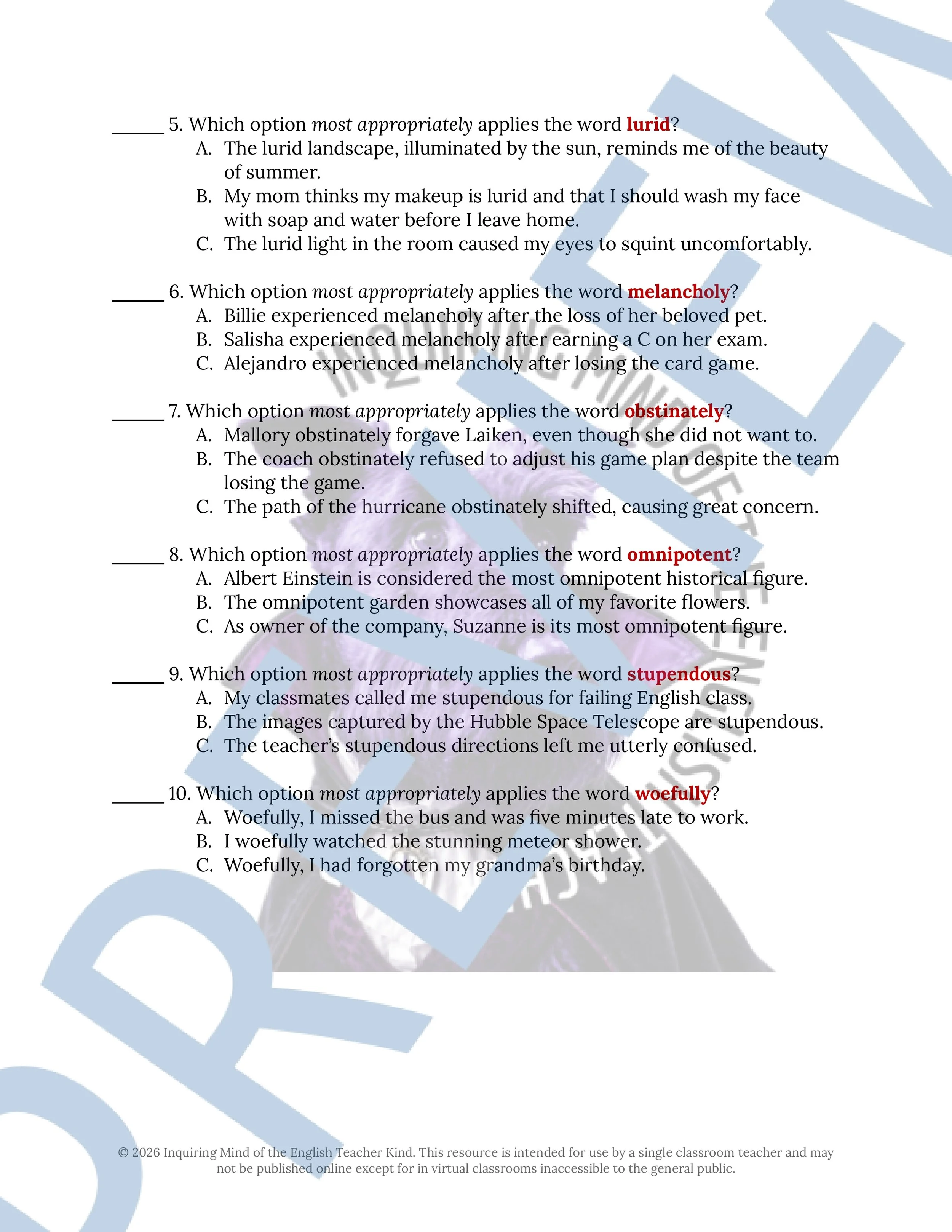
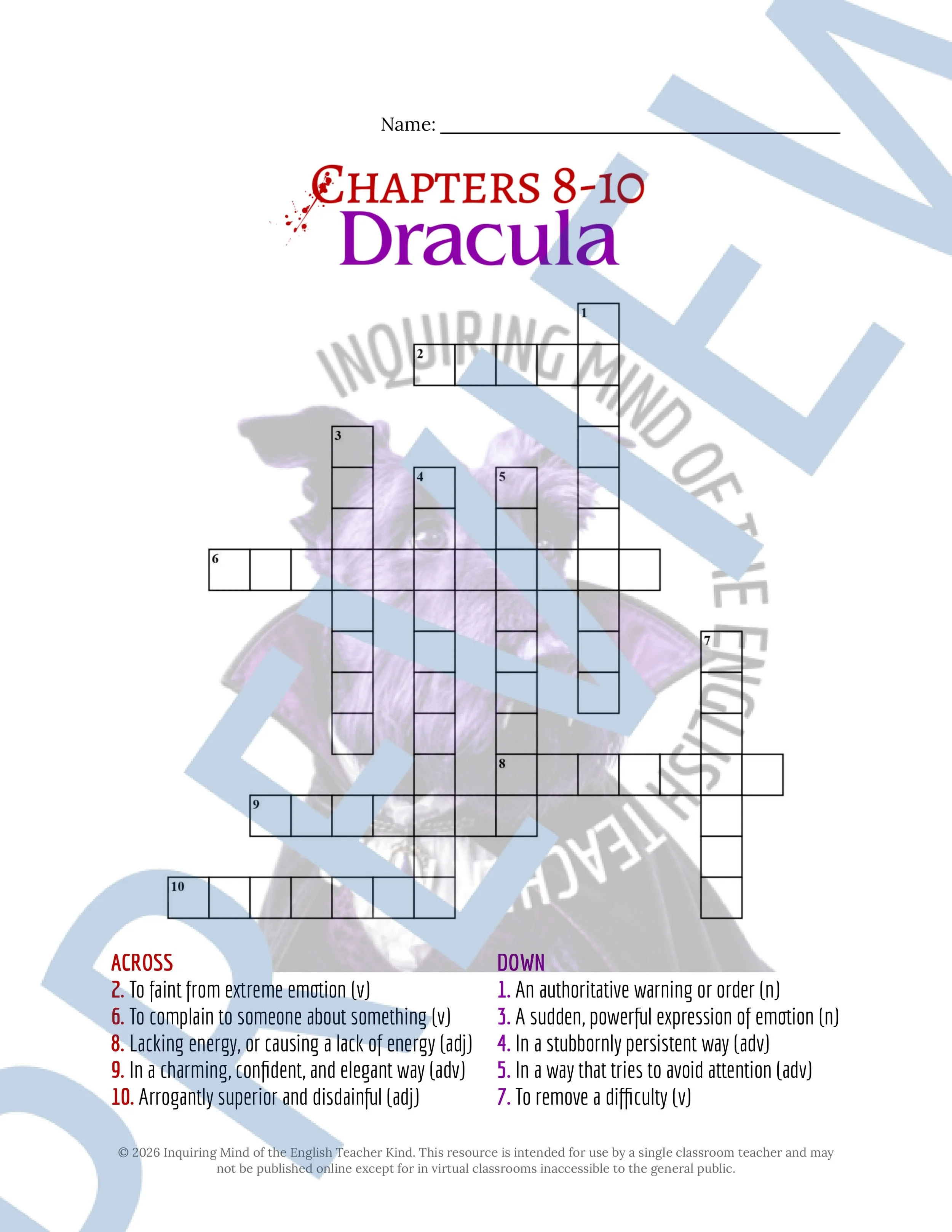
Ideal for short horror story units and high school American Literature classes, this bundle covers "The Possibility of Evil" by Shirley Jackson and includes a reading comprehension quiz, literary analysis worksheet, crossword puzzle, word search, vocabulary application activity, and answer keys. By engaging with these materials, students will:
Identify what the text states explicitly and implicitly
Determine the meaning of unfamiliar and complex words
Consult reference materials in order to learn and verify word meanings
Determine the most proper application of words as they are used in sentences
Infer the intended effects of the author's word choices and narrative techniques
Discern the functions of given details
Explore how complex characters think, behave, interact, and develop
Apply knowledge of literary devices including dramatic irony, foreshadowing, situational irony, and symbolism
Conduct brief online research on a relevant topic (Ethan Allen) in order to answer a question about plot
Support claims and inferences with sound reasoning and relevant evidence
Write about fiction with clarity, accuracy, and precision
Come to class better prepared to discuss literature
Materials are delivered in editable Word Document and printable PDF formats. (Alternatively, a Google Drive bundle option is available.)
Resources are available for teaching short stories of various genres:
Ideal for short horror story units and high school American Literature classes, this bundle covers "The Possibility of Evil" by Shirley Jackson and includes a reading comprehension quiz, literary analysis worksheet, crossword puzzle, word search, vocabulary application activity, and answer keys. By engaging with these materials, students will:
Identify what the text states explicitly and implicitly
Determine the meaning of unfamiliar and complex words
Consult reference materials in order to learn and verify word meanings
Determine the most proper application of words as they are used in sentences
Infer the intended effects of the author's word choices and narrative techniques
Discern the functions of given details
Explore how complex characters think, behave, interact, and develop
Apply knowledge of literary devices including dramatic irony, foreshadowing, situational irony, and symbolism
Conduct brief online research on a relevant topic (Ethan Allen) in order to answer a question about plot
Support claims and inferences with sound reasoning and relevant evidence
Write about fiction with clarity, accuracy, and precision
Come to class better prepared to discuss literature
Materials are delivered in editable Word Document and printable PDF formats. (Alternatively, a Google Drive bundle option is available.)
Resources are available for teaching short stories of various genres: