Image 1 of 56
Image 2 of 56
Image 3 of 56
Image 4 of 56
Image 5 of 56
Image 6 of 56
Image 7 of 56
Image 8 of 56
Image 9 of 56
Image 10 of 56
Image 11 of 56
Image 12 of 56
Image 13 of 56
Image 14 of 56
Image 15 of 56
Image 16 of 56
Image 17 of 56
Image 18 of 56
Image 19 of 56
Image 20 of 56
Image 21 of 56
Image 22 of 56
Image 23 of 56
Image 24 of 56
Image 25 of 56
Image 26 of 56
Image 27 of 56
Image 28 of 56
Image 29 of 56
Image 30 of 56
Image 31 of 56
Image 32 of 56
Image 33 of 56
Image 34 of 56
Image 35 of 56
Image 36 of 56
Image 37 of 56
Image 38 of 56
Image 39 of 56
Image 40 of 56
Image 41 of 56
Image 42 of 56
Image 43 of 56
Image 44 of 56
Image 45 of 56
Image 46 of 56
Image 47 of 56
Image 48 of 56
Image 49 of 56
Image 50 of 56
Image 51 of 56
Image 52 of 56
Image 53 of 56
Image 54 of 56
Image 55 of 56
Image 56 of 56
The Merchant of Venice Act 2 Quiz, Close Readings, and Vocabulary Games Bundle
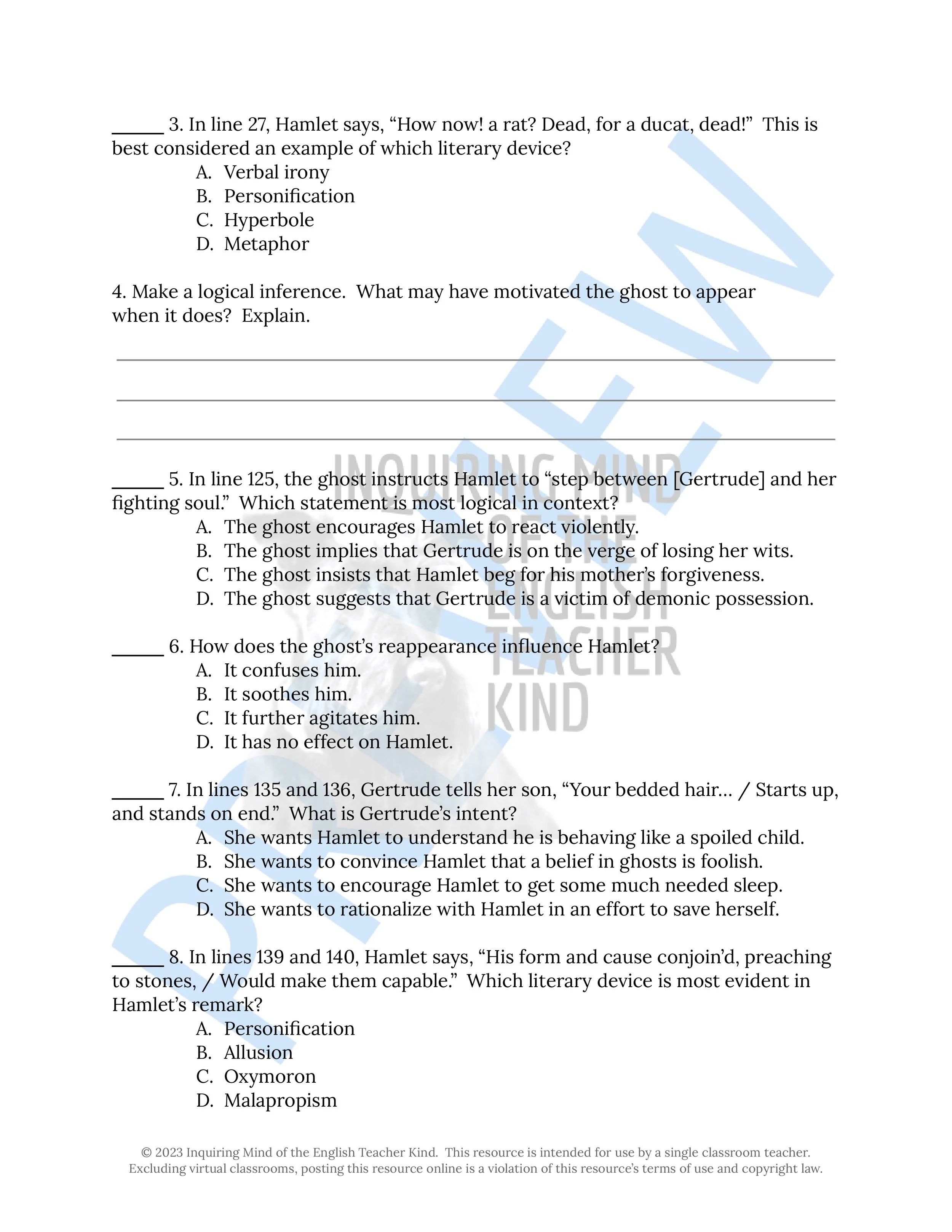
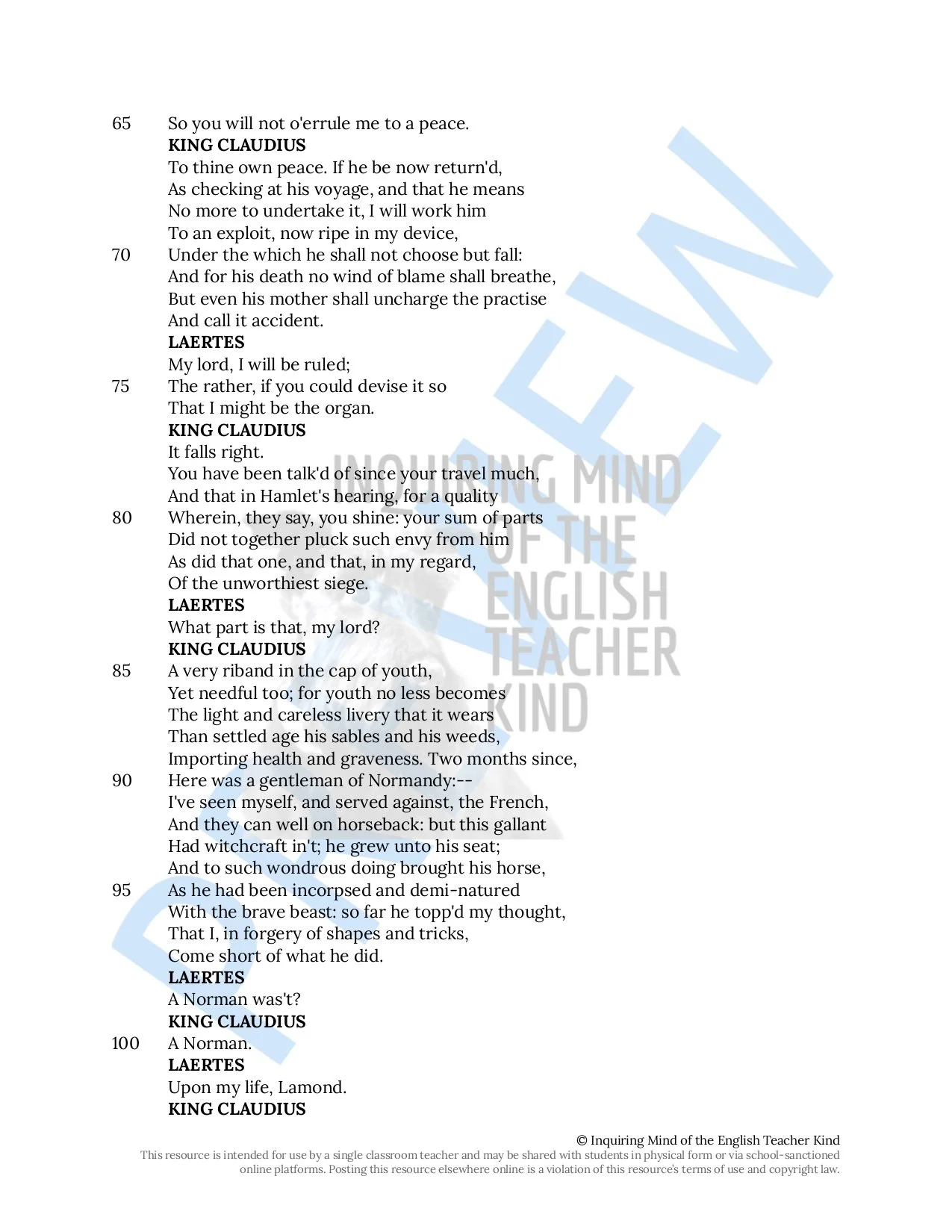
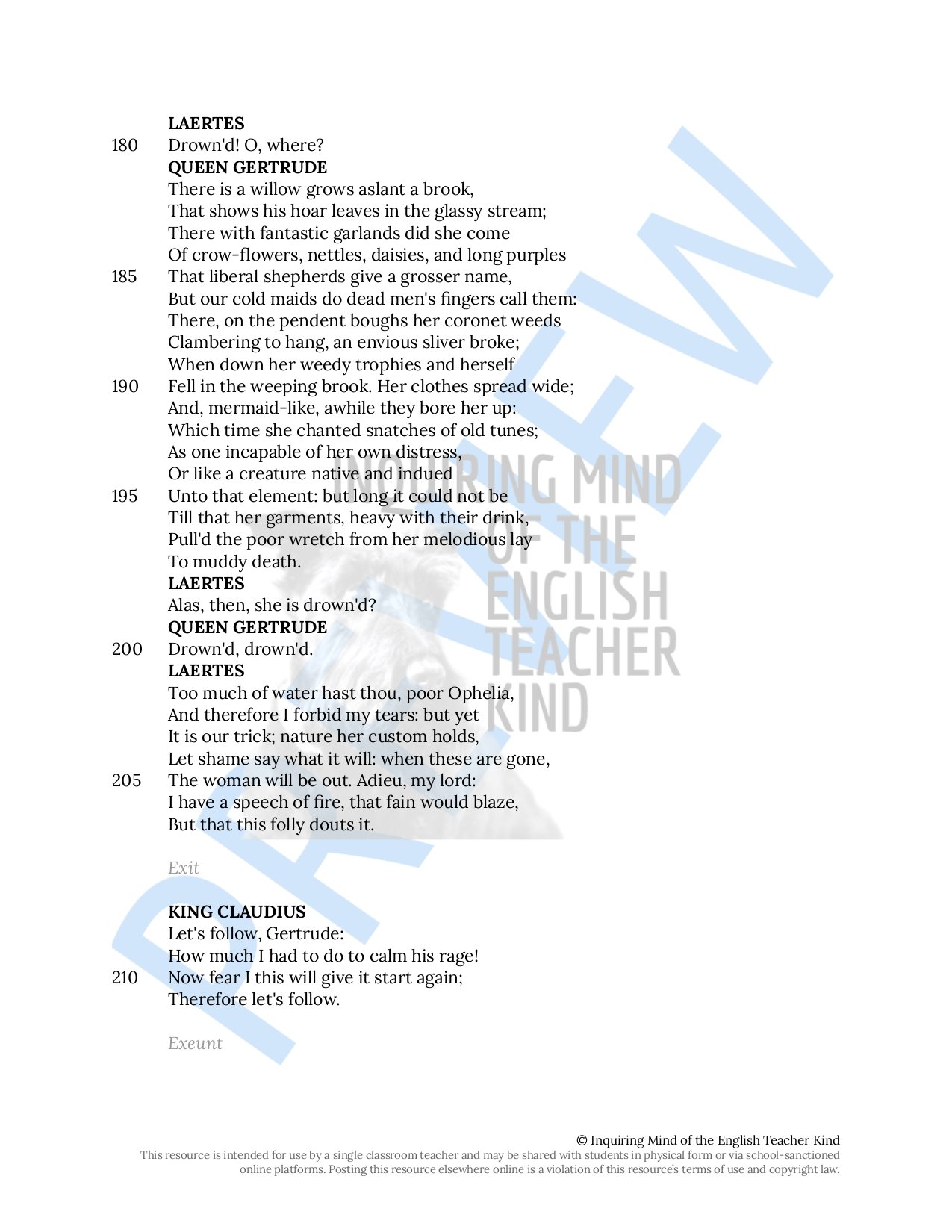
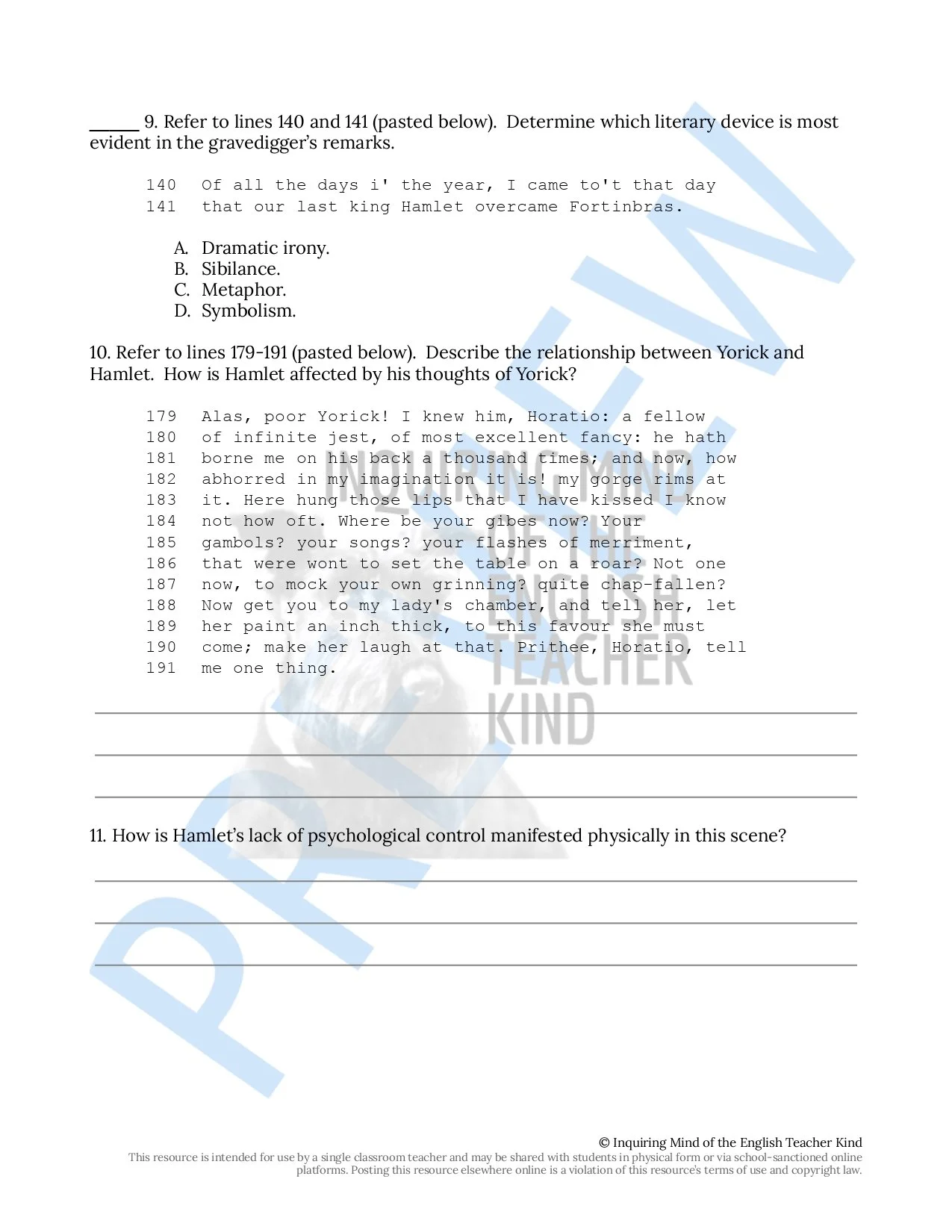
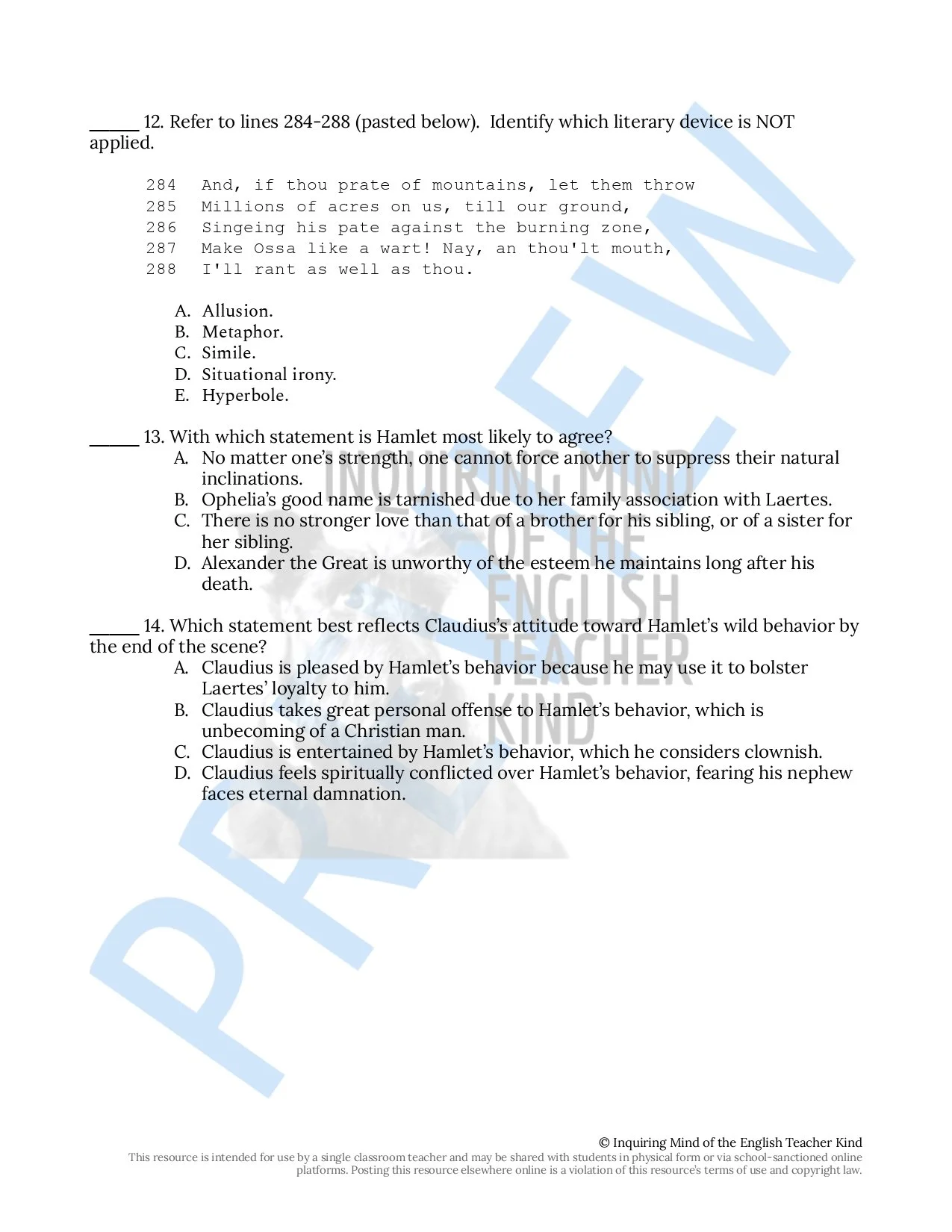
Evaluate general reading comprehension and support the development of critical thinking and dramatic craft analysis skills with this bundle of formative assessments covering Act 2 of William Shakespeare's The Merchant of Venice. A plot-based quiz, nine close reading worksheets (one per scene), a vocabulary application activity, a crossword puzzle, a word search game, and answer keys are provided. Materials are delivered in editable Word Document and printable PDF formats. (Alternatively, a Google Drive bundle option is available.) By engaging with these materials, students will:
Read for literal comprehension
Determine the meanings of unfamiliar and archaic words
Consult reference materials in order to learn and verify word meanings
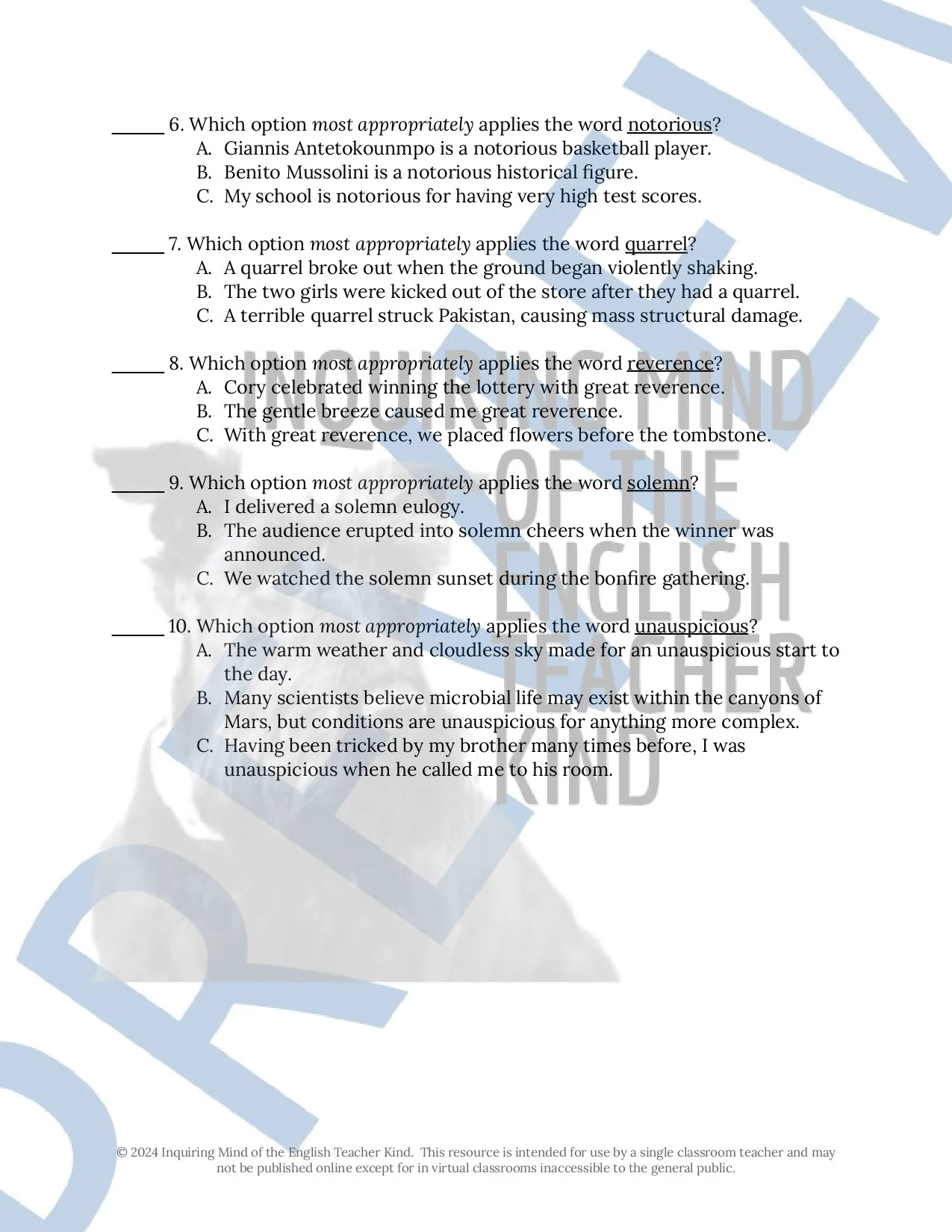
Discern the most proper application of words as they are used in sentences
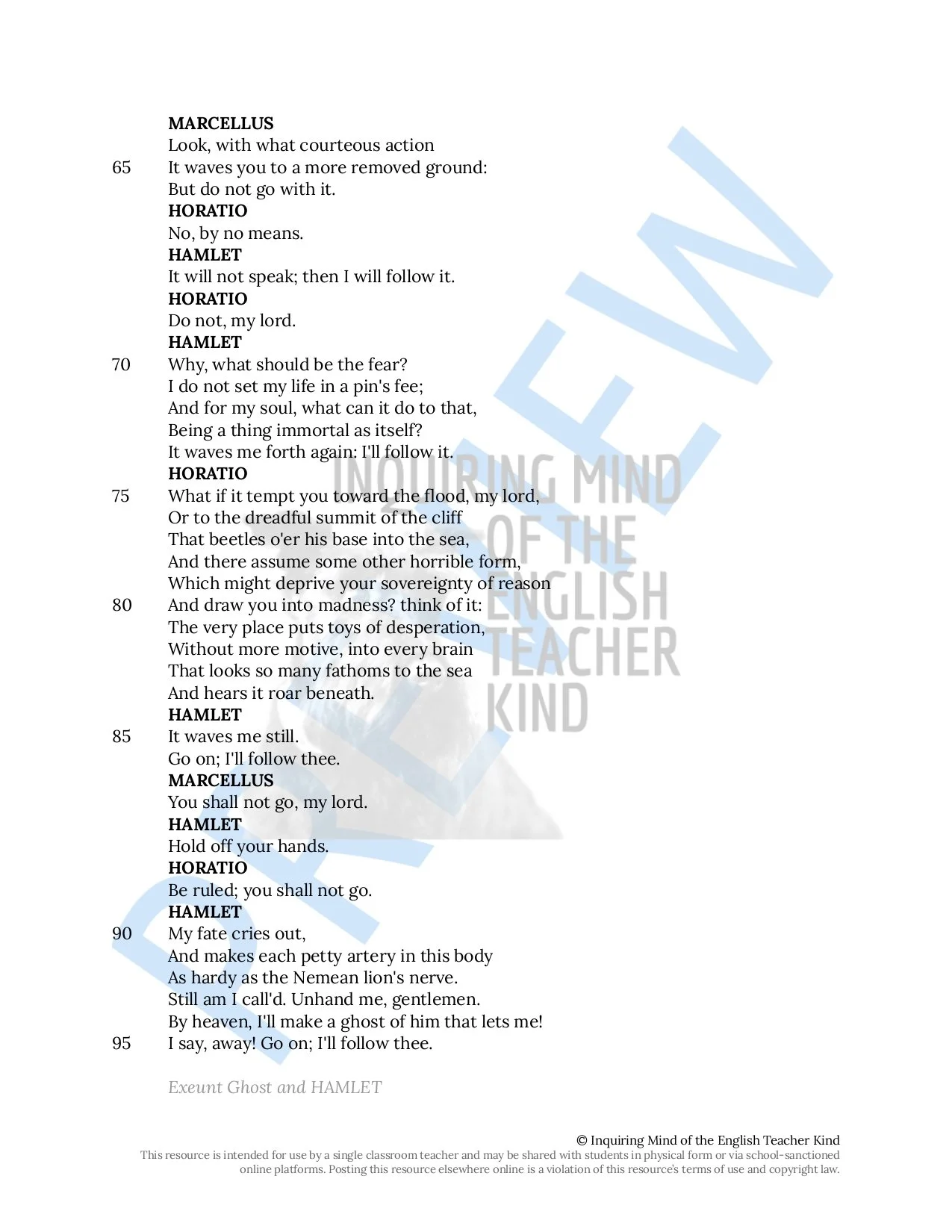
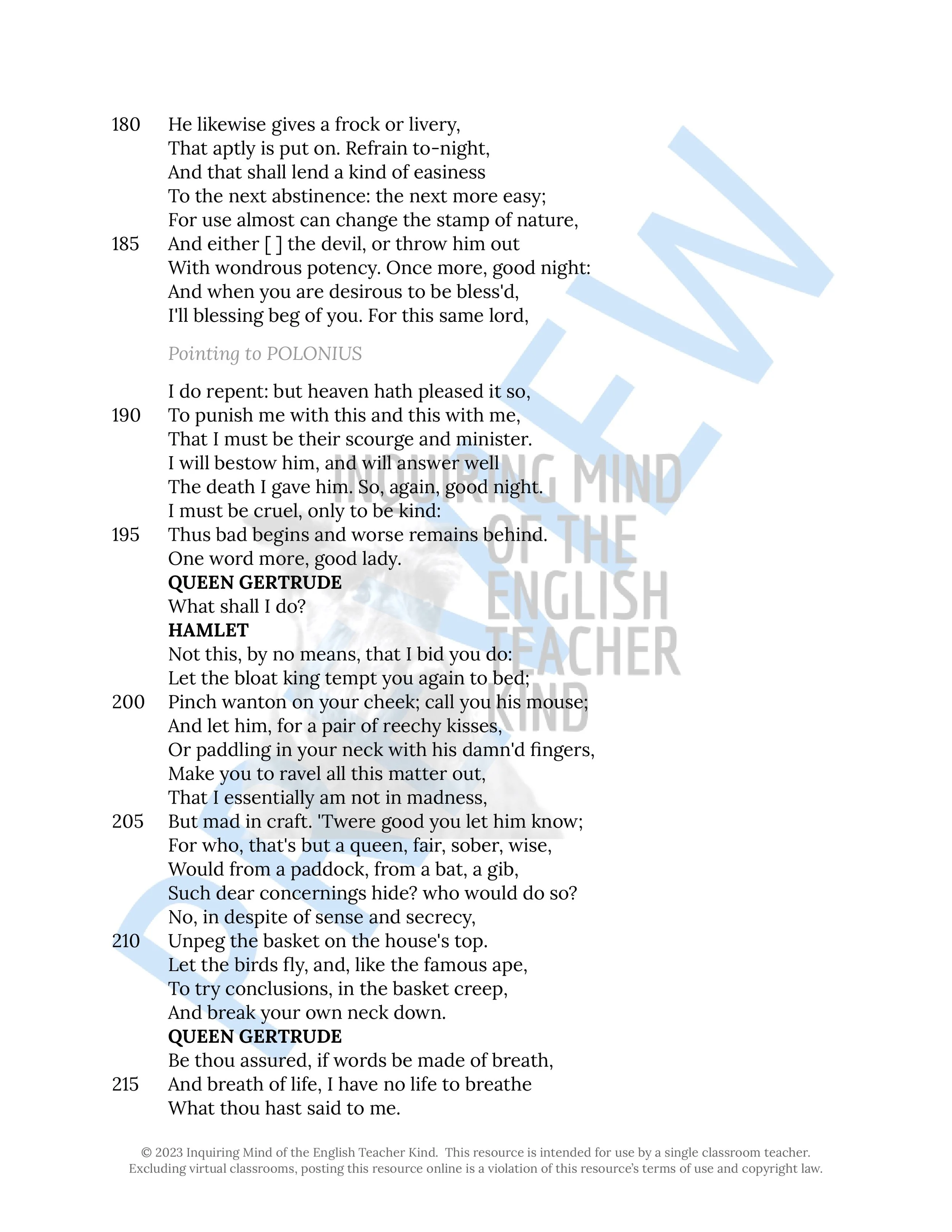
Infer the intended effects of the author's stylistic choices and dramatic techniques
Describe tone in context
Determine the functions of various passages
Explore how complex characters think, behave, develop, and interact
Compare and contrast two characters (Jessica and Portia)
Consider the motif of the guest-host relationship and argue whether Portia conforms to the expectations of a good host, or whether she fails to meet expectations and represents a bad host
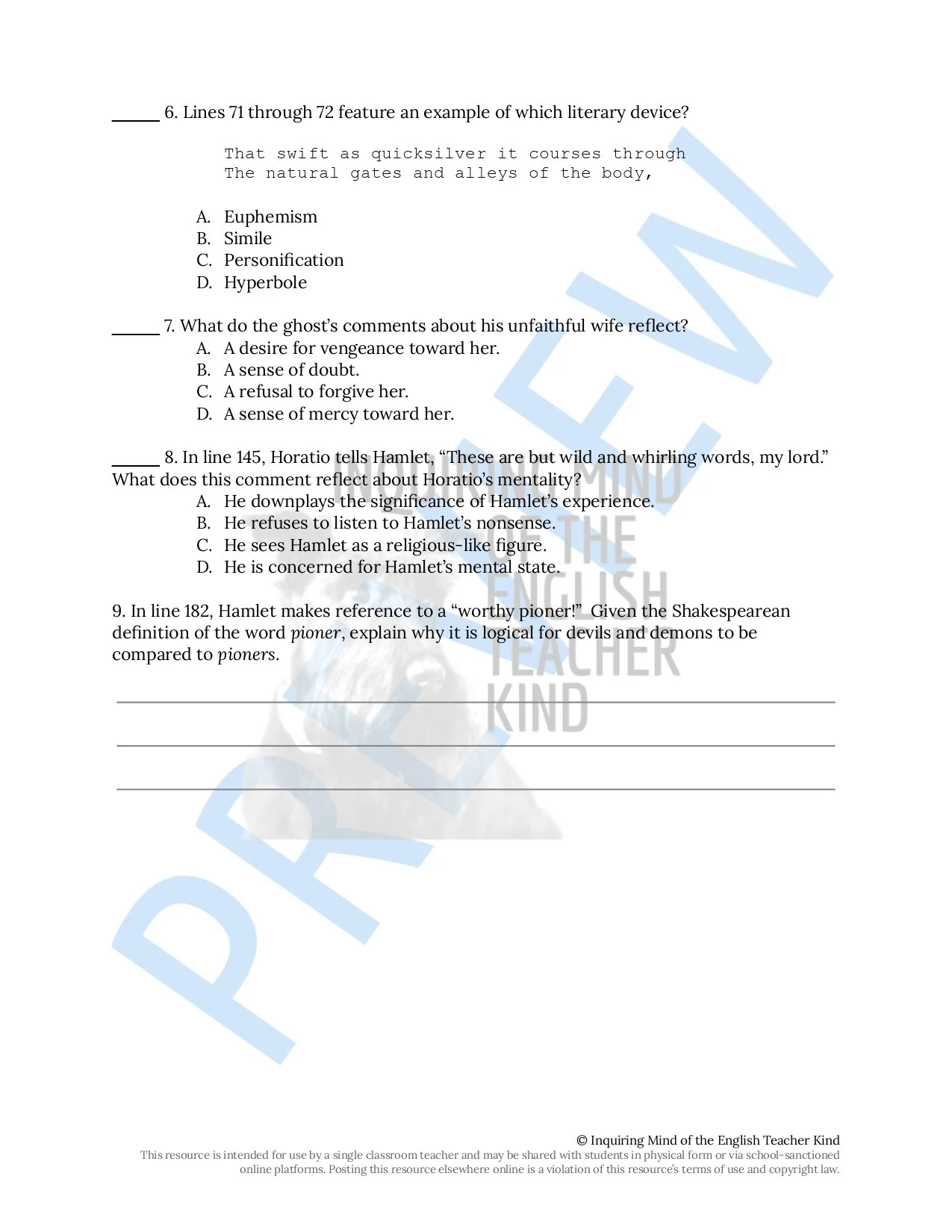
Apply knowledge of many literary devices with emphasis on allusion, hyperbole, dramatic irony, situational irony, personification, symbolism, invective, juxtaposition, and metaphor
Conduct brief online research (if necessary) to determine the symbolic value of a particular object
Support claims and inferences with sound reasoning and relevant evidence
Write about Shakespearean drama with clarity, accuracy, and precision
Come to class better prepared to discuss dramatic works
This resource may facilitate small-group discussions in which students decode language and pose/respond to questions relating to plot, broad topics, and character development. Using this resource for structured guidance, students will improve their ability to present information, conclusions, and supporting textual evidence clearly and convincingly.
Materials are available for teaching a variety of Shakespeare's plays:
Evaluate general reading comprehension and support the development of critical thinking and dramatic craft analysis skills with this bundle of formative assessments covering Act 2 of William Shakespeare's The Merchant of Venice. A plot-based quiz, nine close reading worksheets (one per scene), a vocabulary application activity, a crossword puzzle, a word search game, and answer keys are provided. Materials are delivered in editable Word Document and printable PDF formats. (Alternatively, a Google Drive bundle option is available.) By engaging with these materials, students will:
Read for literal comprehension
Determine the meanings of unfamiliar and archaic words
Consult reference materials in order to learn and verify word meanings
Discern the most proper application of words as they are used in sentences
Infer the intended effects of the author's stylistic choices and dramatic techniques
Describe tone in context
Determine the functions of various passages
Explore how complex characters think, behave, develop, and interact
Compare and contrast two characters (Jessica and Portia)
Consider the motif of the guest-host relationship and argue whether Portia conforms to the expectations of a good host, or whether she fails to meet expectations and represents a bad host
Apply knowledge of many literary devices with emphasis on allusion, hyperbole, dramatic irony, situational irony, personification, symbolism, invective, juxtaposition, and metaphor
Conduct brief online research (if necessary) to determine the symbolic value of a particular object
Support claims and inferences with sound reasoning and relevant evidence
Write about Shakespearean drama with clarity, accuracy, and precision
Come to class better prepared to discuss dramatic works
This resource may facilitate small-group discussions in which students decode language and pose/respond to questions relating to plot, broad topics, and character development. Using this resource for structured guidance, students will improve their ability to present information, conclusions, and supporting textual evidence clearly and convincingly.
Materials are available for teaching a variety of Shakespeare's plays:
Preview this resource.
Evaluate general reading comprehension and support the development of critical thinking and dramatic craft analysis skills with this bundle of formative assessments covering Act 2 of William Shakespeare's The Merchant of Venice. A plot-based quiz, nine close reading worksheets (one per scene), a vocabulary application activity, a crossword puzzle, a word search game, and answer keys are provided.