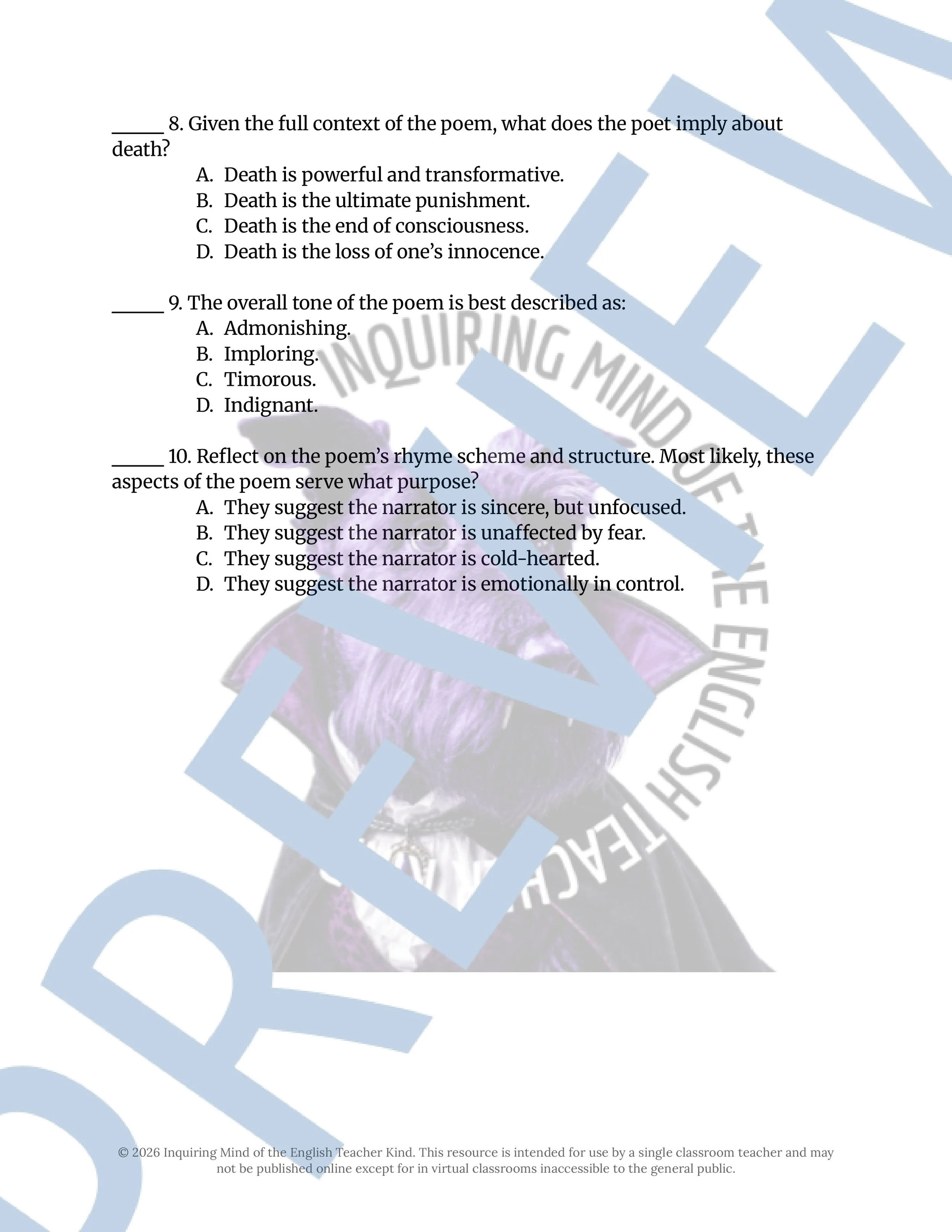
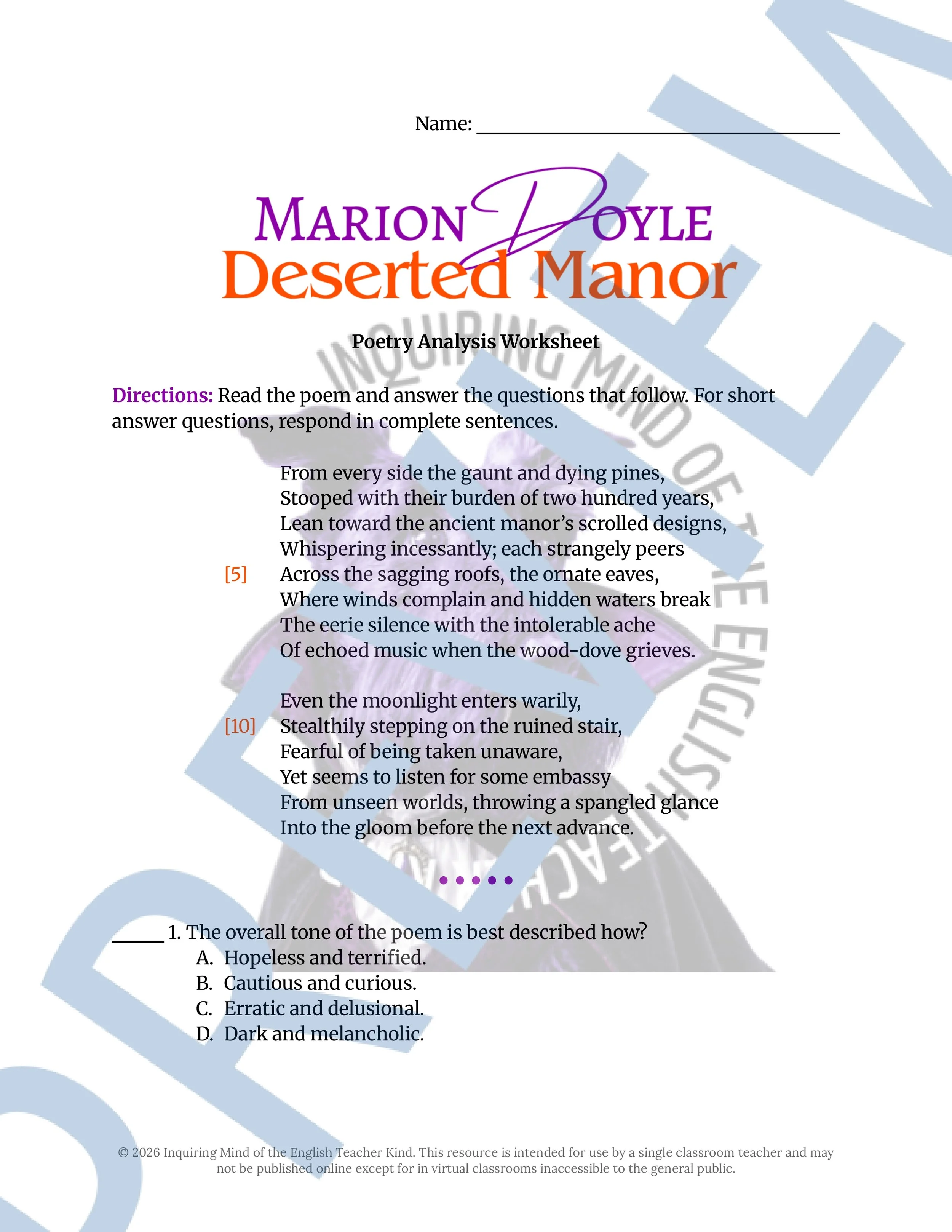
Ideal for British Literature classes and units on Gothic and lyric poetry (especially during fall/autumn and Halloween), this poem analysis worksheet helps high school readers interpret "Spellbound" by Emily Bronte, a piece that establishes a dreary landscape and explores the narrator's emotional paralysis. An answer key is included. By engaging with this poetry activity, students will:
Identify the poem's rhyme scheme.
Apply knowledge of literary devices (e.g., consonance, epizeuxis, and personification).
Infer the intended effects of poetic devices in context (e.g., repetition).
Describe tone in context.
Explore the symbolism associated with an object in context (e.g., the snow-leaden tree).
Make an evidence-based inference (e.g., the narrator's affliction).
Analyze characterization (e.g., the narrator's mental state).
Support claims and inferences with sound reasoning and relevant evidence.
Materials are delivered in editable Word Document and printable PDF formats. (Alternatively, a Google option is available.)
More resources for the Halloween season are available:
Ideal for British Literature classes and units on Gothic and lyric poetry (especially during fall/autumn and Halloween), this poem analysis worksheet helps high school readers interpret "Spellbound" by Emily Bronte, a piece that establishes a dreary landscape and explores the narrator's emotional paralysis. An answer key is included. By engaging with this poetry activity, students will:
Identify the poem's rhyme scheme.
Apply knowledge of literary devices (e.g., consonance, epizeuxis, and personification).
Infer the intended effects of poetic devices in context (e.g., repetition).
Describe tone in context.
Explore the symbolism associated with an object in context (e.g., the snow-leaden tree).
Make an evidence-based inference (e.g., the narrator's affliction).
Analyze characterization (e.g., the narrator's mental state).
Support claims and inferences with sound reasoning and relevant evidence.
Materials are delivered in editable Word Document and printable PDF formats. (Alternatively, a Google option is available.)
More resources for the Halloween season are available:

 Image 1 of 4
 Image 2 of 4
 Image 3 of 4
 Image 4 of 4