Image 1 of 11
Image 2 of 11
Image 3 of 11
Image 4 of 11
Image 5 of 11
Image 6 of 11
Image 7 of 11
Image 8 of 11
Image 9 of 11
Image 10 of 11
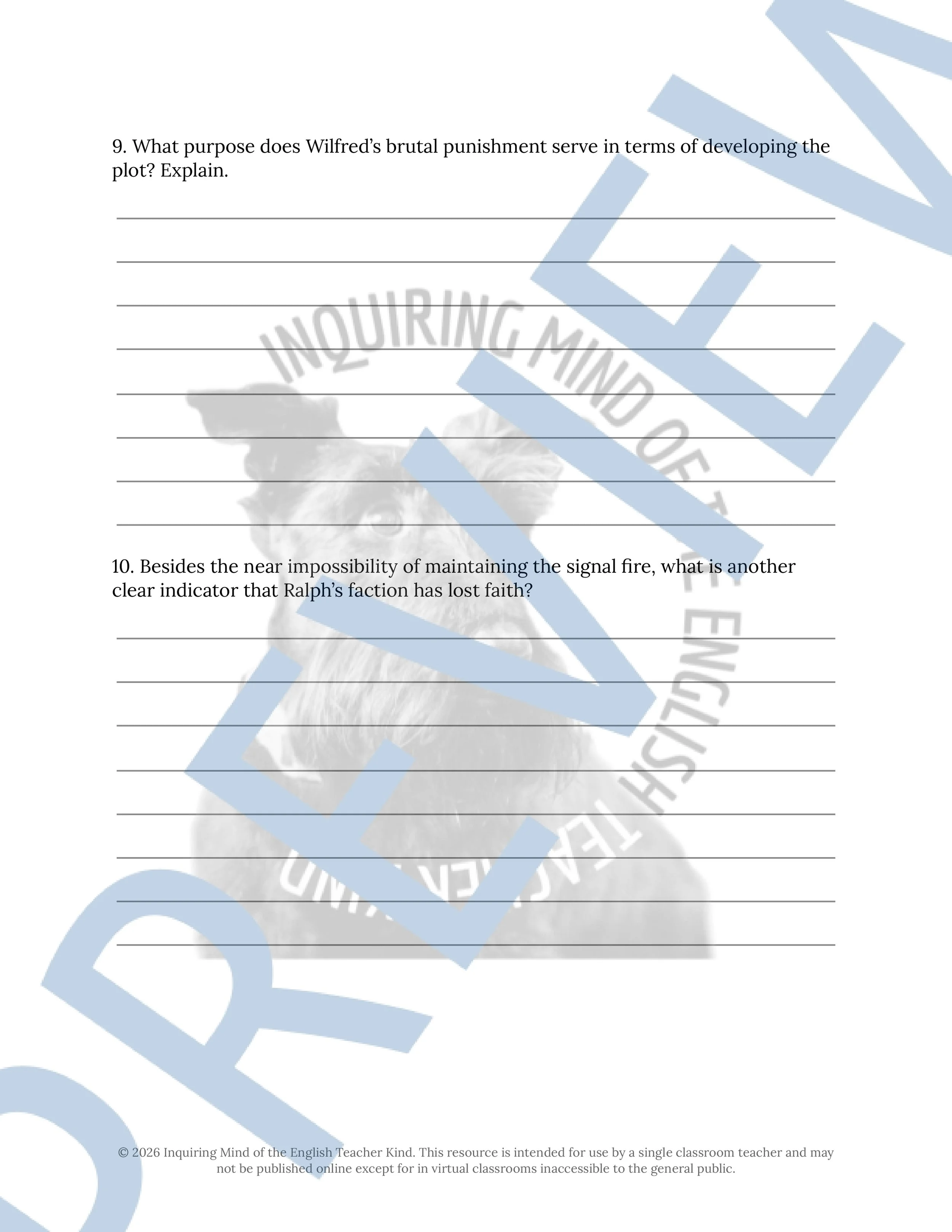
Image 11 of 11
Lord of the Flies Chapter 12 Quiz, Analysis Worksheet, Vocabulary Activities, and Answer Keys
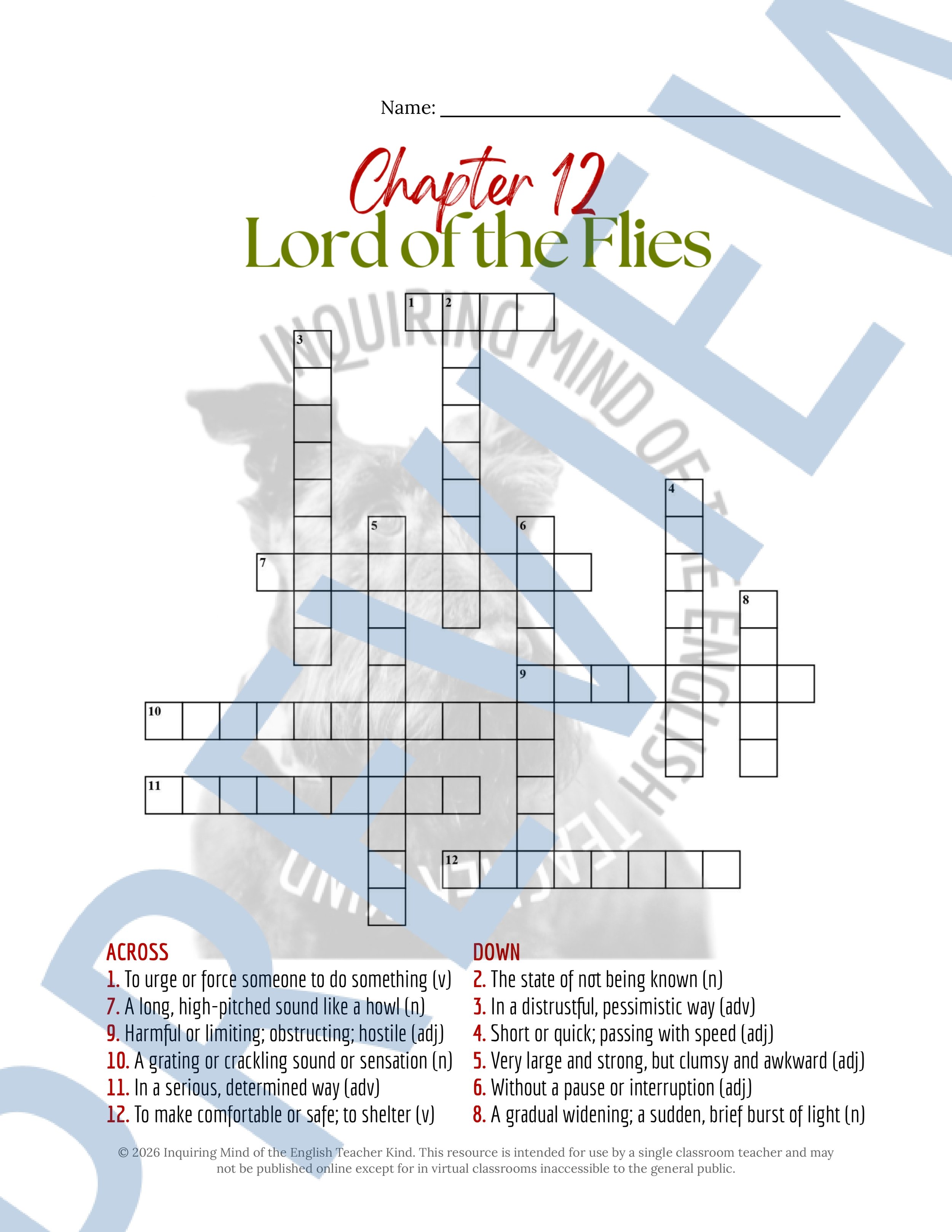
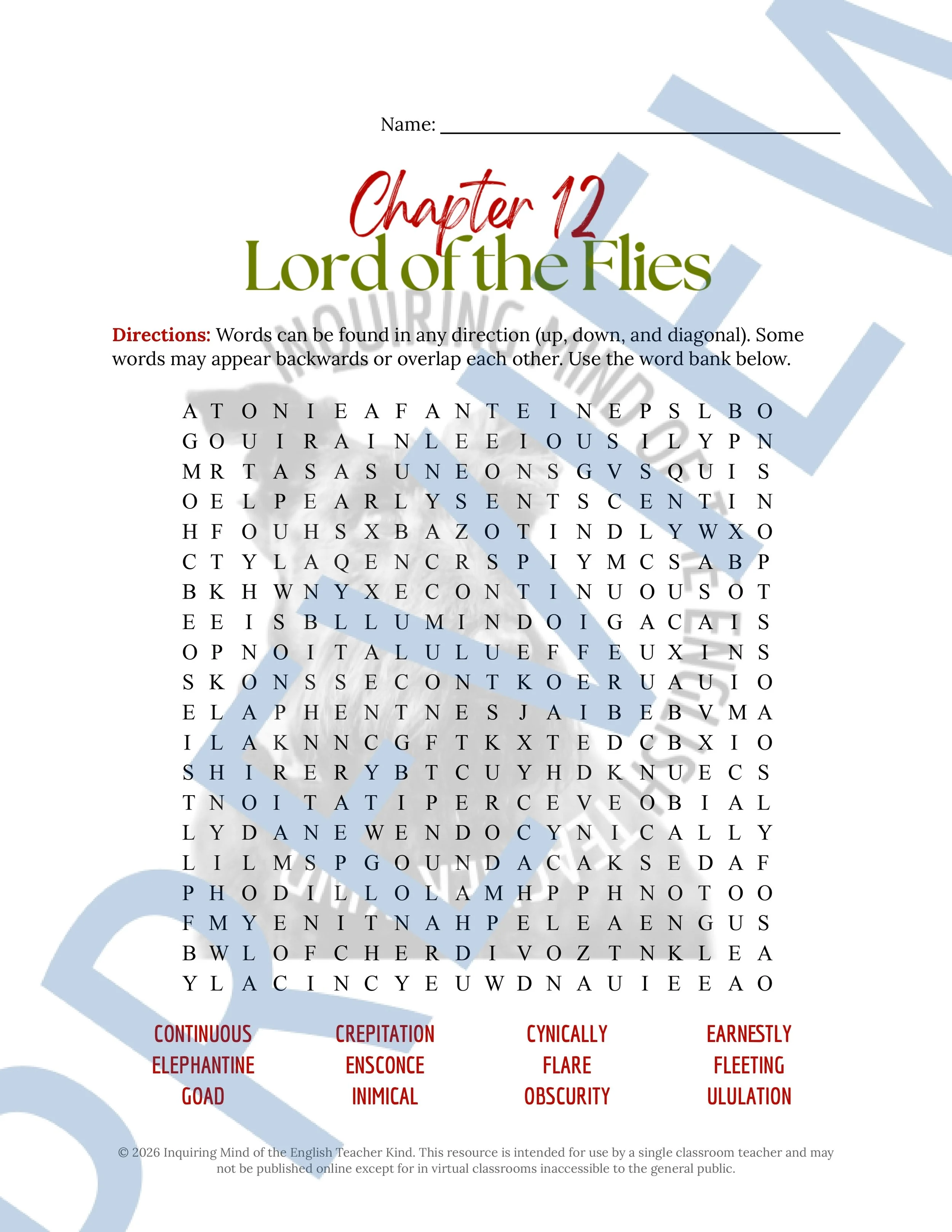
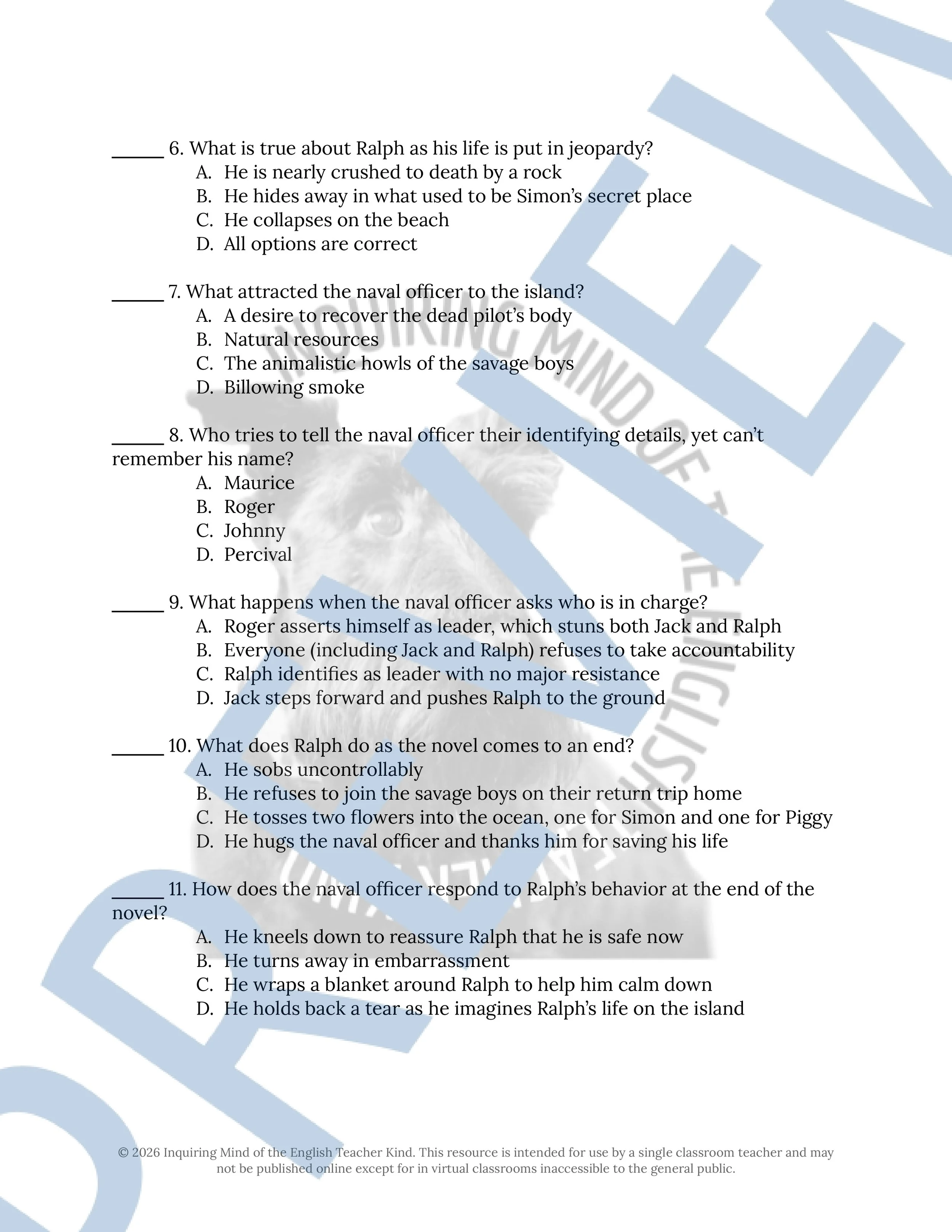
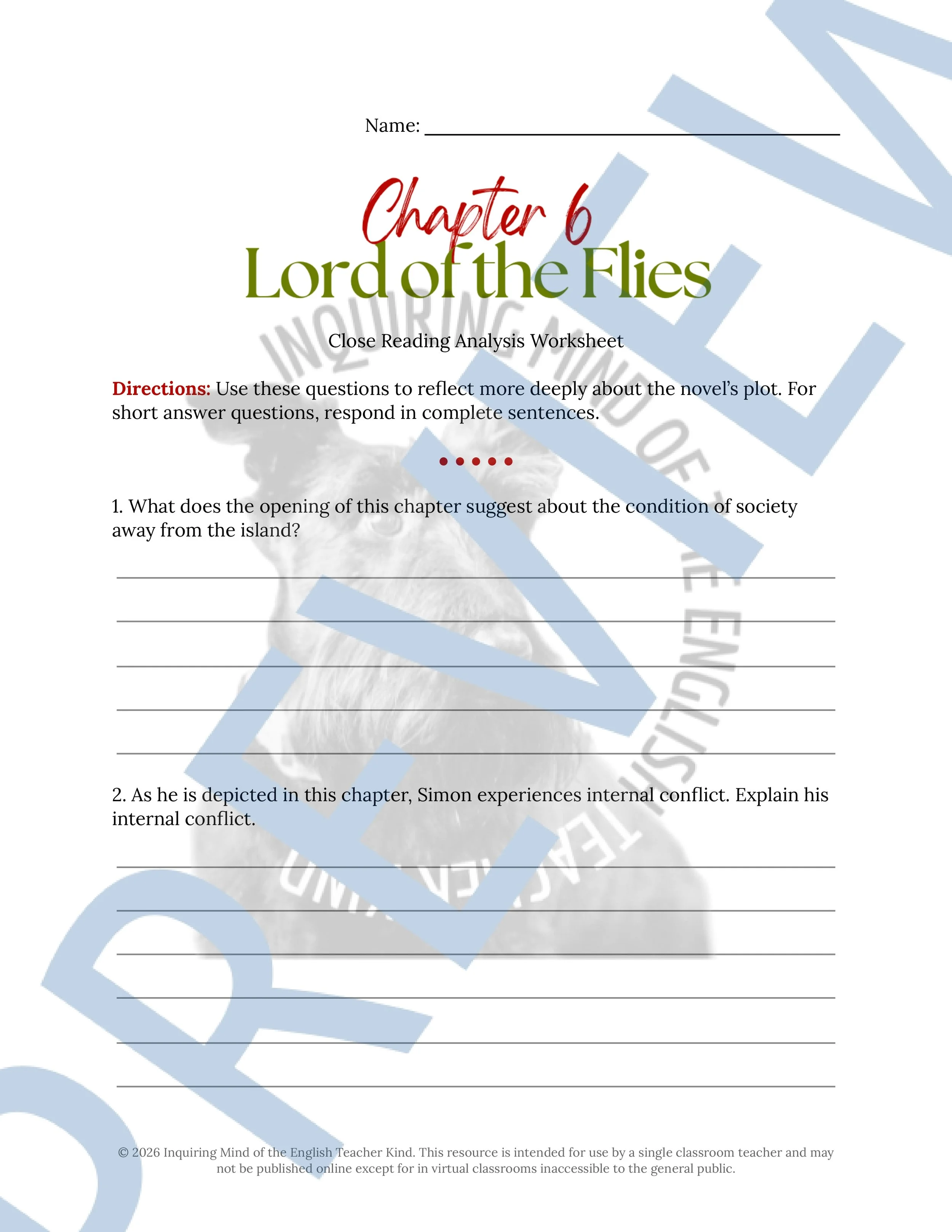
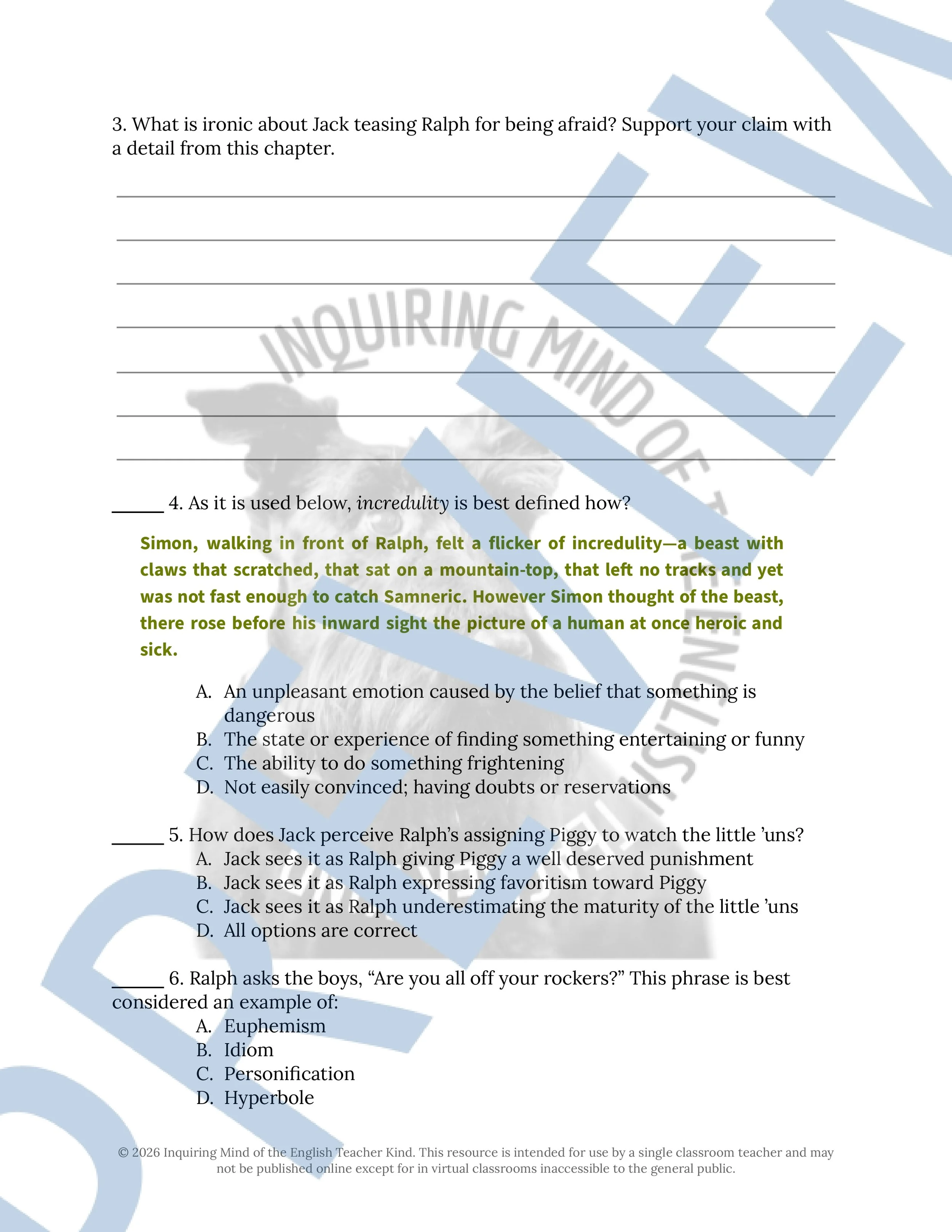
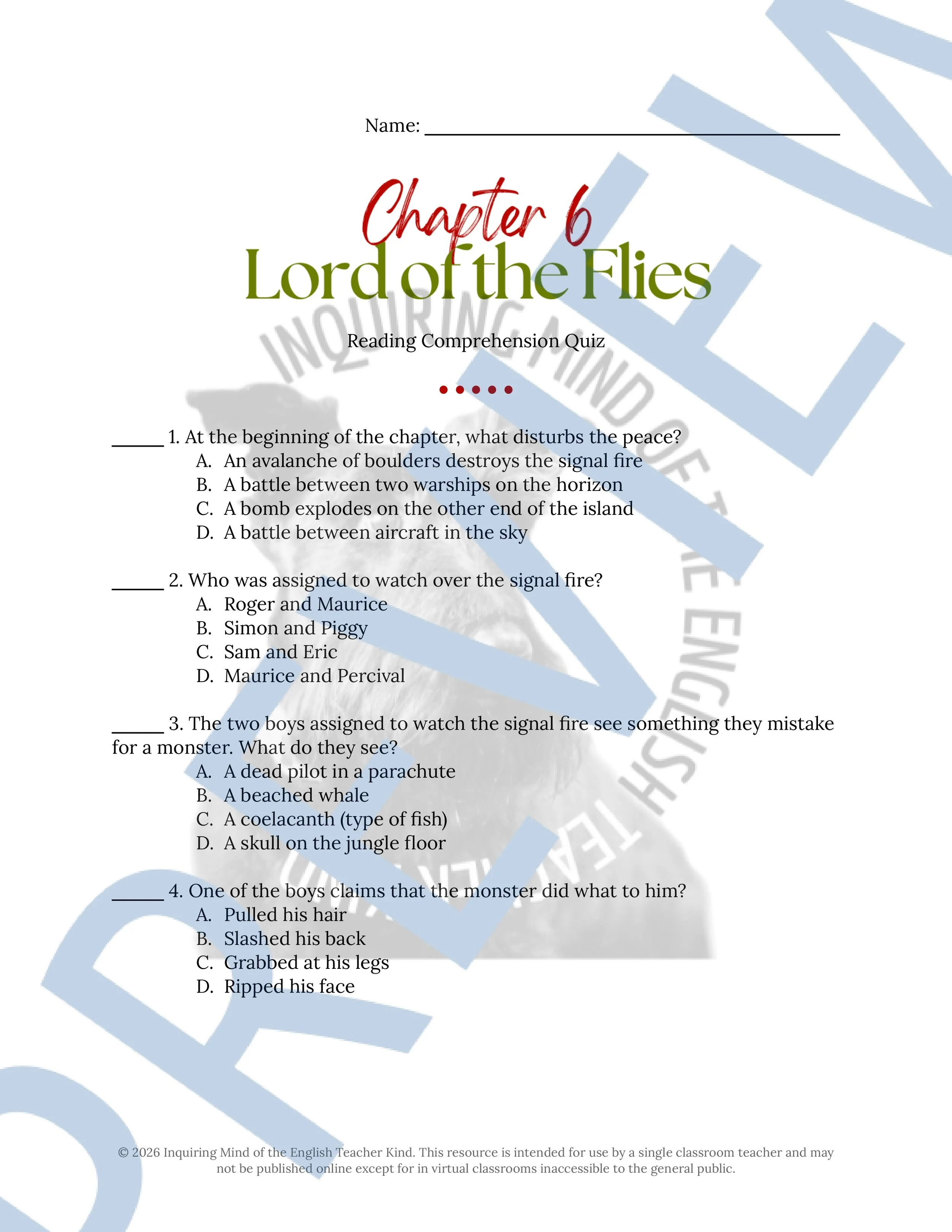
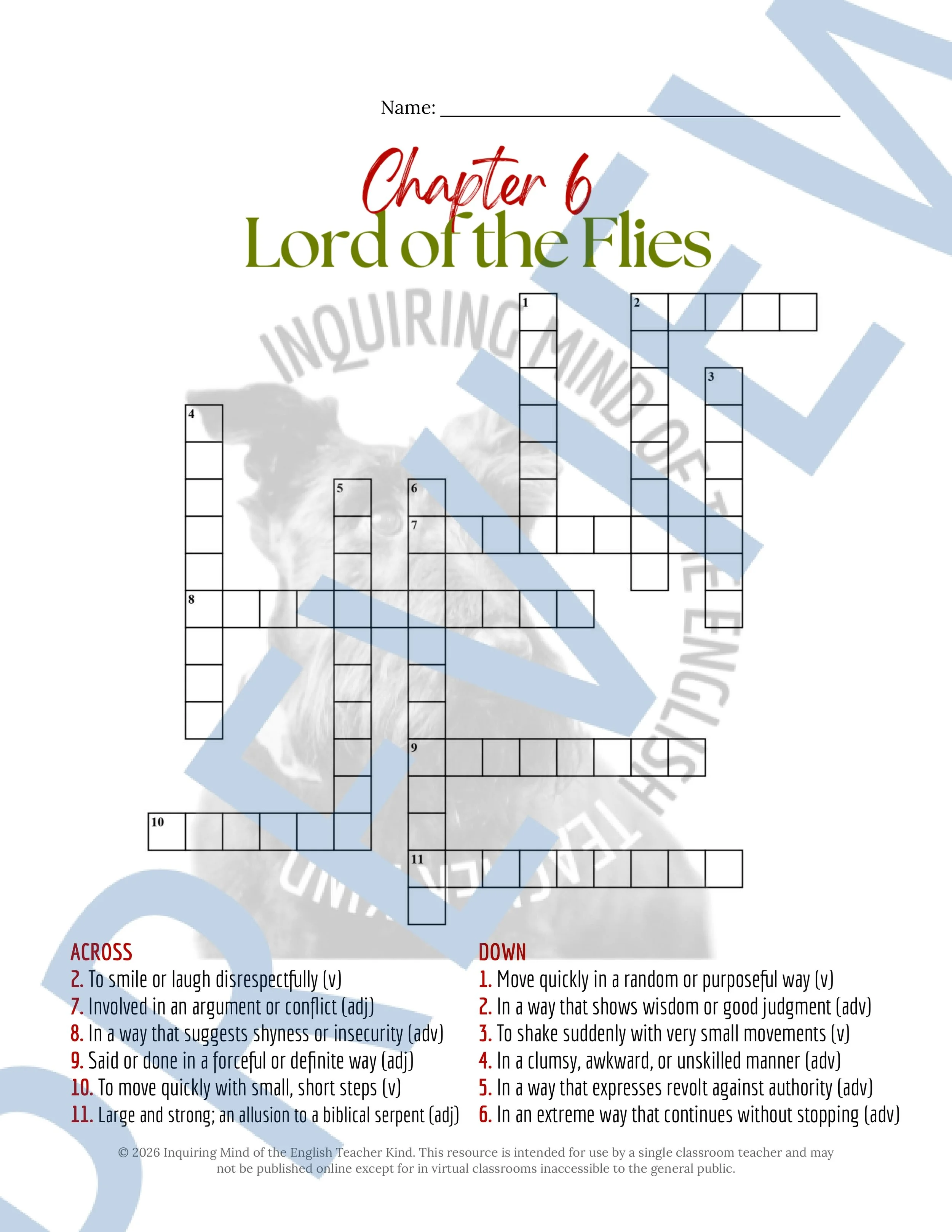
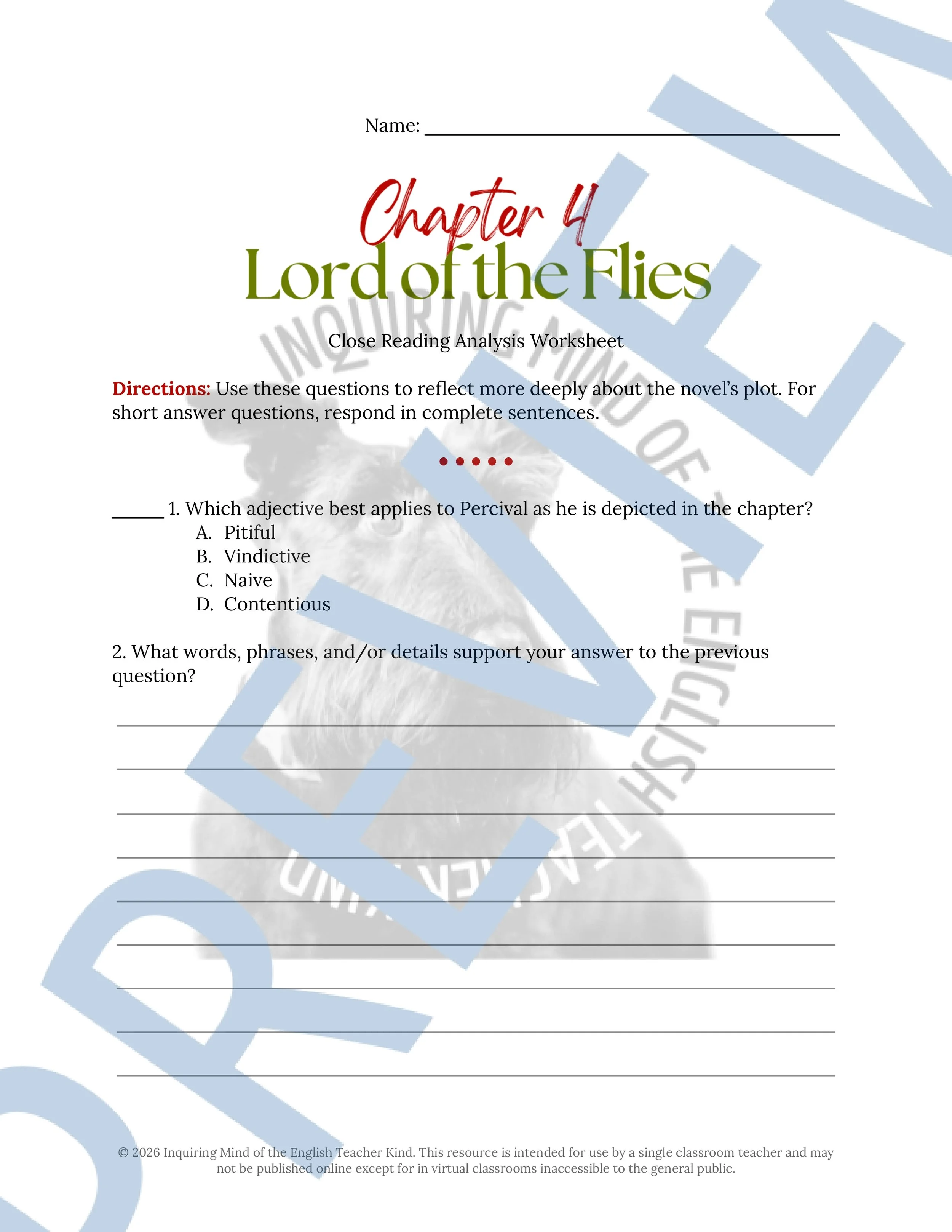
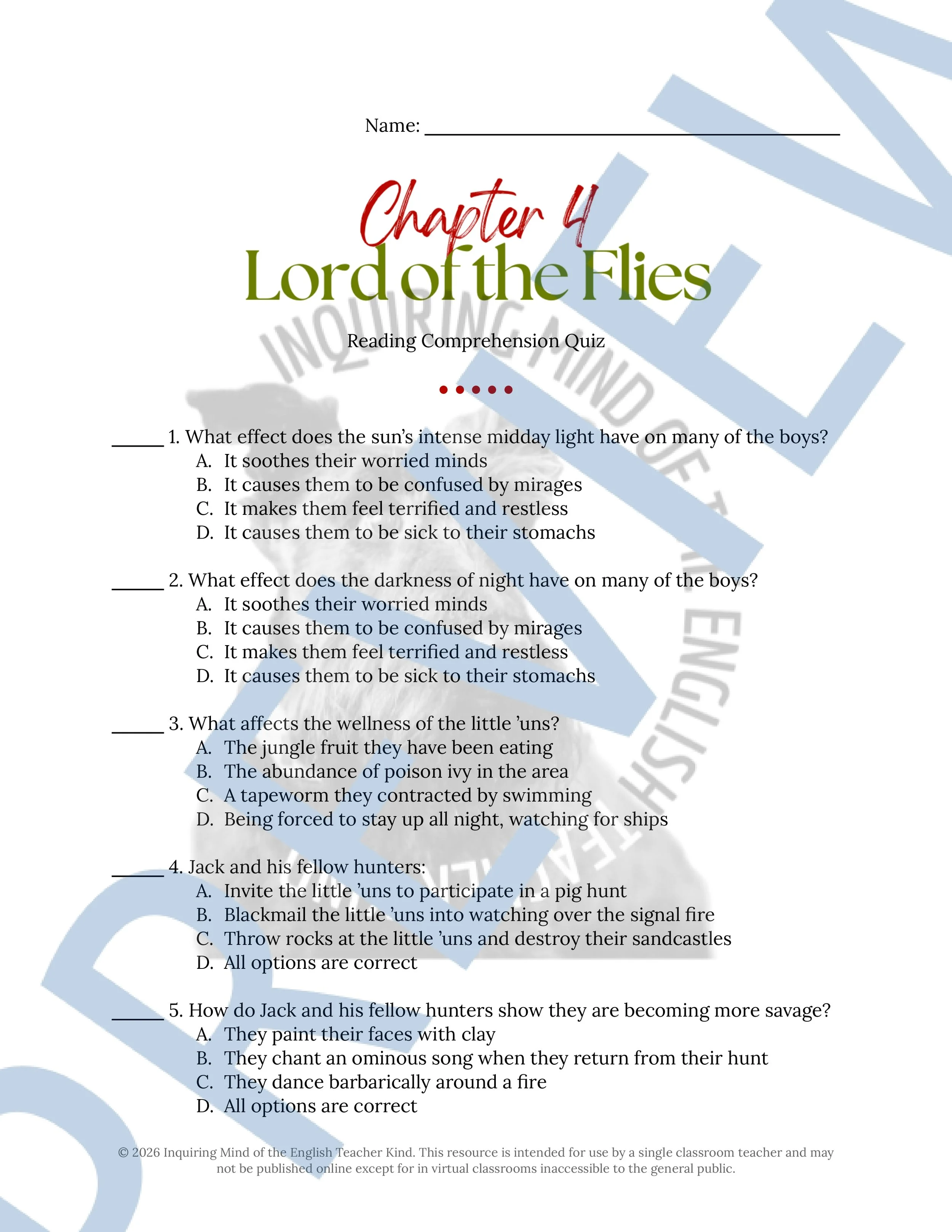
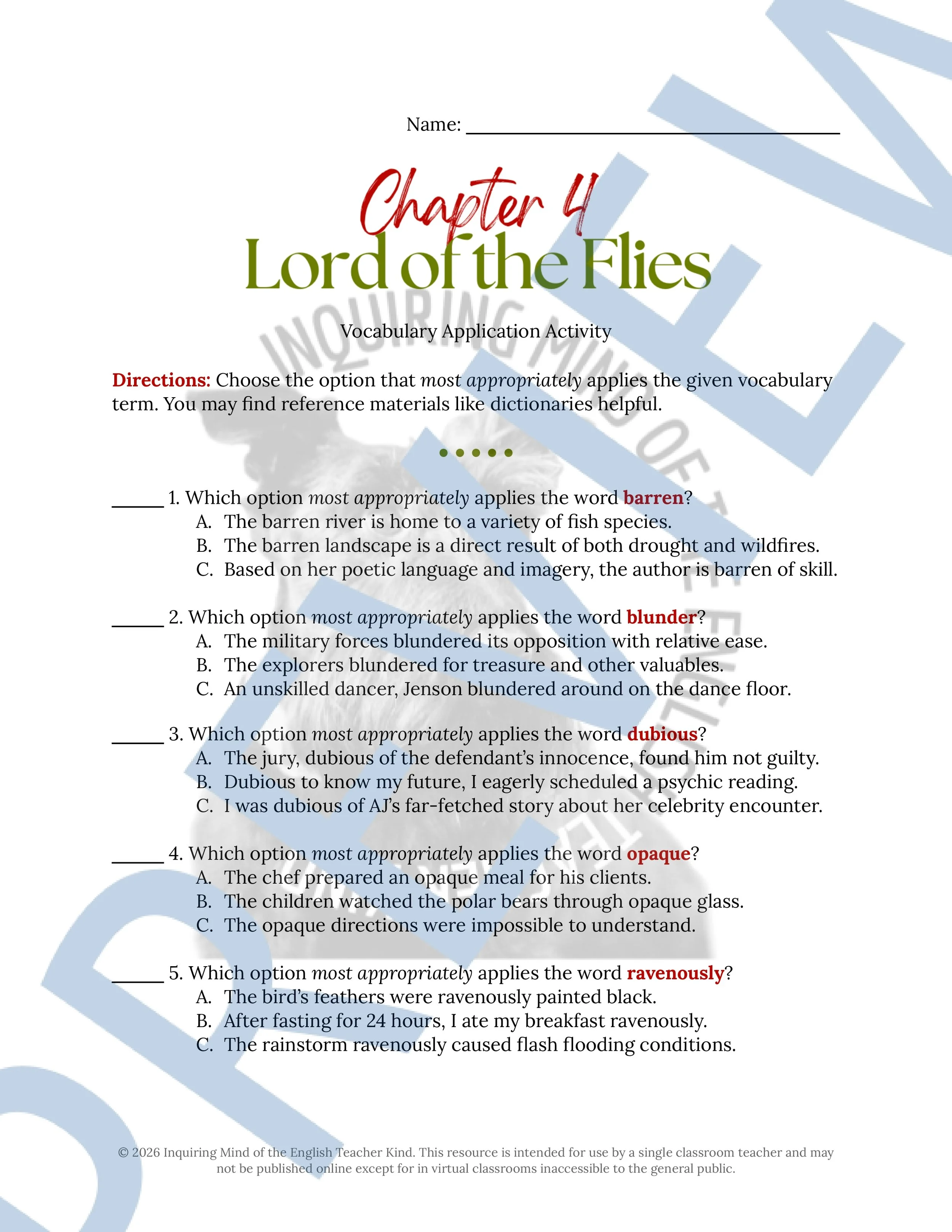
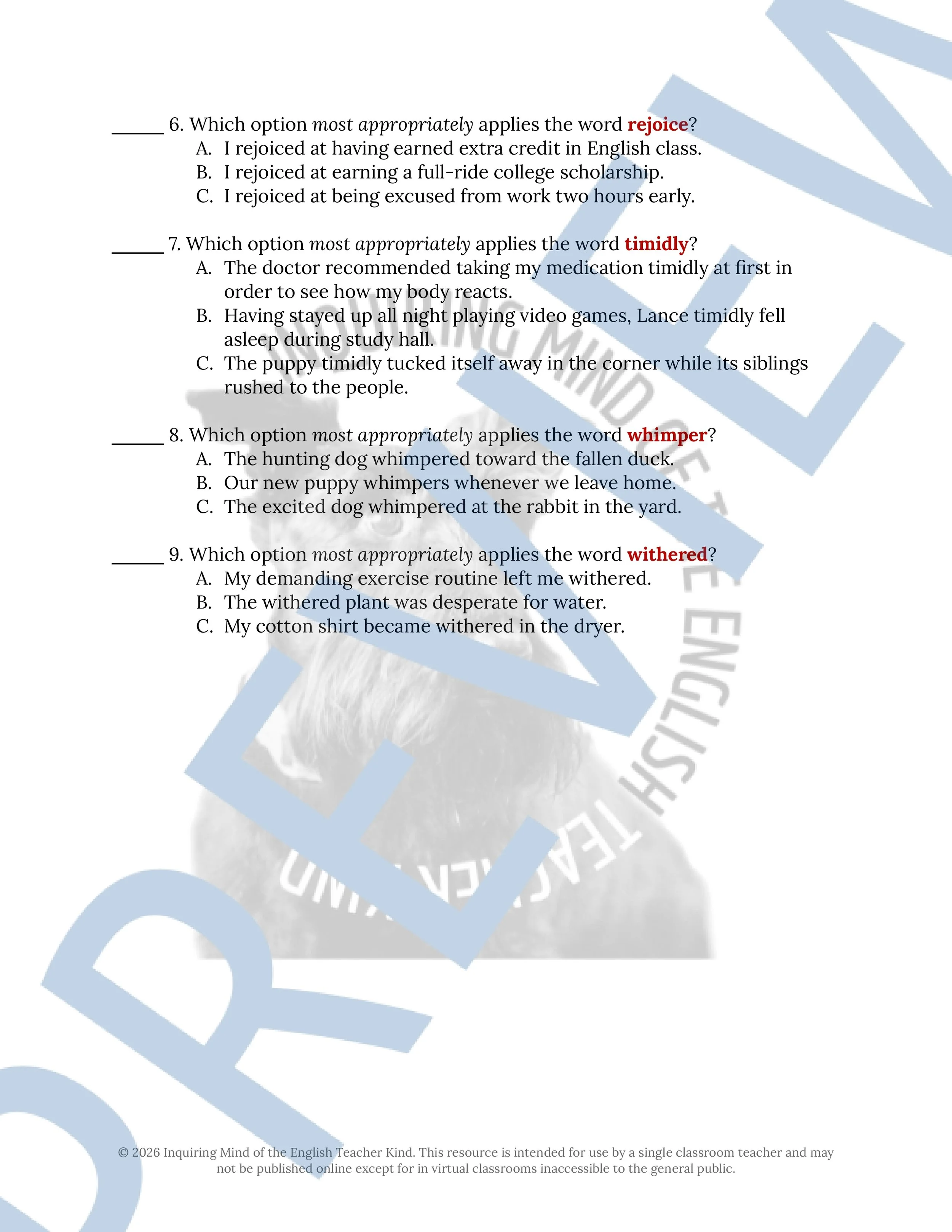
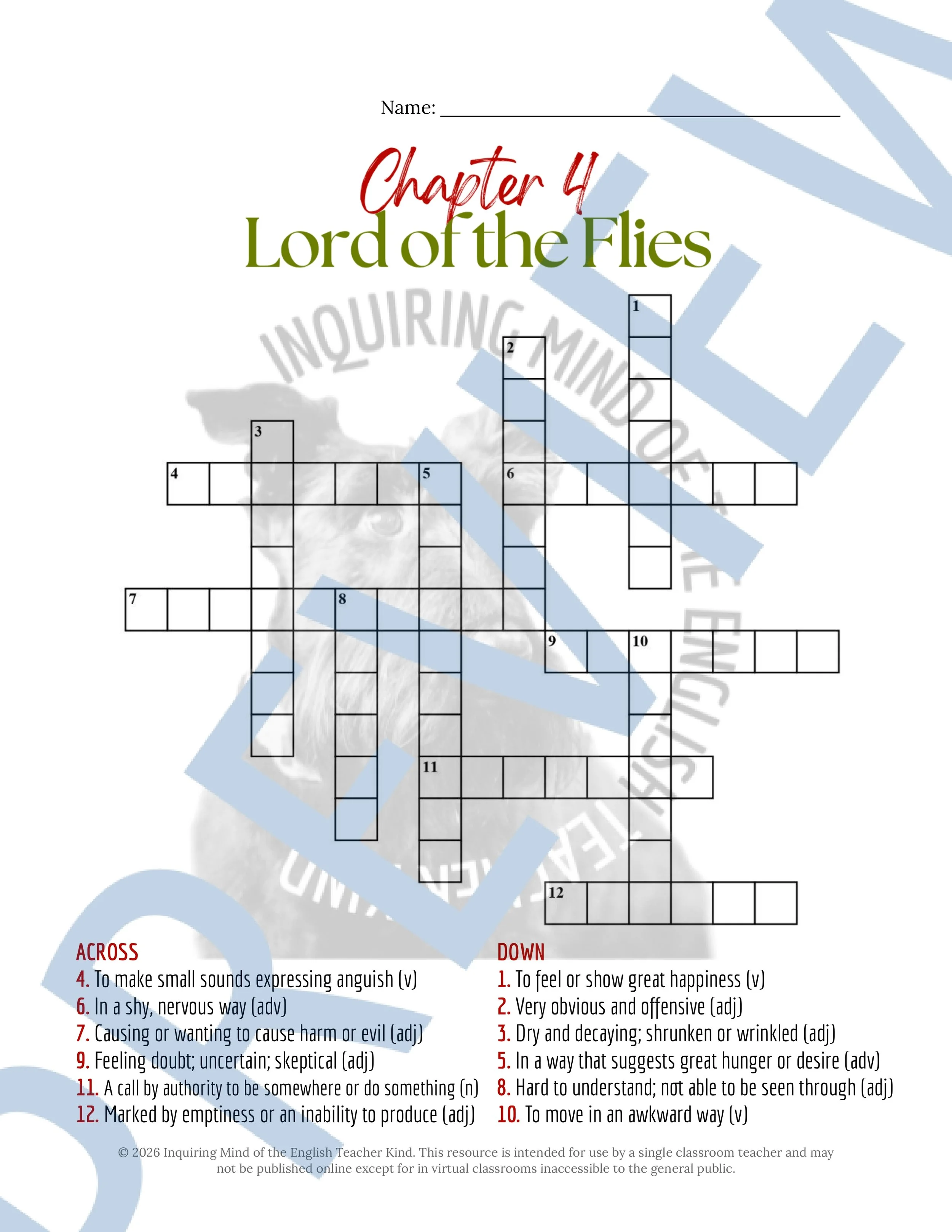
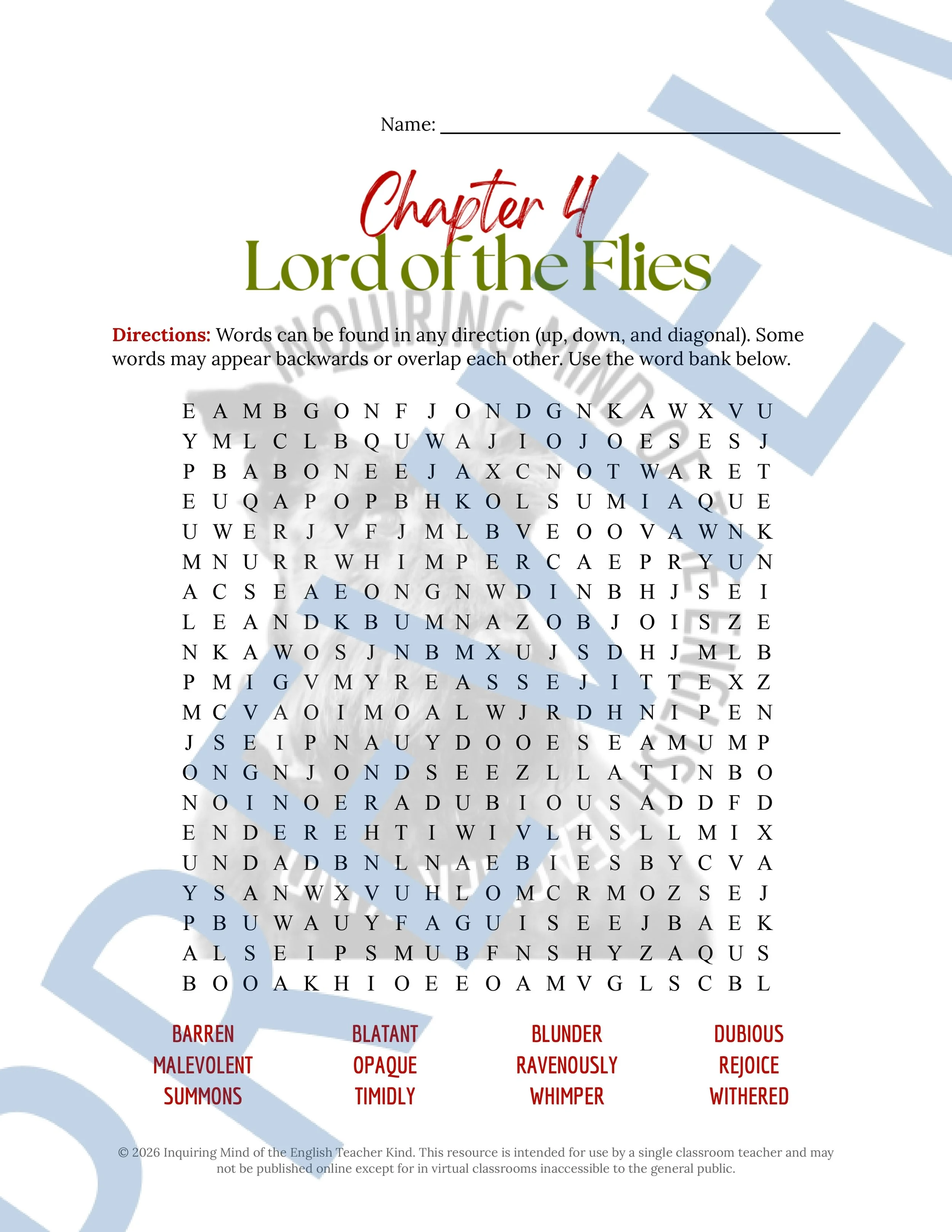
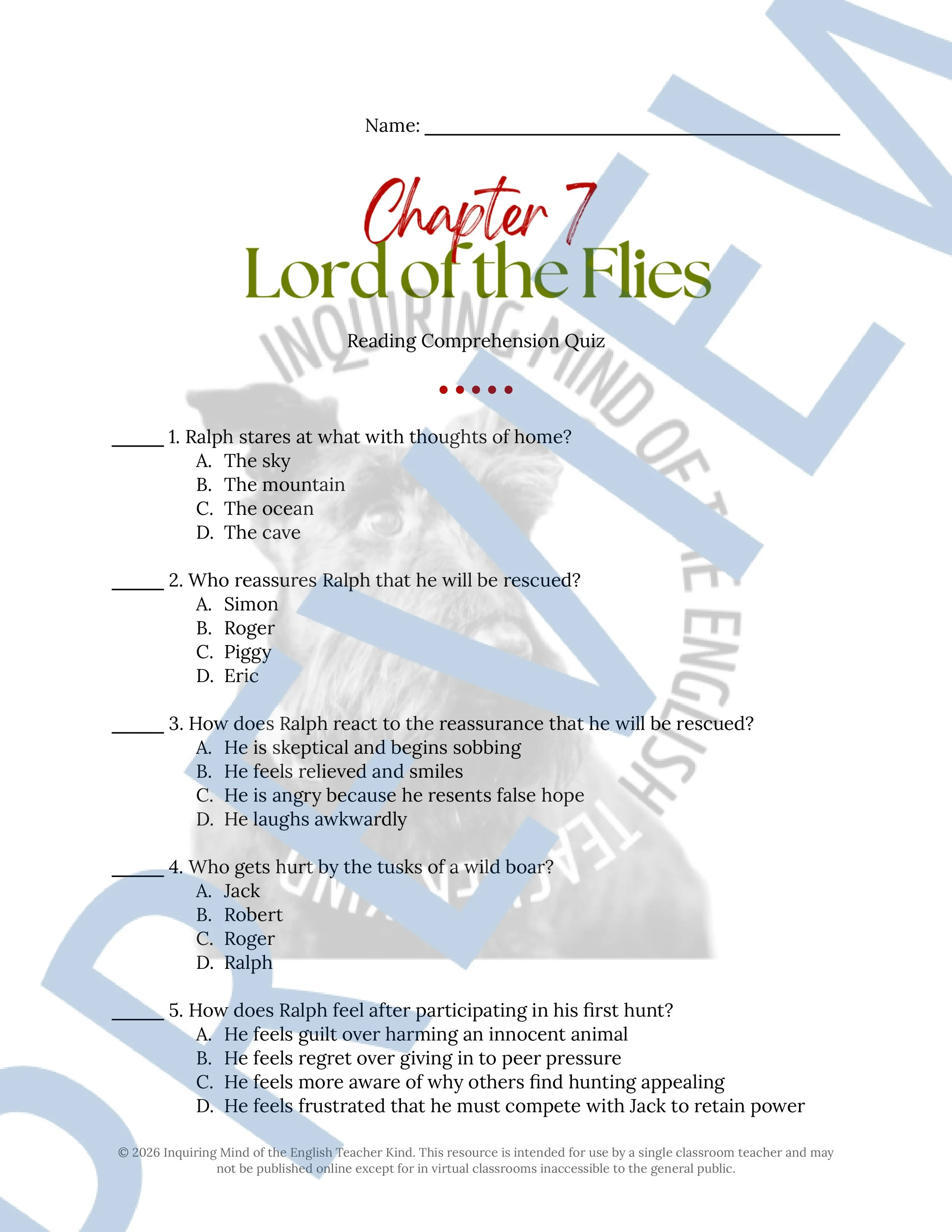
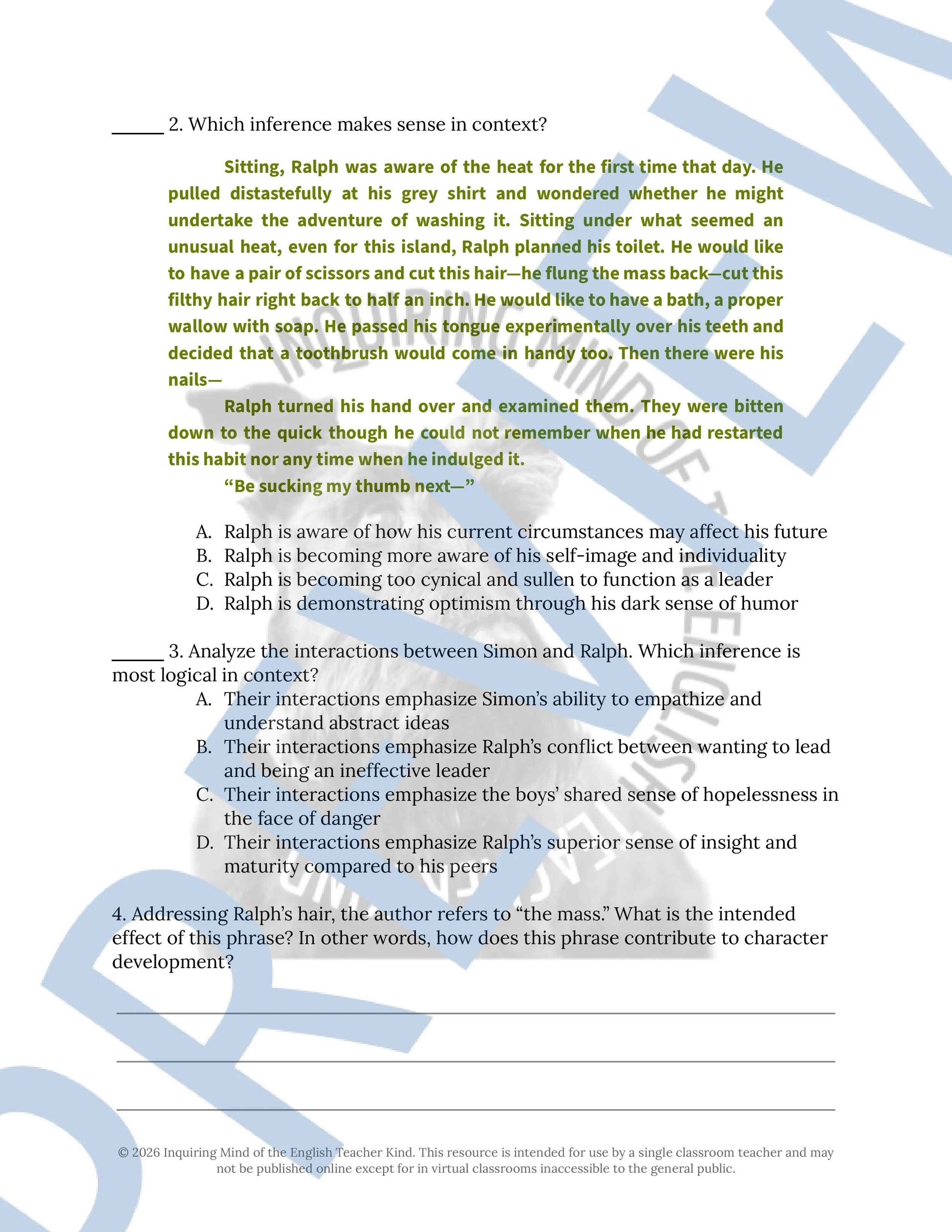
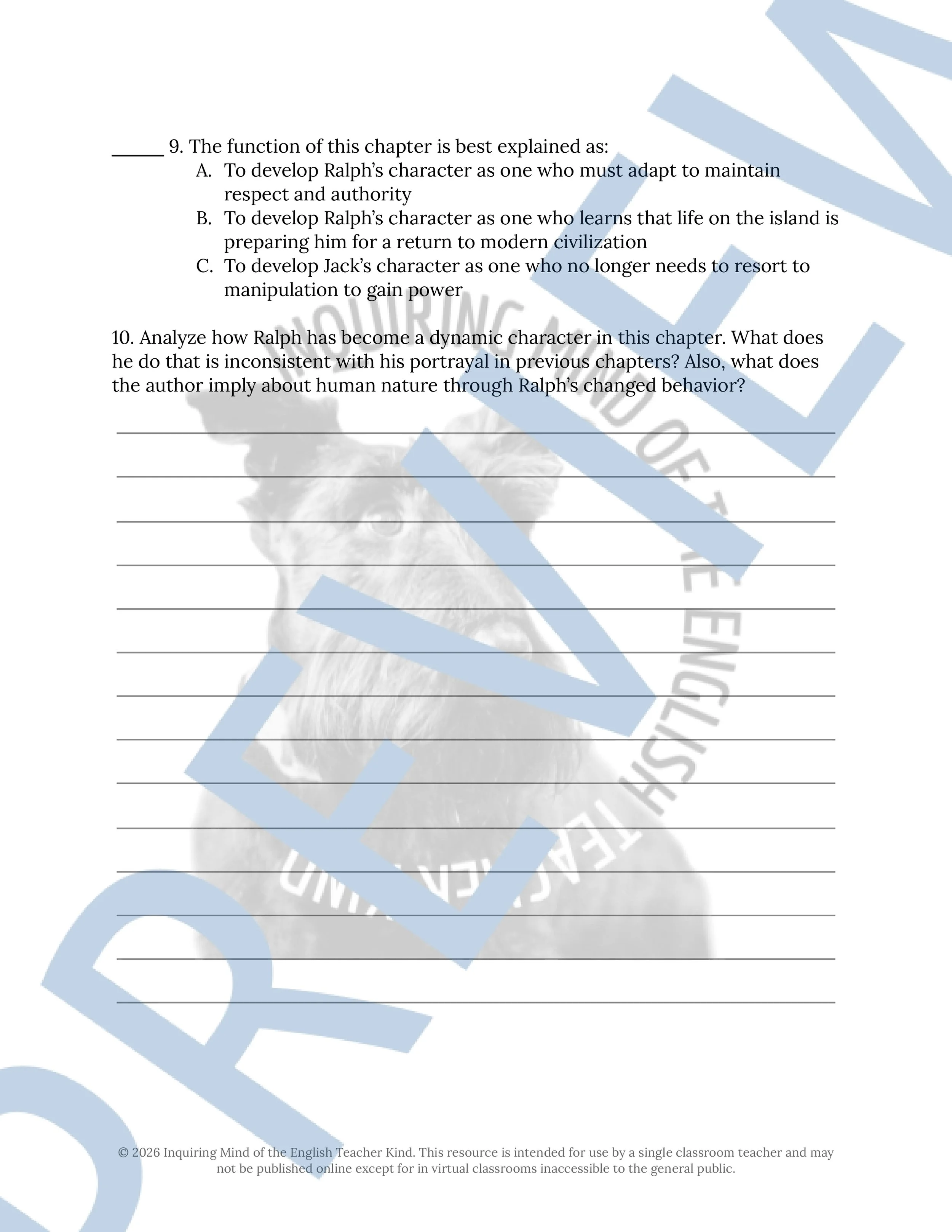
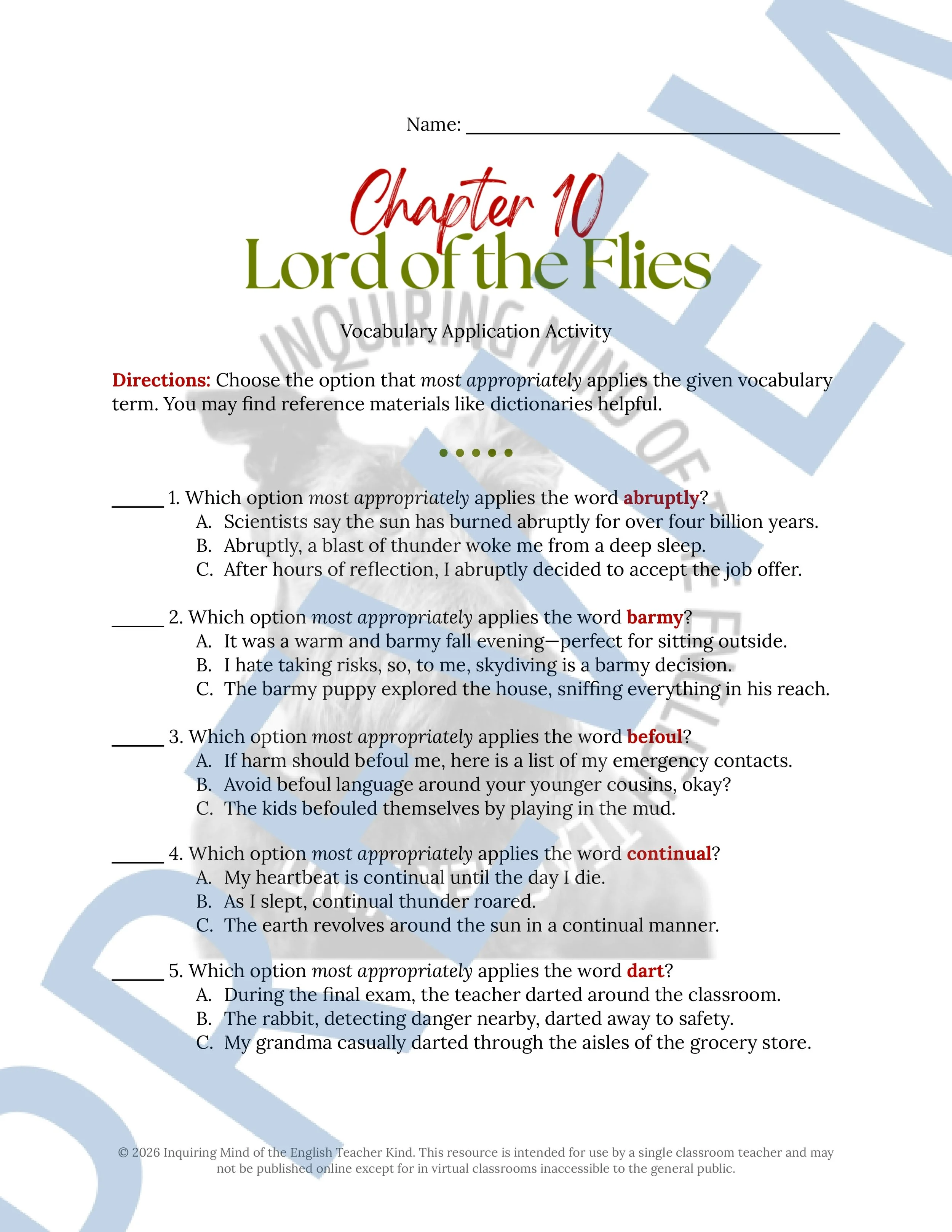
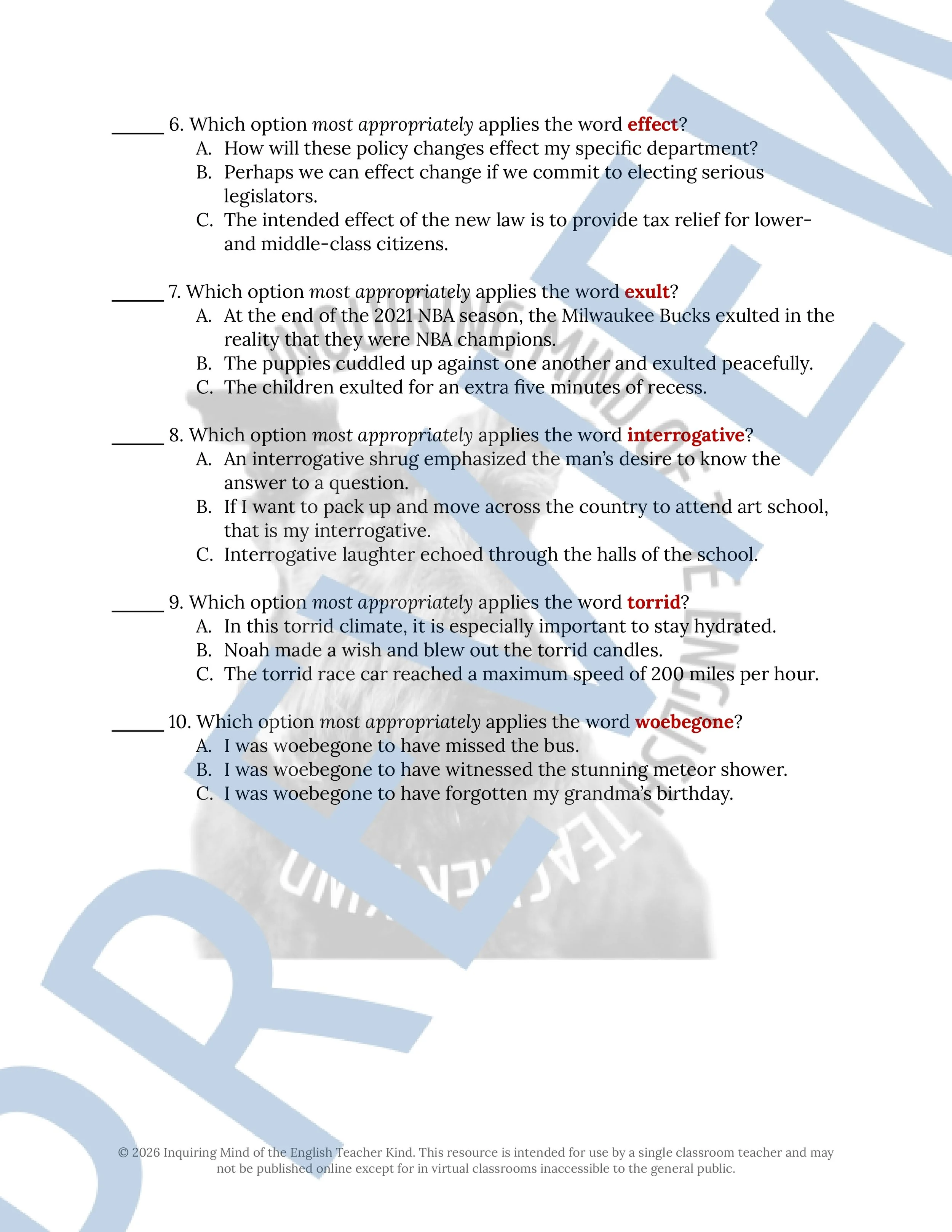
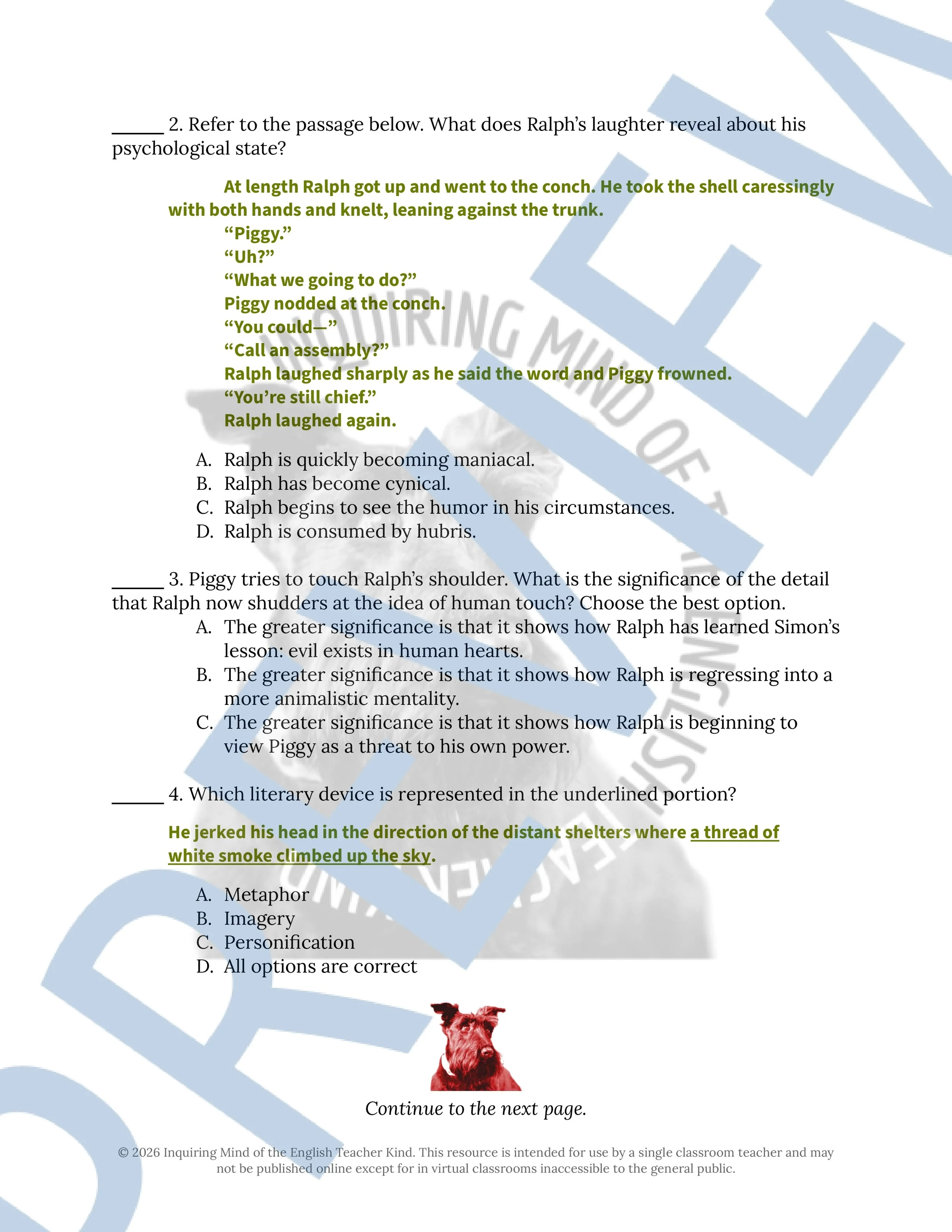
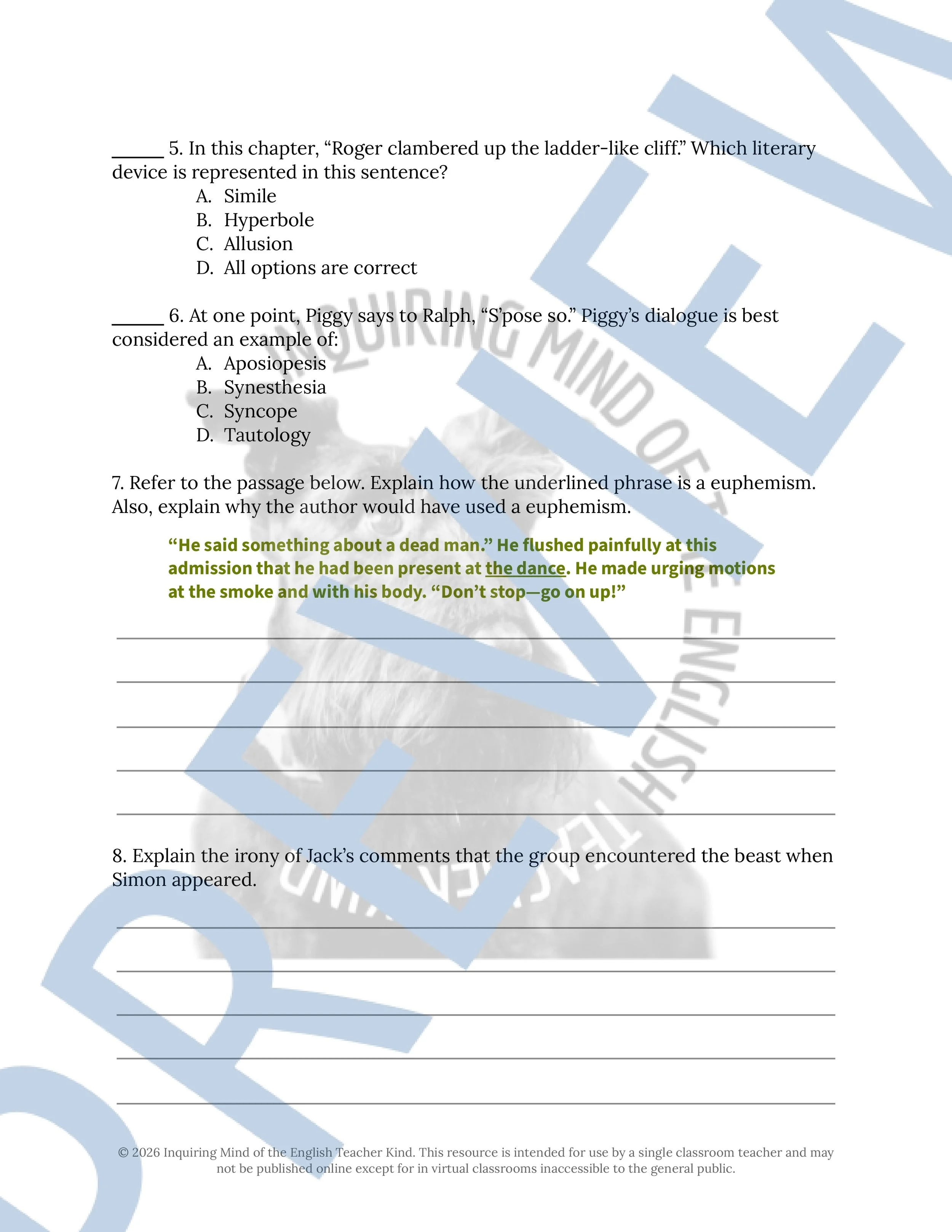
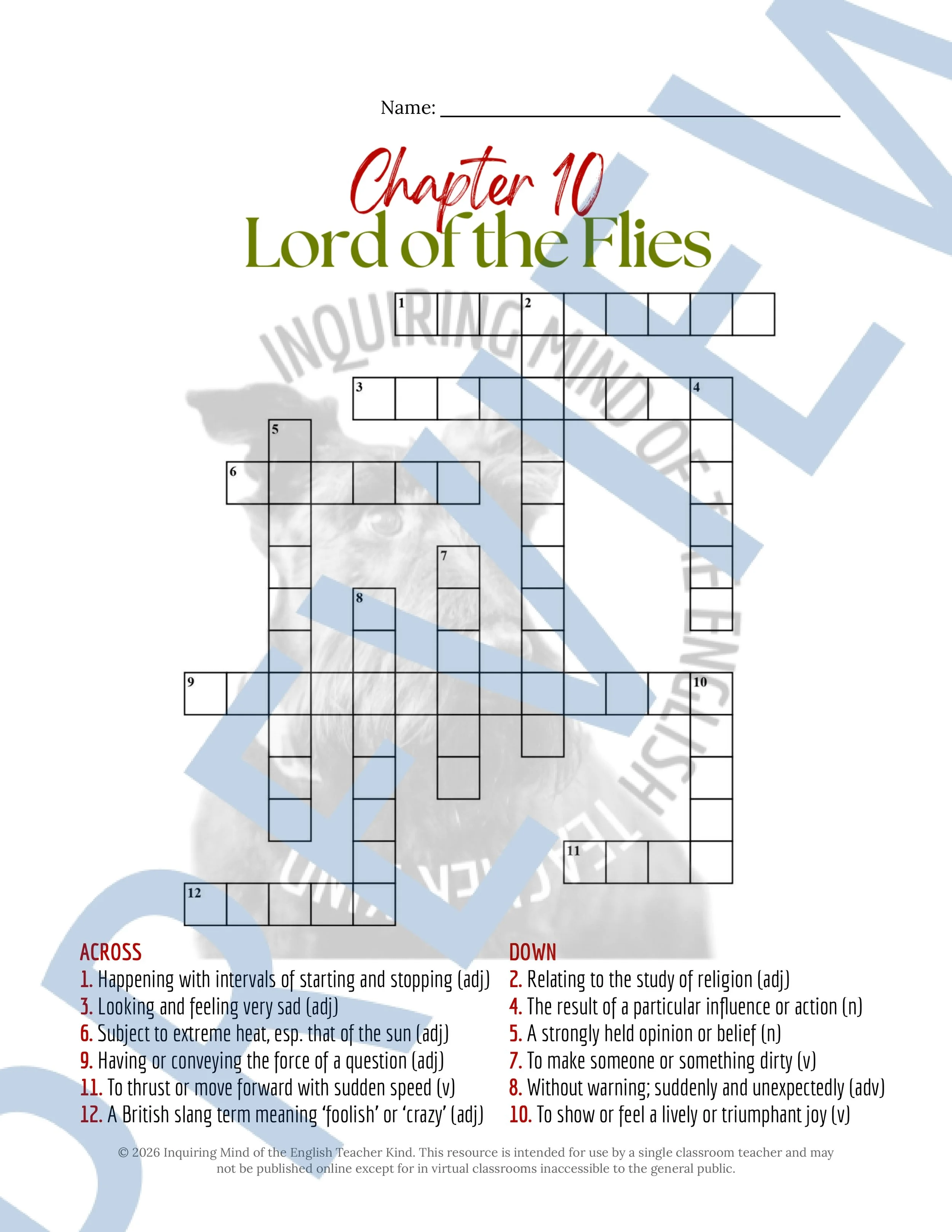
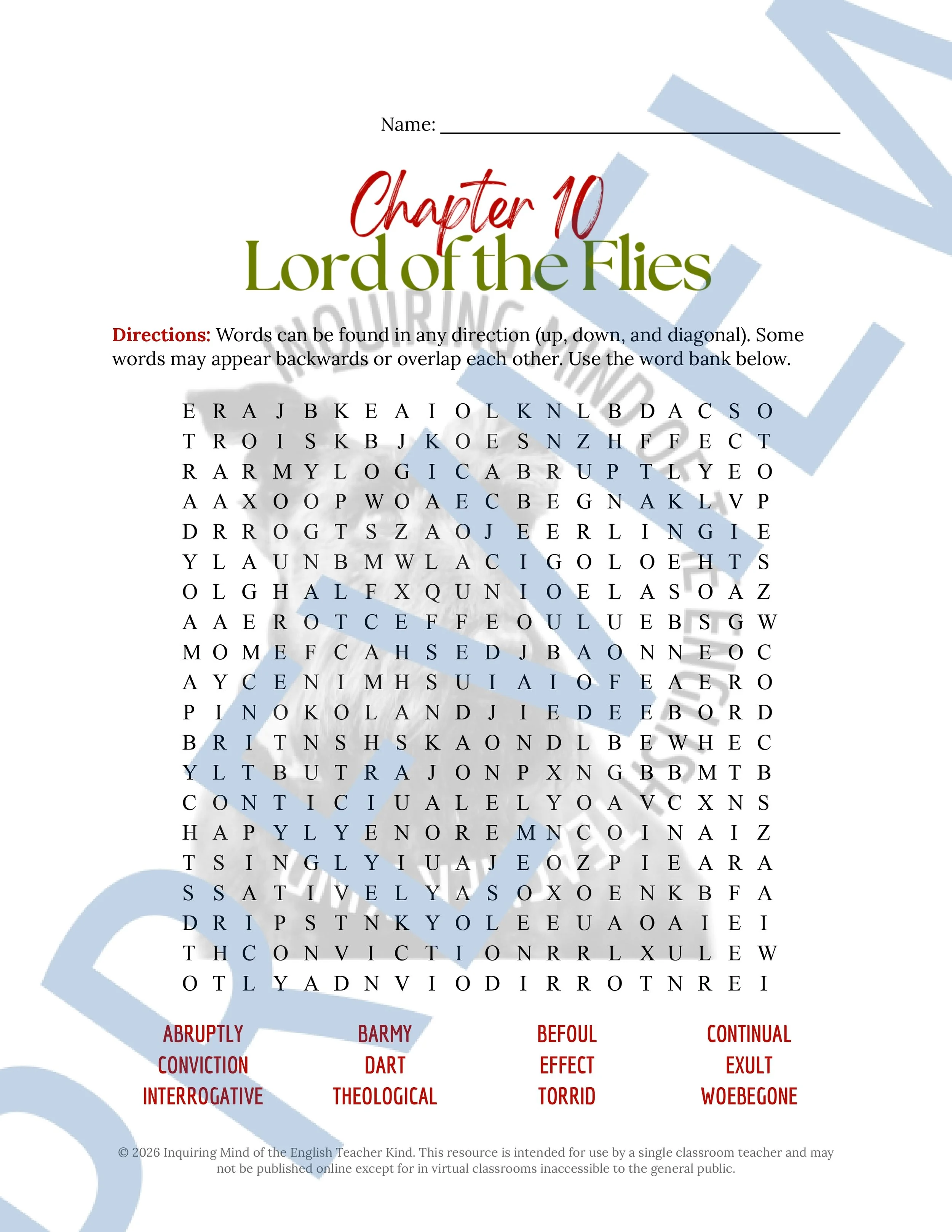
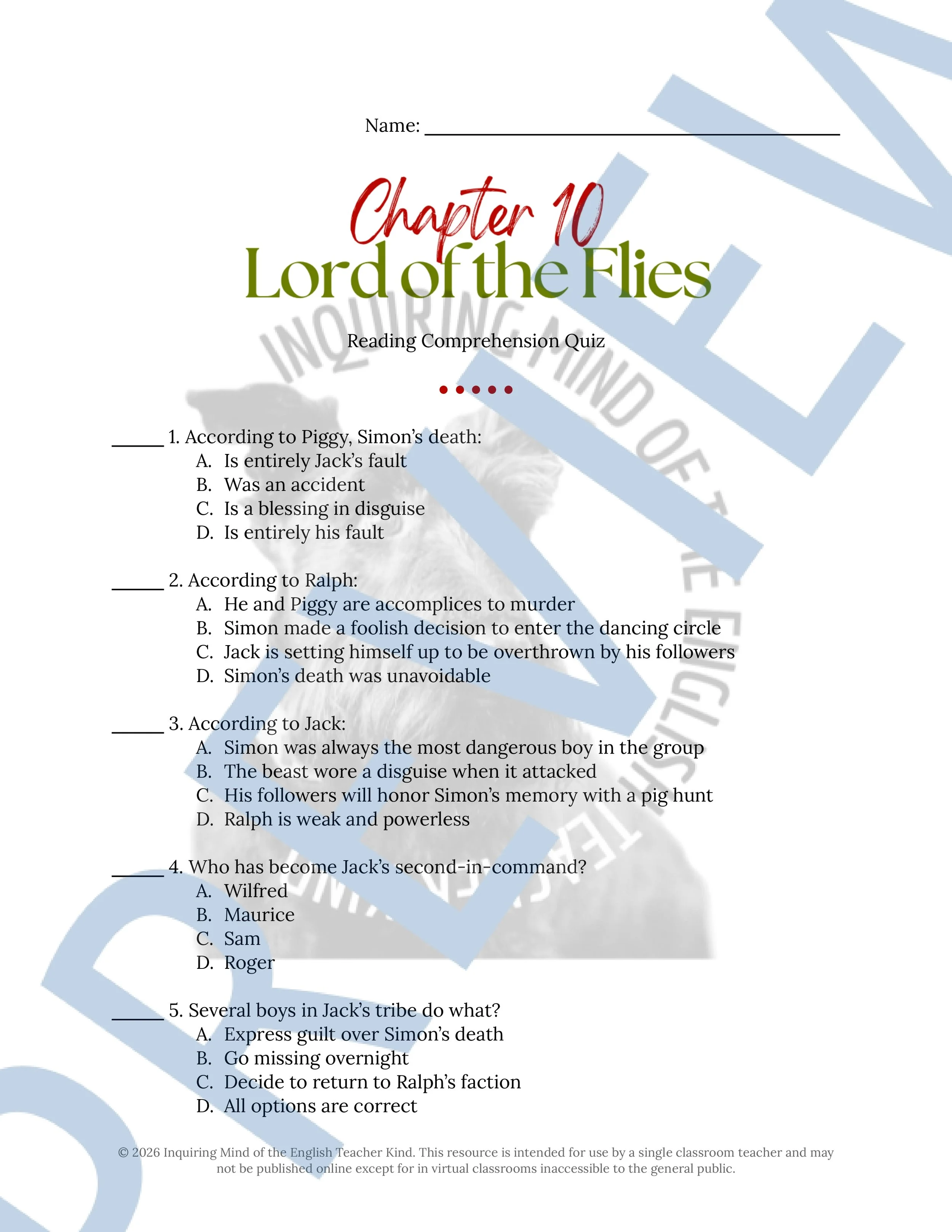
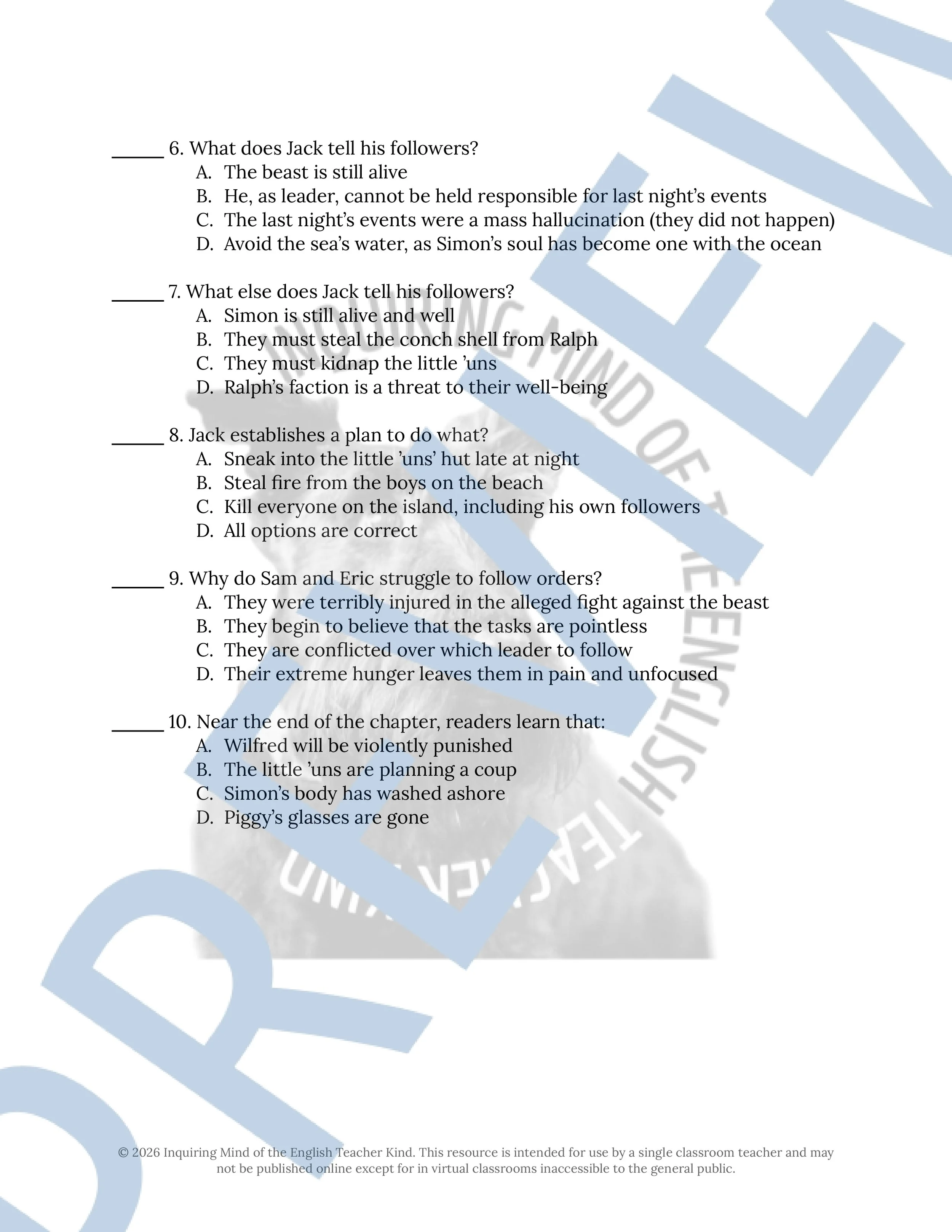
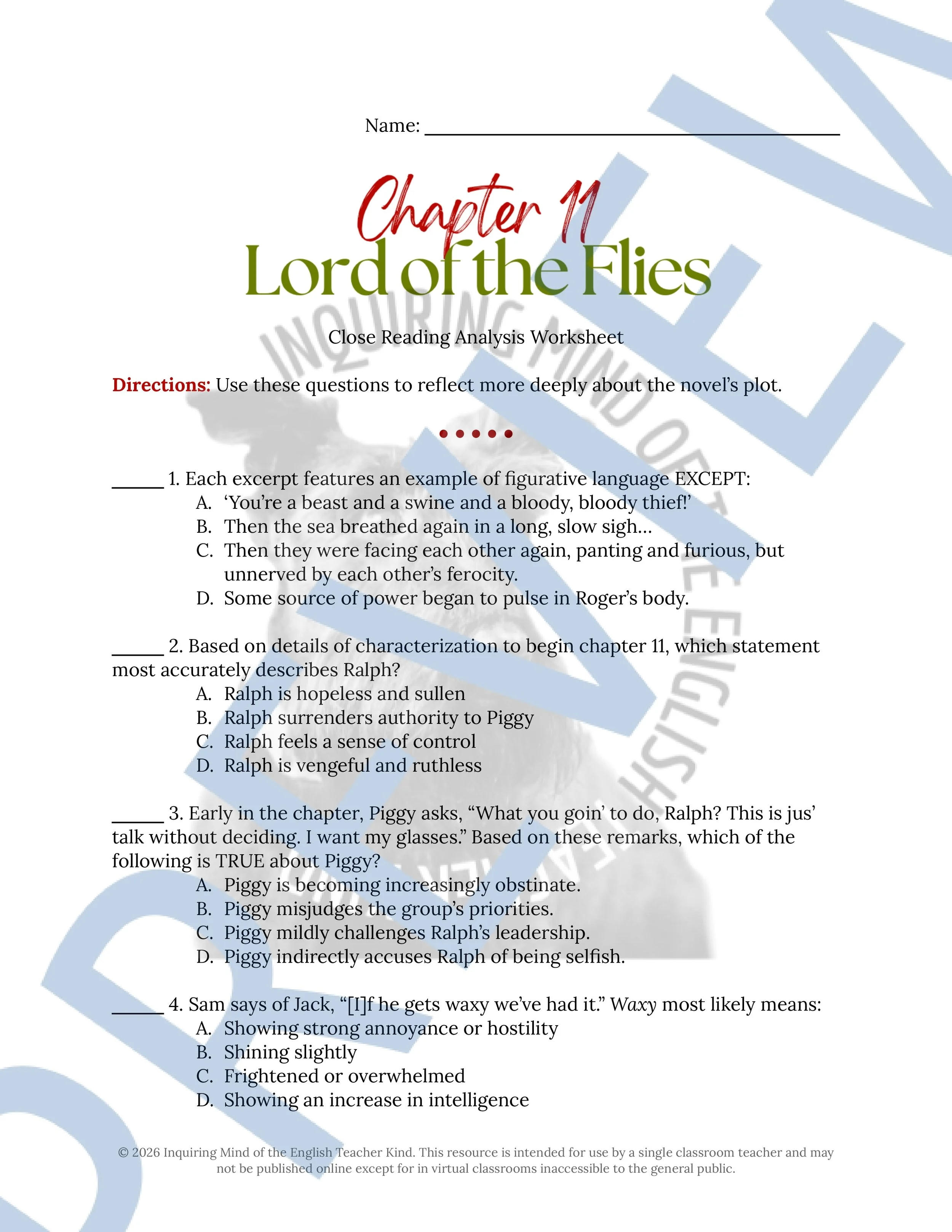
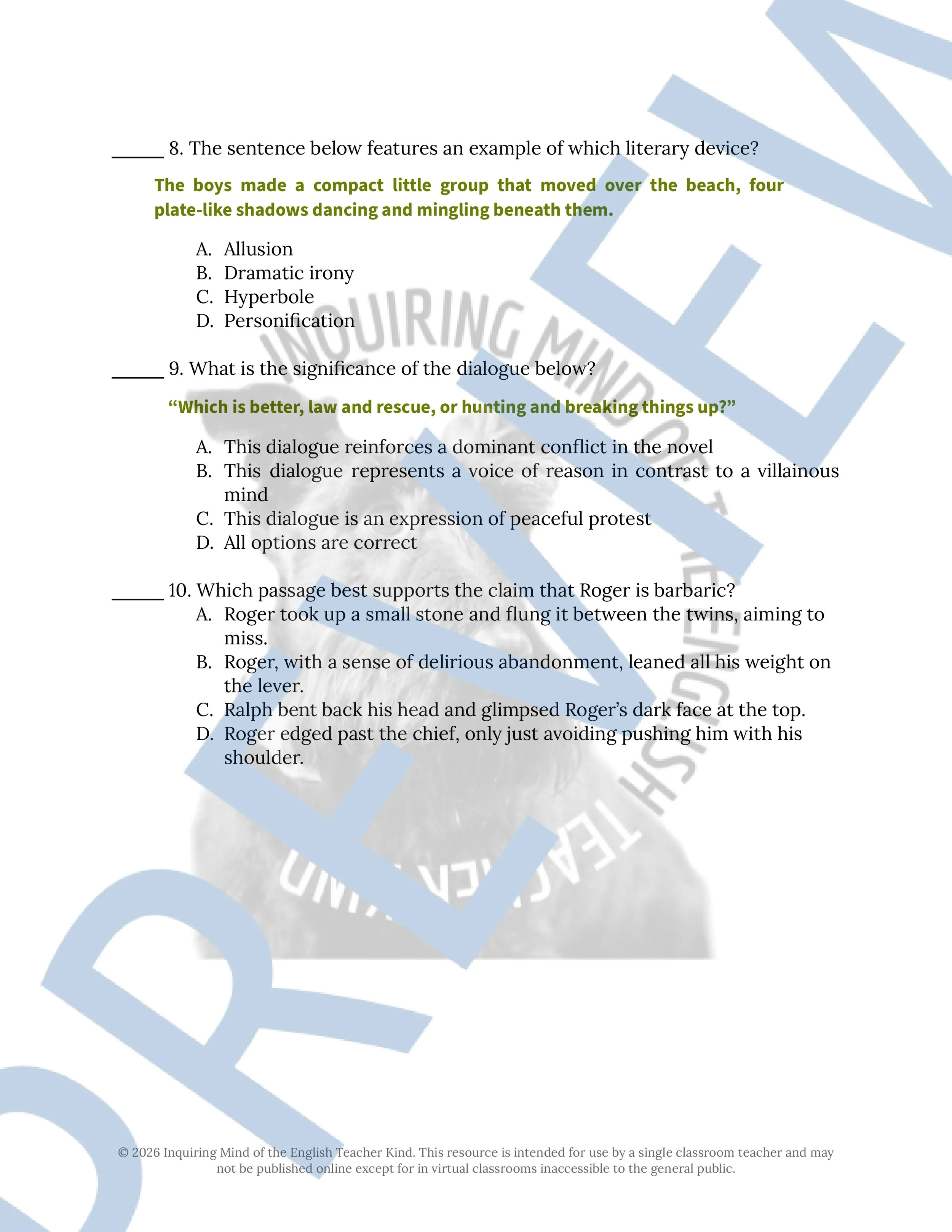
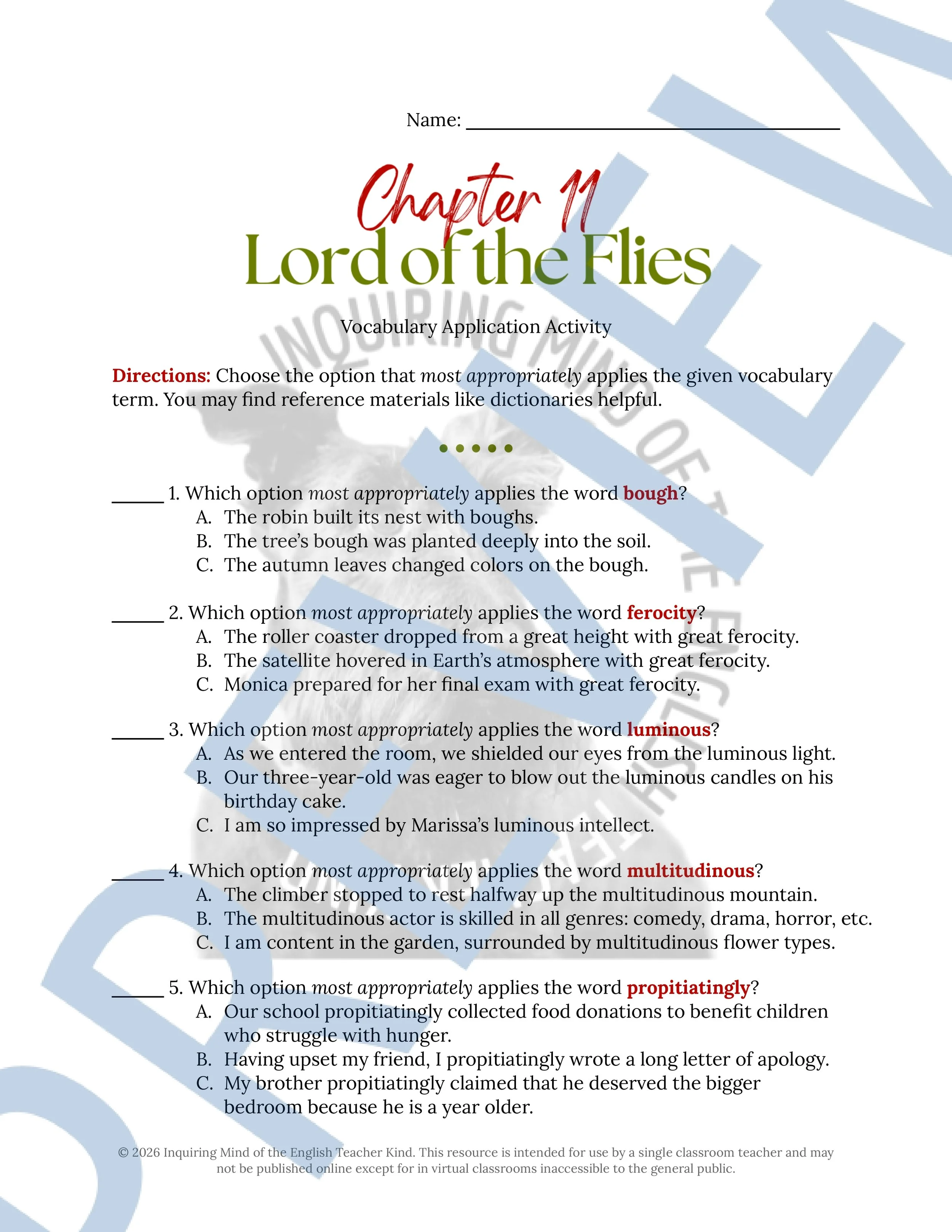
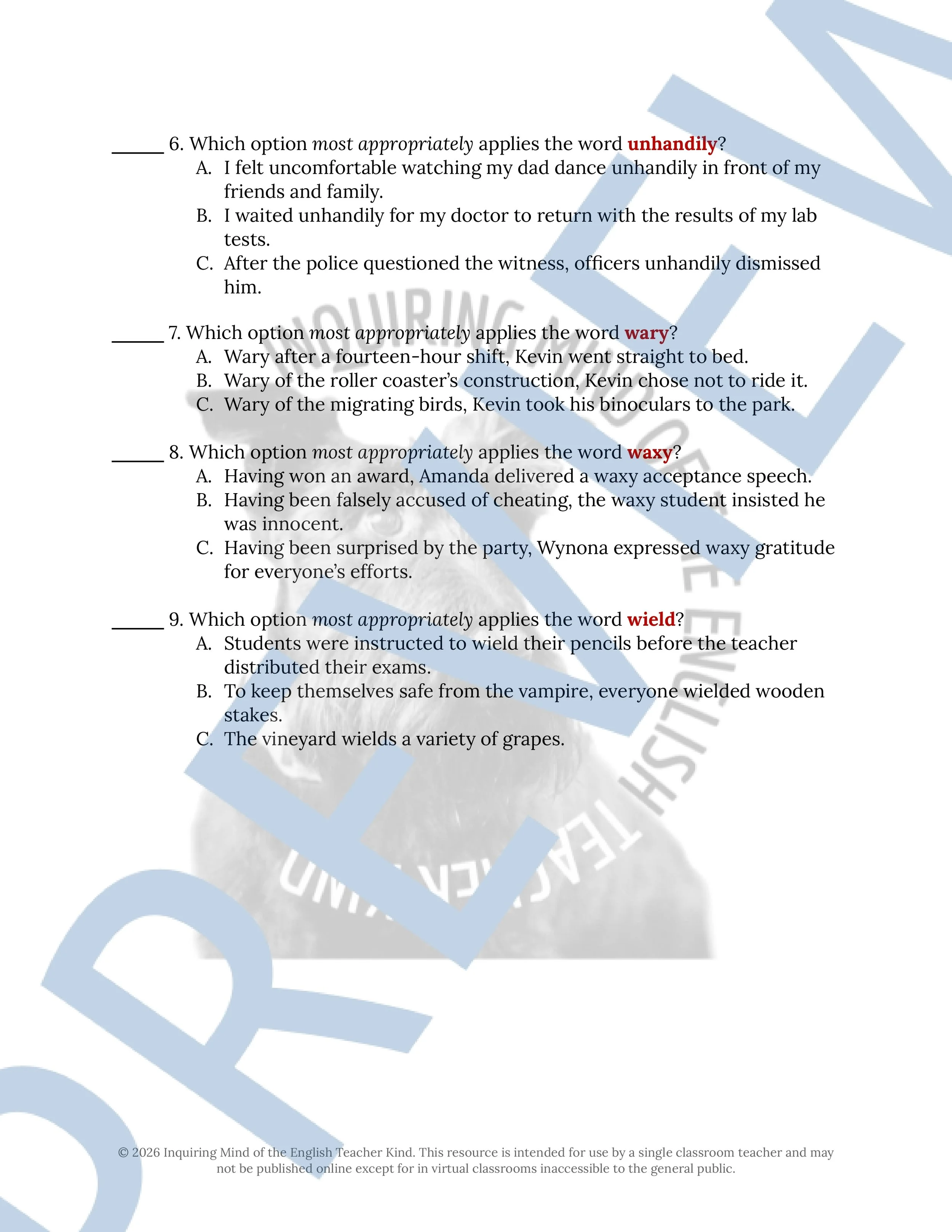
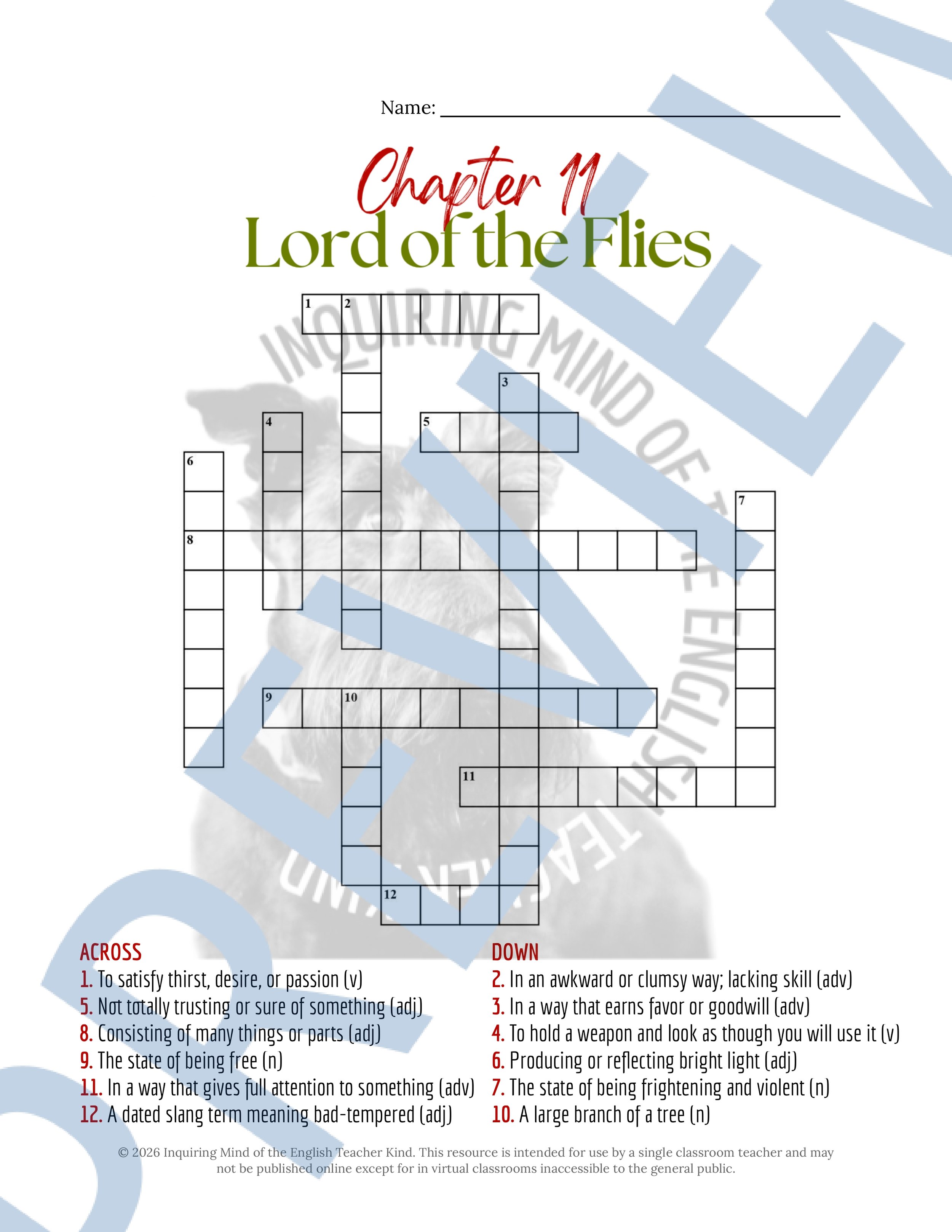
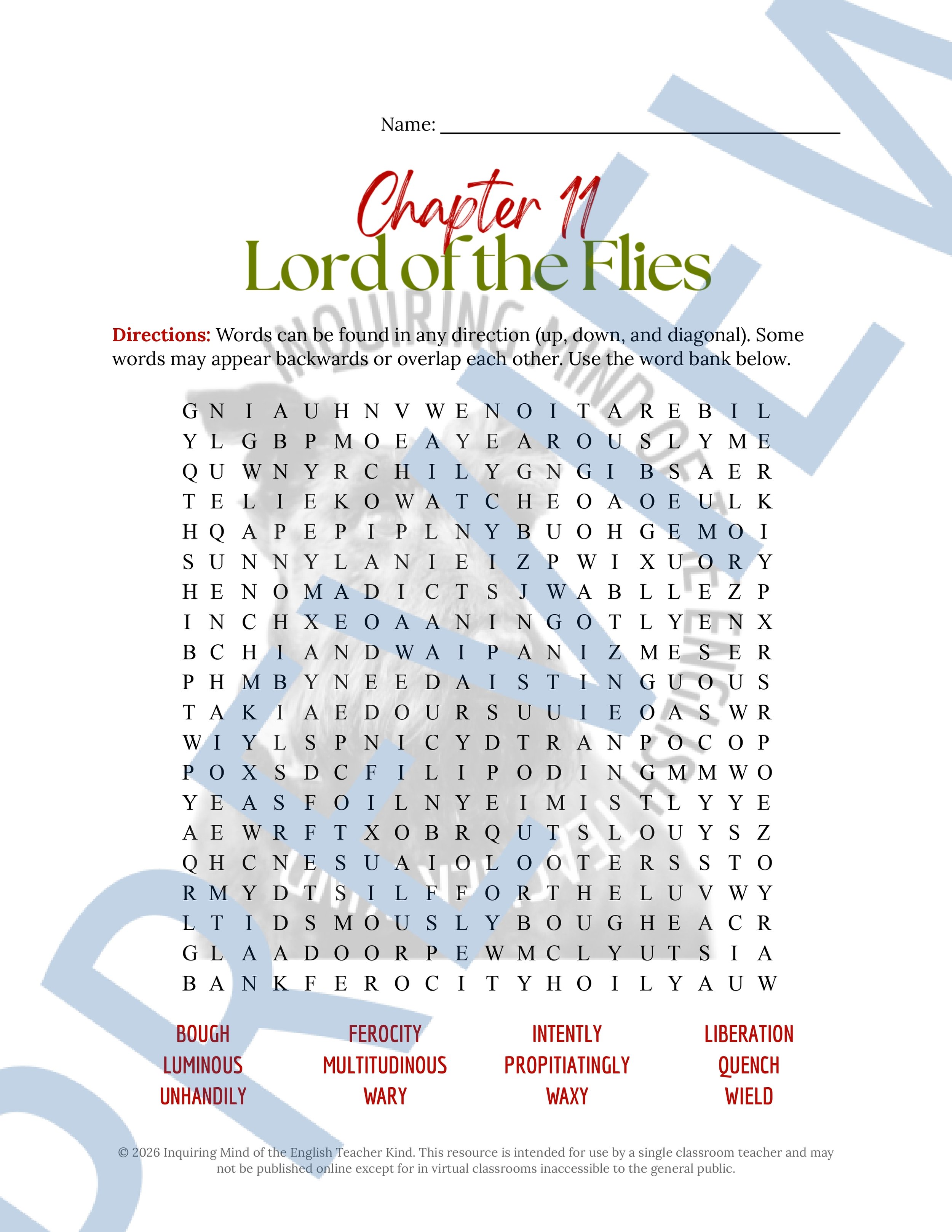
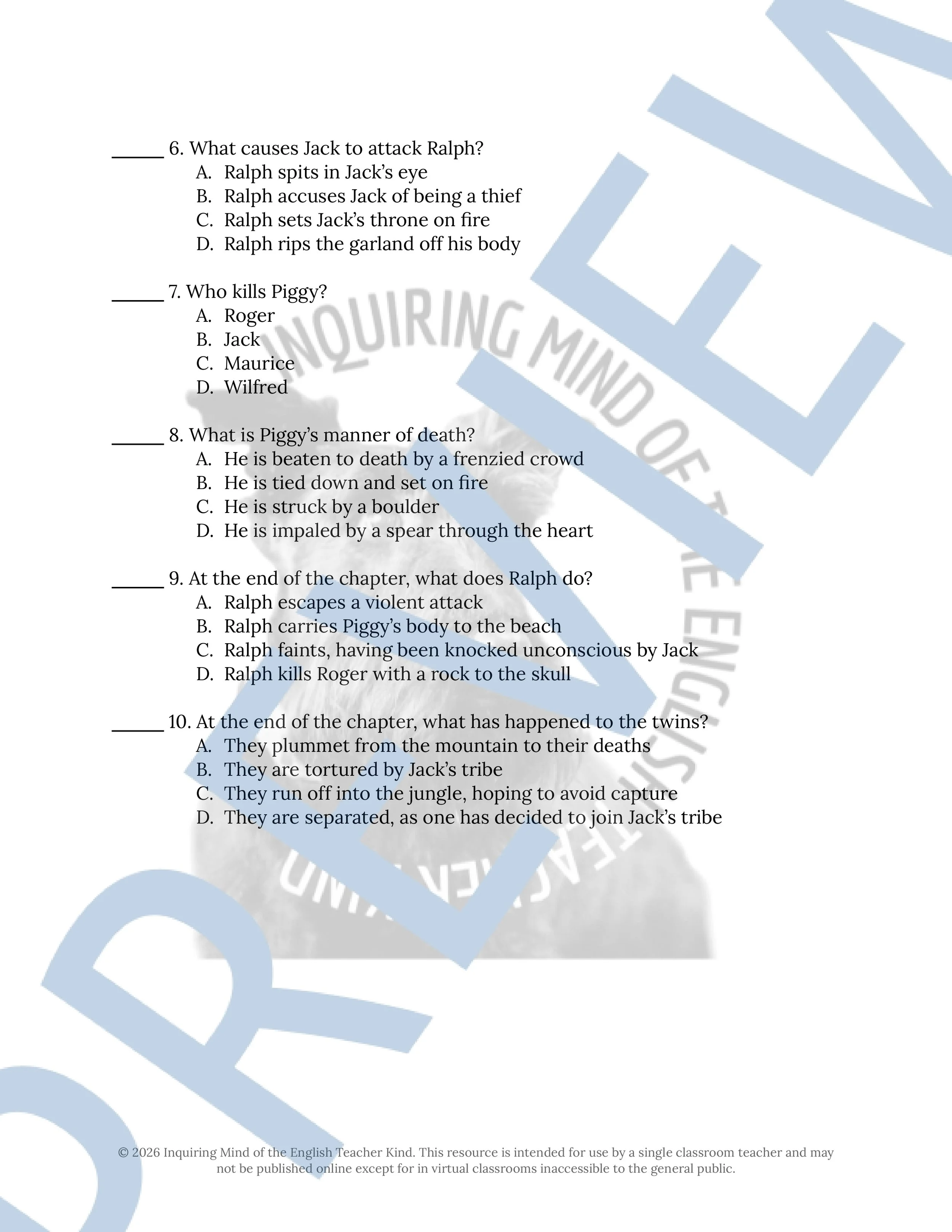
Eliminate assessment planning related to chapter 12 of William Golding's Lord of the Flies with this bundle, which includes a reading comprehension quiz, close reading analysis worksheet, vocabulary application activity, crossword puzzle, word search game, and answer keys. From addressing foundational skills (such as language acquisition) to supporting literary analysis skills (such as making inferences about the intended effects of literary devices in context), these activities keep learners engaged with elements of fiction and accommodate differentiated instruction. Materials are delivered in editable Word Document and printable PDF formats. (Alternatively, a Google Drive option is available.) By engaging with these materials, students will:
Read for literal comprehension
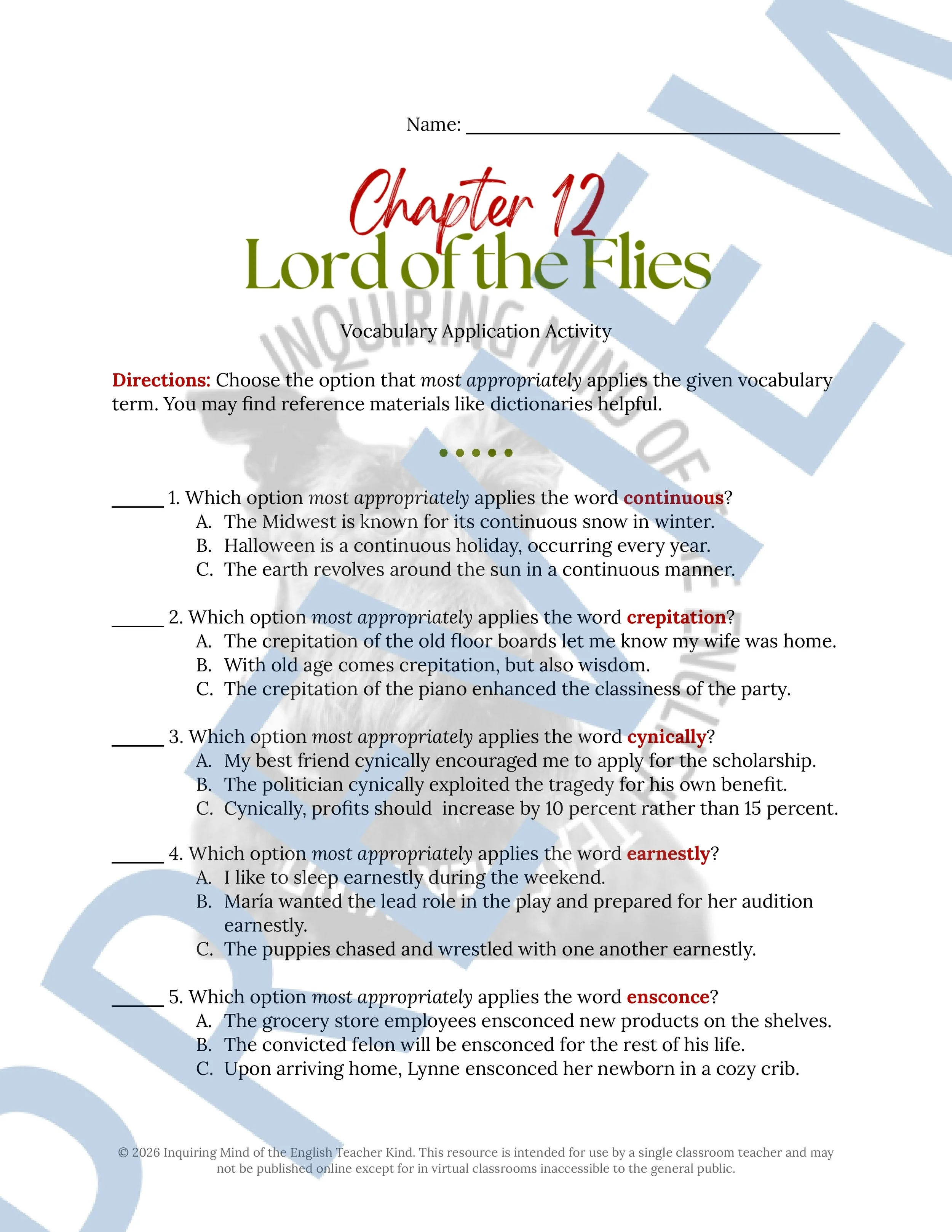
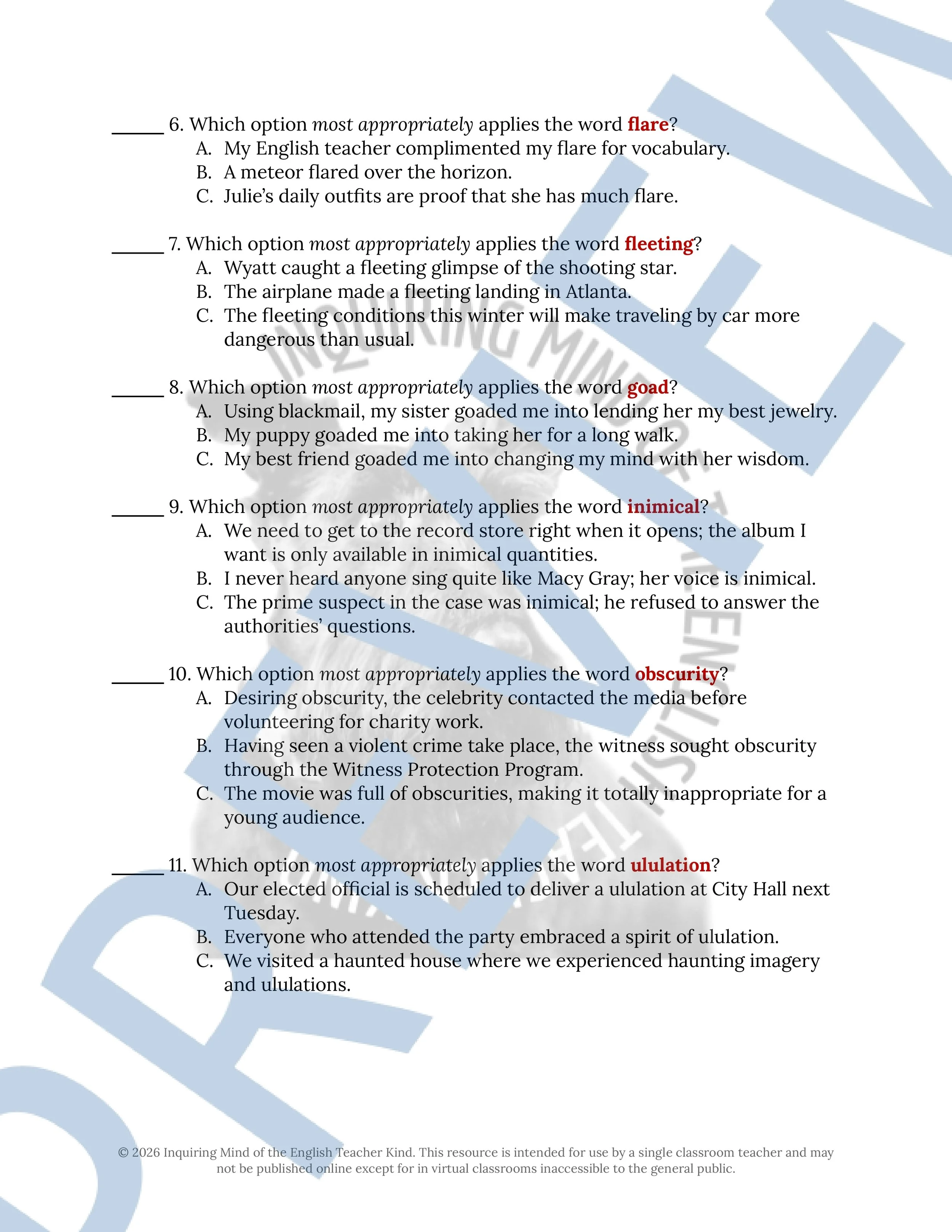
Bolster vocabulary skills
Infer the intended effects of the author's word choices and narrative techniques with emphasis on the author's incorporation of frequent em-dashes
Explore how complex characters think, behave, interact, and develop
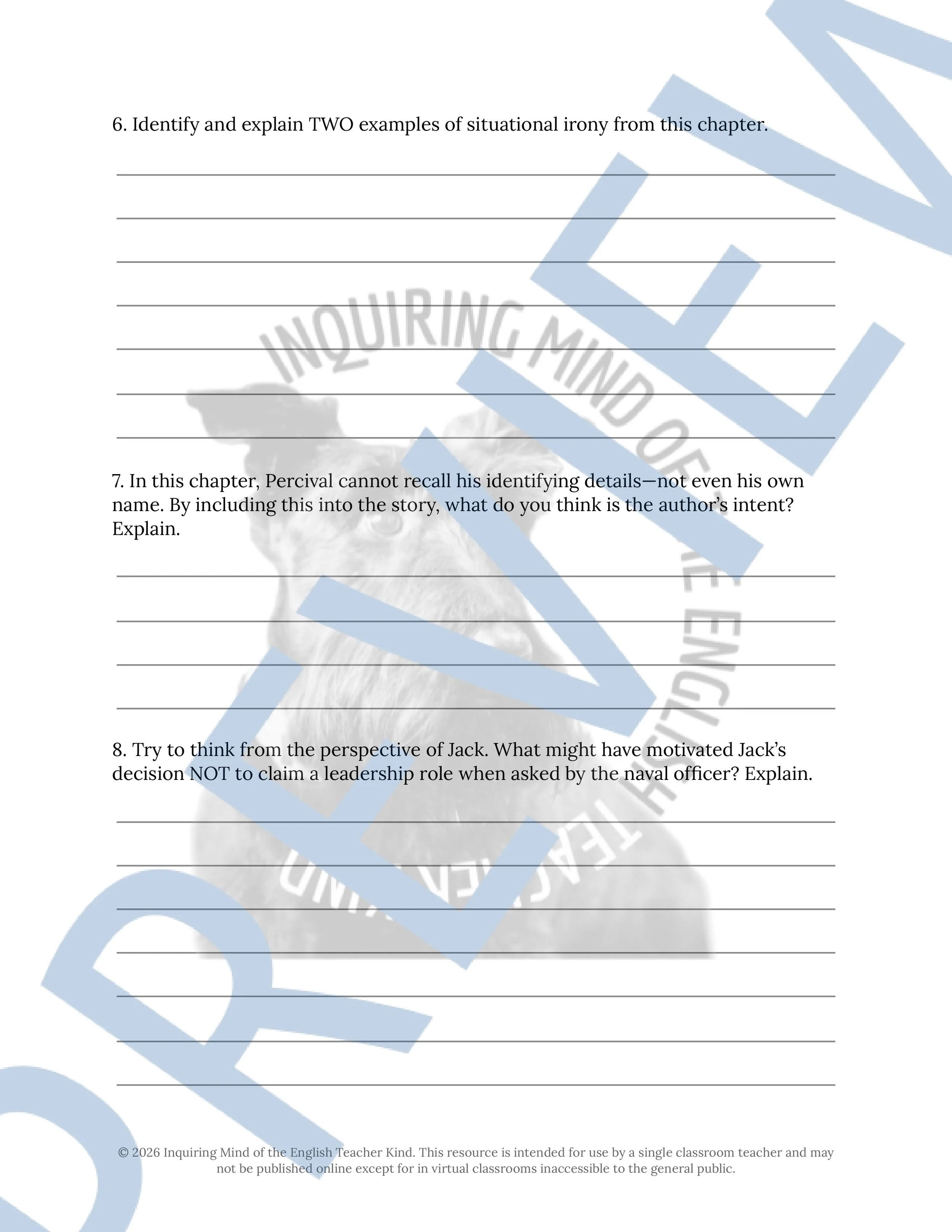
Apply knowledge of various literary devices including personification, aposiopesis, sibilance, and situational irony
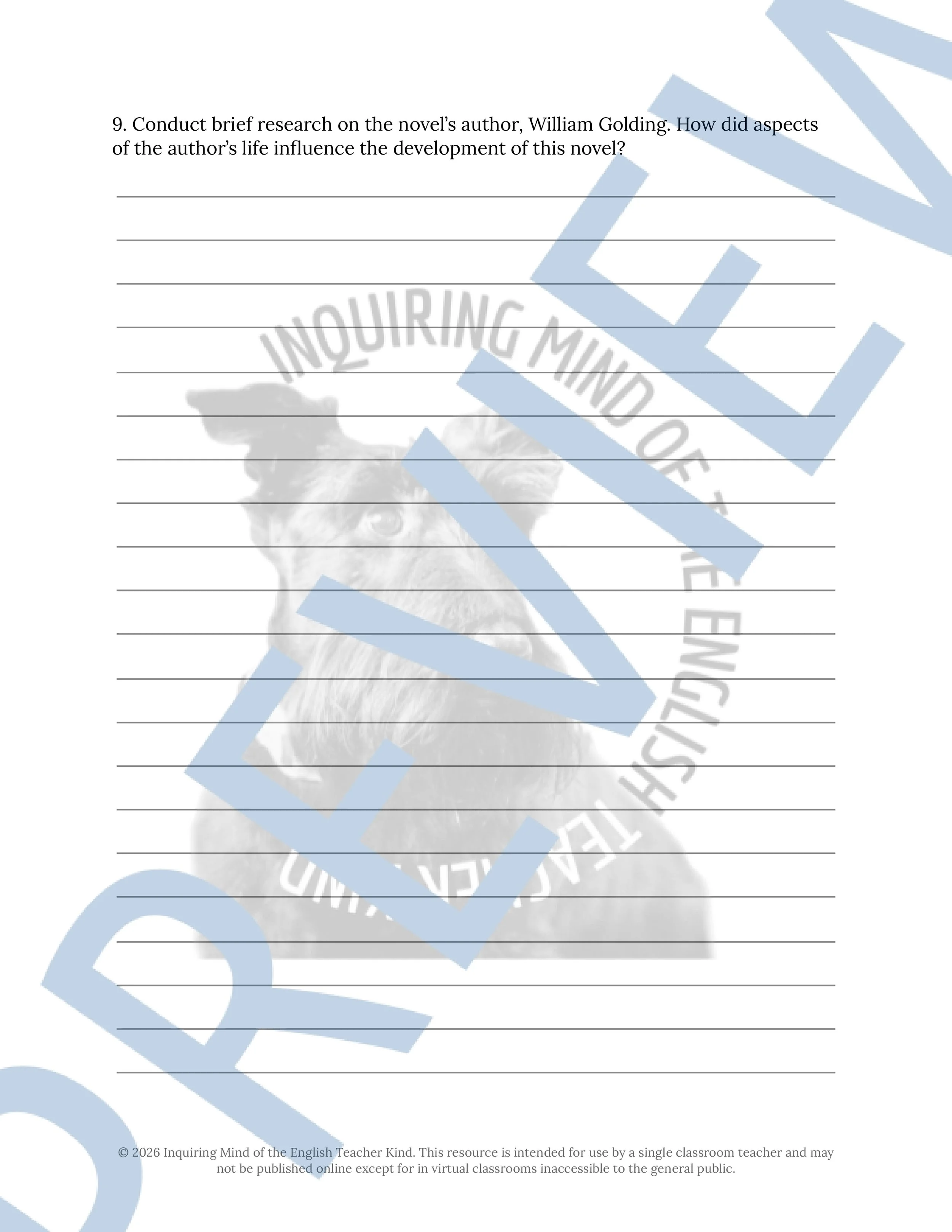
Conduct brief research on the author and identify examples of autobiographical parallel
Support claims and inferences with relevant textual evidence
Write about literature with clarity, accuracy, and precision
Come to class better prepared to discuss literature
Resources are available for teaching a variety of classic texts:
Eliminate assessment planning related to chapter 12 of William Golding's Lord of the Flies with this bundle, which includes a reading comprehension quiz, close reading analysis worksheet, vocabulary application activity, crossword puzzle, word search game, and answer keys. From addressing foundational skills (such as language acquisition) to supporting literary analysis skills (such as making inferences about the intended effects of literary devices in context), these activities keep learners engaged with elements of fiction and accommodate differentiated instruction. Materials are delivered in editable Word Document and printable PDF formats. (Alternatively, a Google Drive option is available.) By engaging with these materials, students will:
Read for literal comprehension
Bolster vocabulary skills
Infer the intended effects of the author's word choices and narrative techniques with emphasis on the author's incorporation of frequent em-dashes
Explore how complex characters think, behave, interact, and develop
Apply knowledge of various literary devices including personification, aposiopesis, sibilance, and situational irony
Conduct brief research on the author and identify examples of autobiographical parallel
Support claims and inferences with relevant textual evidence
Write about literature with clarity, accuracy, and precision
Come to class better prepared to discuss literature
Resources are available for teaching a variety of classic texts: