Sale Price:
$45.00
Original Price:
$60.00
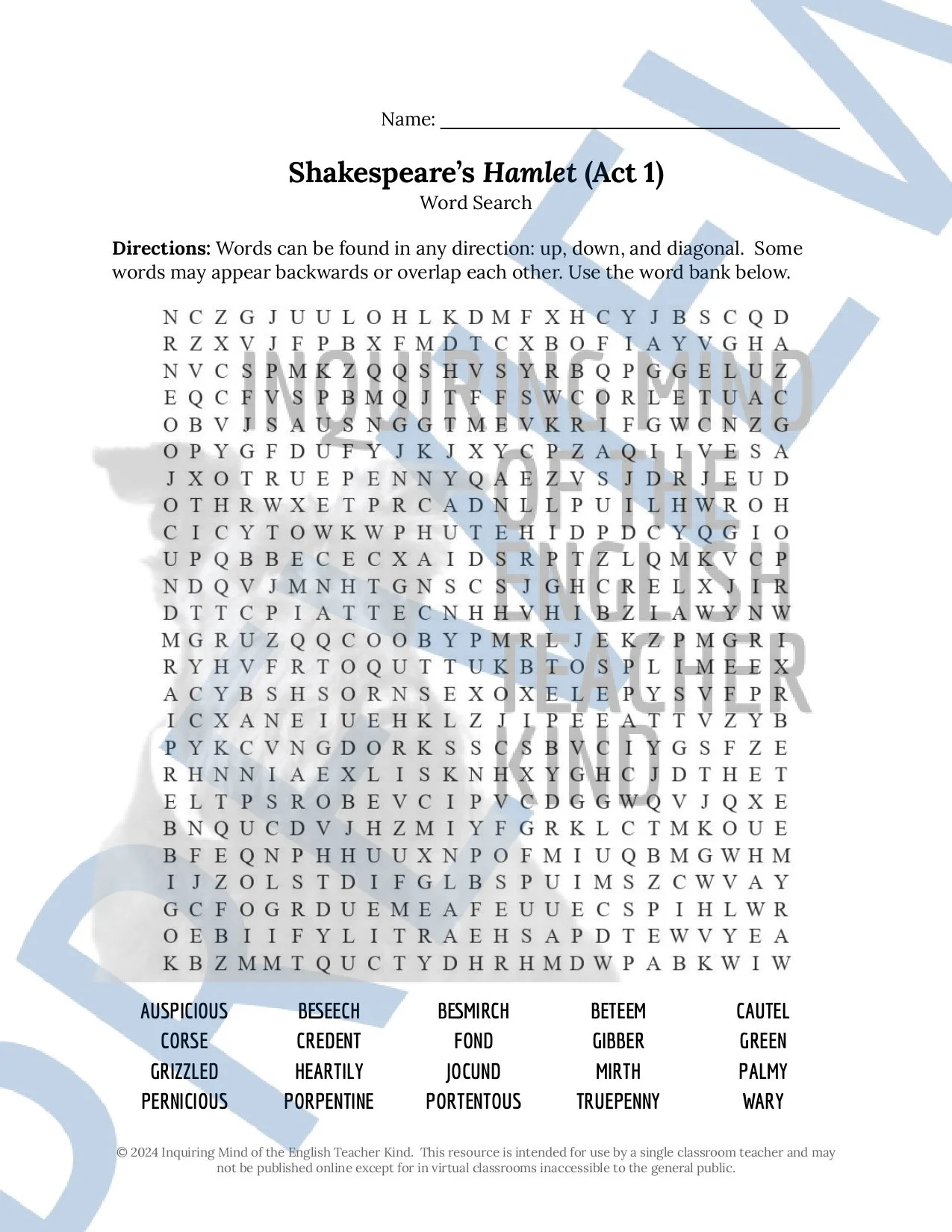
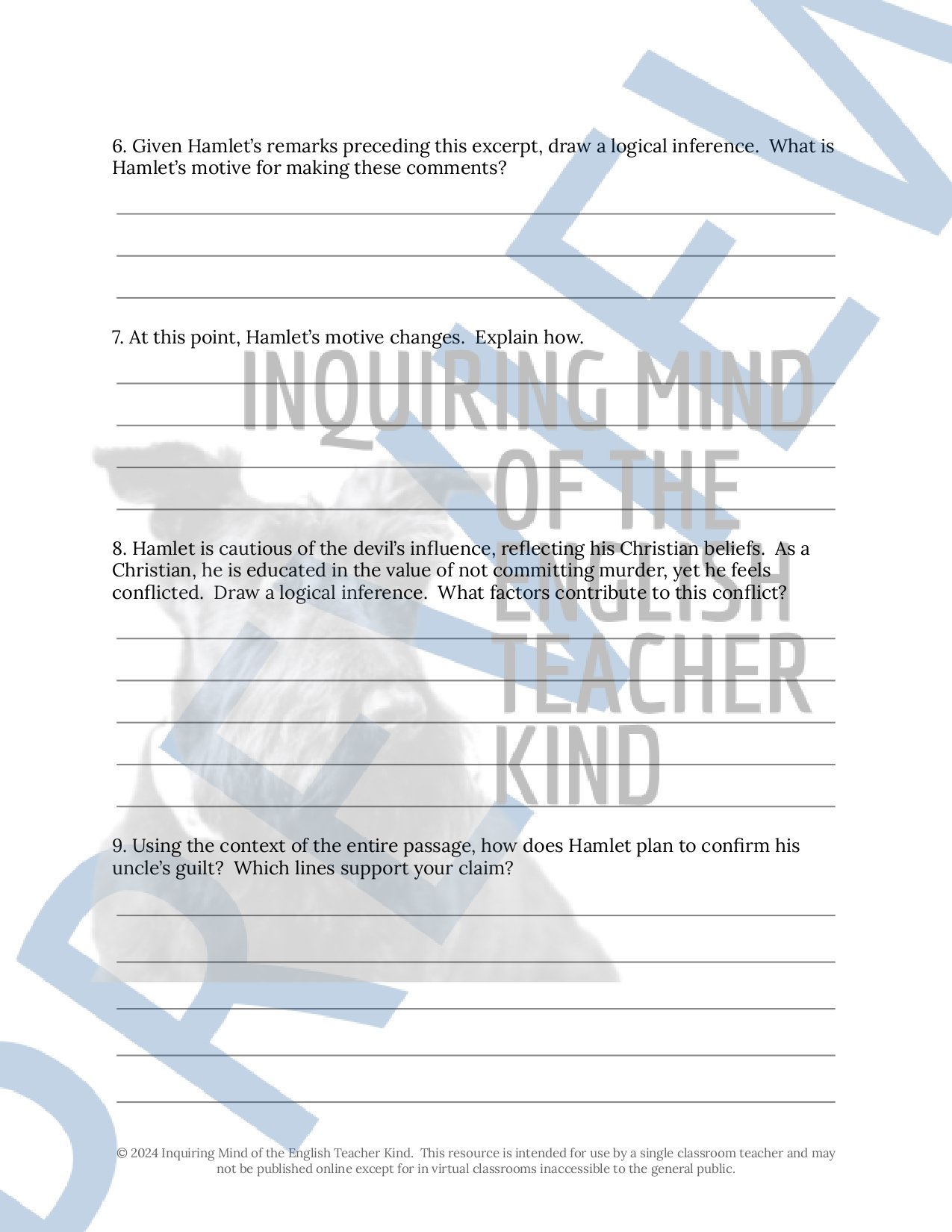
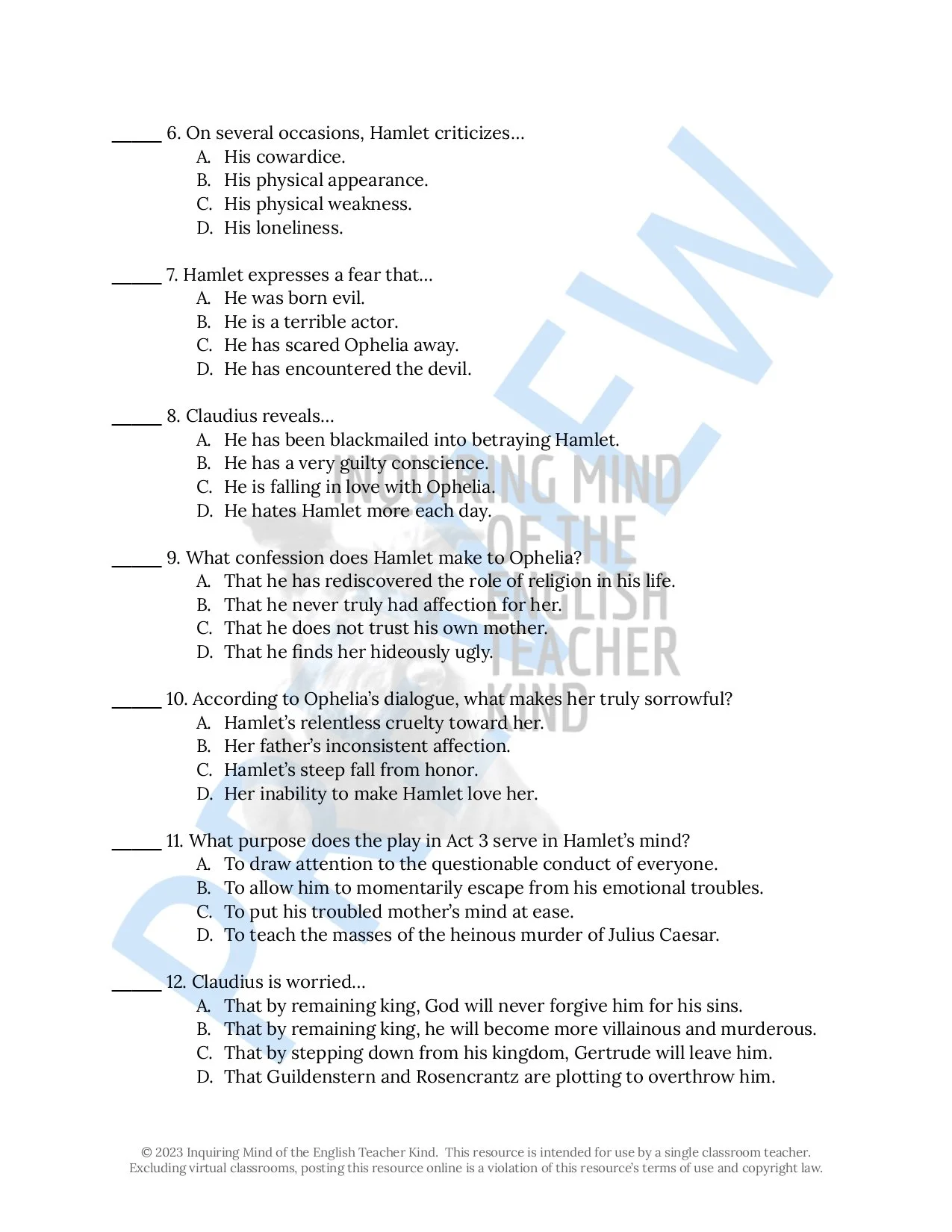
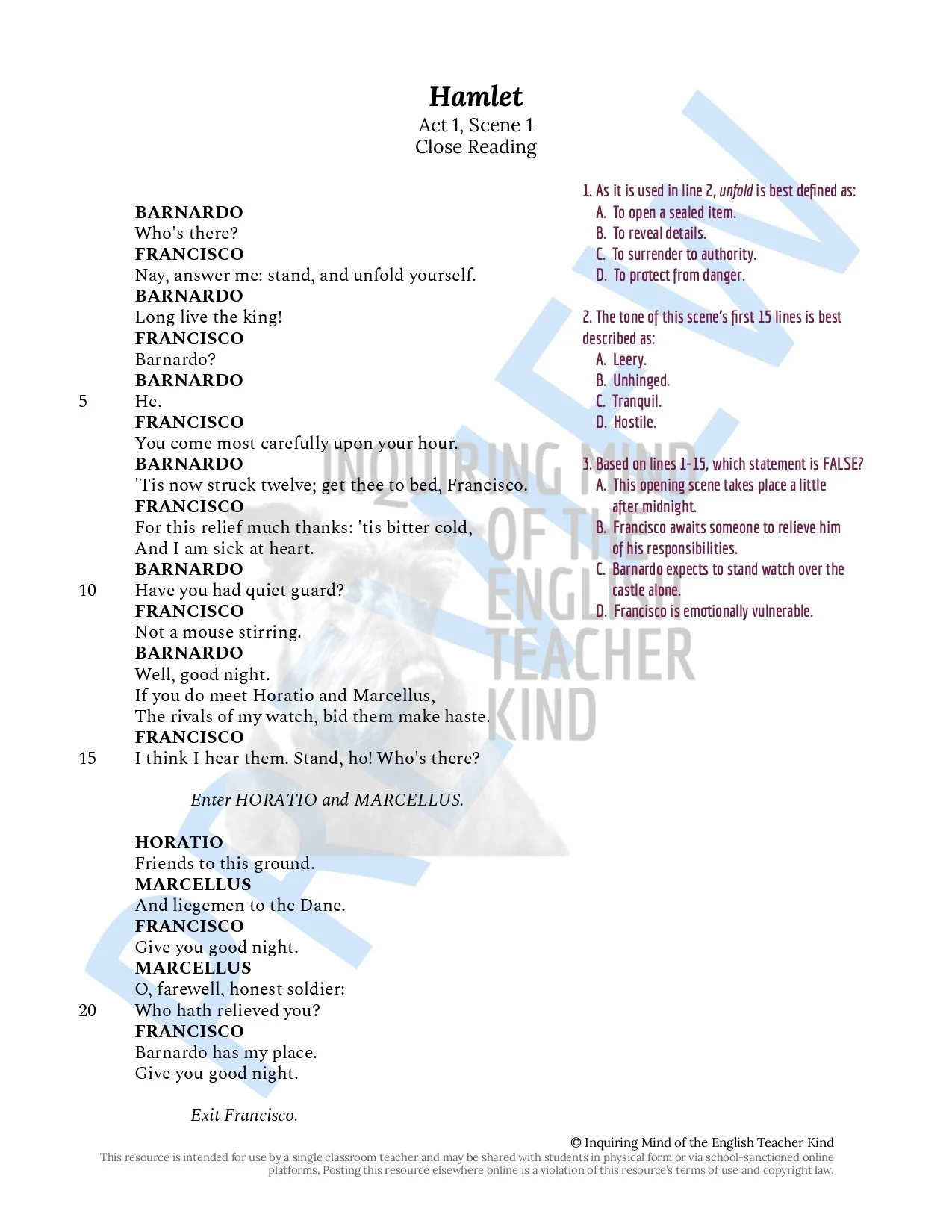
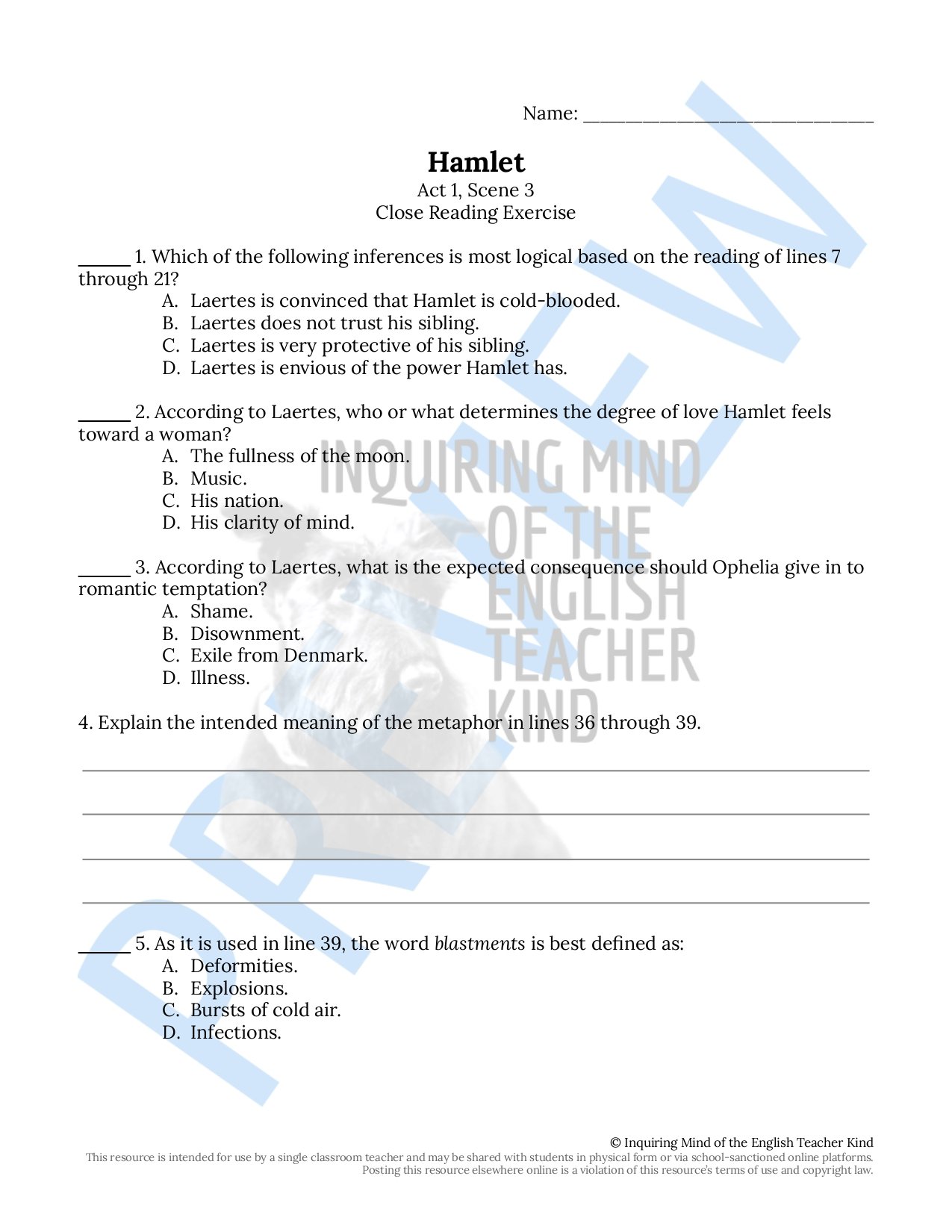
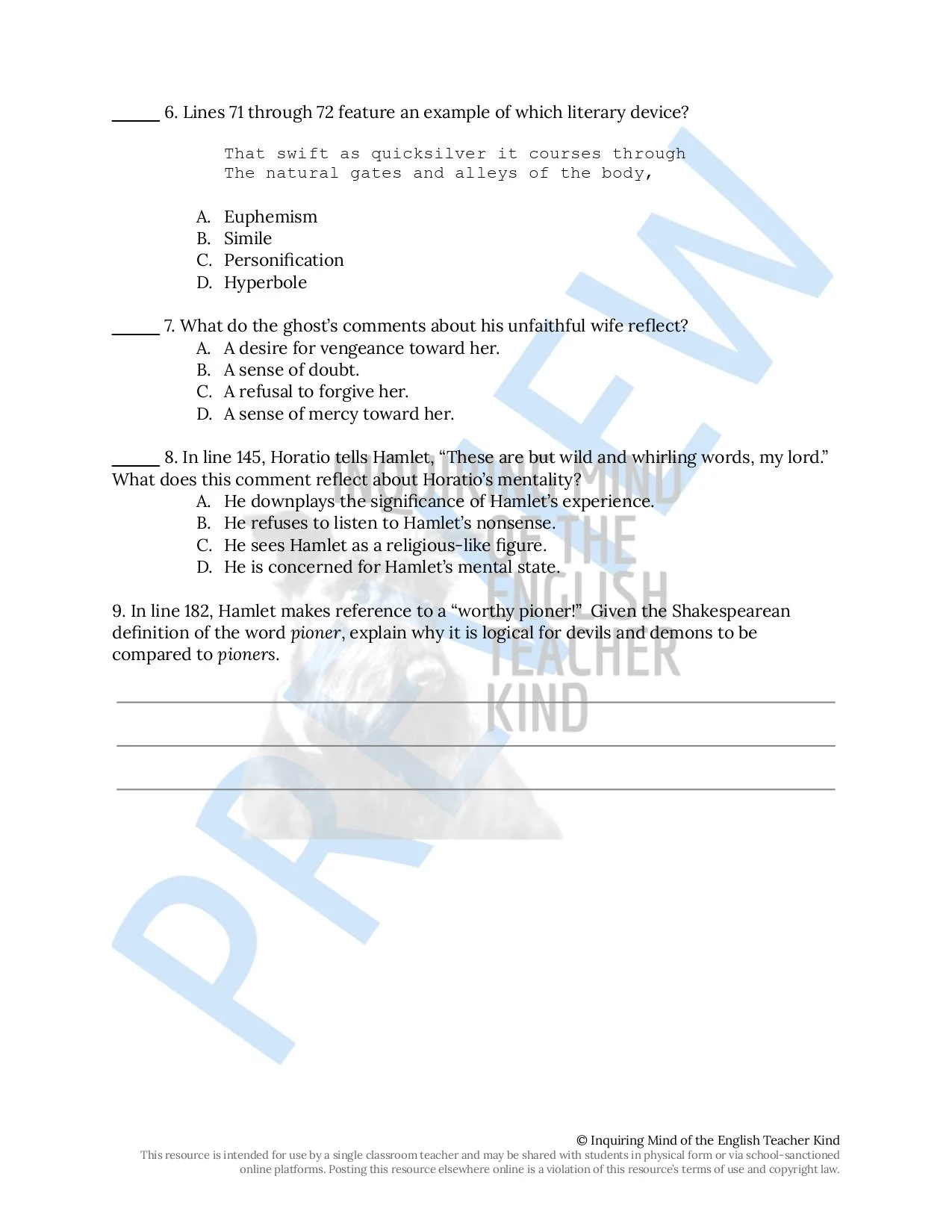
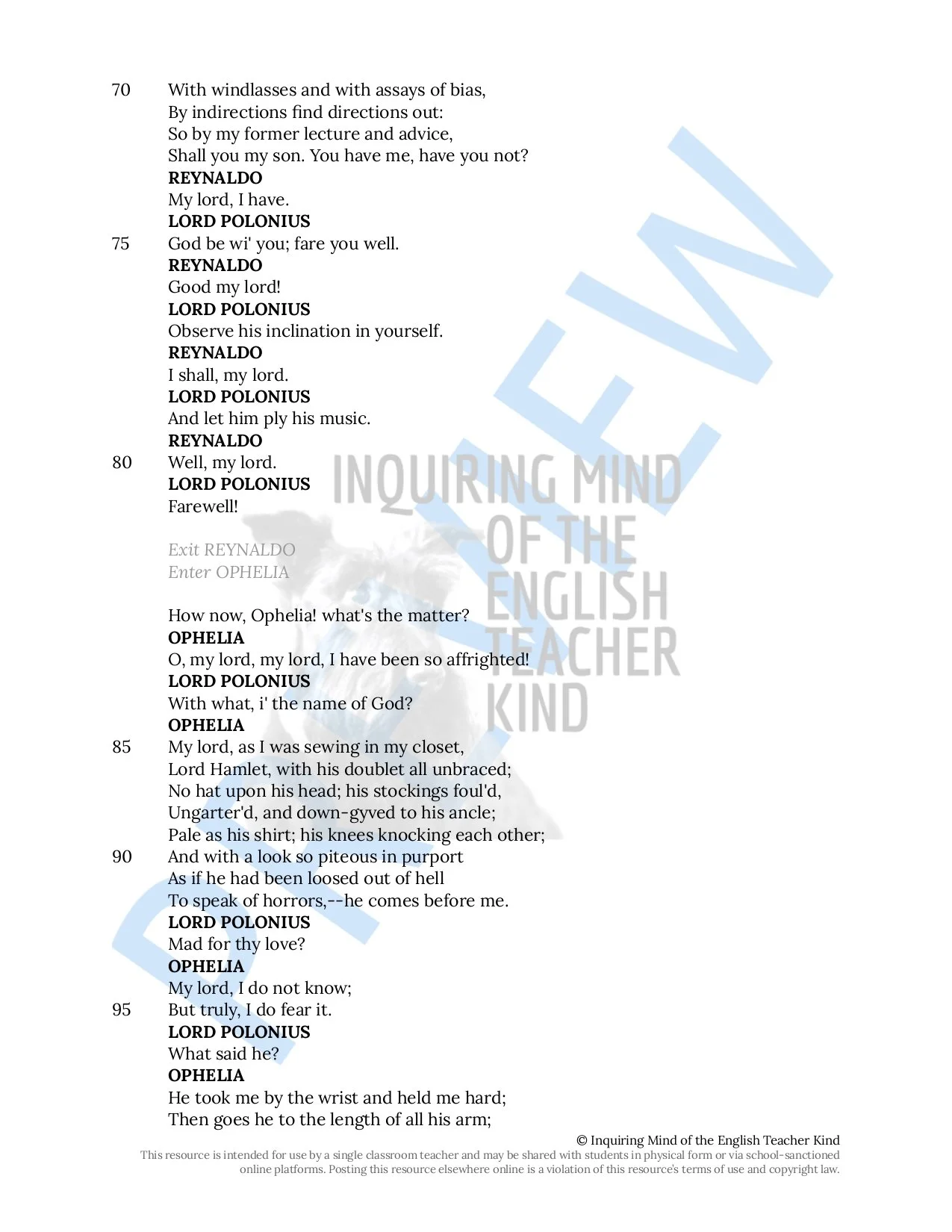
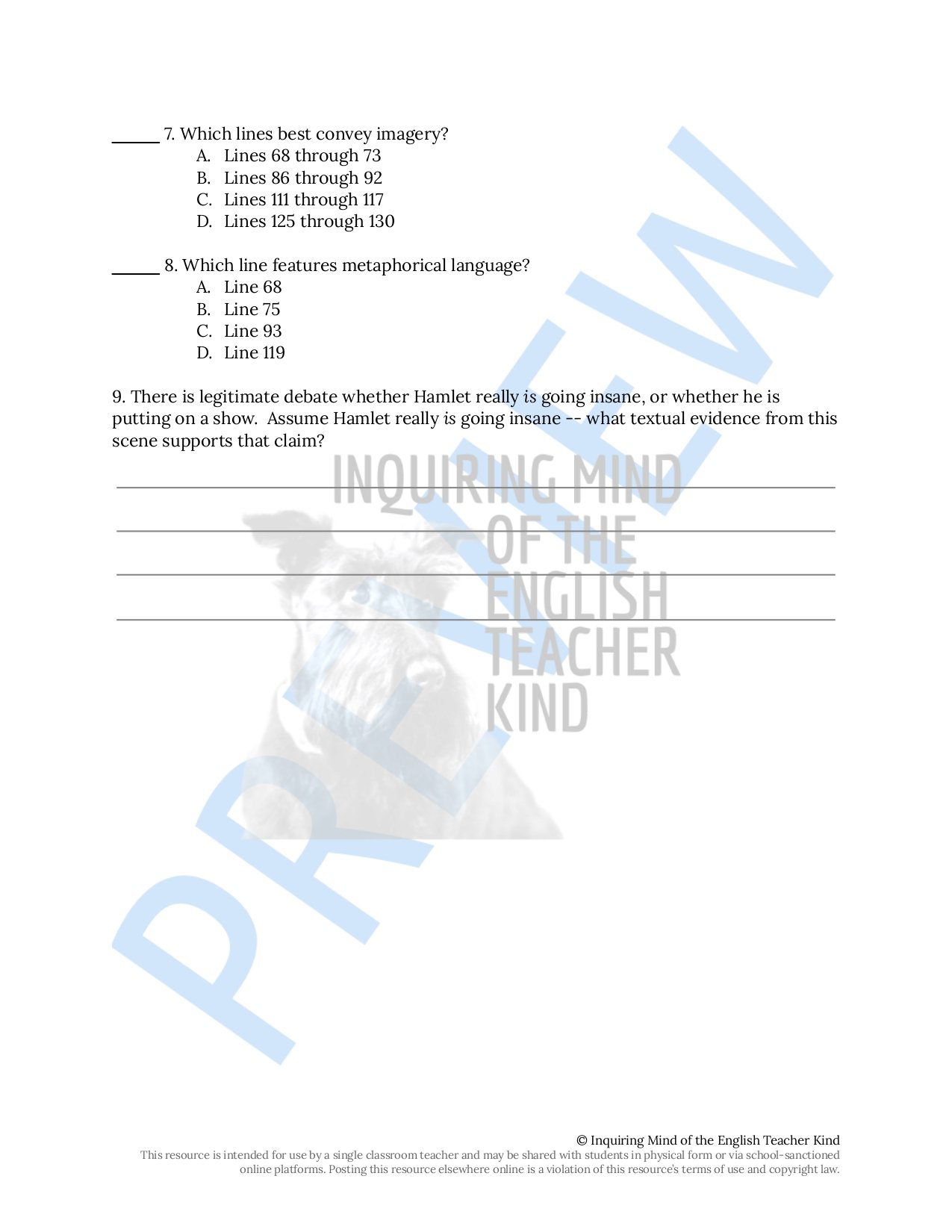
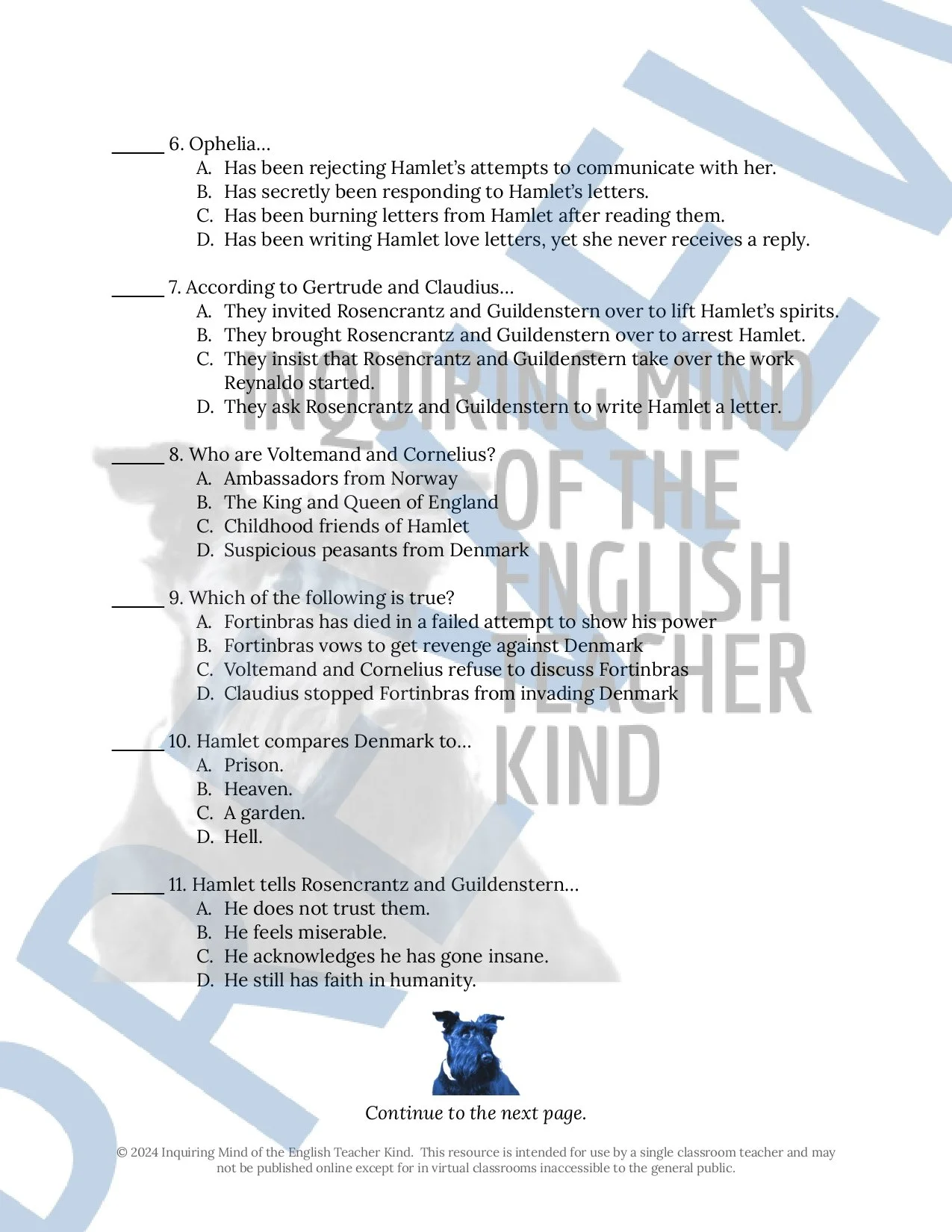
Challenge high school students to push beyond basic reading comprehension and exercise close reading analysis skills while engaging with Hamlet by William Shakespeare. Given the objective nature of the multiple choice questions, each close reading activity is rigorous enough for students to find deeper meaning in the text, yet convenient enough for teachers to quickly and efficiently gather data on their students' textual analysis skills. Included are twelve close reading worksheets, each addressing an individual scene, and answer keys. Materials are delivered in Word Document and PDF formats. (Alternatively, a Google Drive bundle option is available.) By the end of the play, students will:
Identify what the text states explicitly and implicitly
Define words and phrases as they are used in the text
Discern the tone of given passages
Determine the functions of given scenes
Analyze plot from a historical perspective
Consider the greater significance of given details
Explore how complex characters think, behave, interact, and develop
Compare and contrast characters
Examine the effect of Shakespeare's narrative techniques with emphasis on the incorporation of figurative language
Apply knowledge of literary devices including metaphor, simile, euphemism, personification, hyperbole, oxymoron, situational irony, dramatic irony, and more
Conduct brief research to answer a question connecting the drama to aspects of Greek mythology
Consider autobiographical parallel, drawing an informed inference about Shakespeare's philosophy on the purpose of dramatic performances based on details provided in a given scene
Explore themes with emphasis on humanity's relationship with the universe
Support claims and inferences with sound reasoning and relevant textual evidence
Write about Shakespearean drama with clarity, accuracy, and precision
Materials in this bundle may facilitate small-group discussions in which students decode language and pose/respond to questions relating to plot, broad topics, and character development. Using these resources for structured guidance, students will improve their ability to present information, conclusions, and supporting textual evidence clearly and convincingly.
Materials are available for teaching a variety of Shakespeare’s plays:
Challenge high school students to push beyond basic reading comprehension and exercise close reading analysis skills while engaging with Hamlet by William Shakespeare. Given the objective nature of the multiple choice questions, each close reading activity is rigorous enough for students to find deeper meaning in the text, yet convenient enough for teachers to quickly and efficiently gather data on their students' textual analysis skills. Included are twelve close reading worksheets, each addressing an individual scene, and answer keys. Materials are delivered in Word Document and PDF formats. (Alternatively, a Google Drive bundle option is available.) By the end of the play, students will:
Identify what the text states explicitly and implicitly
Define words and phrases as they are used in the text
Discern the tone of given passages
Determine the functions of given scenes
Analyze plot from a historical perspective
Consider the greater significance of given details
Explore how complex characters think, behave, interact, and develop
Compare and contrast characters
Examine the effect of Shakespeare's narrative techniques with emphasis on the incorporation of figurative language
Apply knowledge of literary devices including metaphor, simile, euphemism, personification, hyperbole, oxymoron, situational irony, dramatic irony, and more
Conduct brief research to answer a question connecting the drama to aspects of Greek mythology
Consider autobiographical parallel, drawing an informed inference about Shakespeare's philosophy on the purpose of dramatic performances based on details provided in a given scene
Explore themes with emphasis on humanity's relationship with the universe
Support claims and inferences with sound reasoning and relevant textual evidence
Write about Shakespearean drama with clarity, accuracy, and precision
Materials in this bundle may facilitate small-group discussions in which students decode language and pose/respond to questions relating to plot, broad topics, and character development. Using these resources for structured guidance, students will improve their ability to present information, conclusions, and supporting textual evidence clearly and convincingly.
Materials are available for teaching a variety of Shakespeare’s plays:

 Image 1 of 121
 Image 2 of 121
 Image 3 of 121
 Image 4 of 121
 Image 5 of 121
 Image 6 of 121
 Image 7 of 121
 Image 8 of 121
 Image 9 of 121
 Image 10 of 121
 Image 11 of 121
 Image 12 of 121
 Image 13 of 121
 Image 14 of 121
 Image 15 of 121
 Image 16 of 121
 Image 17 of 121
 Image 18 of 121
 Image 19 of 121
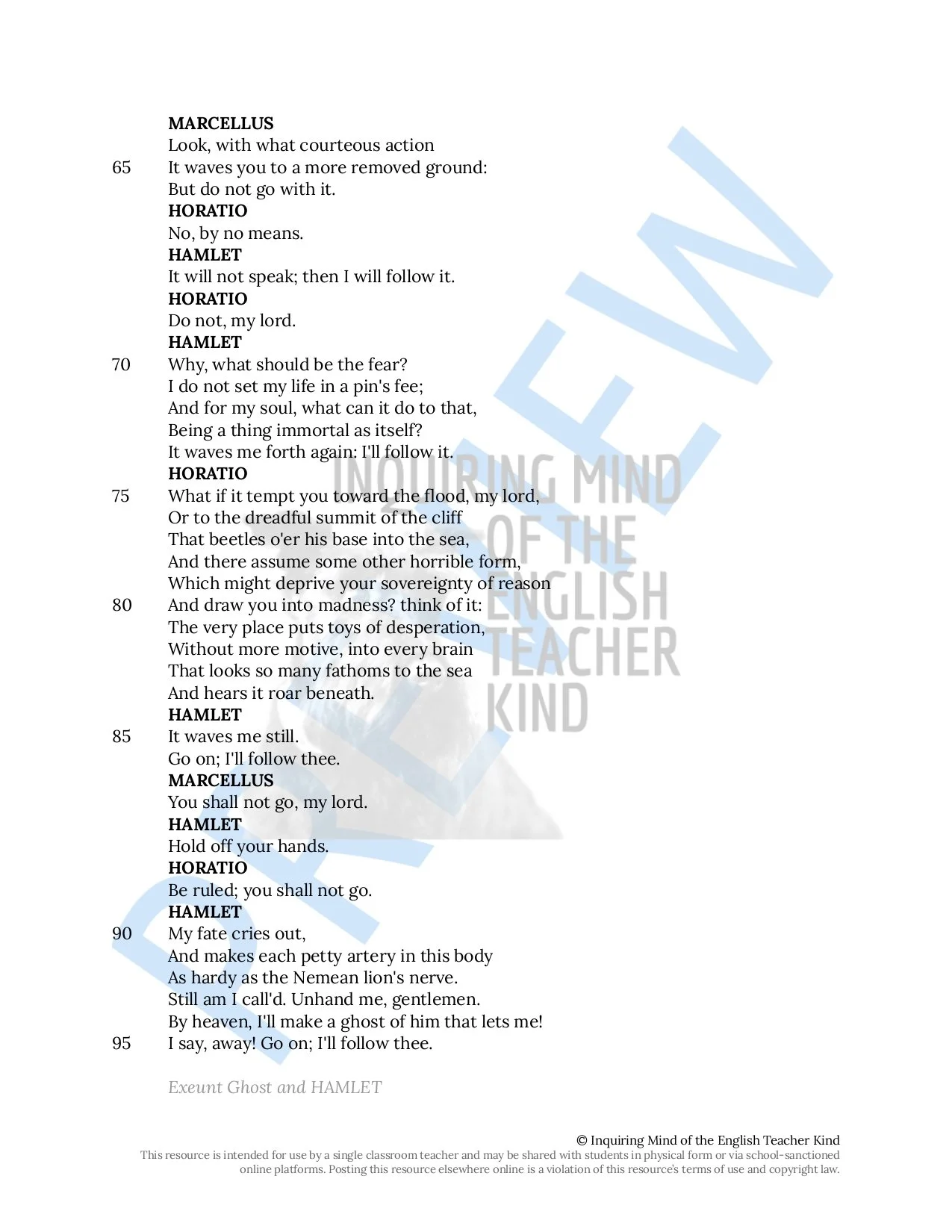 Image 20 of 121
 Image 21 of 121
 Image 22 of 121
 Image 23 of 121
 Image 24 of 121
 Image 25 of 121
 Image 26 of 121
 Image 27 of 121
 Image 28 of 121
 Image 29 of 121
 Image 30 of 121
 Image 31 of 121
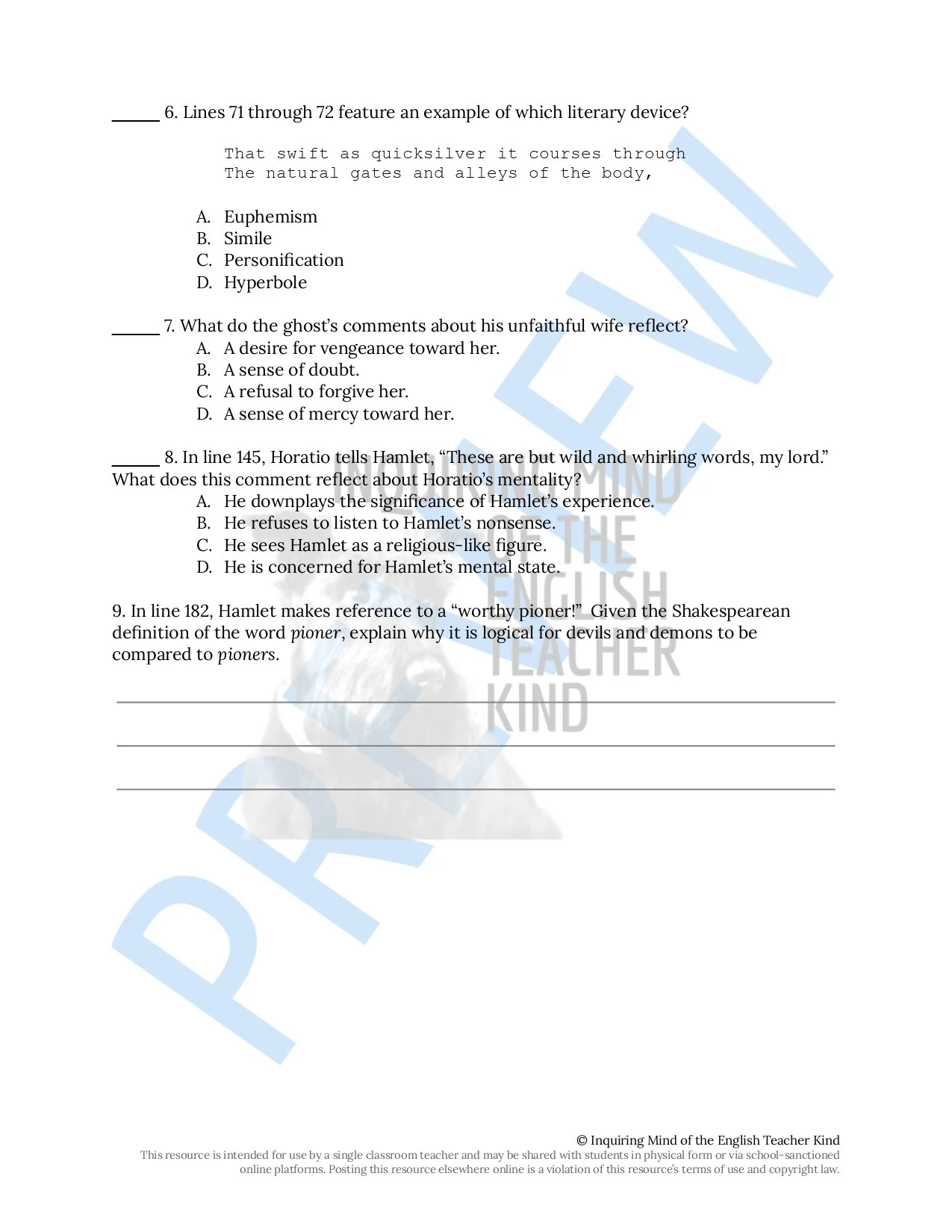 Image 32 of 121
 Image 33 of 121
 Image 34 of 121
 Image 35 of 121
 Image 36 of 121
 Image 37 of 121
 Image 38 of 121
 Image 39 of 121
 Image 40 of 121
 Image 41 of 121
 Image 42 of 121
 Image 43 of 121
 Image 44 of 121
 Image 45 of 121
 Image 46 of 121
 Image 47 of 121
 Image 48 of 121
 Image 49 of 121
 Image 50 of 121
 Image 51 of 121
 Image 52 of 121
 Image 53 of 121
 Image 54 of 121
 Image 55 of 121
 Image 56 of 121
 Image 57 of 121
 Image 58 of 121
 Image 59 of 121
 Image 60 of 121
 Image 61 of 121
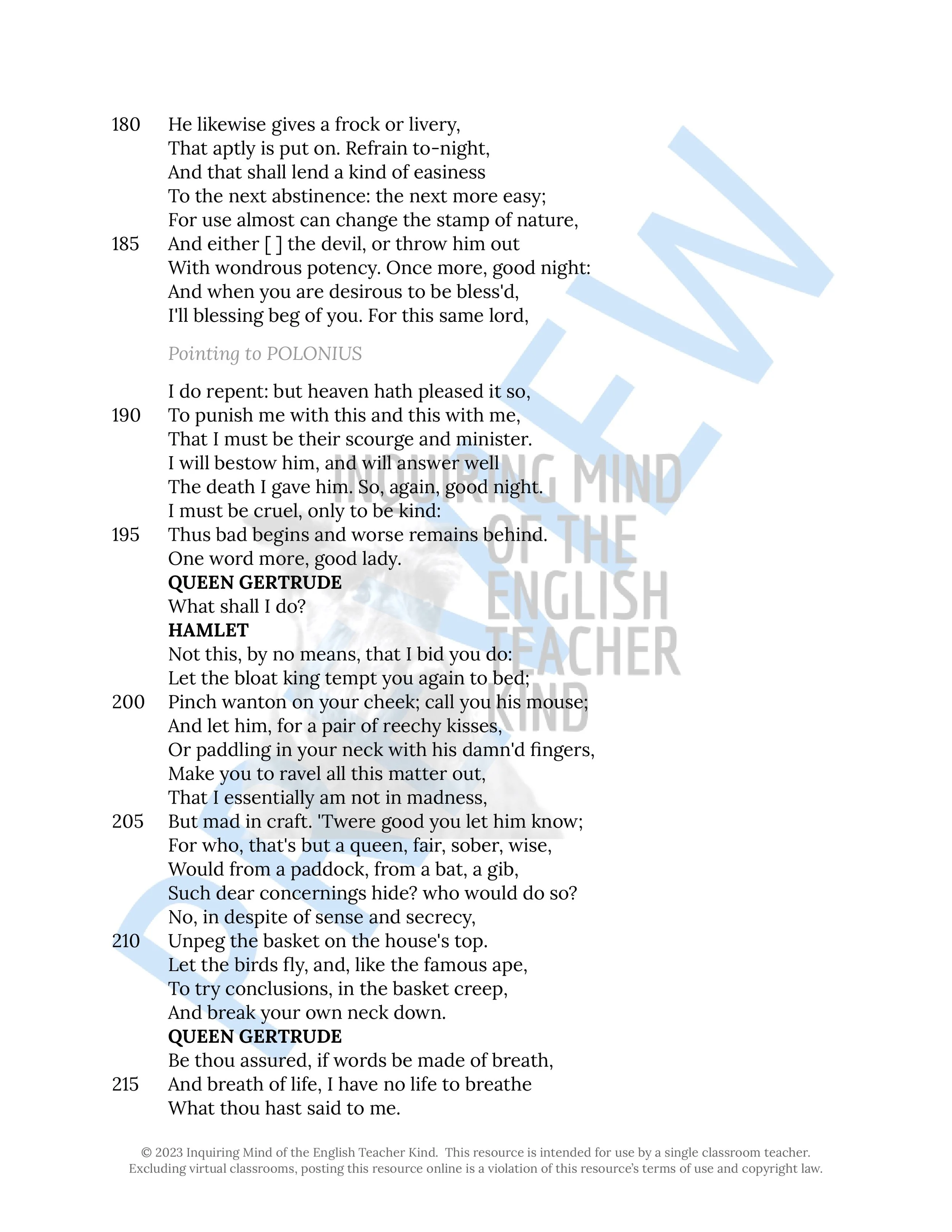 Image 62 of 121
 Image 63 of 121
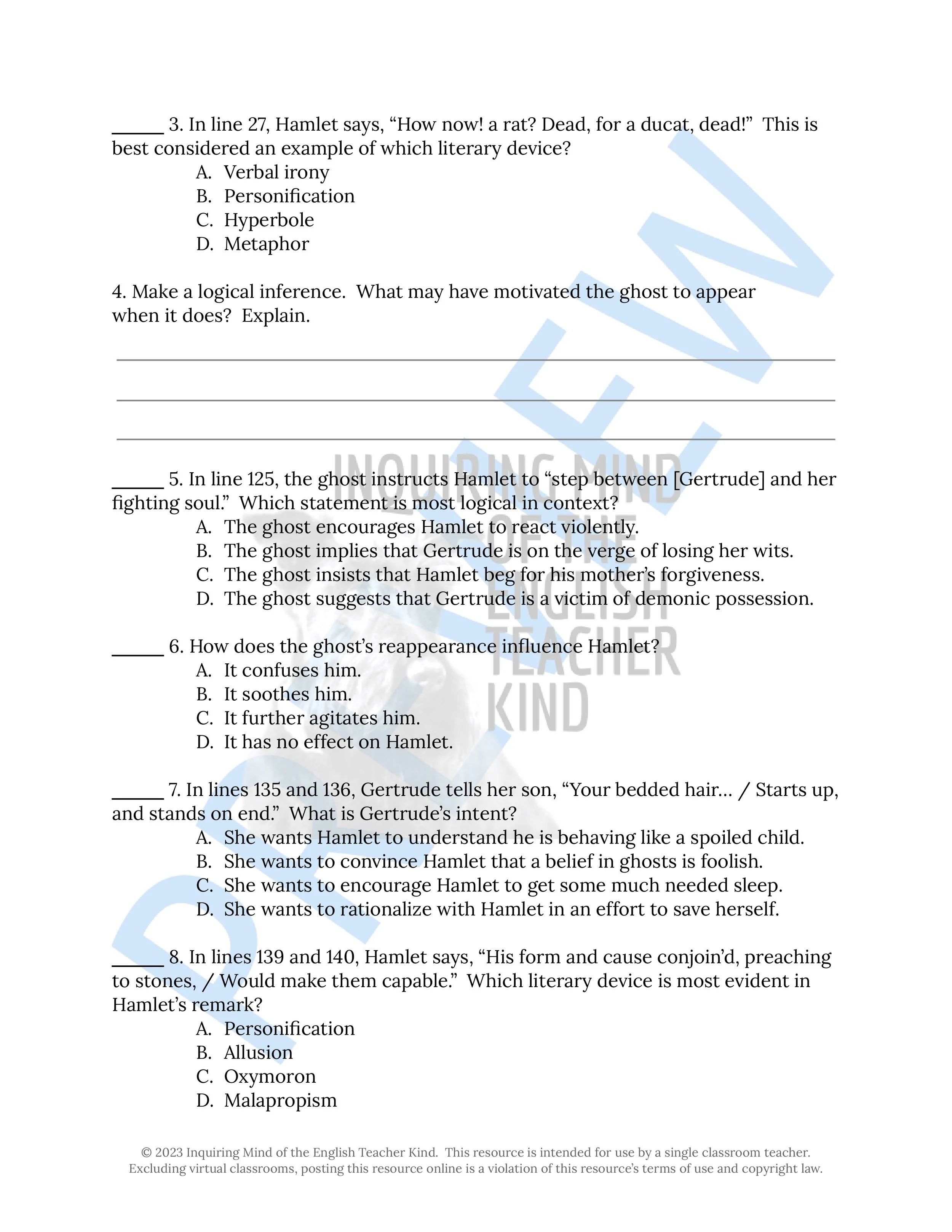 Image 64 of 121
 Image 65 of 121
 Image 66 of 121
 Image 67 of 121
 Image 68 of 121
 Image 69 of 121
 Image 70 of 121
 Image 71 of 121
 Image 72 of 121
 Image 73 of 121
 Image 74 of 121
 Image 75 of 121
 Image 76 of 121
 Image 77 of 121
 Image 78 of 121
 Image 79 of 121
 Image 80 of 121
 Image 81 of 121
 Image 82 of 121
 Image 83 of 121
 Image 84 of 121
 Image 85 of 121
 Image 86 of 121
 Image 87 of 121
 Image 88 of 121
 Image 89 of 121
 Image 90 of 121
 Image 91 of 121
 Image 92 of 121
 Image 93 of 121
 Image 94 of 121
 Image 95 of 121
 Image 96 of 121
 Image 97 of 121
 Image 98 of 121
 Image 99 of 121
 Image 100 of 121
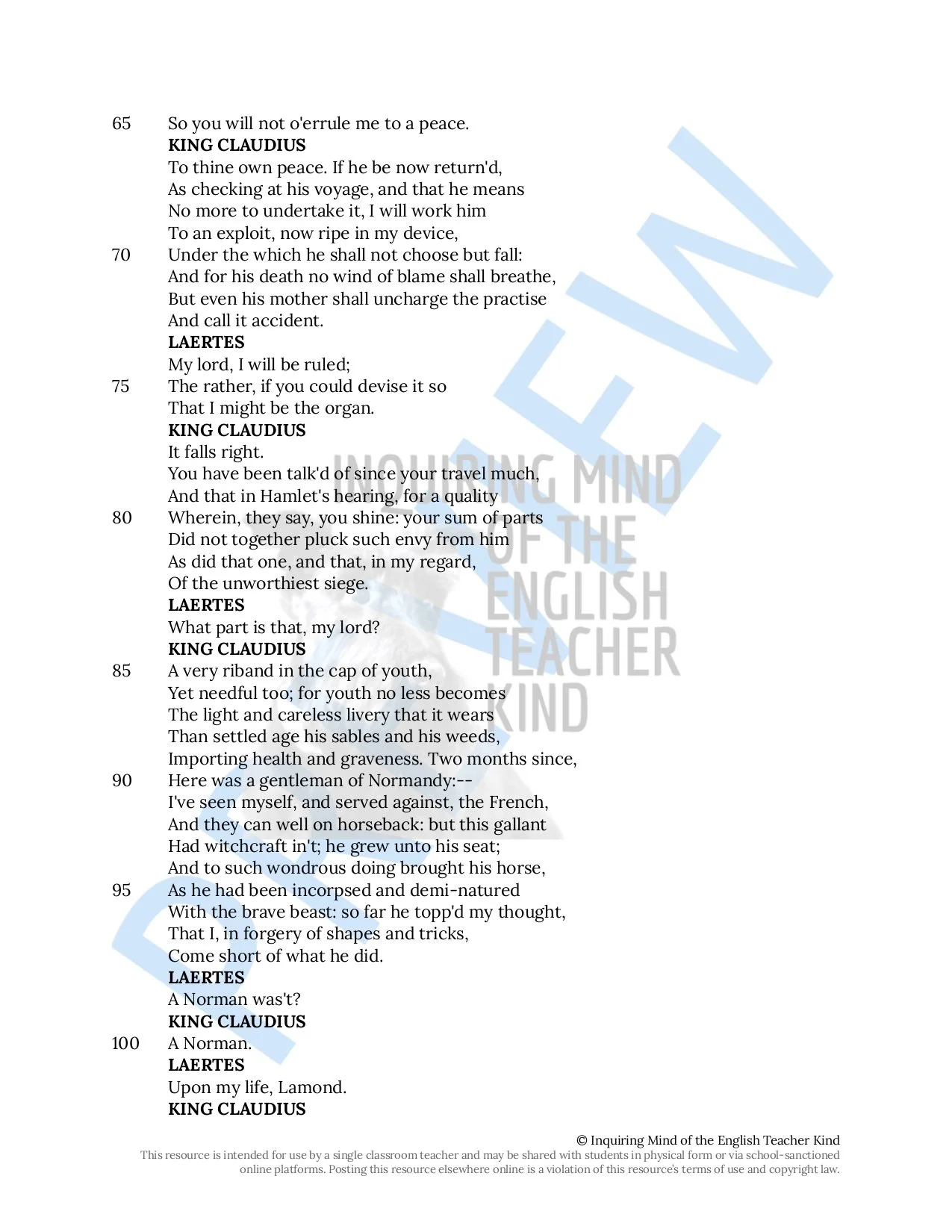 Image 101 of 121
 Image 102 of 121
 Image 103 of 121
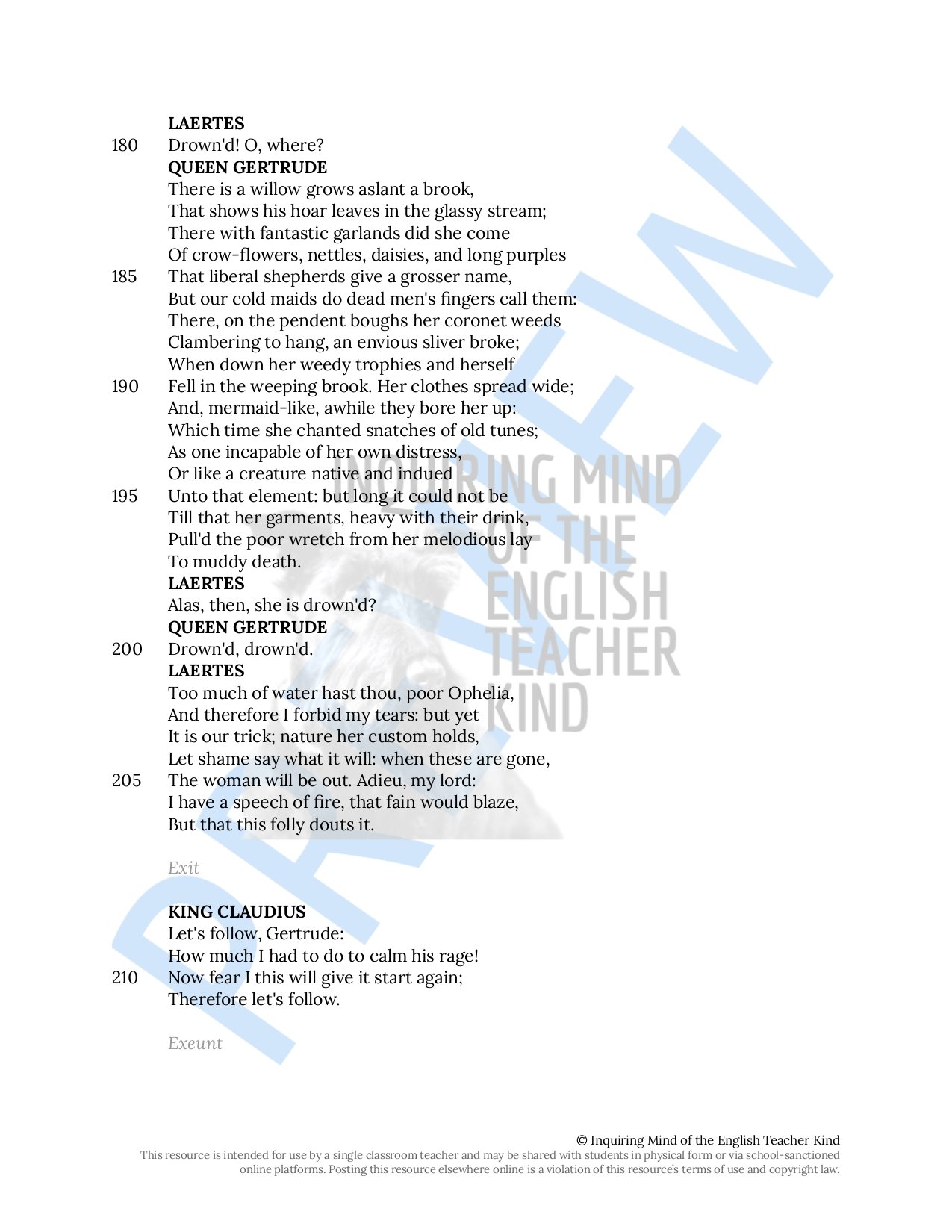 Image 104 of 121
 Image 105 of 121
 Image 106 of 121
 Image 107 of 121
 Image 108 of 121
 Image 109 of 121
 Image 110 of 121
 Image 111 of 121
 Image 112 of 121
 Image 113 of 121
 Image 114 of 121
 Image 115 of 121
 Image 116 of 121
 Image 117 of 121
 Image 118 of 121
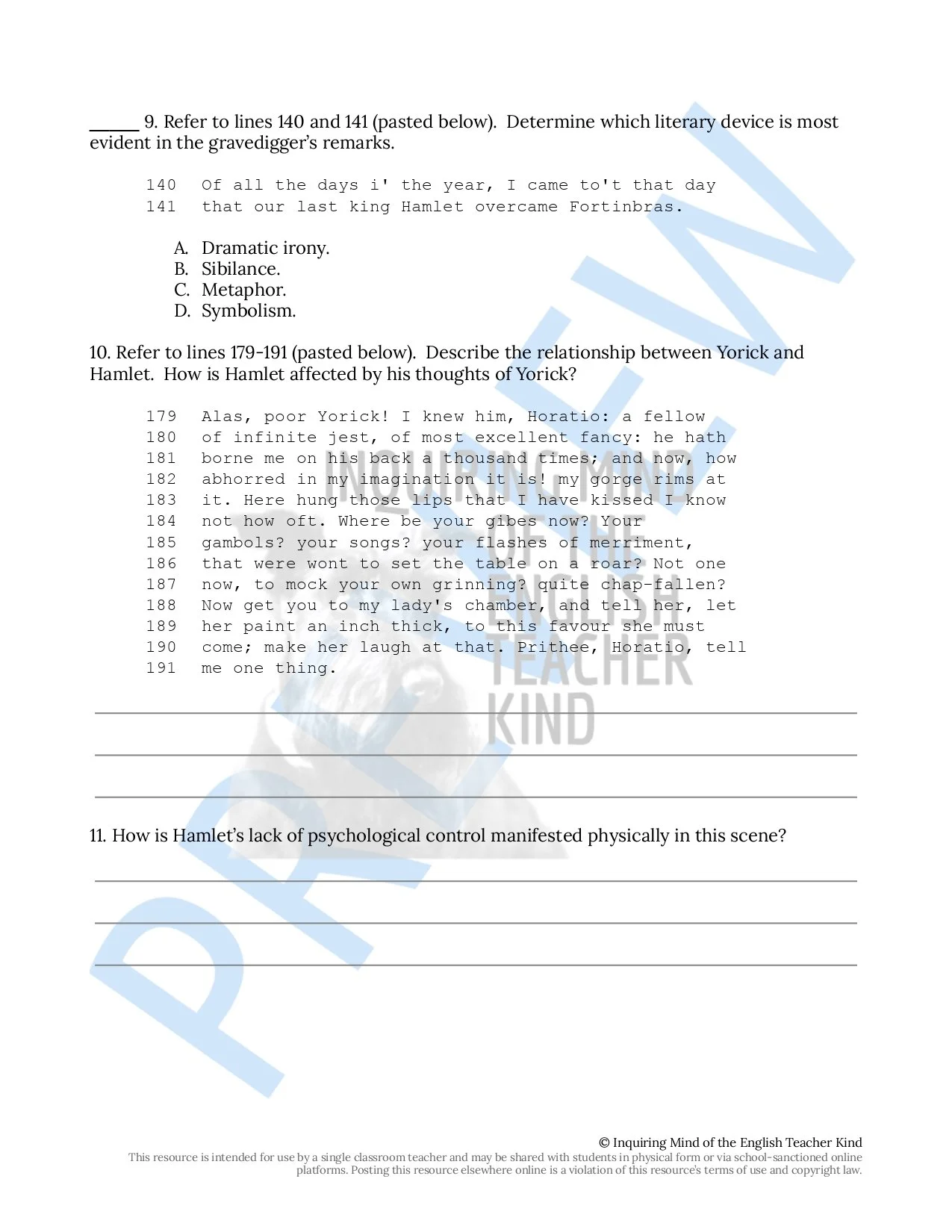 Image 119 of 121
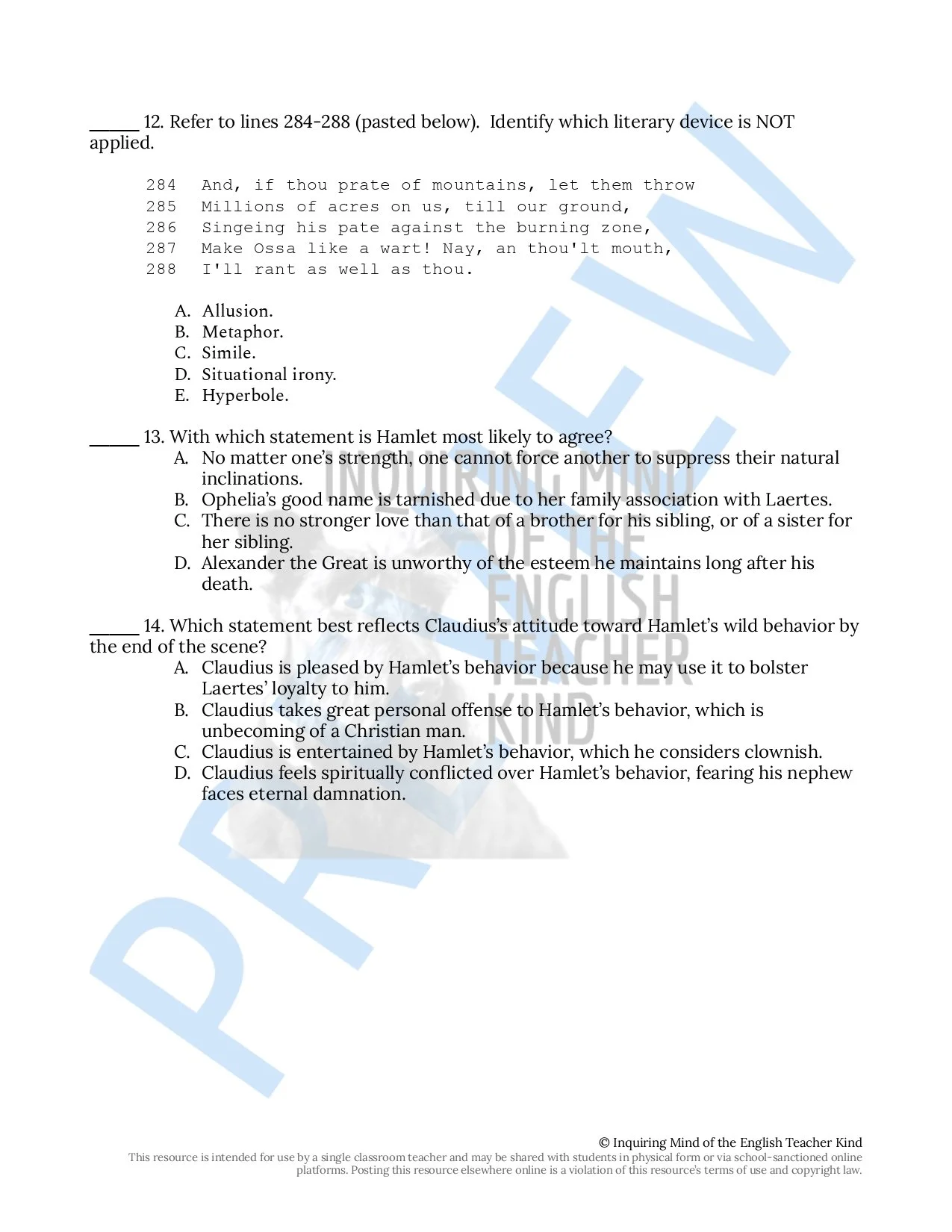 Image 120 of 121
 Image 121 of 121