Image 1 of 18
Image 2 of 18
Image 3 of 18
Image 4 of 18
Image 5 of 18
Image 6 of 18
Image 7 of 18
Image 8 of 18
Image 9 of 18
Image 10 of 18
Image 11 of 18
Image 12 of 18
Image 13 of 18
Image 14 of 18
Image 15 of 18
Image 16 of 18
Image 17 of 18
Image 18 of 18
Dracula Chapters 11, 12 & 13 Quiz, Literary Analysis Worksheets, Vocabulary Activities & Answer Keys
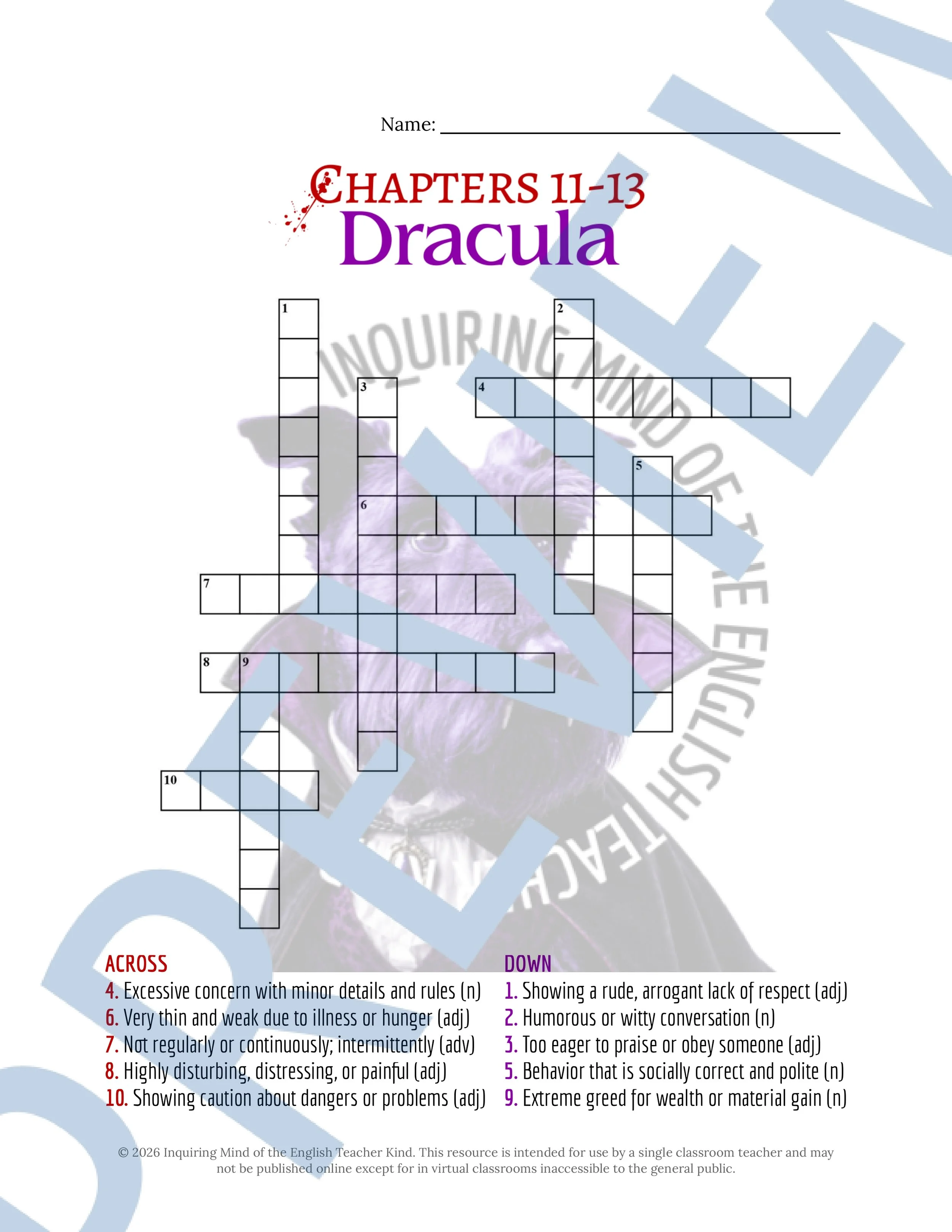
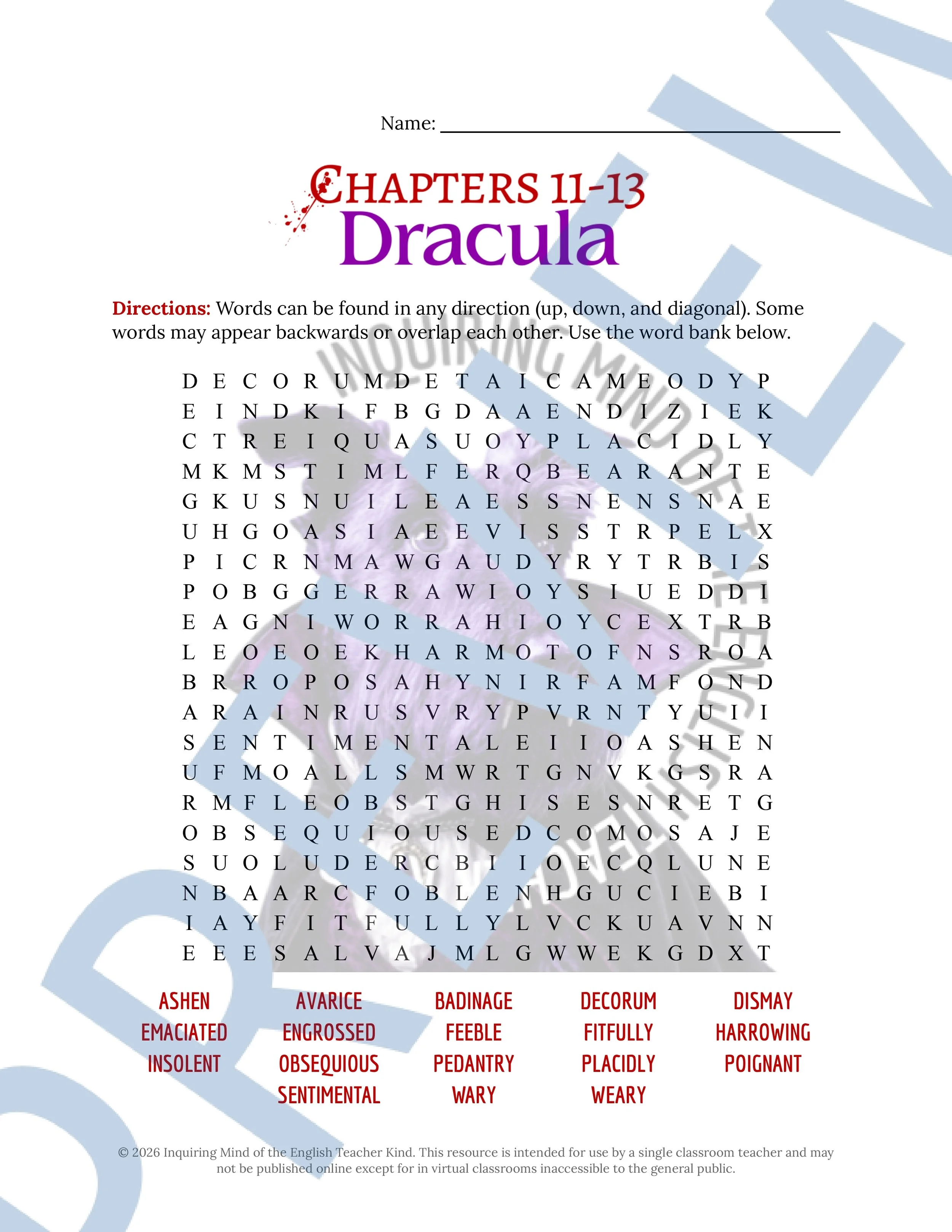
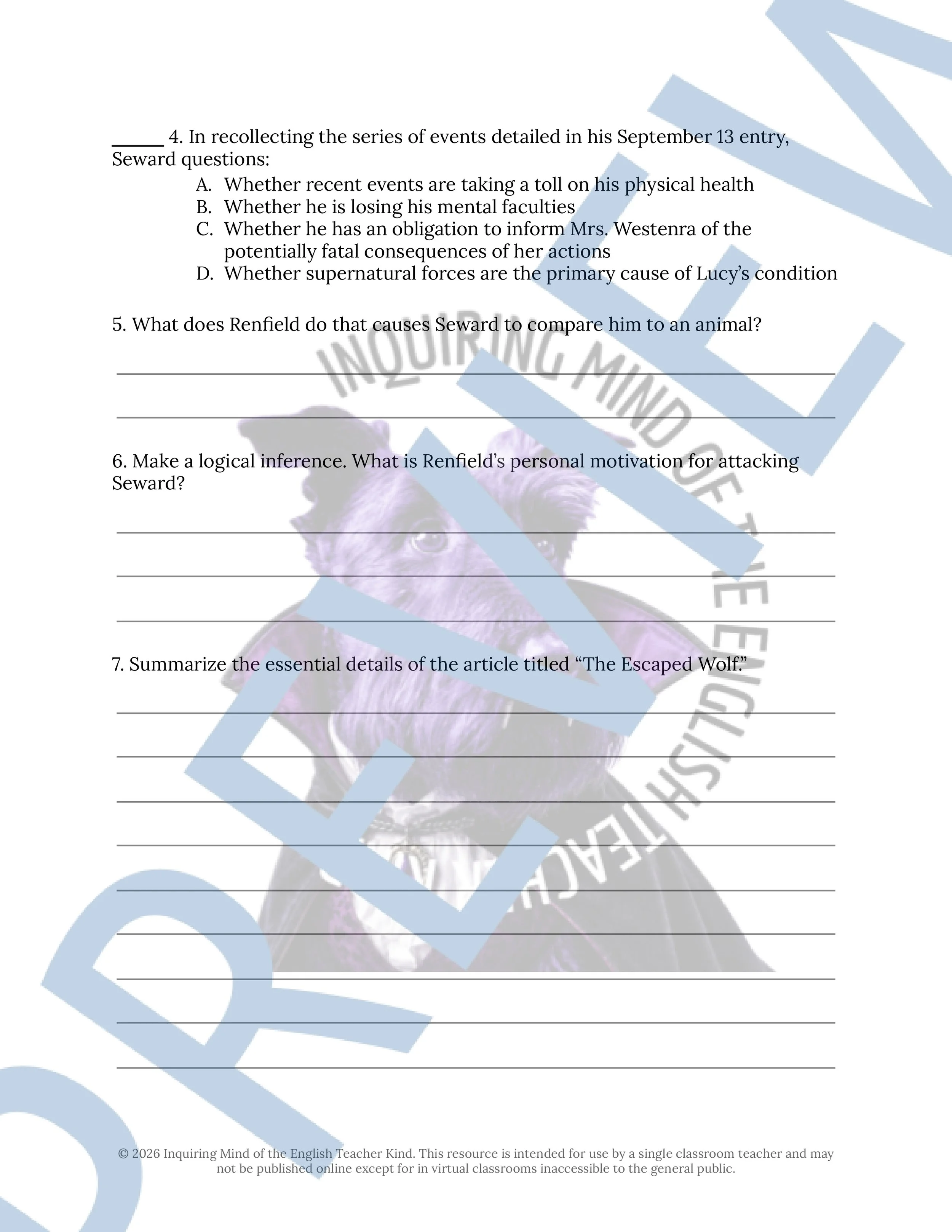
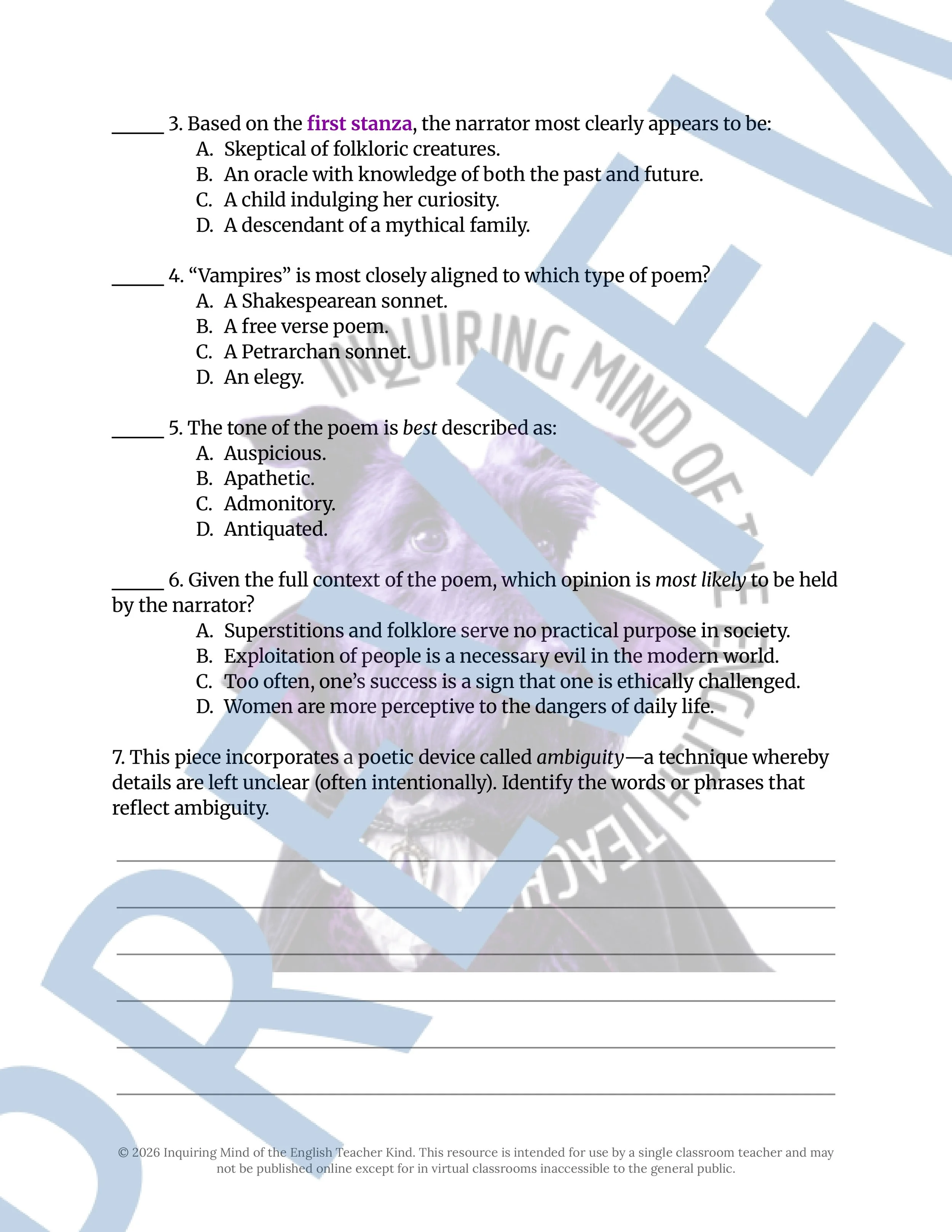
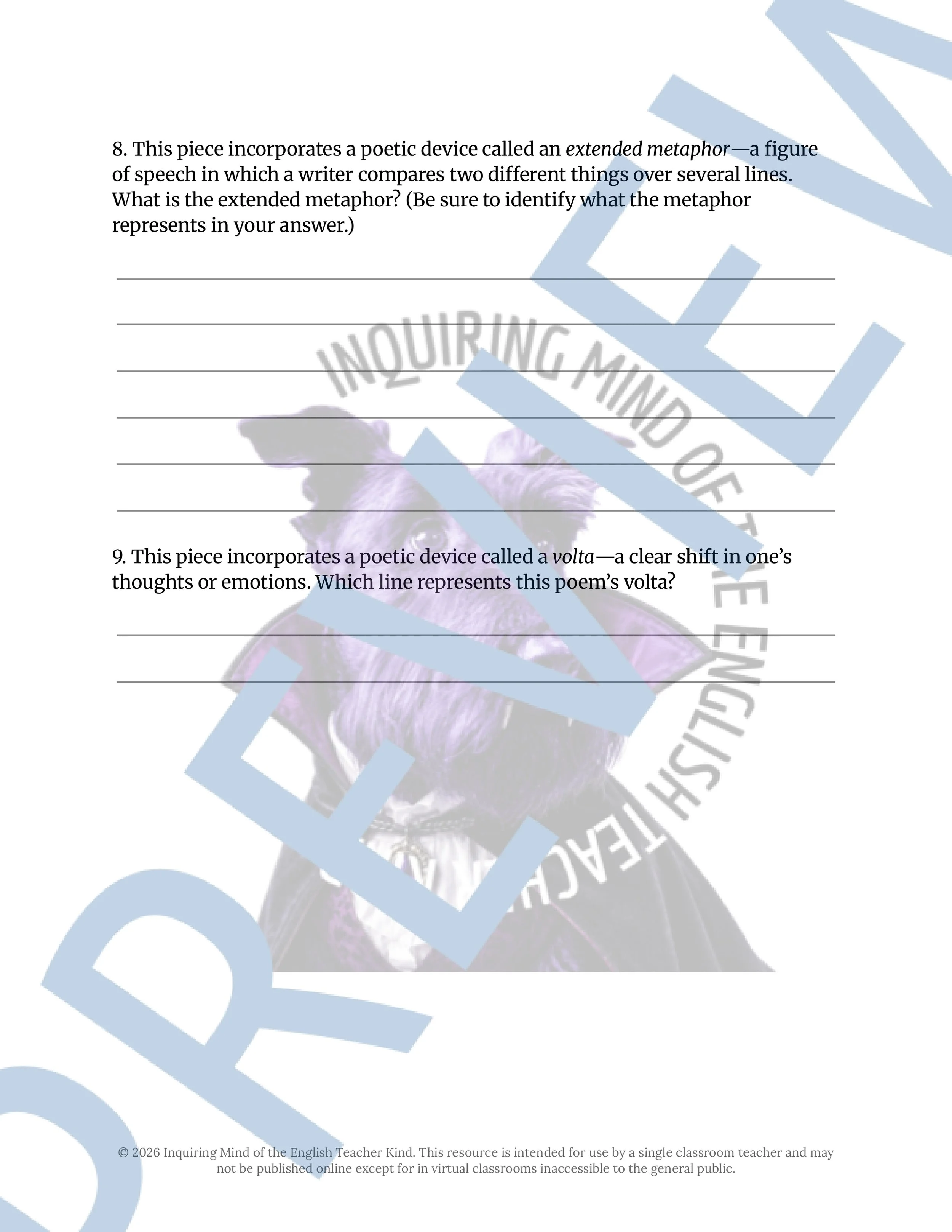
This bundle covers chapters 11, 12, and 13 of Bram Stoker's Dracula and includes a reading comprehension quiz, vocabulary worksheet, crossword puzzle, word search, three literary analysis activities, and answer keys. Ideal for high school English classes focusing on Gothic literature and epistolary fiction (especially during the Halloween season), these resources make differentiating based on student readiness levels easier. By engaging with these activities and assessments, students will:
Identify what the text states explicitly
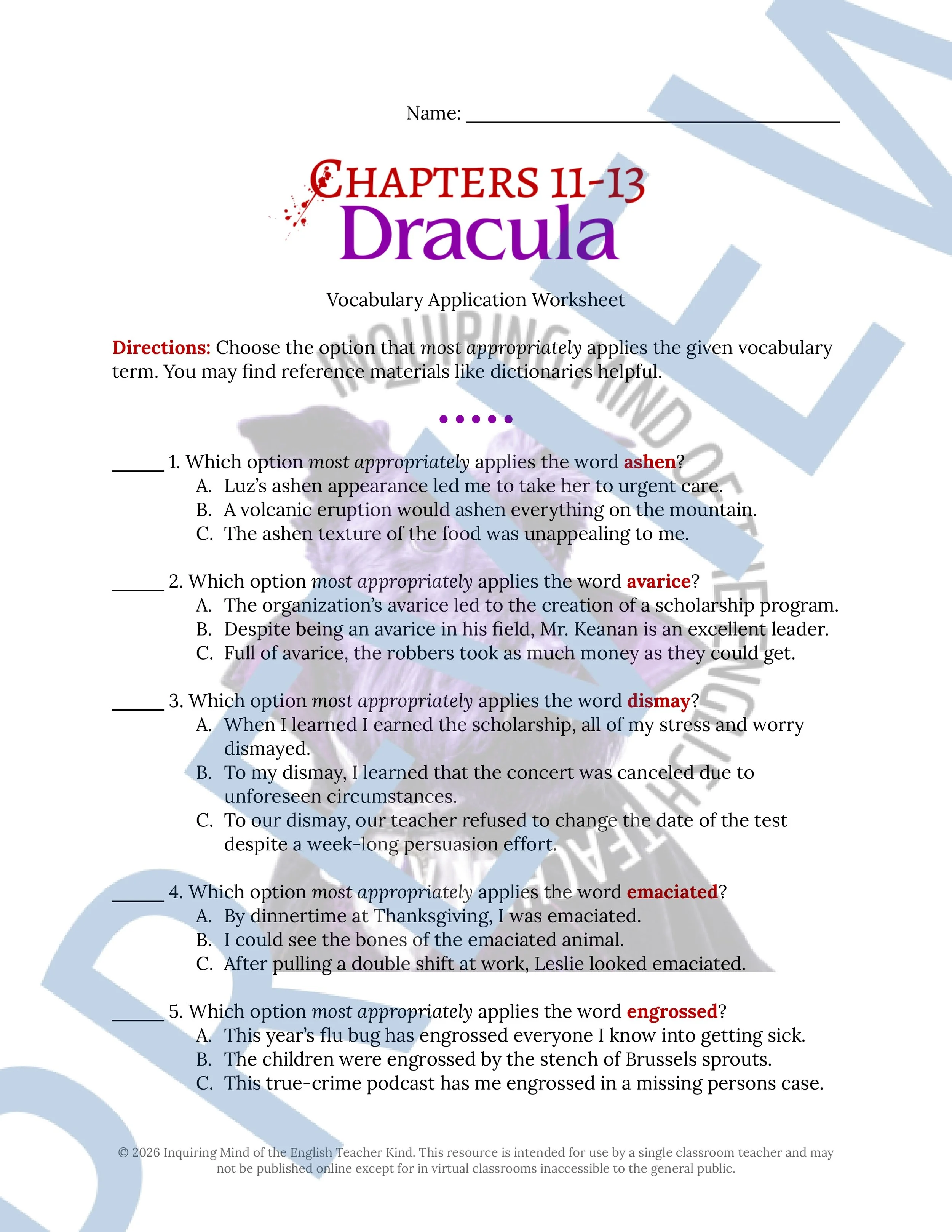
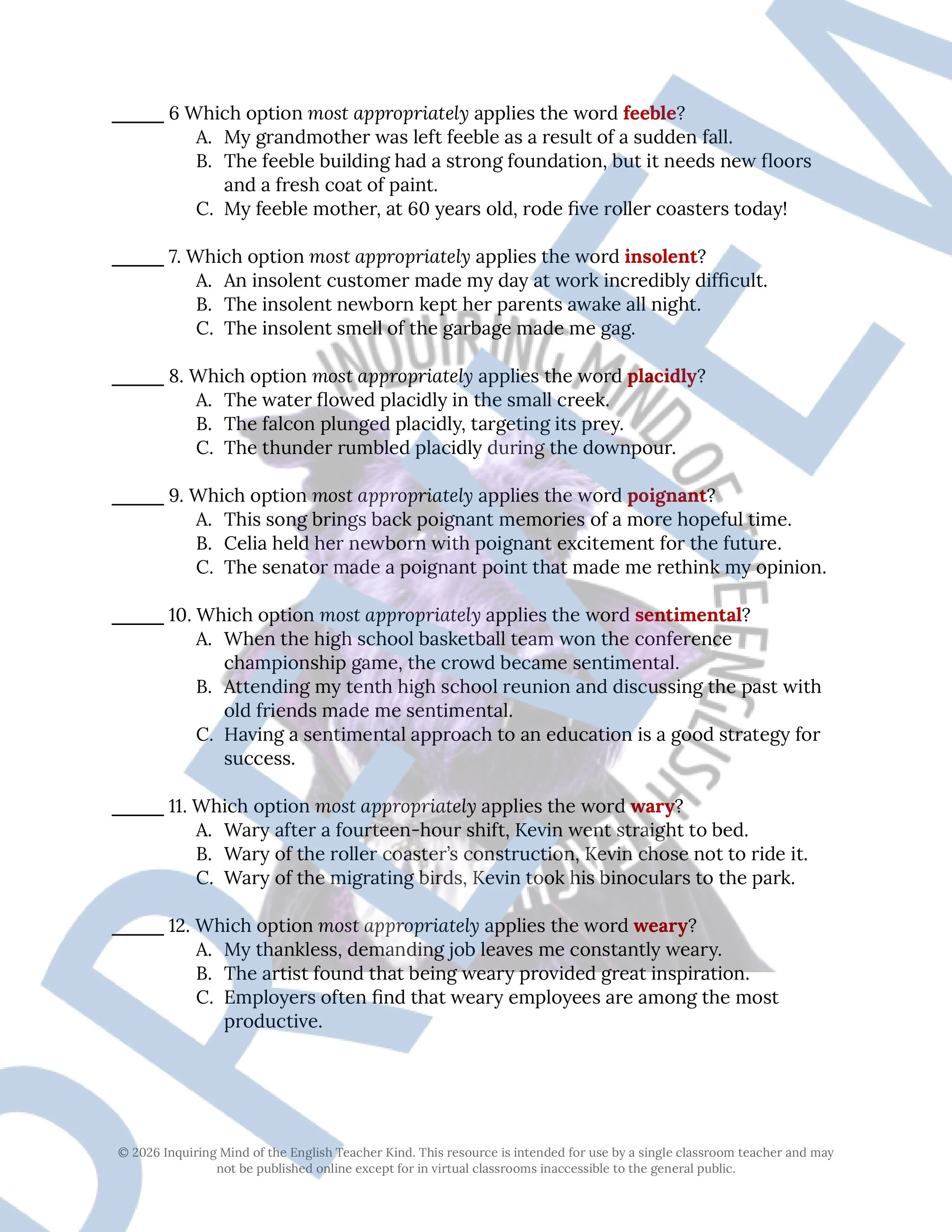
Define challenging vocabulary
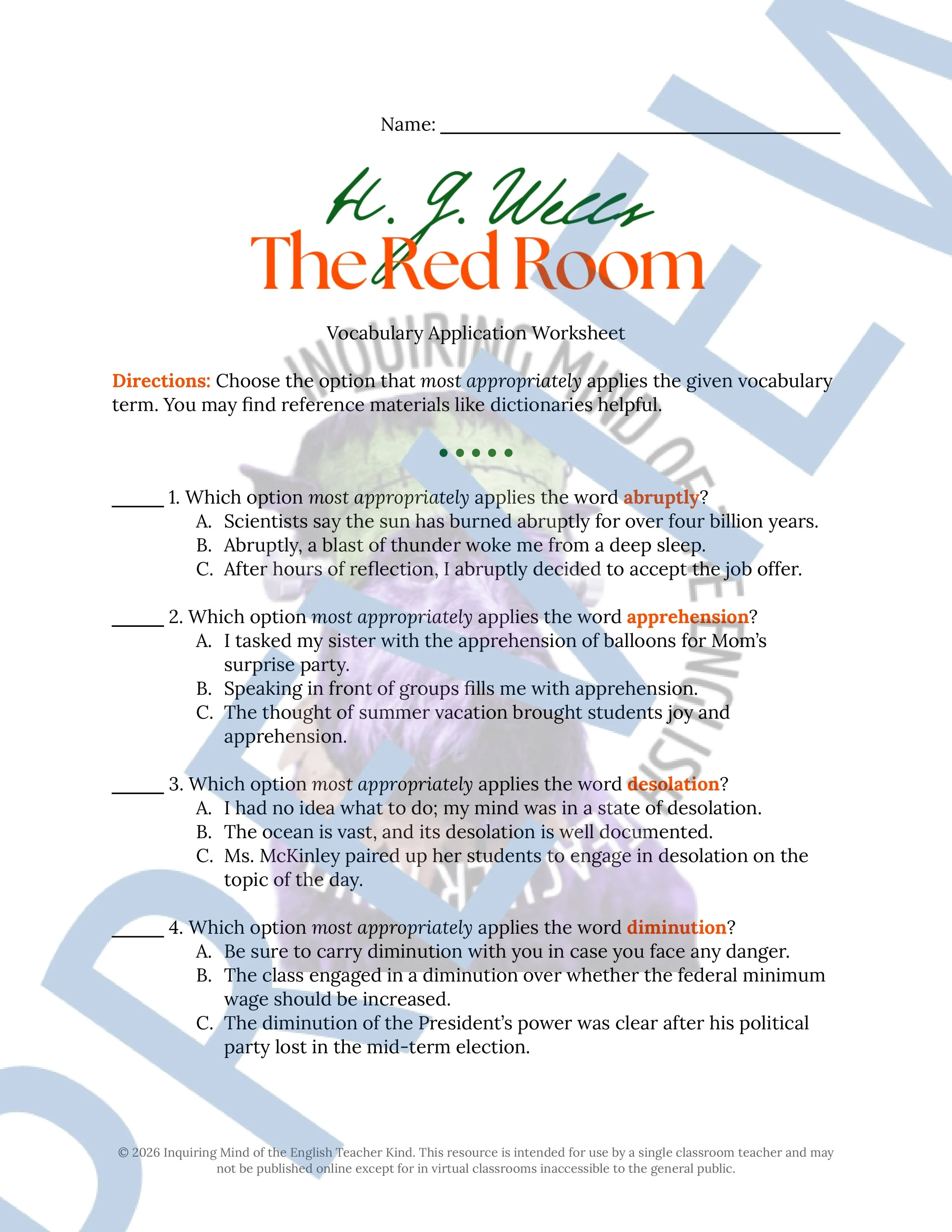
Discern the best application of words as they are used in sentences
Describe the tone of given excerpts
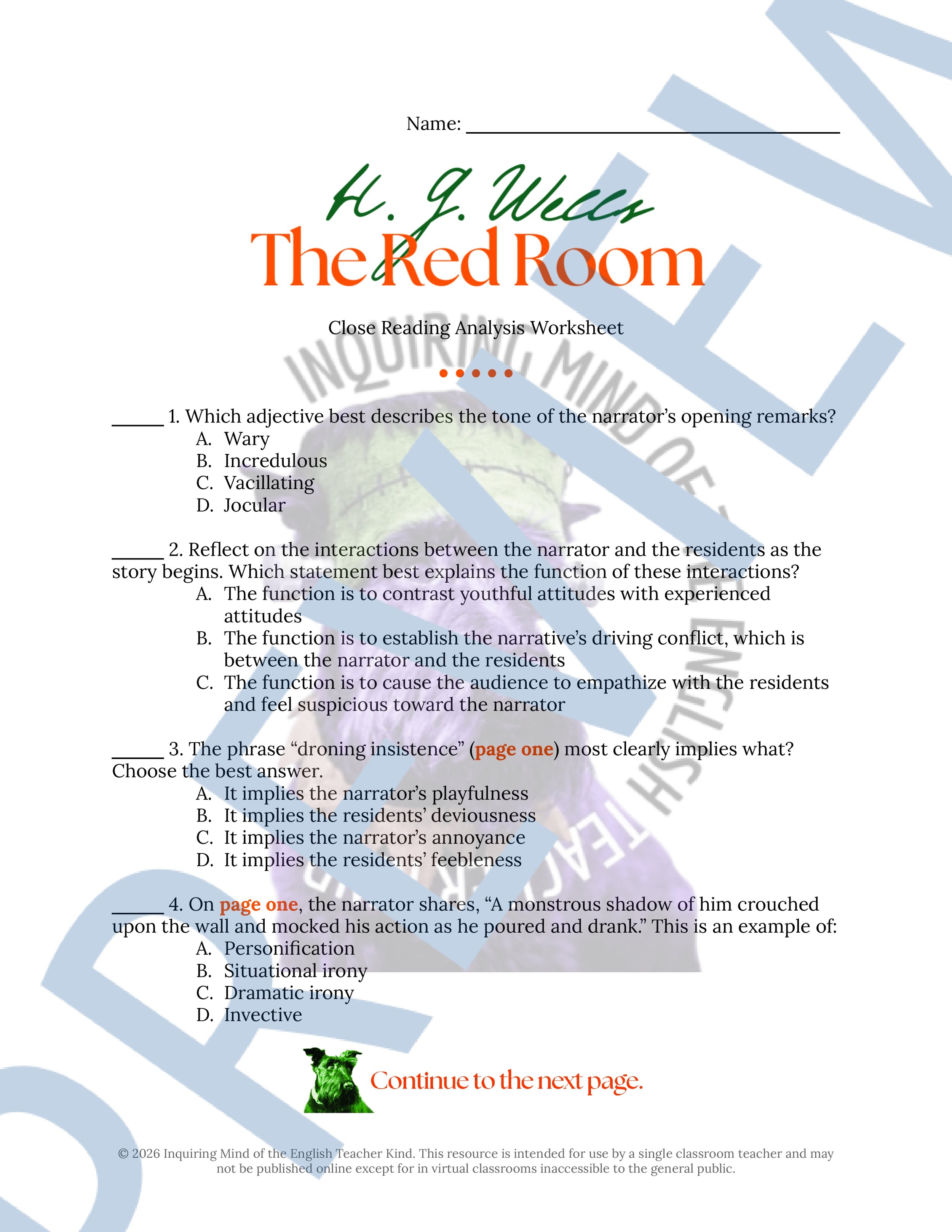
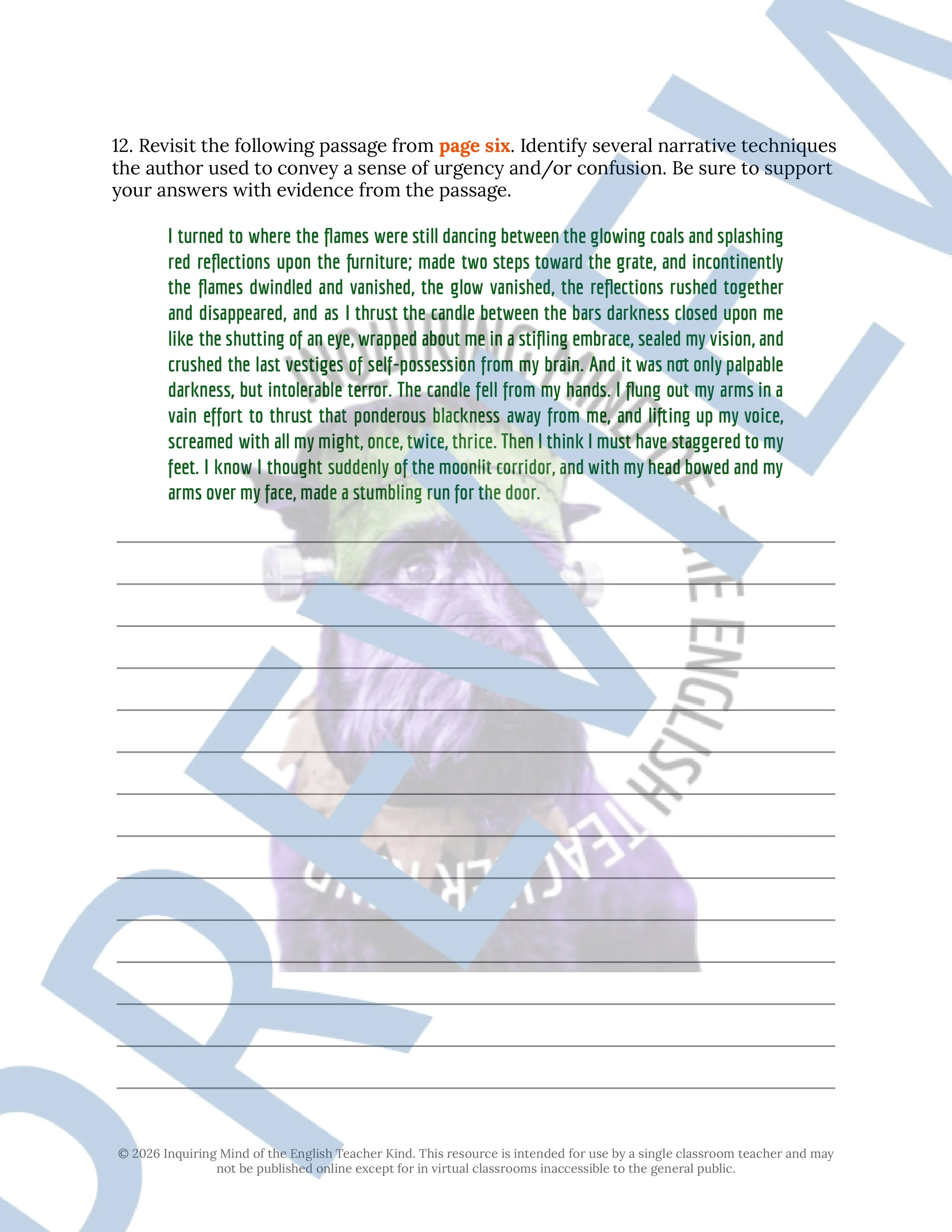
Discern the intended effects of the author's narrative techniques
Indicate the function of a given telegram
Make connections between the novel and William Shakespeare's Hamlet
Examine how complex characters think, behave, interact, and develop
Apply knowledge of literary devices including foreshadowing, personification, metaphor, paradox, onomatopoeia, and more
Make a prediction about potential plot developments
Support claims and inferences with sound reasoning and relevant evidence
Write about Gothic literature with clarity, accuracy, and precision
The relevant chapters, which are in the public domain, are provided. All materials are delivered in printable Word Document and PDF formats. (Alternatively, a Google Drive bundle option is available.)
Resources are available for a variety of other engaging novels:
This bundle covers chapters 11, 12, and 13 of Bram Stoker's Dracula and includes a reading comprehension quiz, vocabulary worksheet, crossword puzzle, word search, three literary analysis activities, and answer keys. Ideal for high school English classes focusing on Gothic literature and epistolary fiction (especially during the Halloween season), these resources make differentiating based on student readiness levels easier. By engaging with these activities and assessments, students will:
Identify what the text states explicitly
Define challenging vocabulary
Discern the best application of words as they are used in sentences
Describe the tone of given excerpts
Discern the intended effects of the author's narrative techniques
Indicate the function of a given telegram
Make connections between the novel and William Shakespeare's Hamlet
Examine how complex characters think, behave, interact, and develop
Apply knowledge of literary devices including foreshadowing, personification, metaphor, paradox, onomatopoeia, and more
Make a prediction about potential plot developments
Support claims and inferences with sound reasoning and relevant evidence
Write about Gothic literature with clarity, accuracy, and precision
The relevant chapters, which are in the public domain, are provided. All materials are delivered in printable Word Document and PDF formats. (Alternatively, a Google Drive bundle option is available.)
Resources are available for a variety of other engaging novels:
Preview this resource:
Evaluate comprehension and support the development of close reading analysis skills with this bundle of resources covering chapters 11, 12, and 13 of Dracula by Bram Stoker. A plot-based quiz, close reading worksheets, vocabulary activities, and answer keys are provided.