Image 1 of 40
Image 2 of 40
Image 3 of 40
Image 4 of 40
Image 5 of 40
Image 6 of 40
Image 7 of 40
Image 8 of 40
Image 9 of 40
Image 10 of 40
Image 11 of 40
Image 12 of 40
Image 13 of 40
Image 14 of 40
Image 15 of 40
Image 16 of 40
Image 17 of 40
Image 18 of 40
Image 19 of 40
Image 20 of 40
Image 21 of 40
Image 22 of 40
Image 23 of 40
Image 24 of 40
Image 25 of 40
Image 26 of 40
Image 27 of 40
Image 28 of 40
Image 29 of 40
Image 30 of 40
Image 31 of 40
Image 32 of 40
Image 33 of 40
Image 34 of 40
Image 35 of 40
Image 36 of 40
Image 37 of 40
Image 38 of 40
Image 39 of 40
Image 40 of 40
High School Creative Writing Unit Plan for Modified and Modern Fairy Tales
Help high school Creative Writing students better understand the conventions of the fairy tale genre and prepare for the drafting of modified fairy tales with this comprehensive, low-prep, standards-aligned unit plan. All supporting materials are provided in both Word Document and PDF formats. (Alternatively, a Google Drive option is available.) More specifically, the following are included:
A detailed, standards-based unit plan articulating the unit's transfer goal(s), essential question(s), enduring understanding(s), learning target(s), academic vocabulary, formative assessment(s), summative performance task(s), and learning plan(s).
A PowerPoint addressing the conventions of the fairy tale genre.
Representative narratives by the Brothers Grimm for analysis with supplemental worksheets.
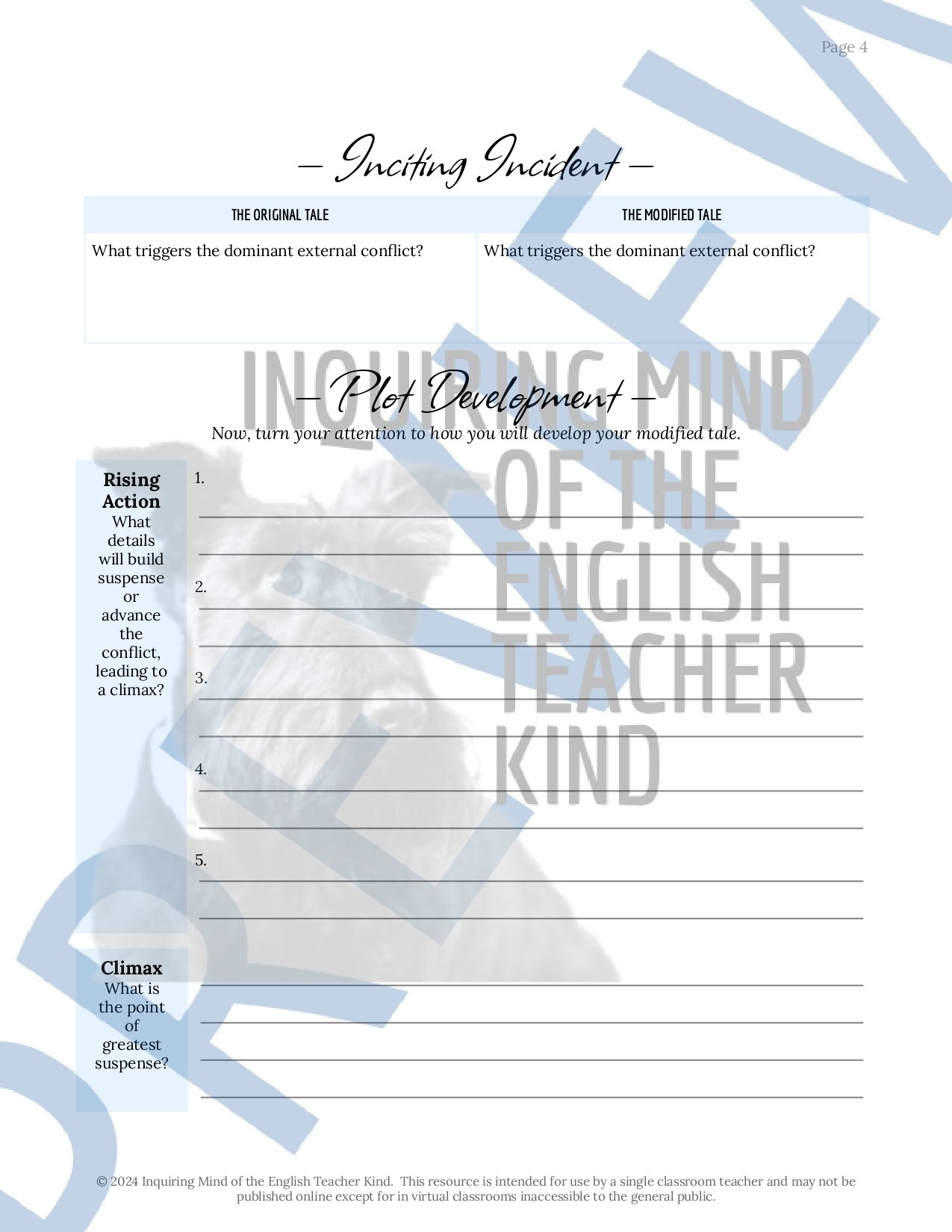
Detailed directions.
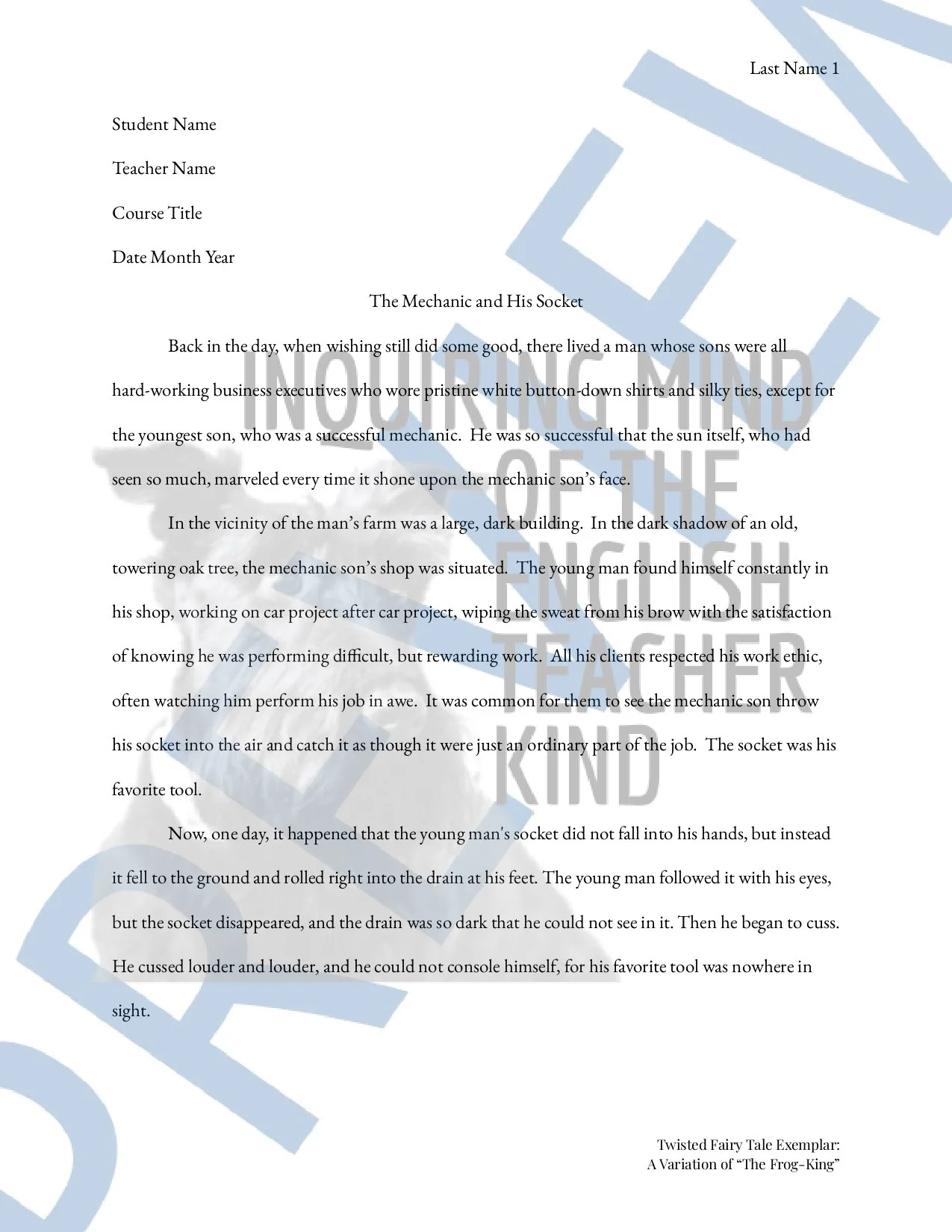
A student exemplar for reference.
A comprehensive outline for student planning.
A document to facilitate the editing process.
A comprehensive rubric for evaluating student writing.
With these materials, students will do the following:
Develop greater understanding of the conventions of the fairy tale genre.
Analyze how the Brothers Grimm used characterization, exaggeration, description, and various literary devices that are consistent with the conventions of fairy tale writing in "The Frog King," "Cinderella," "The Juniper Tree," and "Snow White and the Seven Dwarfs."
Organize initial ideas in a coherent manner.
Engage the reader with a compelling exposition that establishes a majestic setting.
Use many appropriate narrative techniques (dialogue, dialect, description, pacing, etc.) to enhance a fairy tale plot.
Draft a coherent, cohesive, and appropriate narrative that builds toward a particular tone and outcome (a sense of mystery, suspense, etc.).
Use precise words and phrases, active verbs, and sensory language to convey a compelling story.
Draft an unrushed conclusion that resolves conflicts and conveys a theme.
Show mastery of the conventions of standard English grammar, usage, capitalization, punctuation, and spelling.
Unit plans are available for a variety of writing tasks:
Help high school Creative Writing students better understand the conventions of the fairy tale genre and prepare for the drafting of modified fairy tales with this comprehensive, low-prep, standards-aligned unit plan. All supporting materials are provided in both Word Document and PDF formats. (Alternatively, a Google Drive option is available.) More specifically, the following are included:
A detailed, standards-based unit plan articulating the unit's transfer goal(s), essential question(s), enduring understanding(s), learning target(s), academic vocabulary, formative assessment(s), summative performance task(s), and learning plan(s).
A PowerPoint addressing the conventions of the fairy tale genre.
Representative narratives by the Brothers Grimm for analysis with supplemental worksheets.
Detailed directions.
A student exemplar for reference.
A comprehensive outline for student planning.
A document to facilitate the editing process.
A comprehensive rubric for evaluating student writing.
With these materials, students will do the following:
Develop greater understanding of the conventions of the fairy tale genre.
Analyze how the Brothers Grimm used characterization, exaggeration, description, and various literary devices that are consistent with the conventions of fairy tale writing in "The Frog King," "Cinderella," "The Juniper Tree," and "Snow White and the Seven Dwarfs."
Organize initial ideas in a coherent manner.
Engage the reader with a compelling exposition that establishes a majestic setting.
Use many appropriate narrative techniques (dialogue, dialect, description, pacing, etc.) to enhance a fairy tale plot.
Draft a coherent, cohesive, and appropriate narrative that builds toward a particular tone and outcome (a sense of mystery, suspense, etc.).
Use precise words and phrases, active verbs, and sensory language to convey a compelling story.
Draft an unrushed conclusion that resolves conflicts and conveys a theme.
Show mastery of the conventions of standard English grammar, usage, capitalization, punctuation, and spelling.
Unit plans are available for a variety of writing tasks:
Preview this resource:
Help high school Creative Writing students better understand the conventions of the fairy tale genre and prepare for the drafting of modified fairy tales with this comprehensive, low-prep, standards-aligned unit plan.