Image 1 of 11
Image 2 of 11
Image 3 of 11
Image 4 of 11
Image 5 of 11
Image 6 of 11
Image 7 of 11
Image 8 of 11
Image 9 of 11
Image 10 of 11
Image 11 of 11
"By the Waters of Babylon" Quiz, Close Reading Analysis Worksheet, and Vocabulary Activities
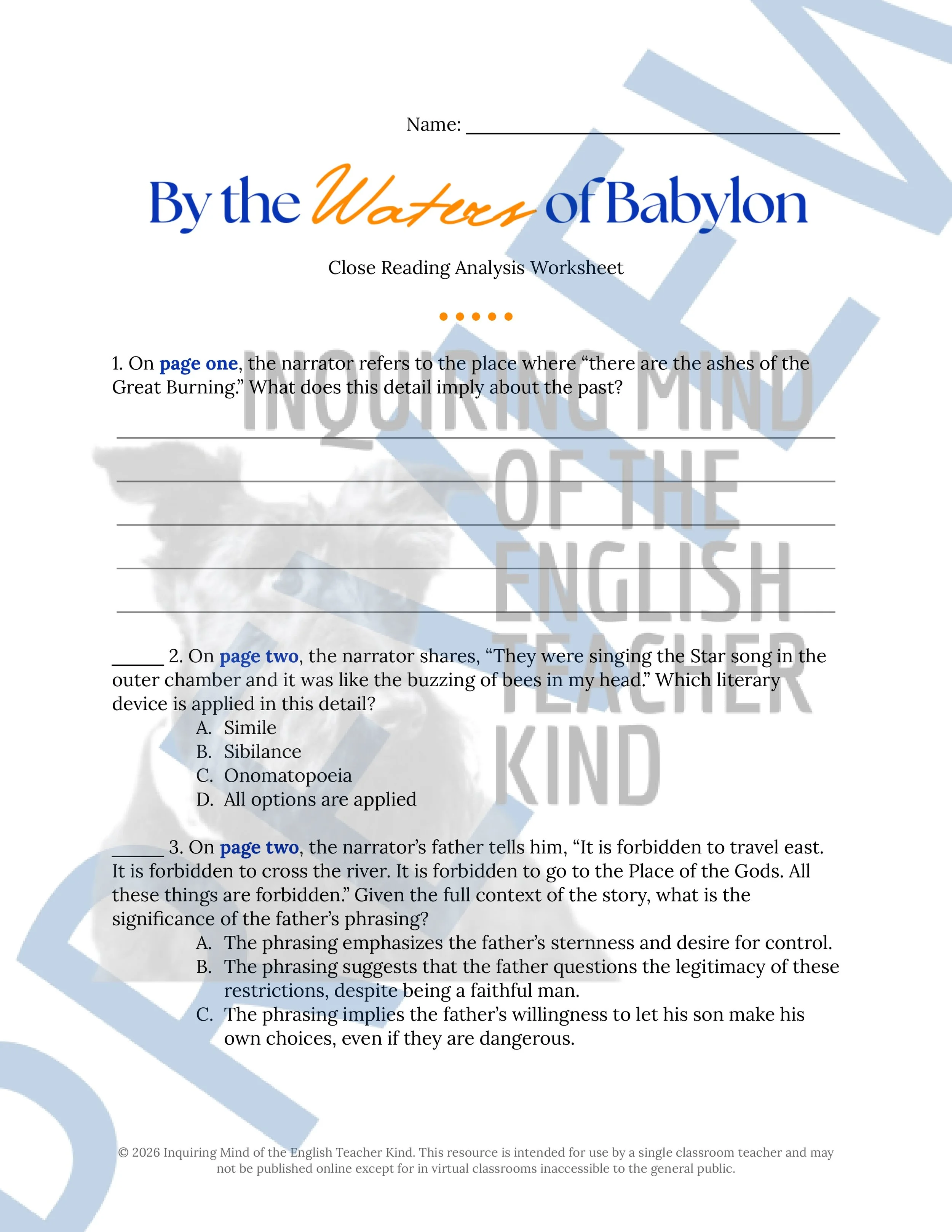
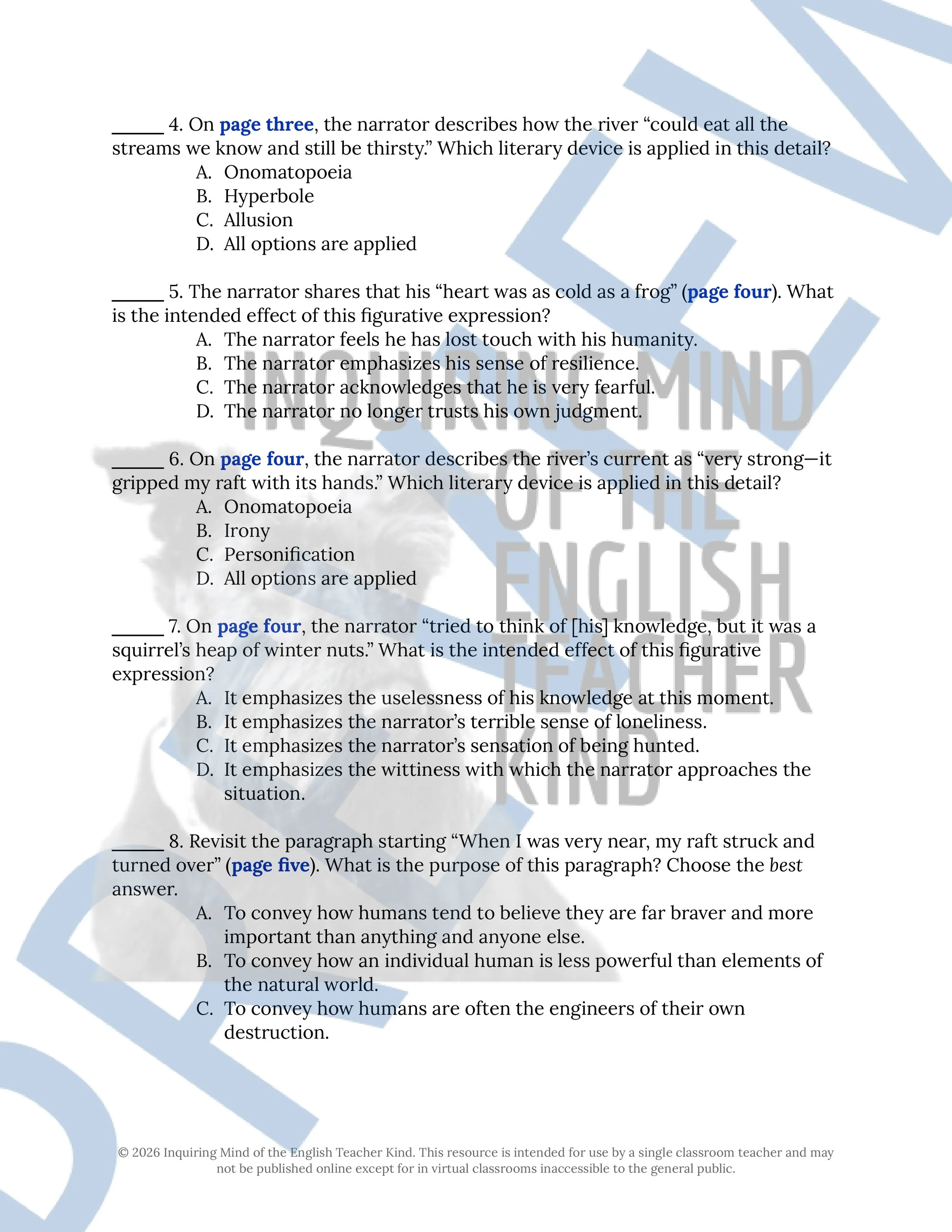
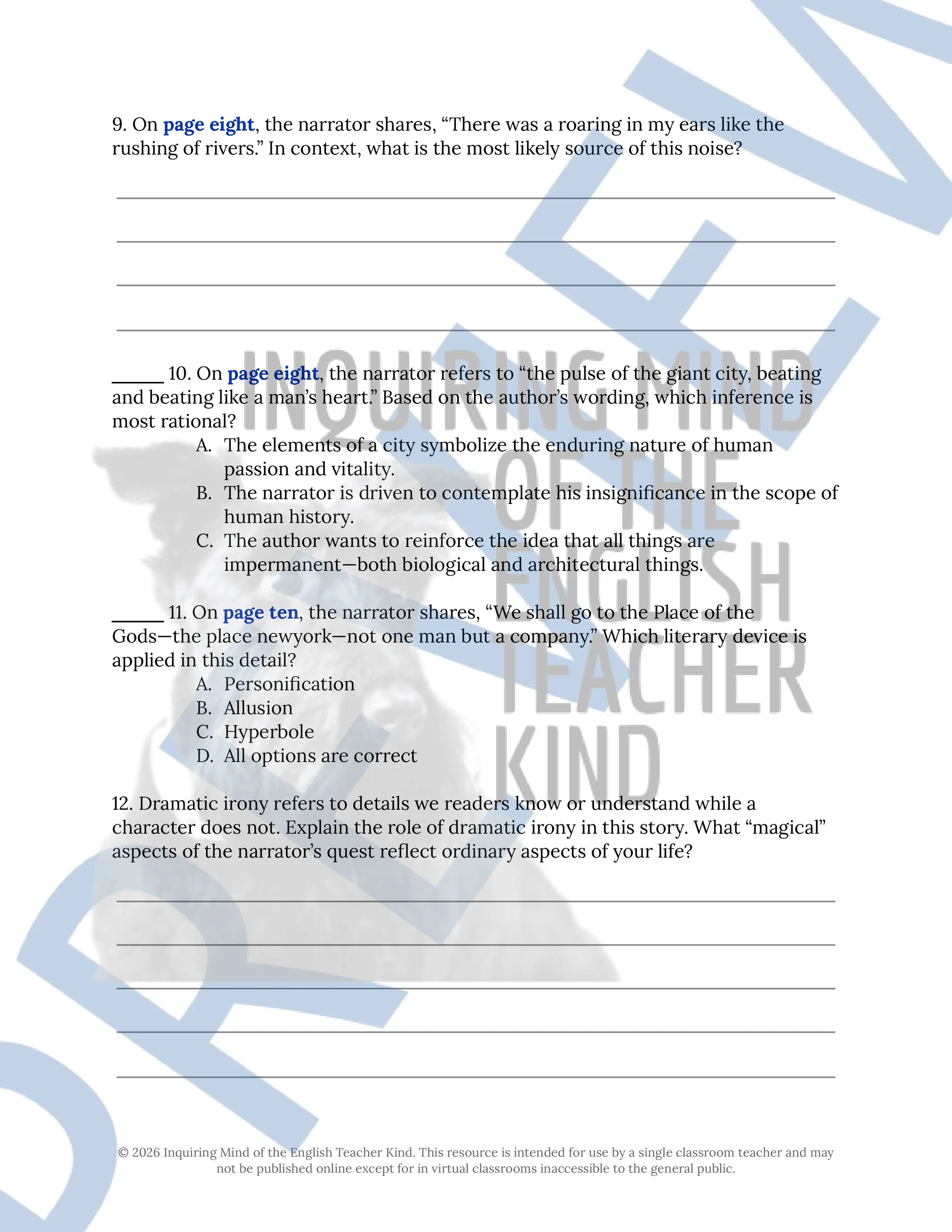
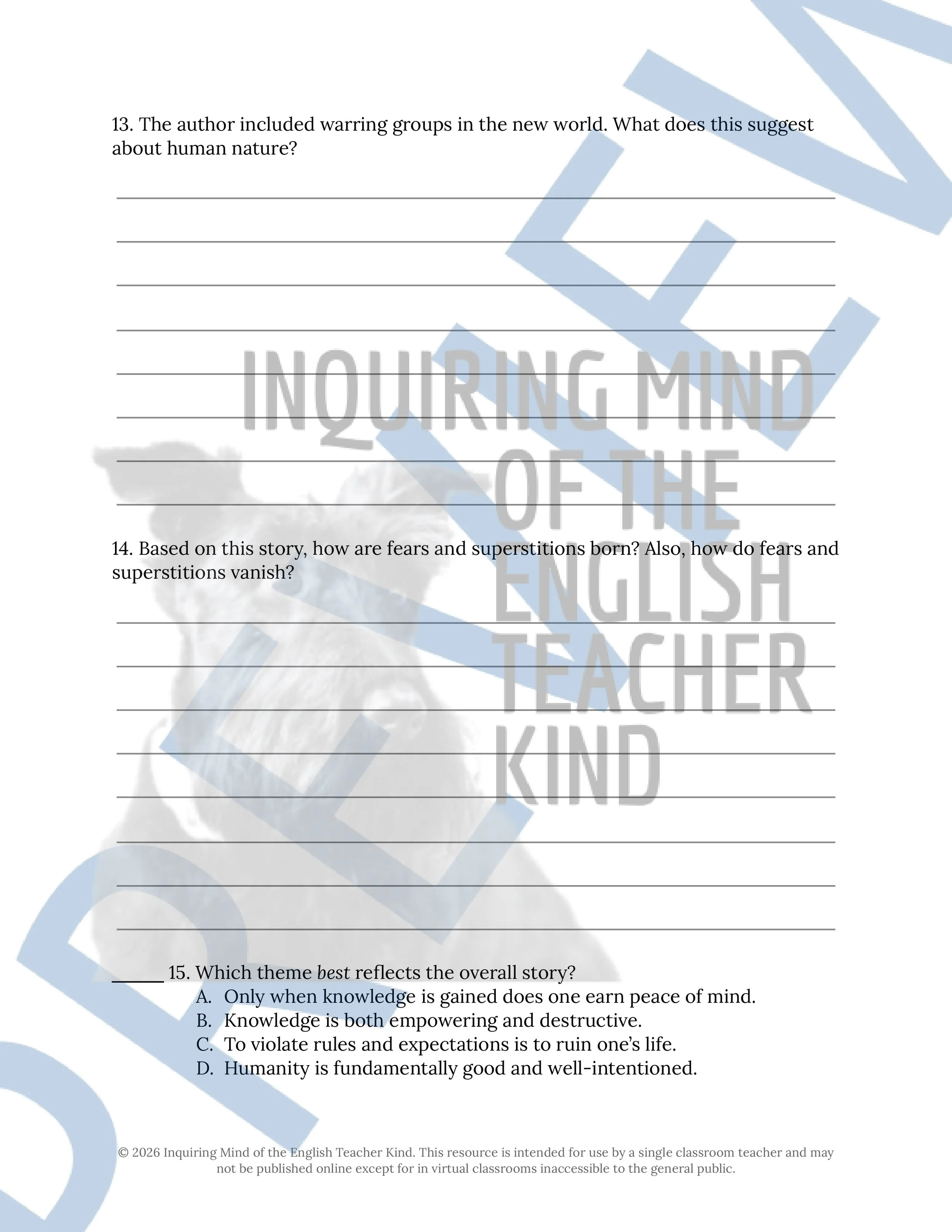
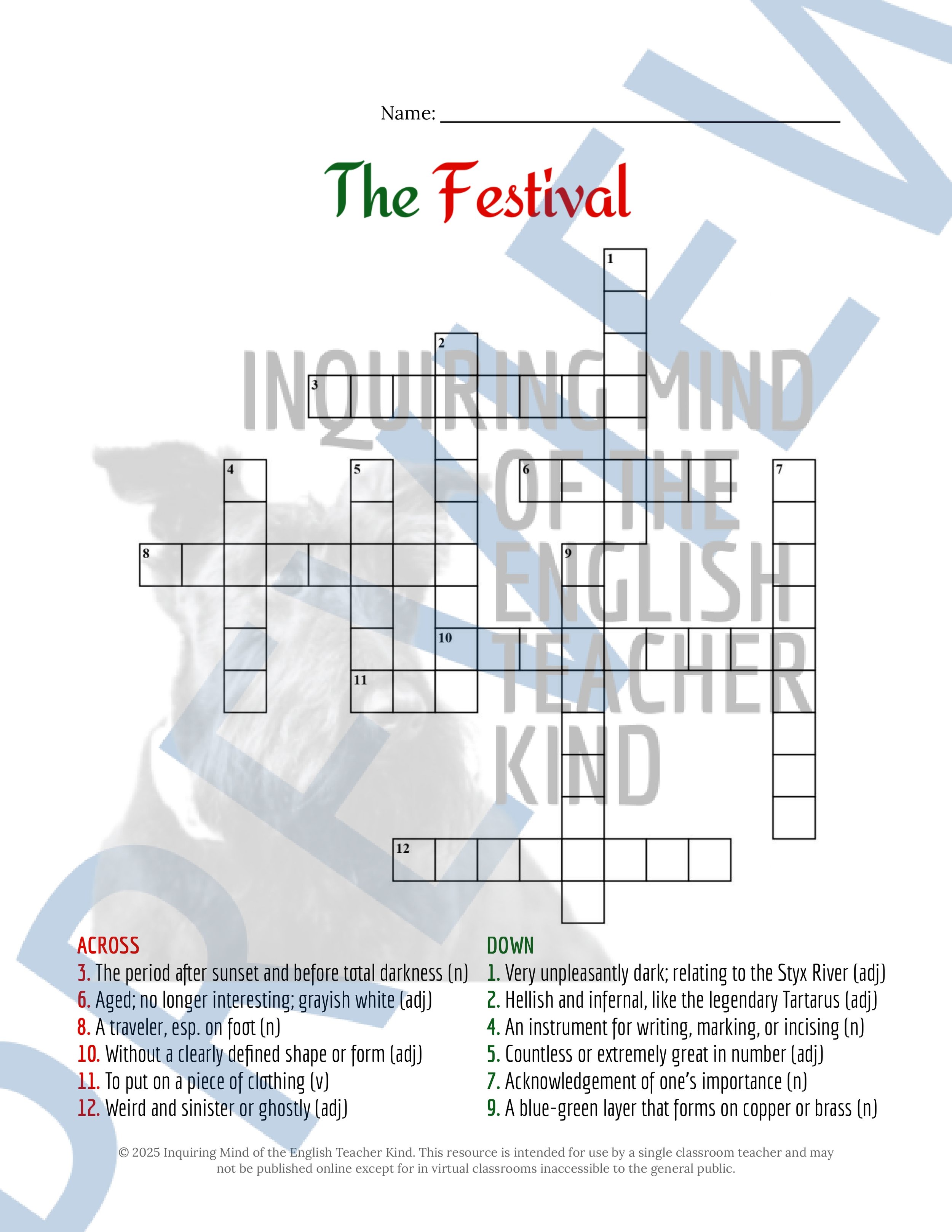
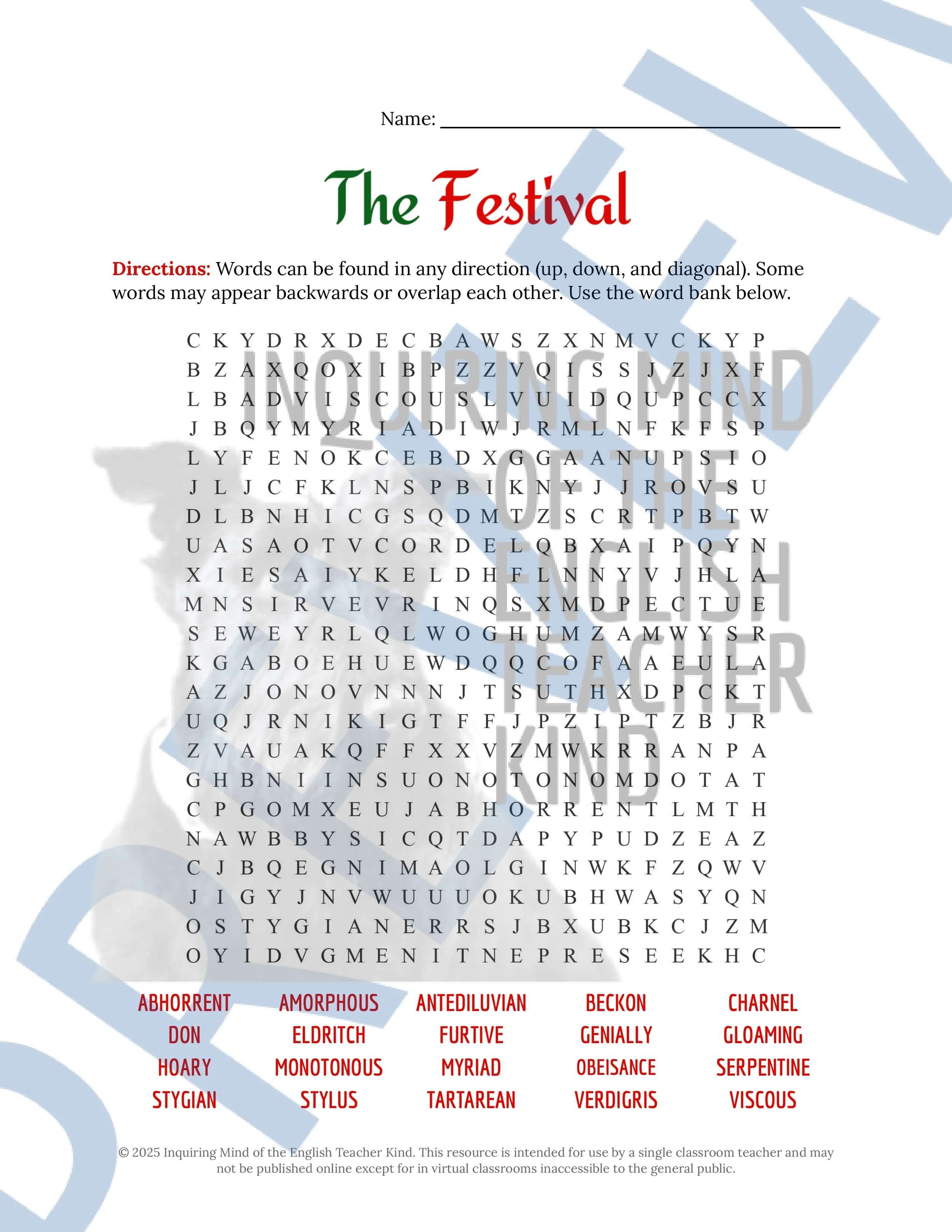
Ideal for American Literature courses and dystopian short story units addressing themes of resilience and survival, these activities and assessments cover "By the Waters of Babylon" by Stephen Vincent Benet. A reading comprehension quiz, literary analysis worksheet, vocabulary application activity, crossword puzzle, word search game, and answer keys are included. Materials are delivered in editable Word Document and printable PDF formats. (Alternatively, a Google Drive bundle option is available.) By engaging with these materials, students will:
Bolster vocabulary skills.
Determine the function of a given paragraph.
Make evidence-based inferences (e.g., what phrases like "the ashes of the Great Burning" imply about the past and what the warring groups of the new world imply about human nature).
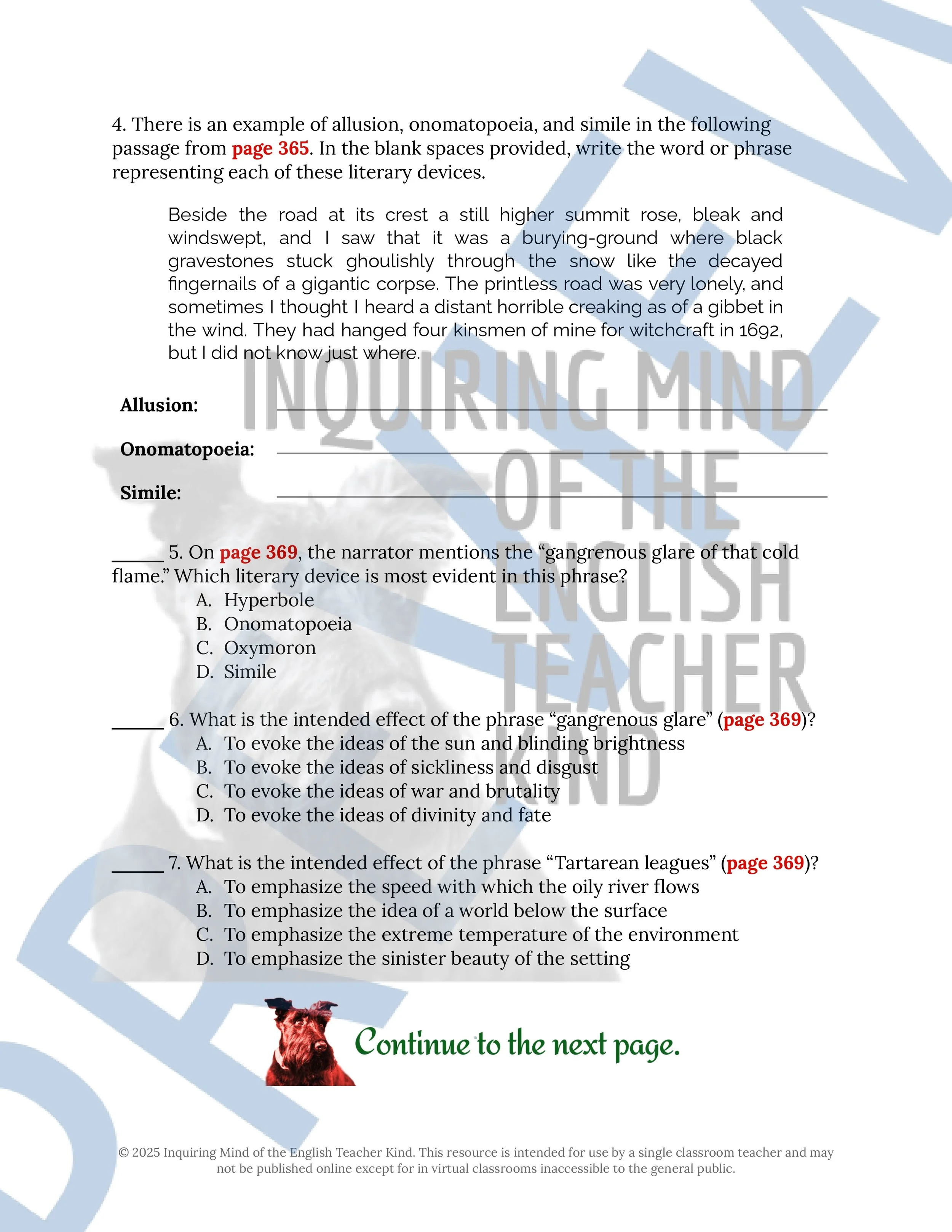
Apply knowledge of literary devices (e.g., allusion, hyperbole, onomatopoeia, personification, simile, and more).
Discern the intended effect of figurative language (e.g., "heart was as cold as a frog," "[his knowledge] was a squirrel's heap of winter nuts," and "the pulse of the giant city").
Analyze sentence structures to infer a character's intent (e.g., passive voice).
Identify a relevant theme.
Support claims and inferences with relevant textual evidence.
Information about the selection:
In a post-apocalyptic future, a young priest's son embarks on a forbidden journey to the Place of the Gods and makes a fascinating discovery about the former deities
Resources are available for teaching short stories of various genres:
Ideal for American Literature courses and dystopian short story units addressing themes of resilience and survival, these activities and assessments cover "By the Waters of Babylon" by Stephen Vincent Benet. A reading comprehension quiz, literary analysis worksheet, vocabulary application activity, crossword puzzle, word search game, and answer keys are included. Materials are delivered in editable Word Document and printable PDF formats. (Alternatively, a Google Drive bundle option is available.) By engaging with these materials, students will:
Bolster vocabulary skills.
Determine the function of a given paragraph.
Make evidence-based inferences (e.g., what phrases like "the ashes of the Great Burning" imply about the past and what the warring groups of the new world imply about human nature).
Apply knowledge of literary devices (e.g., allusion, hyperbole, onomatopoeia, personification, simile, and more).
Discern the intended effect of figurative language (e.g., "heart was as cold as a frog," "[his knowledge] was a squirrel's heap of winter nuts," and "the pulse of the giant city").
Analyze sentence structures to infer a character's intent (e.g., passive voice).
Identify a relevant theme.
Support claims and inferences with relevant textual evidence.
Information about the selection:
In a post-apocalyptic future, a young priest's son embarks on a forbidden journey to the Place of the Gods and makes a fascinating discovery about the former deities
Resources are available for teaching short stories of various genres:
Preview this resource:
Ideal for American Literature courses and dystopian short story units addressing themes of resilience and survival, these activities and assessments cover "By the Waters of Babylon" by Stephen Vincent Benet. A reading comprehension quiz, literary analysis worksheet, vocabulary application activity, crossword puzzle, word search game, and answer keys are included.