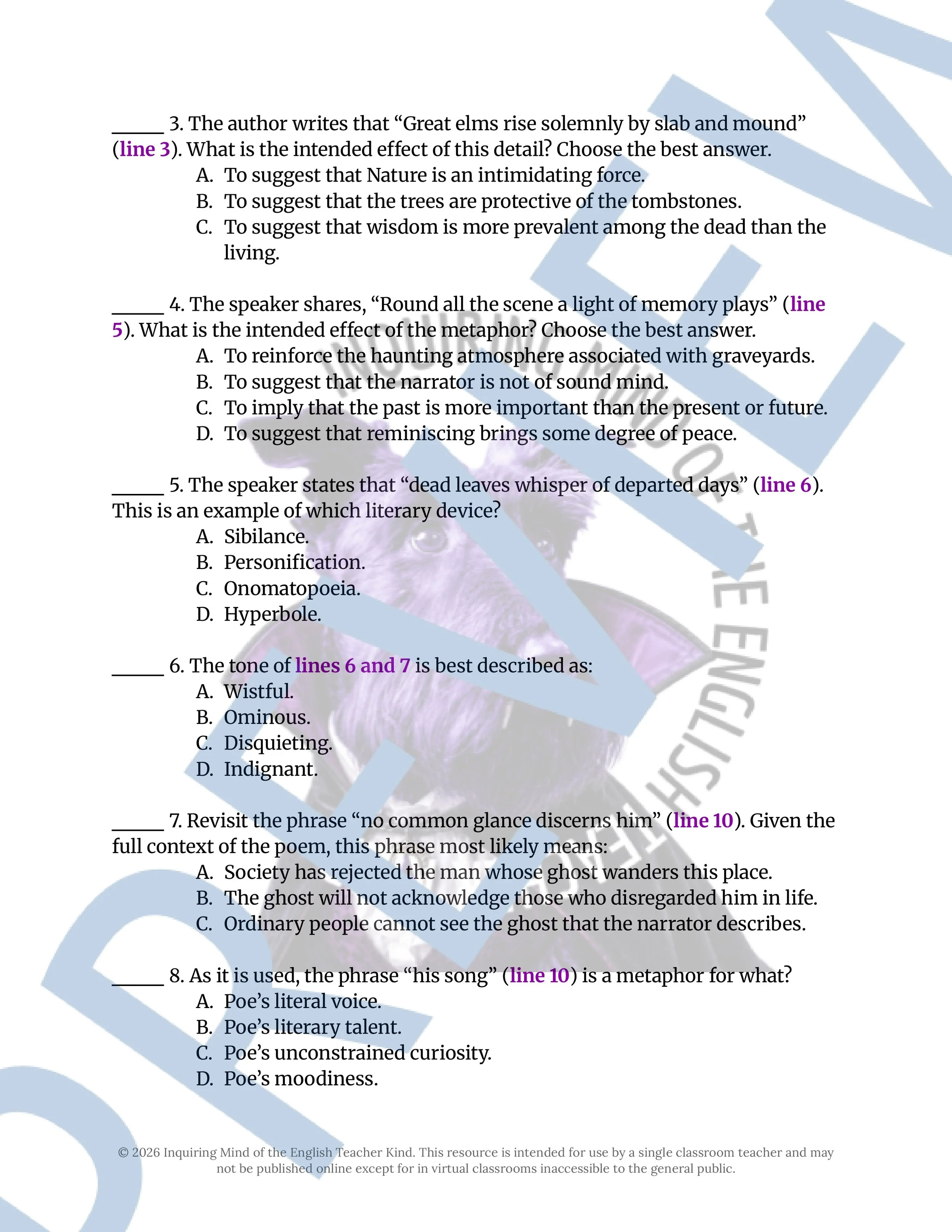
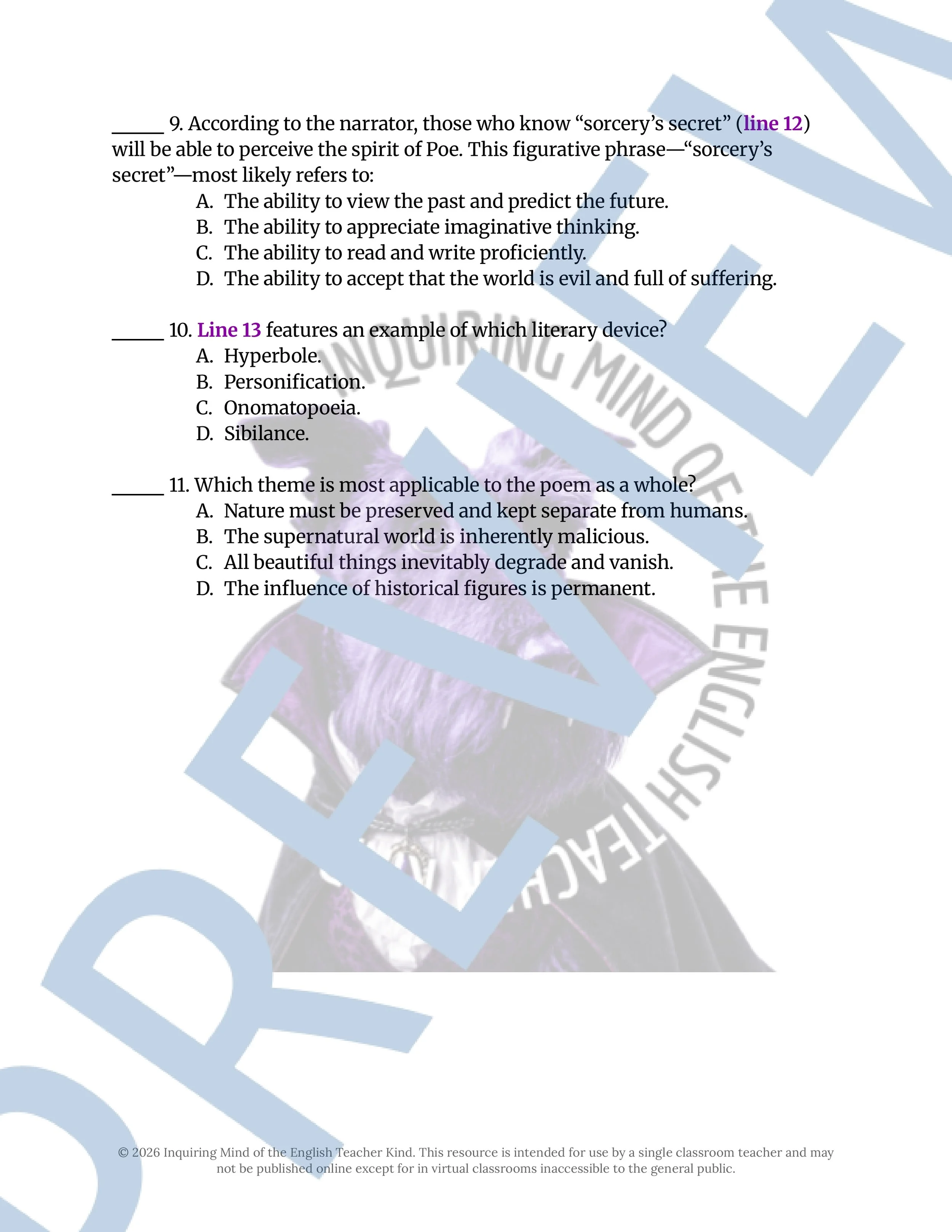
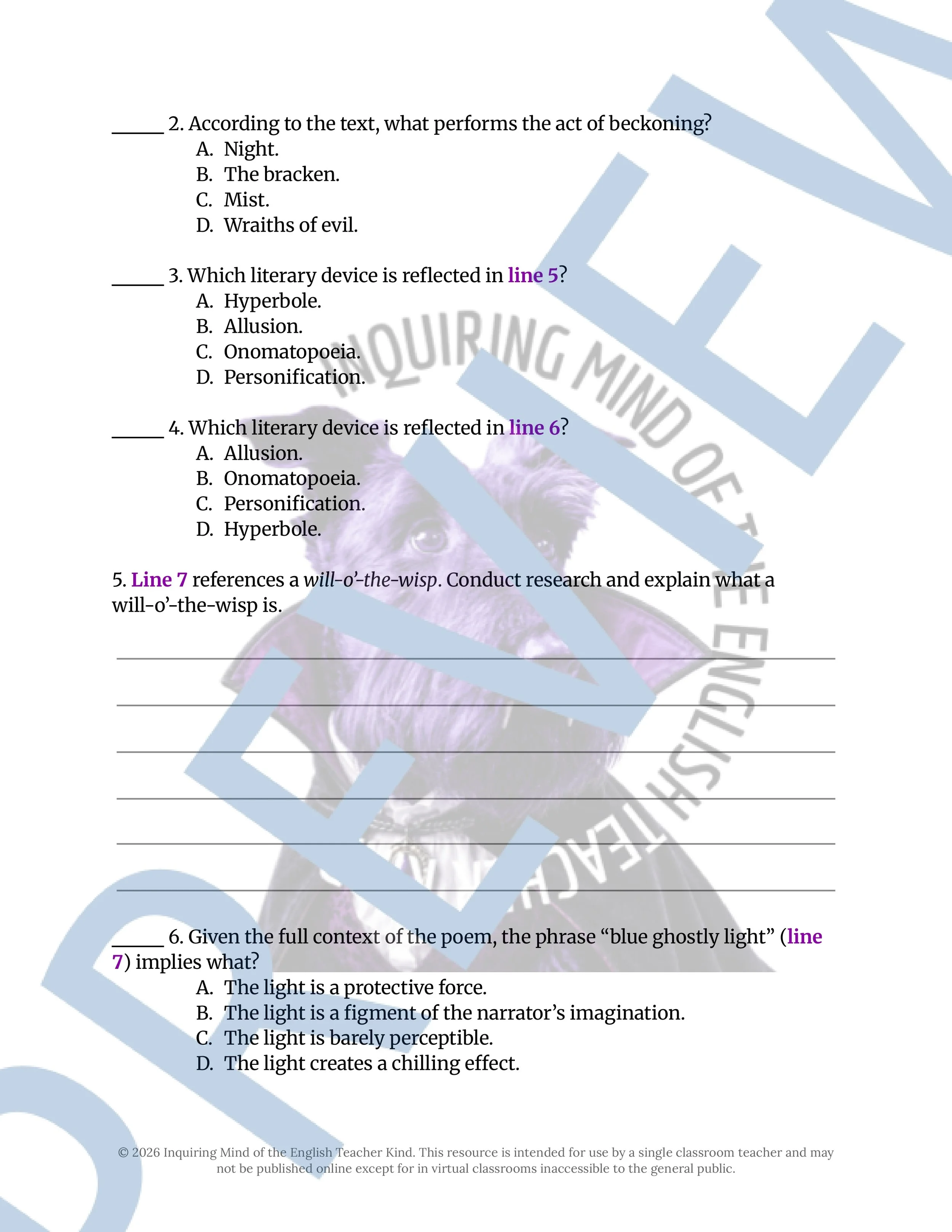
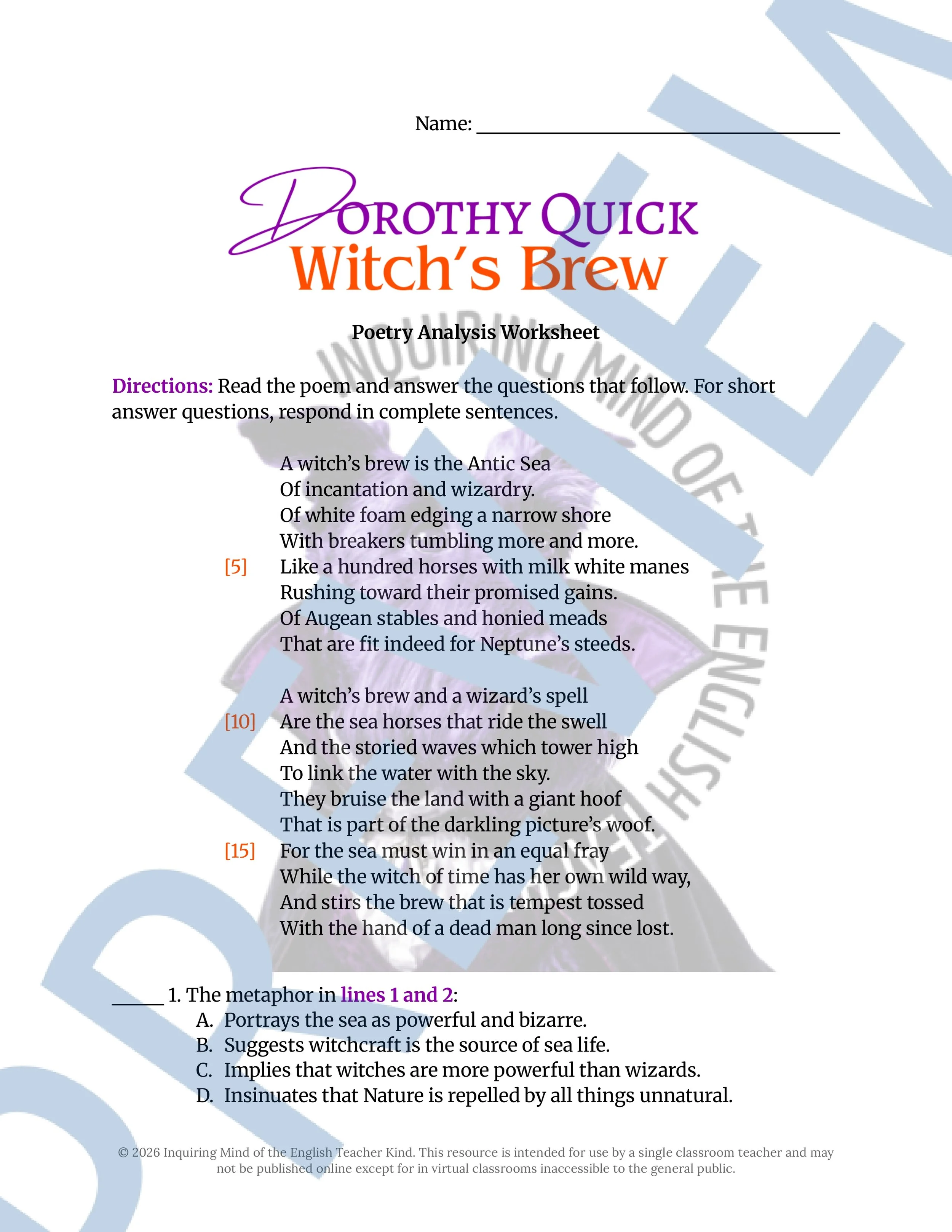
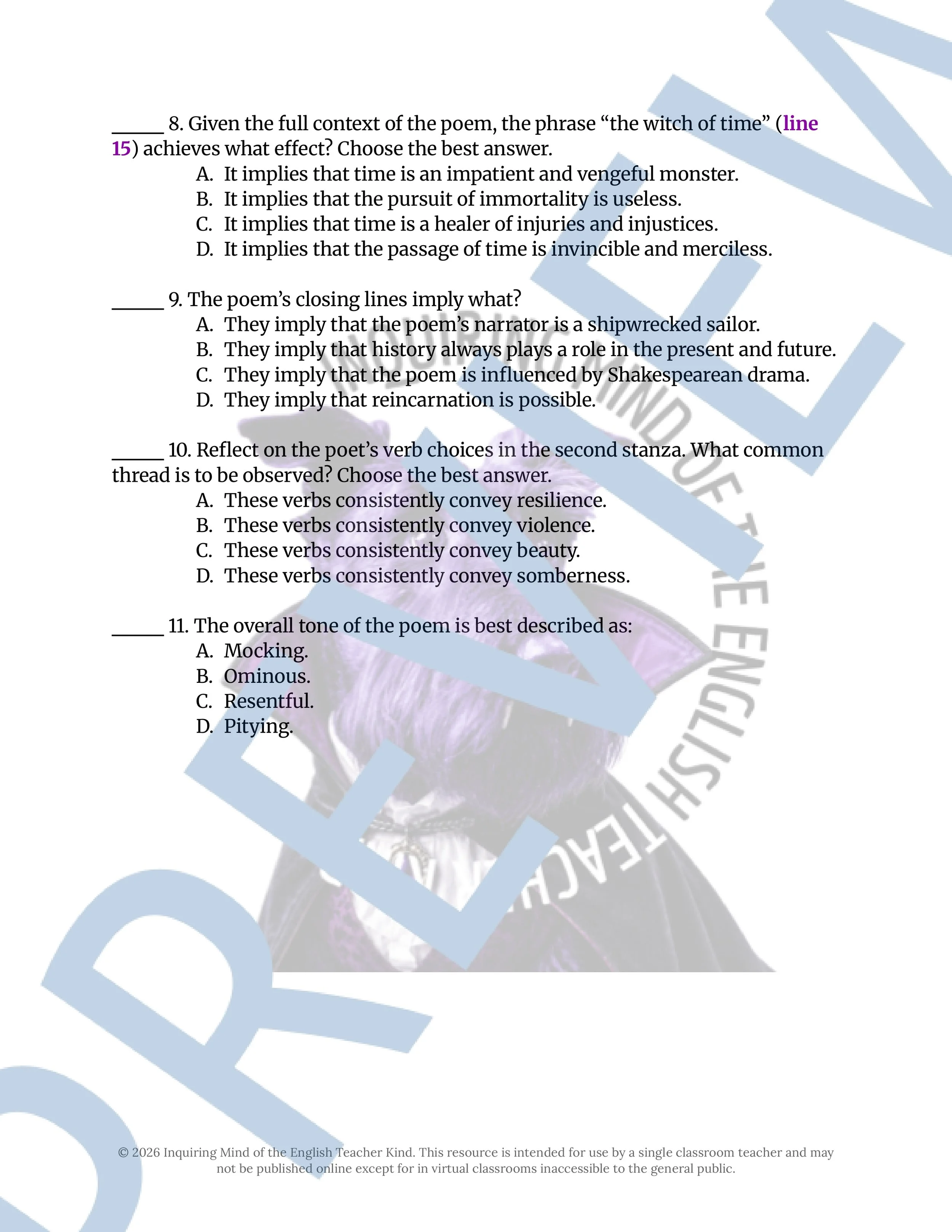
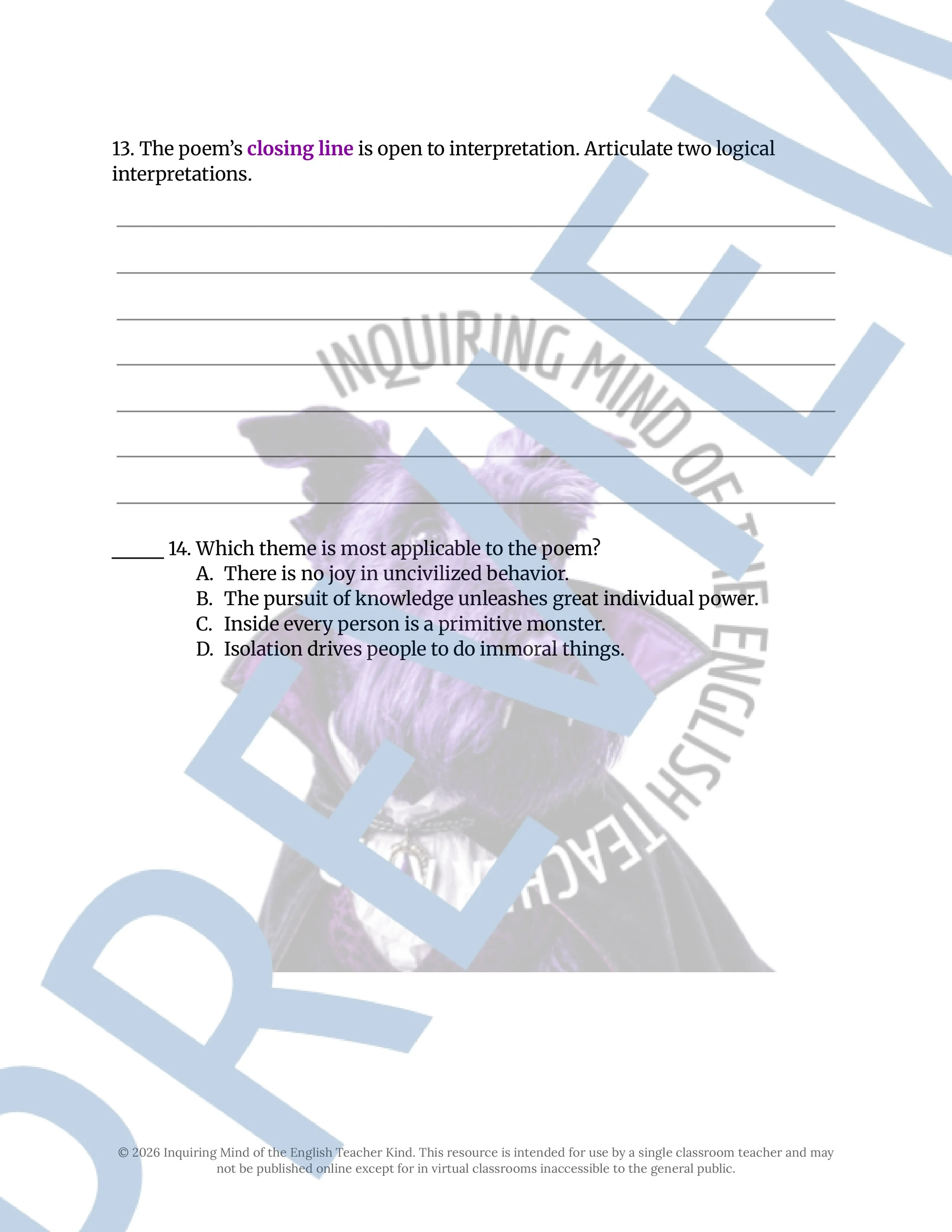
Ideal for short poetry units during the fall/autumn and Halloween seasons, this poem analysis worksheet covers "All Hallows' E'en" by Alfred I. Tooke. Whether used as a bell-ringer activity, homework assignment, or collaborative activity, this resource helps high school readers think critically and remain engaged in rigorous learning. An answer key is included. By engaging with this poetry activity, students will:
Discern the intended effects of words and phrases in context.
Apply knowledge of literary devices (e.g., alliteration, ambiguity, inversion, personification, sibilance, etc.).
Make rational inferences about behaviors (e.g., why the executioners do not care that their deeds are witnessed).
Make evidence-based inferences (e.g., a character's past behavior, a character's manner of death, etc.).
Conduct research to answer a question about setting (e.g., the etymology of the word Halloween) and symbolism (e.g., crossroads in the context of European folklore).
Support claims and inferences with sound reasoning and relevant evidence.
Materials are delivered in editable Word Document and printable PDF formats. (Alternatively, a Google option is available.)
More resources for the Halloween season are available:
Ideal for short poetry units during the fall/autumn and Halloween seasons, this poem analysis worksheet covers "All Hallows' E'en" by Alfred I. Tooke. Whether used as a bell-ringer activity, homework assignment, or collaborative activity, this resource helps high school readers think critically and remain engaged in rigorous learning. An answer key is included. By engaging with this poetry activity, students will:
Discern the intended effects of words and phrases in context.
Apply knowledge of literary devices (e.g., alliteration, ambiguity, inversion, personification, sibilance, etc.).
Make rational inferences about behaviors (e.g., why the executioners do not care that their deeds are witnessed).
Make evidence-based inferences (e.g., a character's past behavior, a character's manner of death, etc.).
Conduct research to answer a question about setting (e.g., the etymology of the word Halloween) and symbolism (e.g., crossroads in the context of European folklore).
Support claims and inferences with sound reasoning and relevant evidence.
Materials are delivered in editable Word Document and printable PDF formats. (Alternatively, a Google option is available.)
More resources for the Halloween season are available:

 Image 1 of 5
 Image 2 of 5
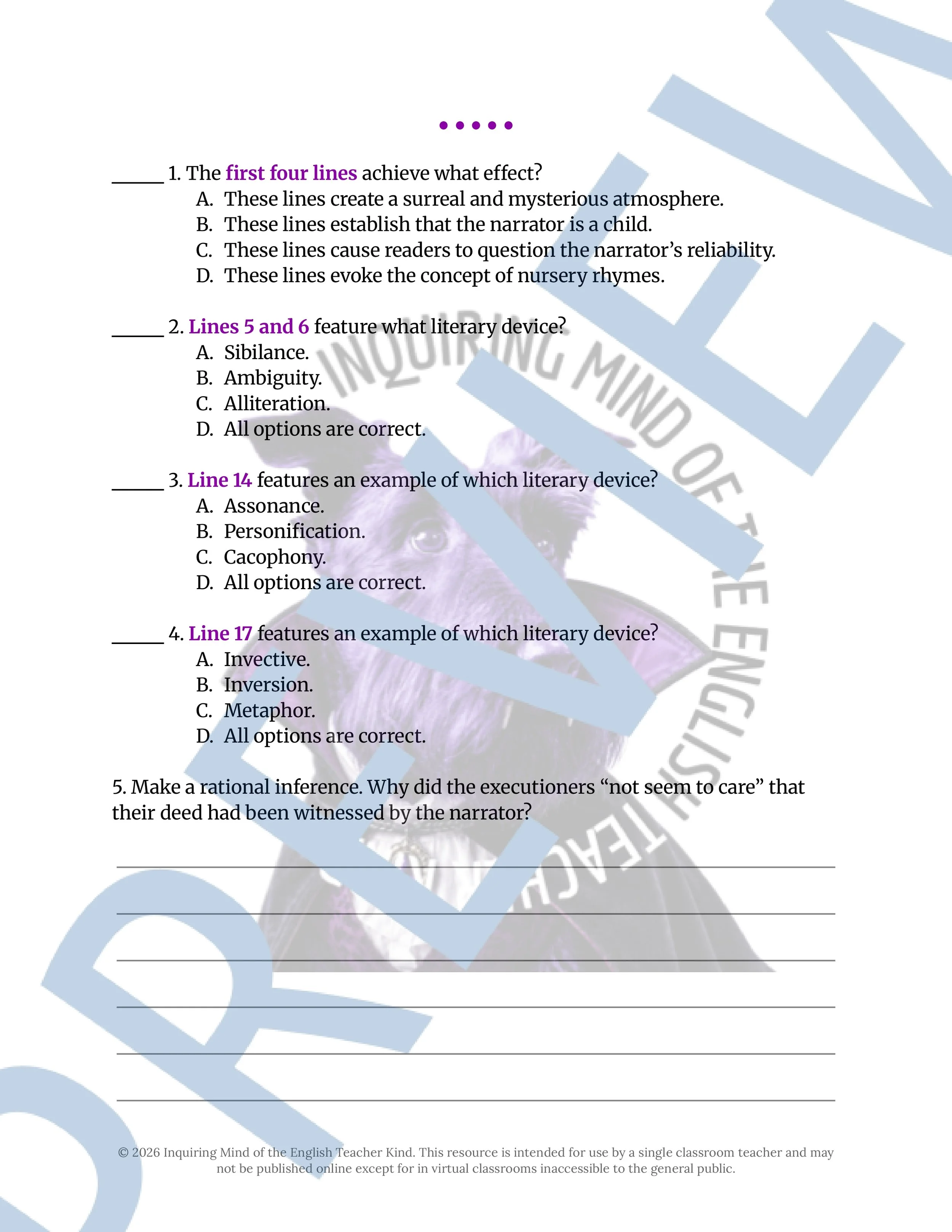 Image 3 of 5
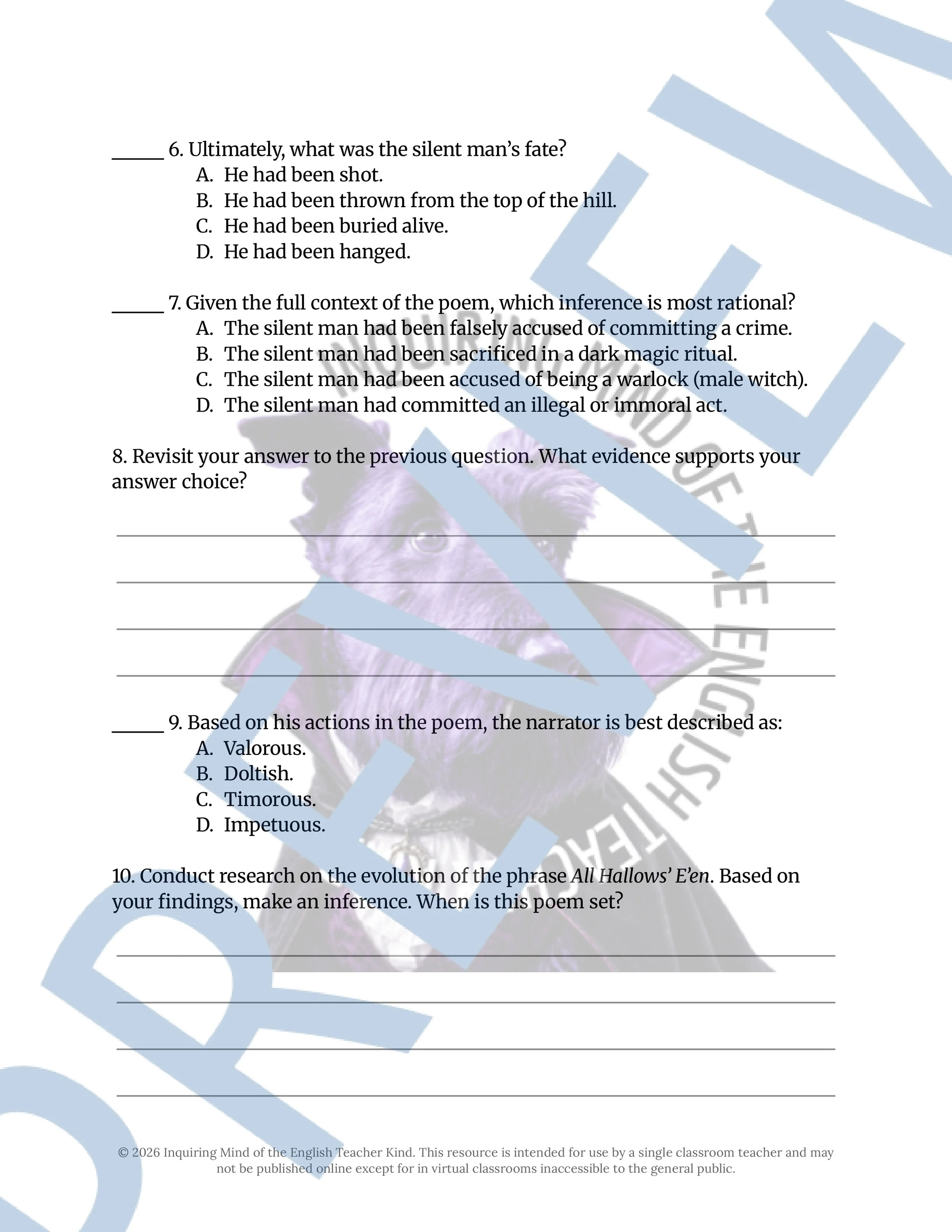 Image 4 of 5
 Image 5 of 5