Image 1 of 57
Image 2 of 57
Image 3 of 57
Image 4 of 57
Image 5 of 57
Image 6 of 57
Image 7 of 57
Image 8 of 57
Image 9 of 57
Image 10 of 57
Image 11 of 57
Image 12 of 57
Image 13 of 57
Image 14 of 57
Image 15 of 57
Image 16 of 57
Image 17 of 57
Image 18 of 57
Image 19 of 57
Image 20 of 57
Image 21 of 57
Image 22 of 57
Image 23 of 57
Image 24 of 57
Image 25 of 57
Image 26 of 57
Image 27 of 57
Image 28 of 57
Image 29 of 57
Image 30 of 57
Image 31 of 57
Image 32 of 57
Image 33 of 57
Image 34 of 57
Image 35 of 57
Image 36 of 57
Image 37 of 57
Image 38 of 57
Image 39 of 57
Image 40 of 57
Image 41 of 57
Image 42 of 57
Image 43 of 57
Image 44 of 57
Image 45 of 57
Image 46 of 57
Image 47 of 57
Image 48 of 57
Image 49 of 57
Image 50 of 57
Image 51 of 57
Image 52 of 57
Image 53 of 57
Image 54 of 57
Image 55 of 57
Image 56 of 57
Image 57 of 57
1984 Book 2 Quiz, Close Reading, Vocabulary Games, and Answer Keys Bundle
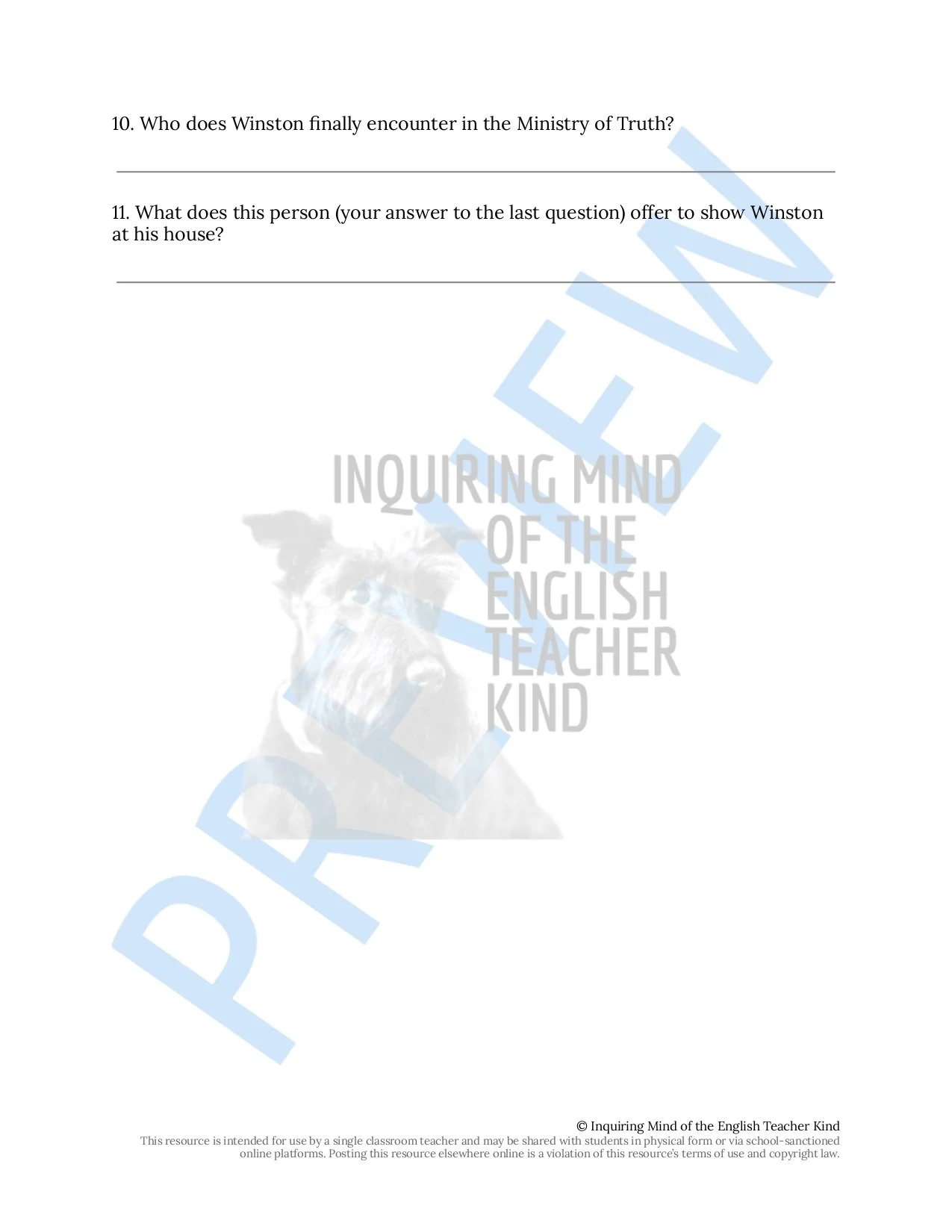
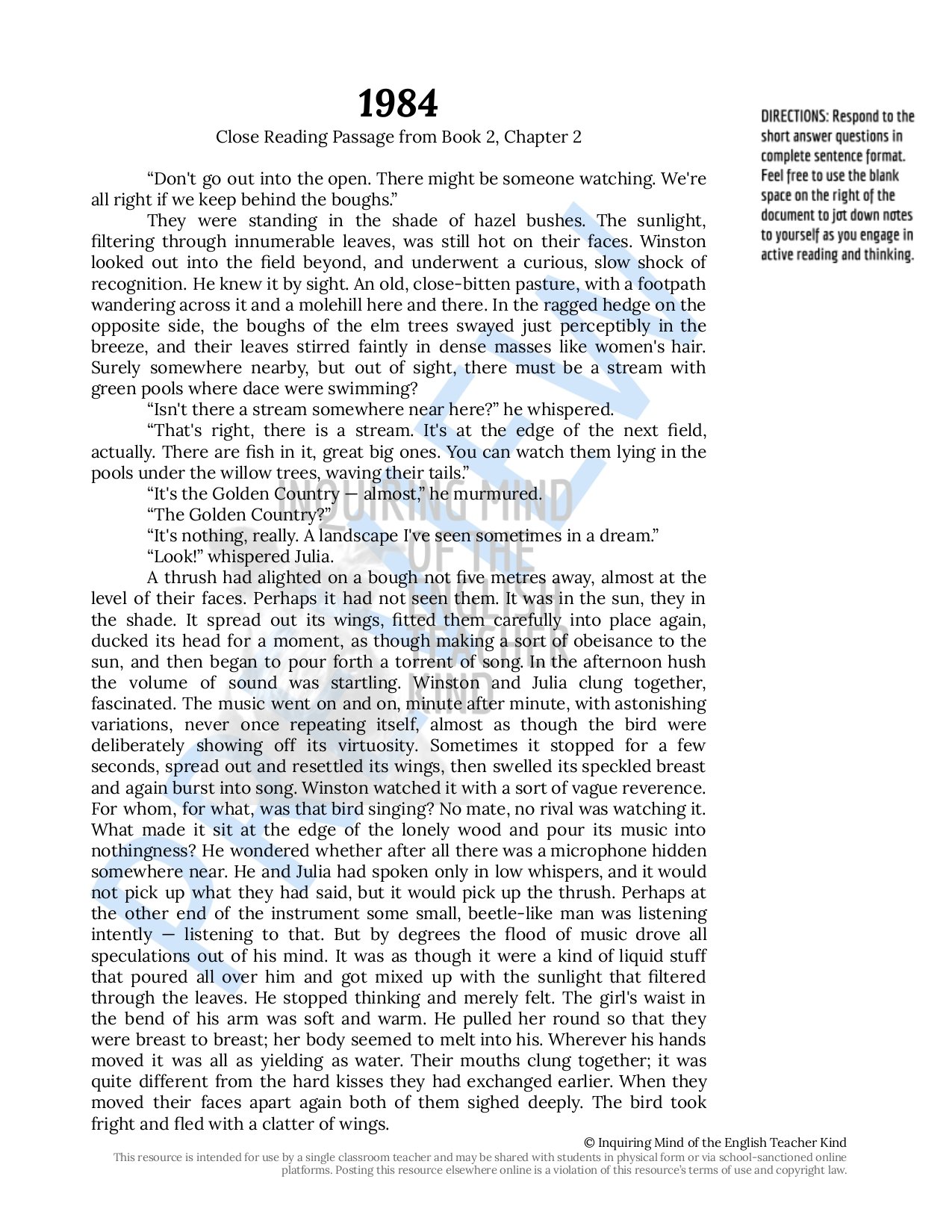
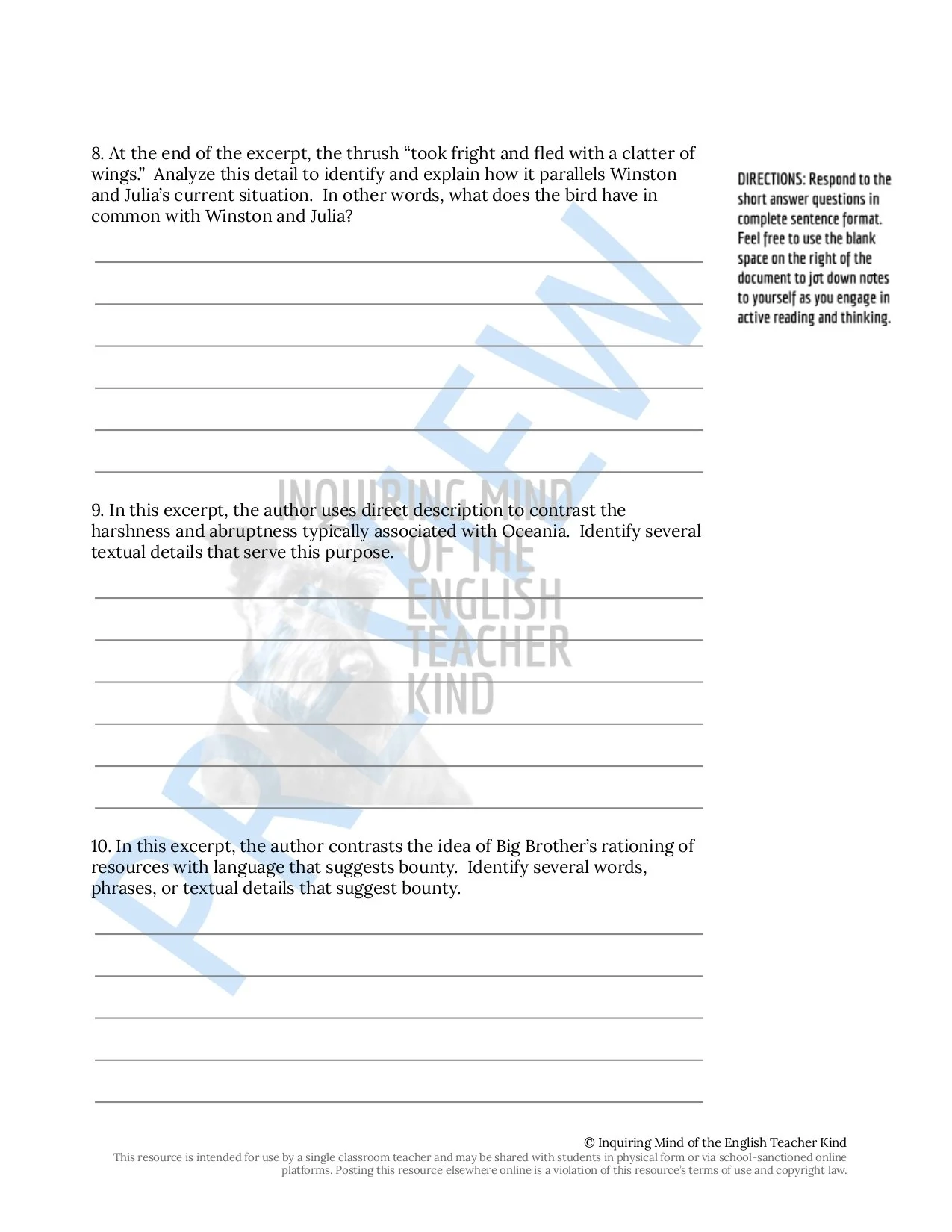
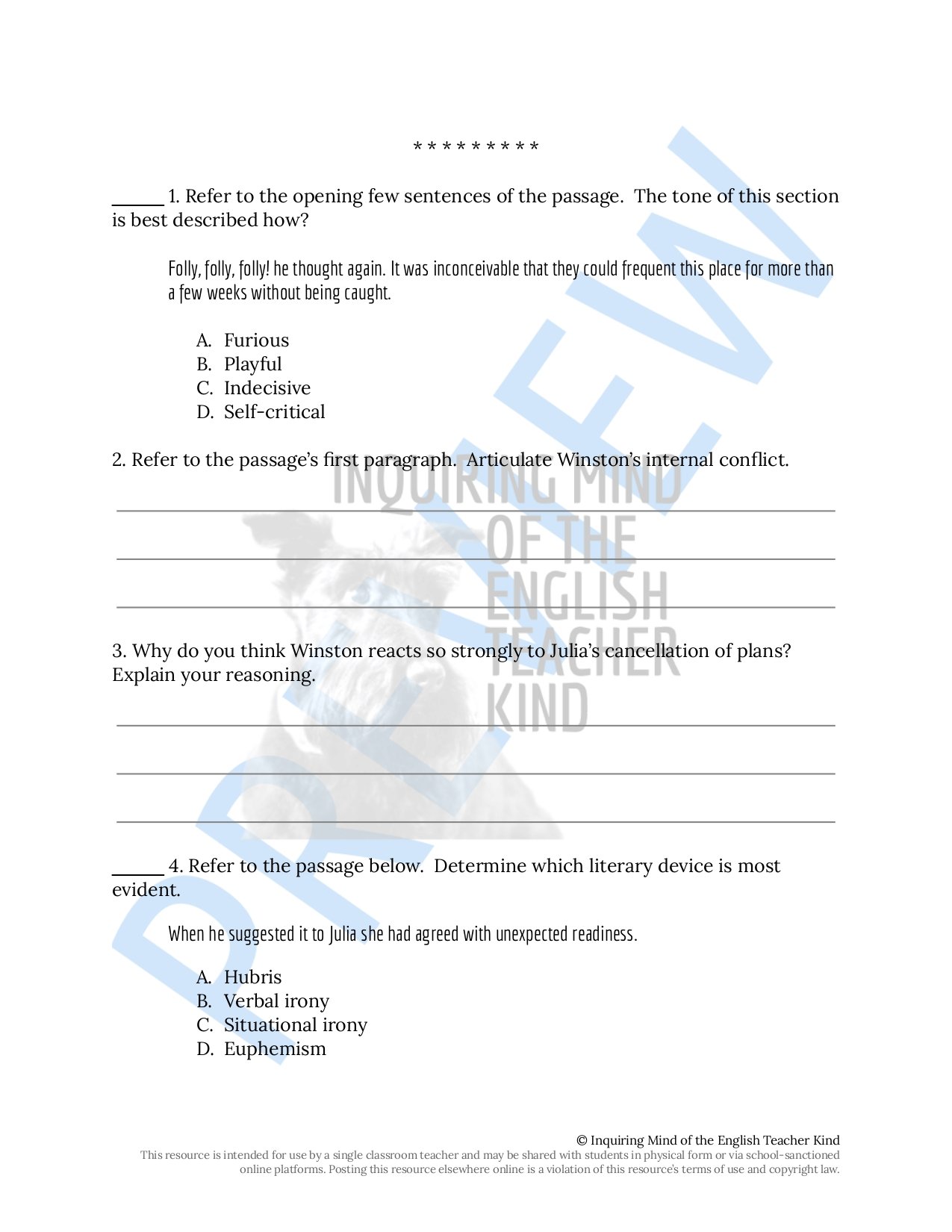
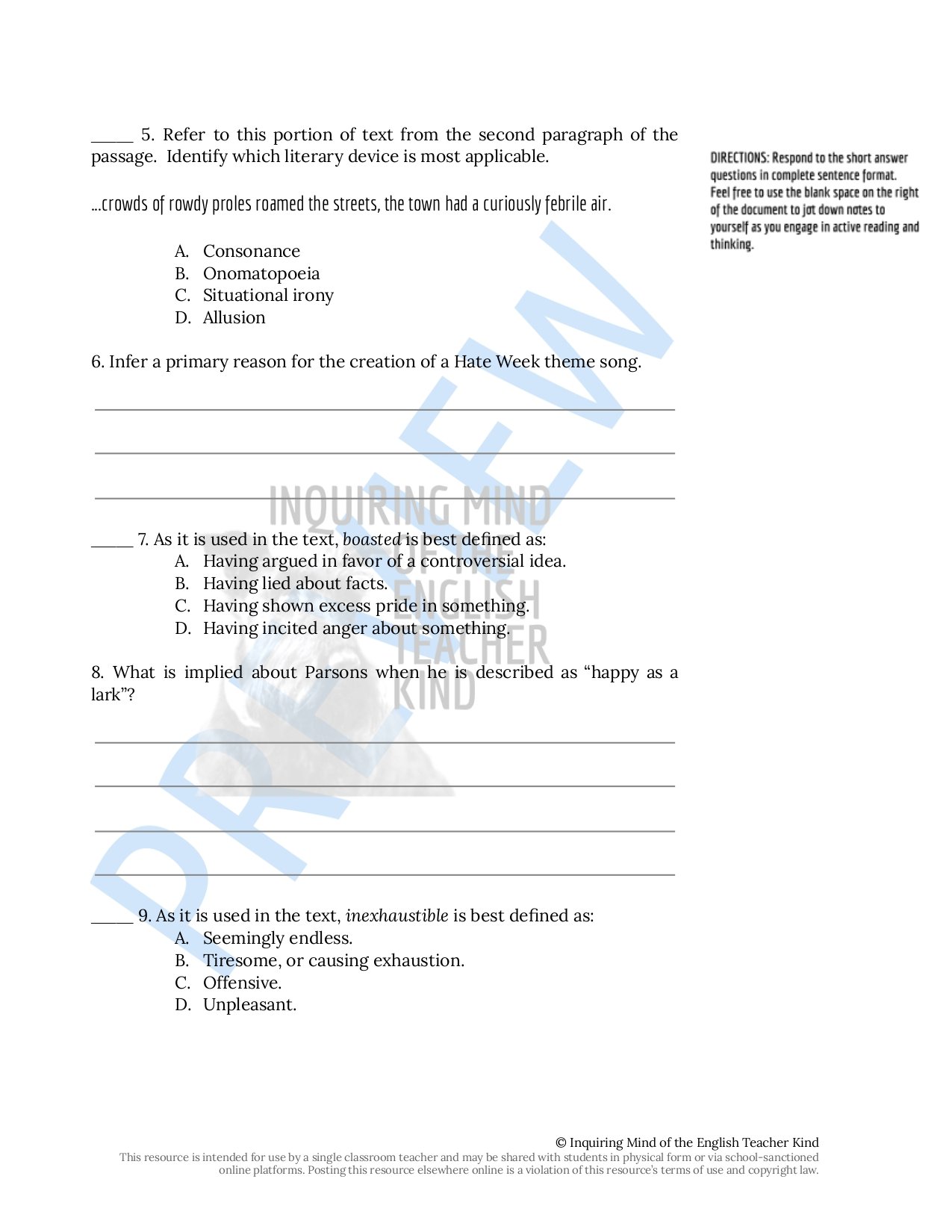
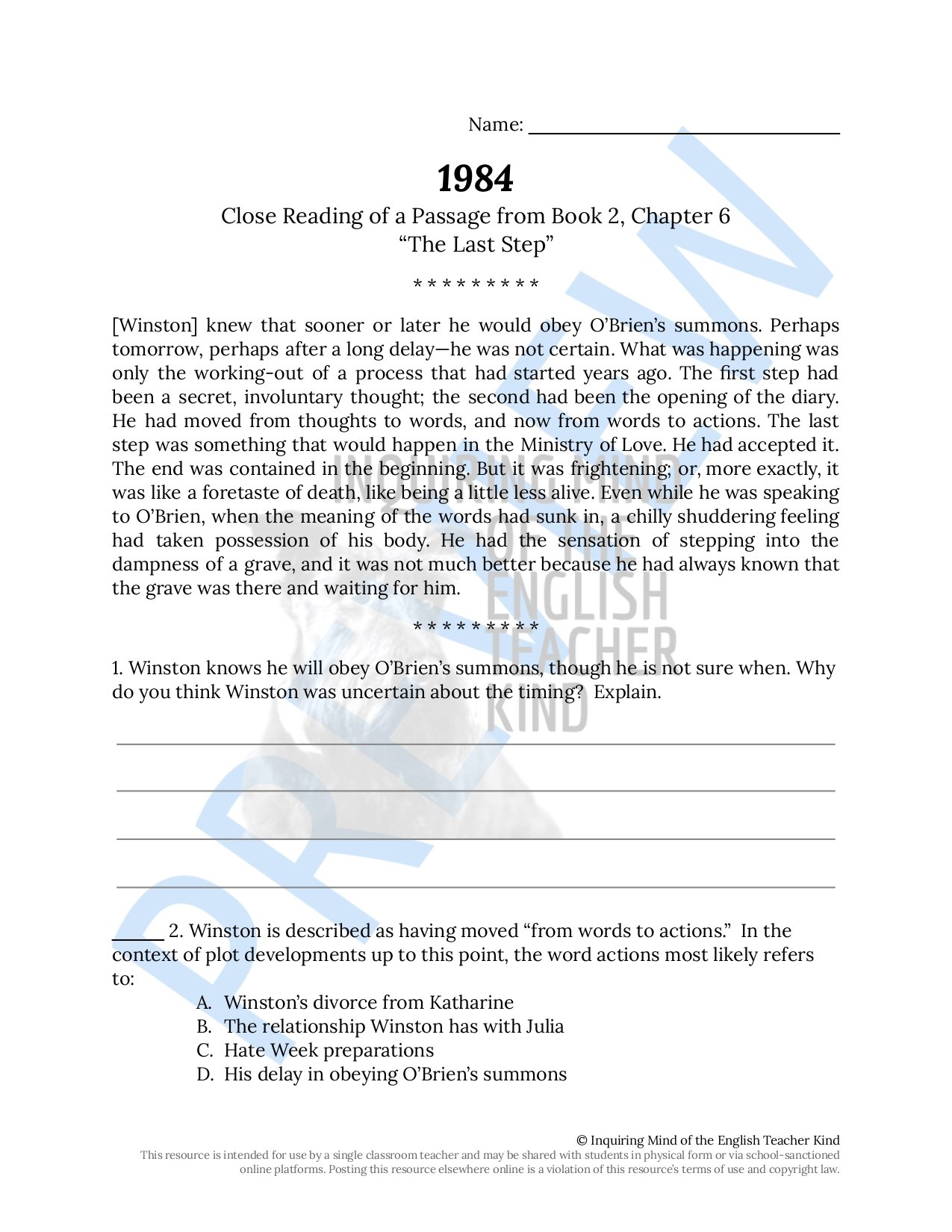
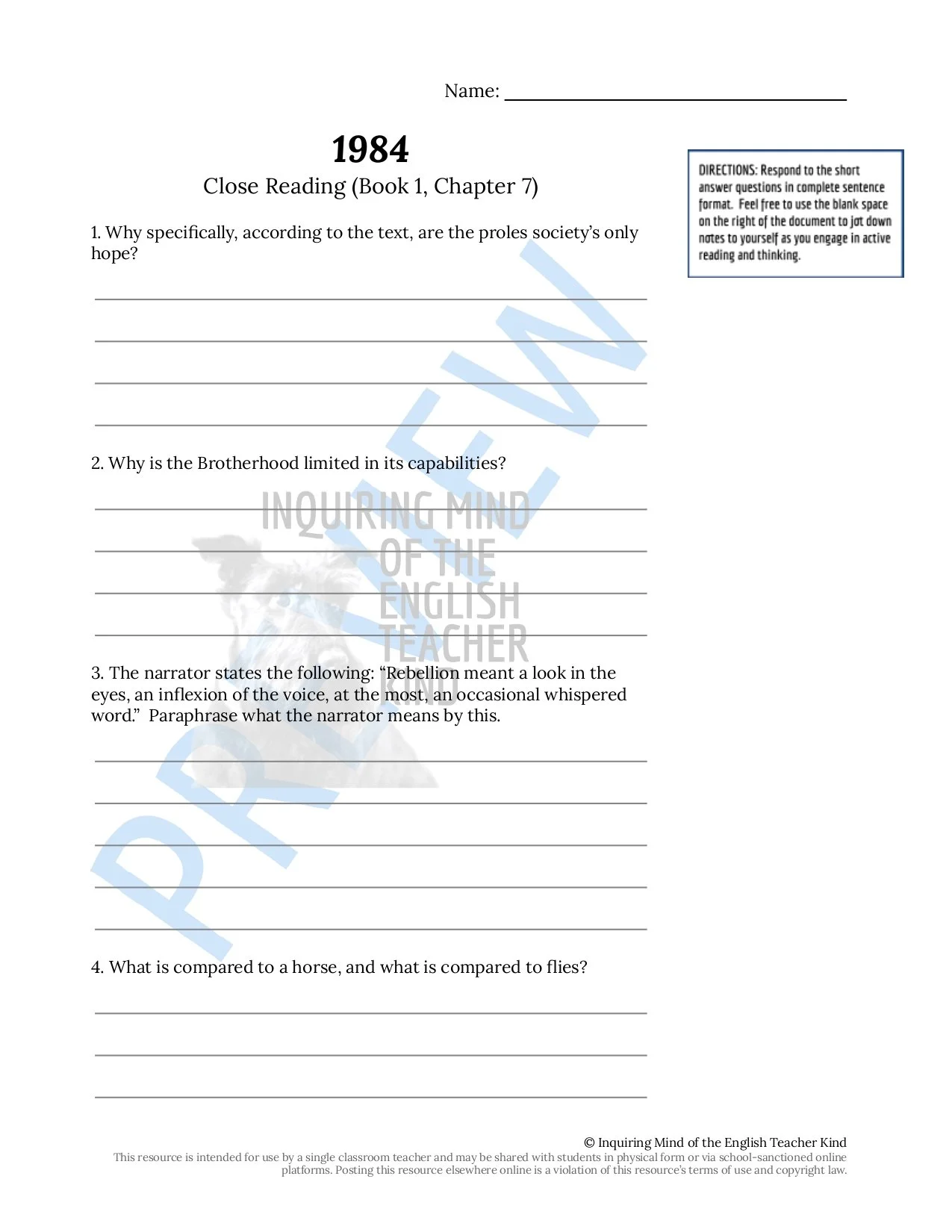
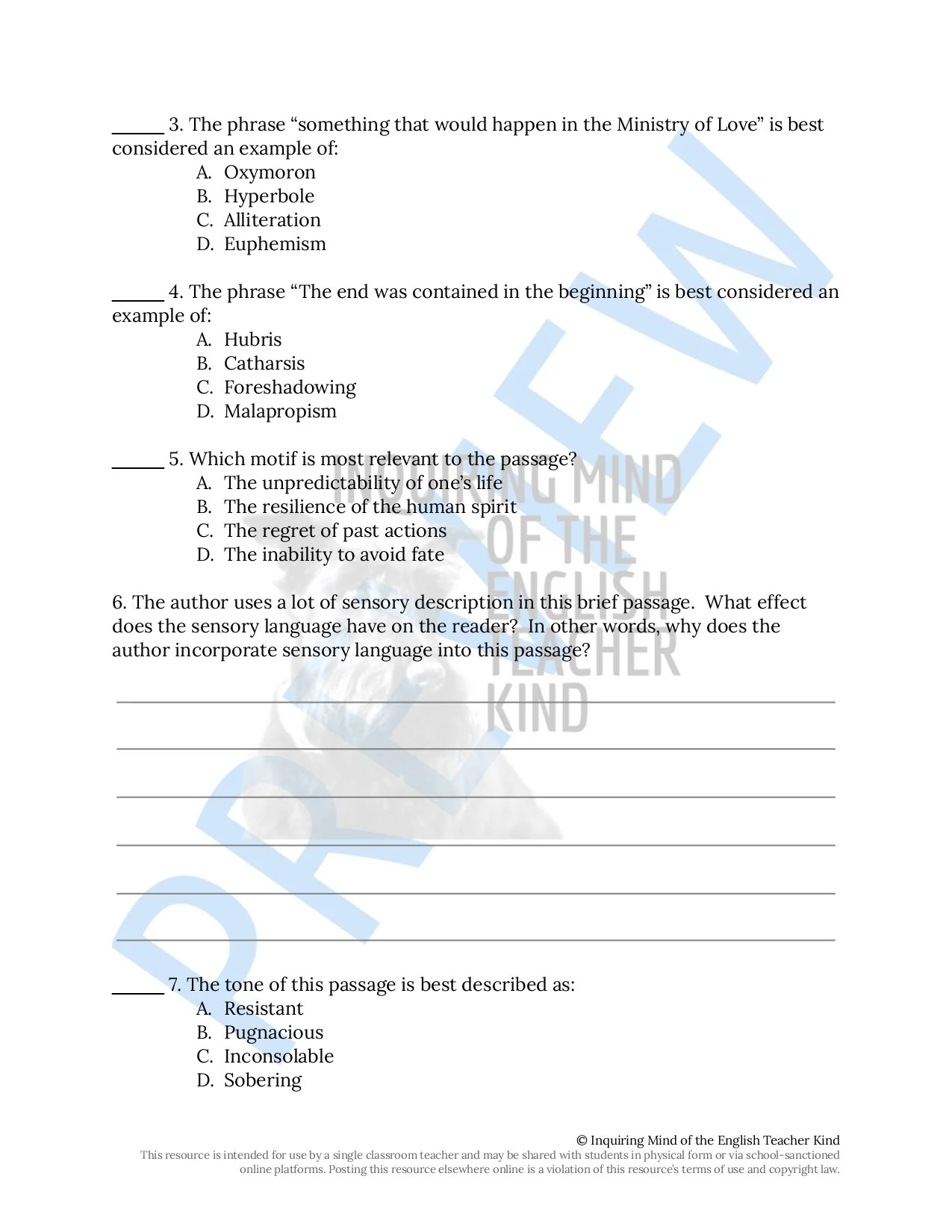
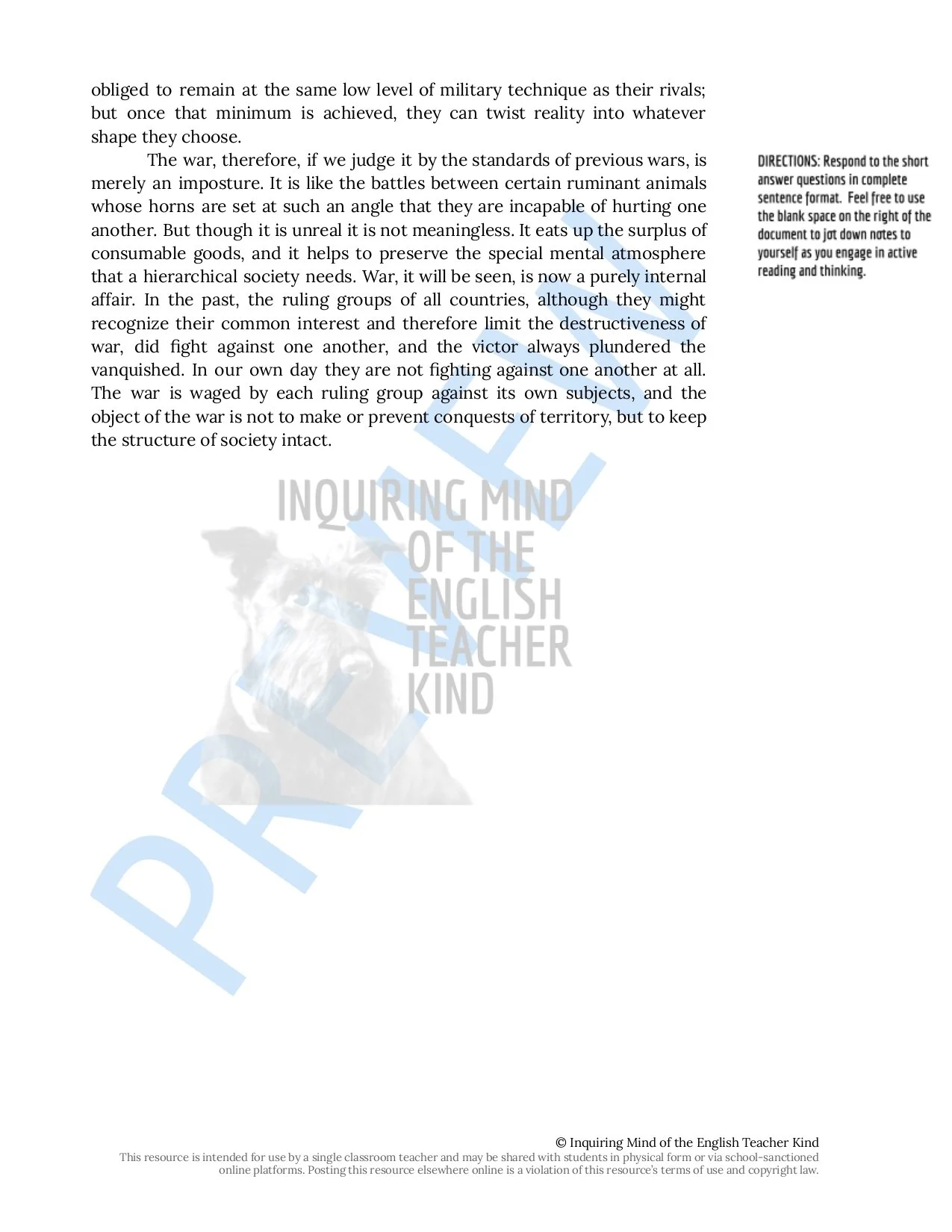
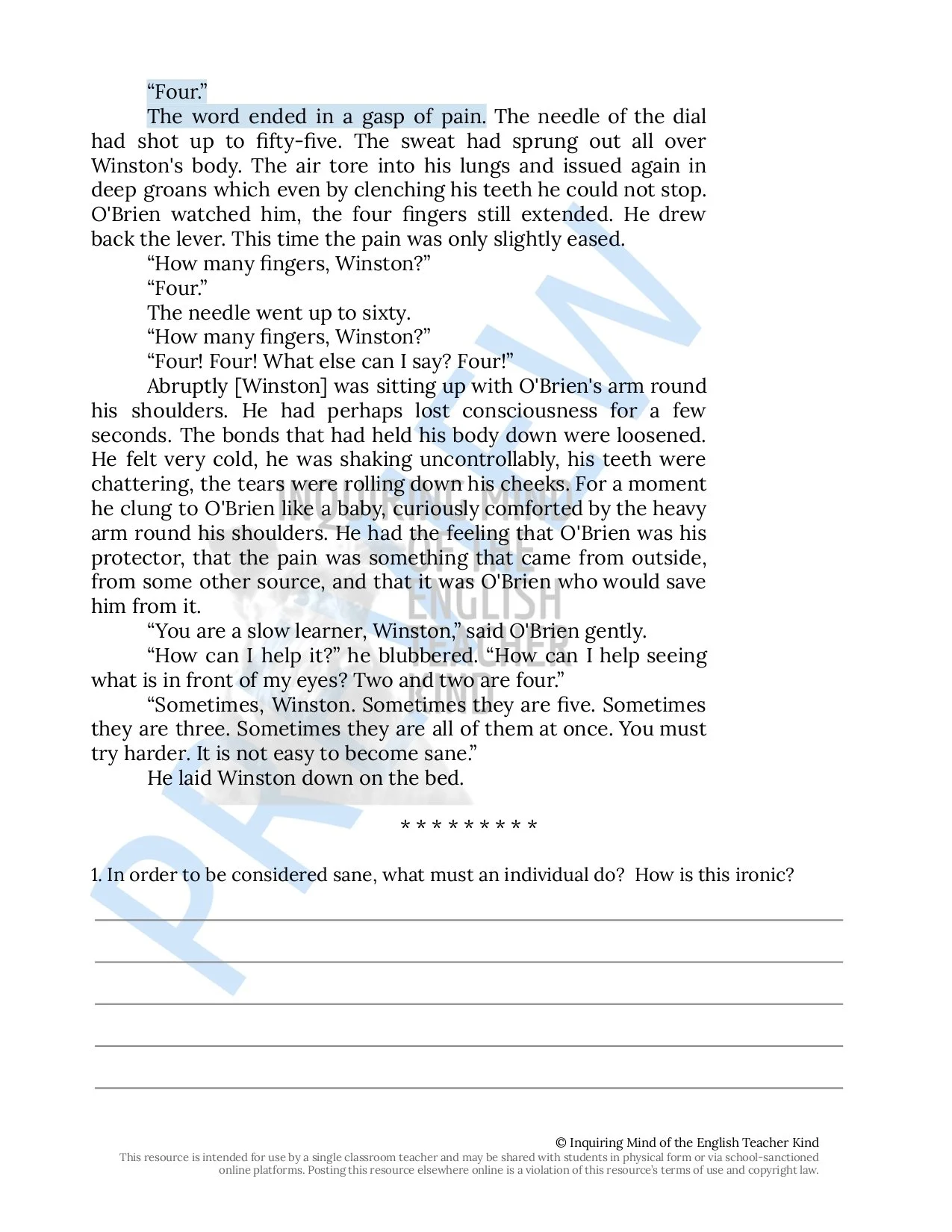
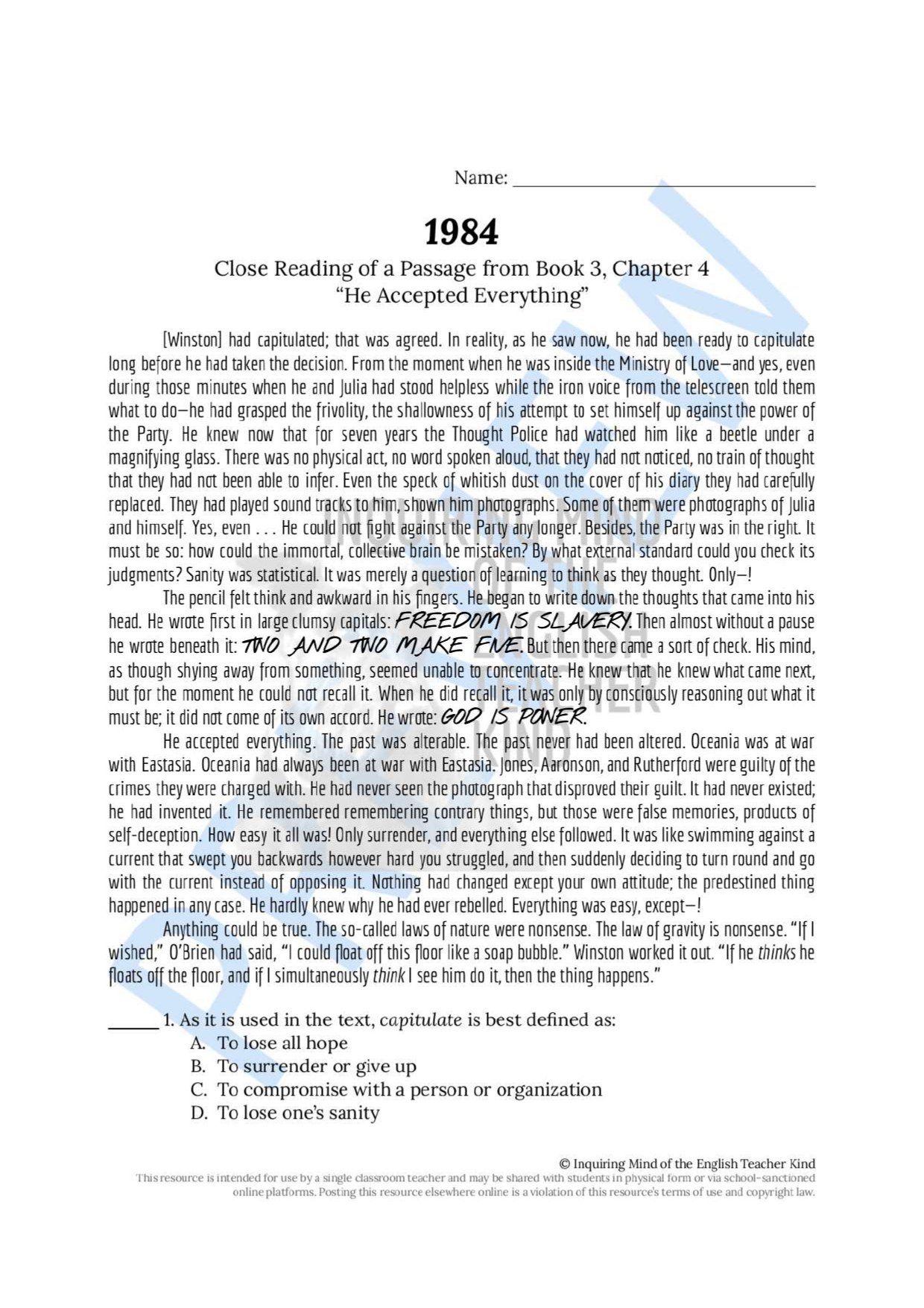
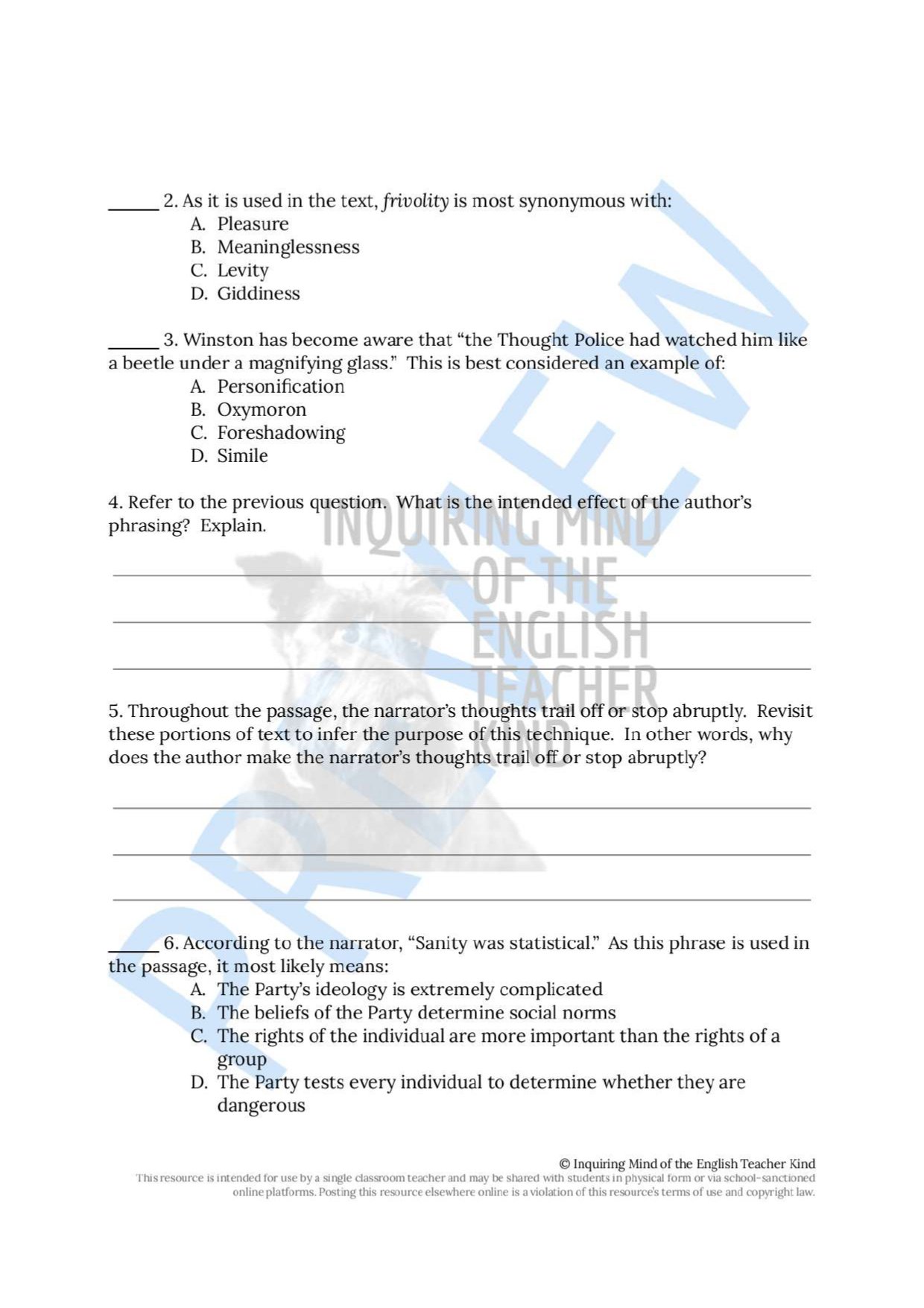
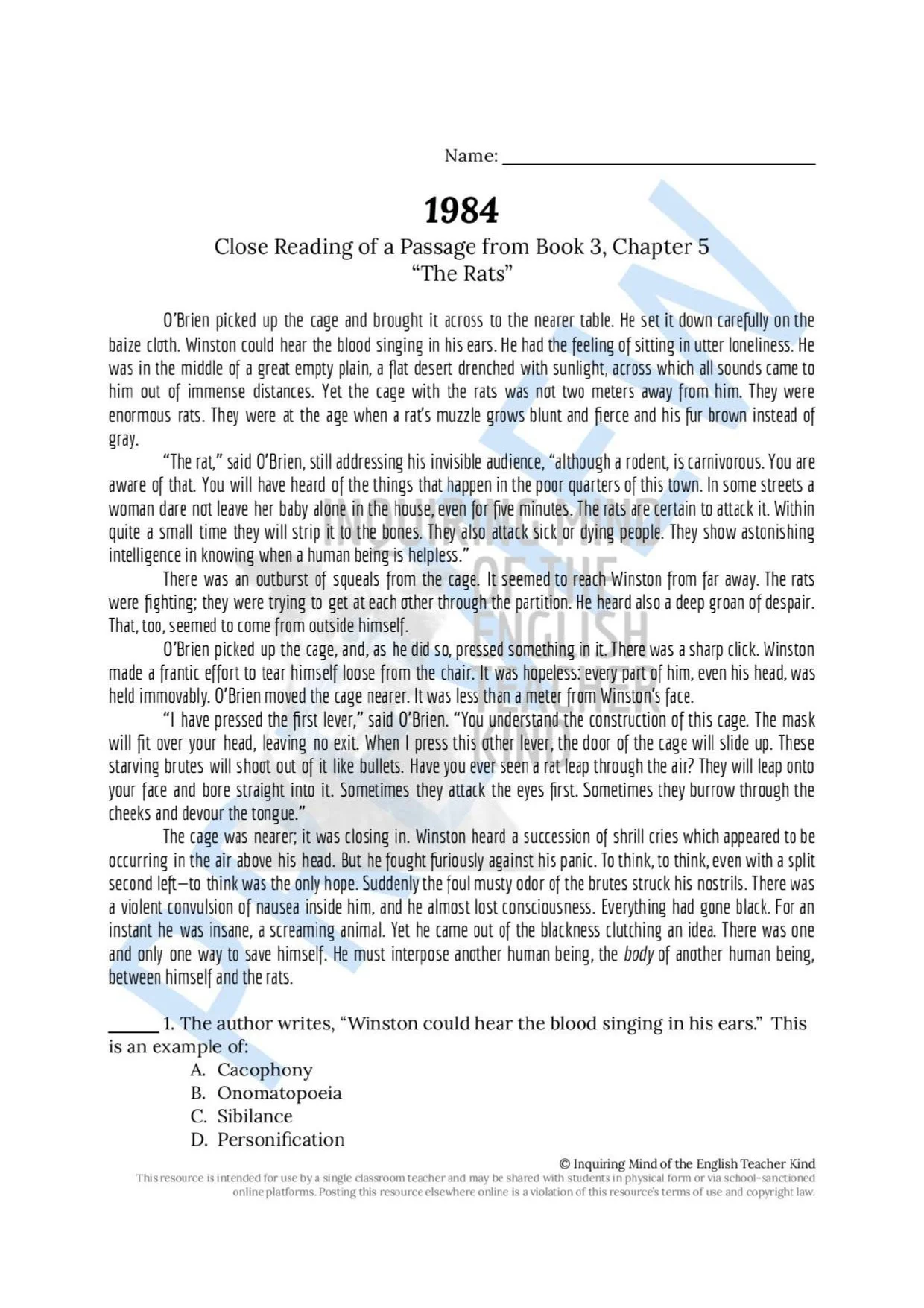
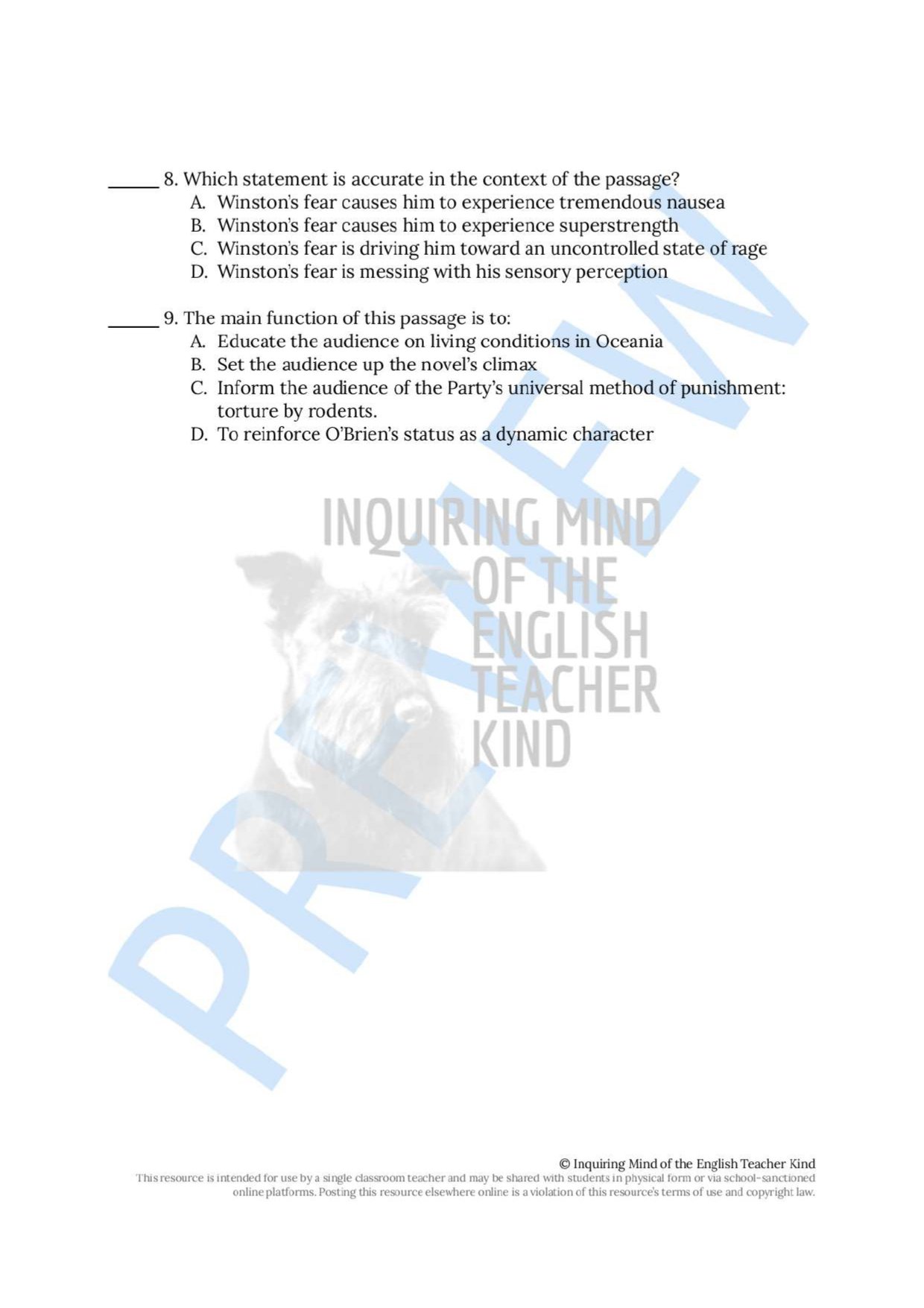
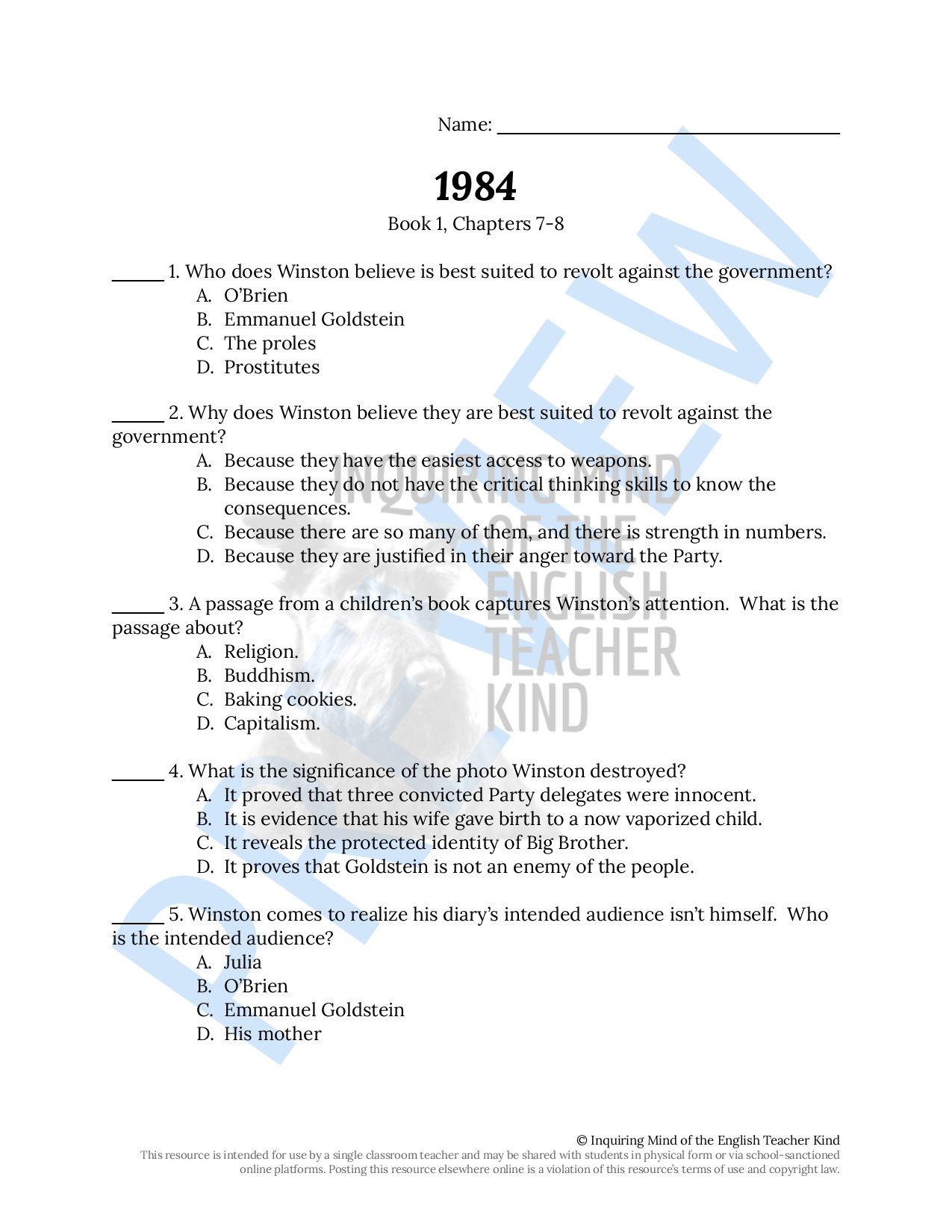
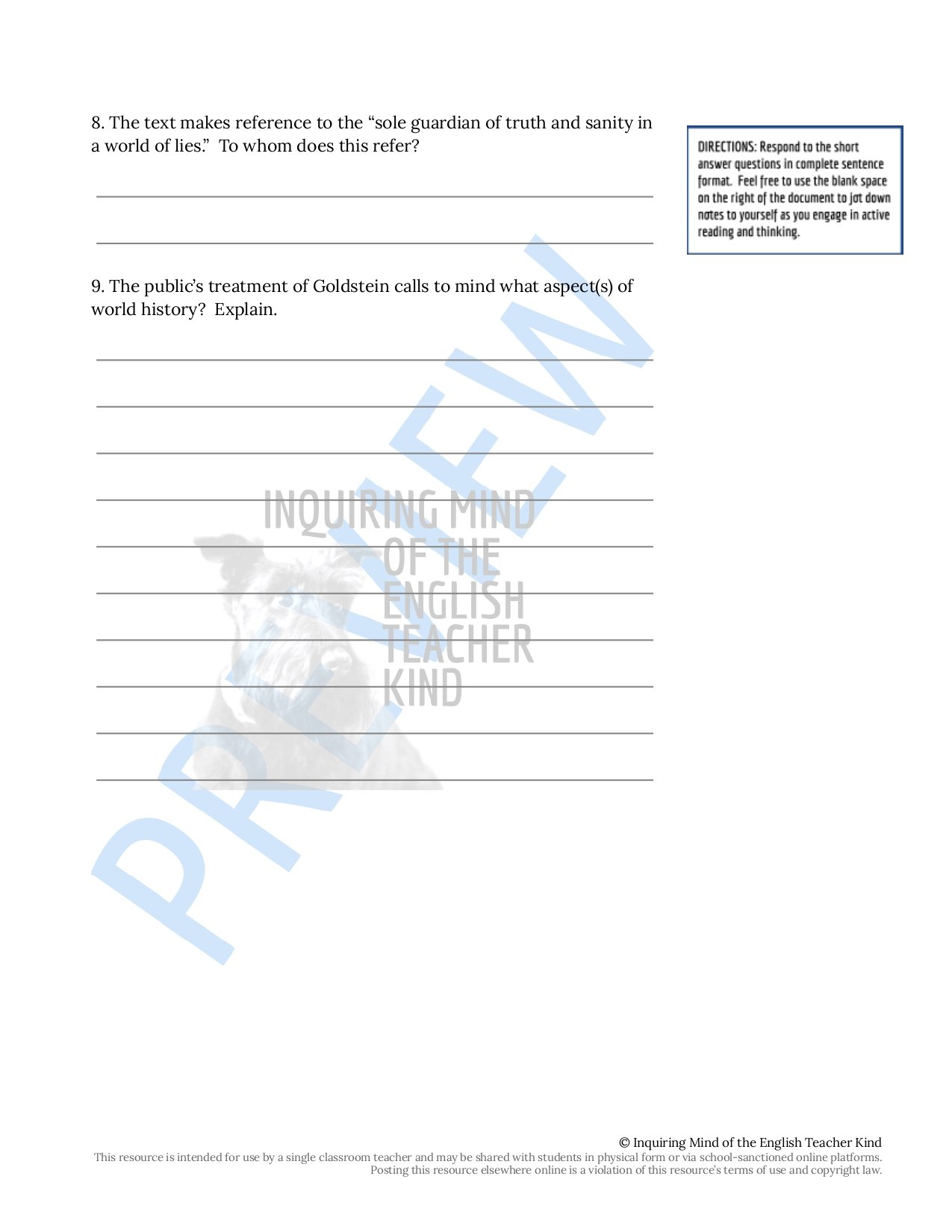
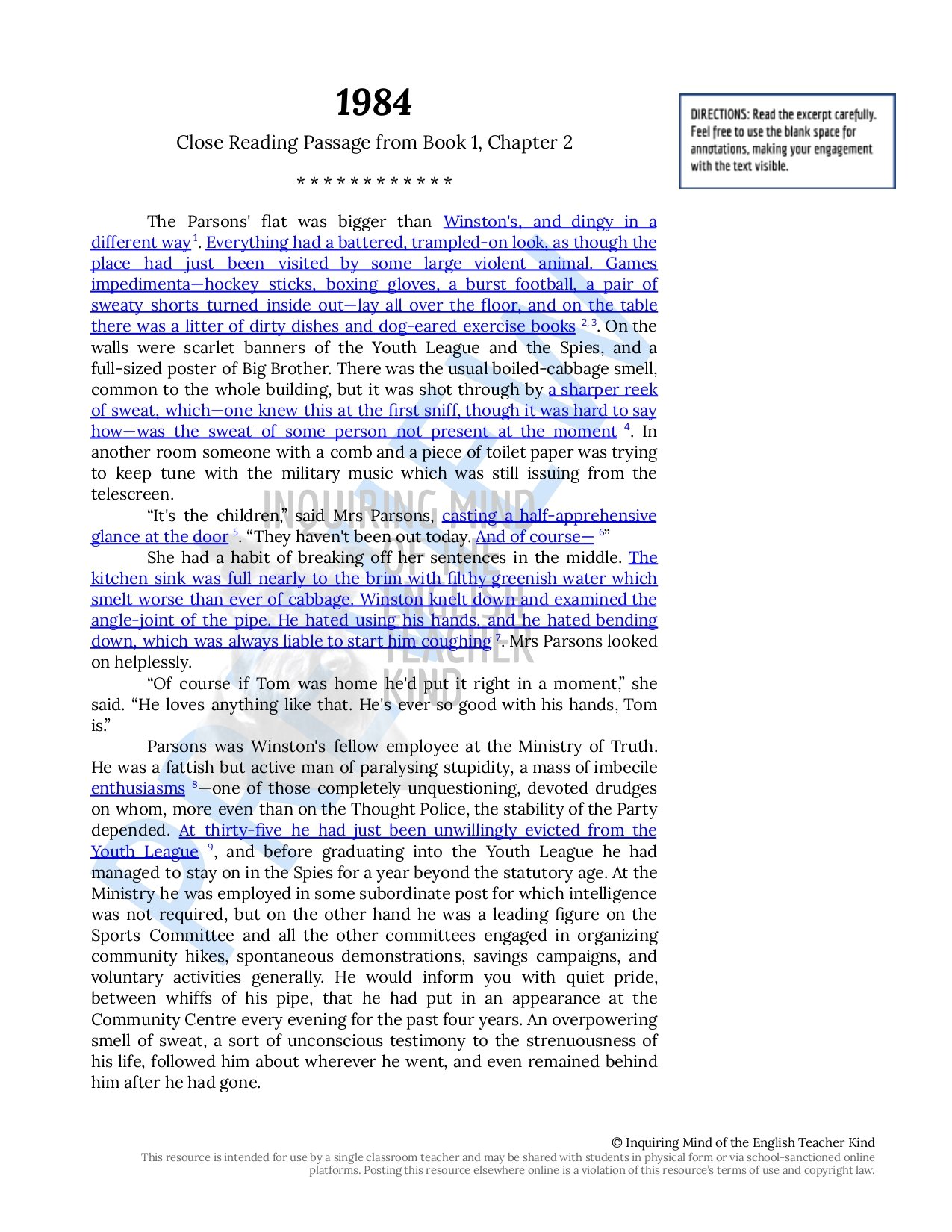
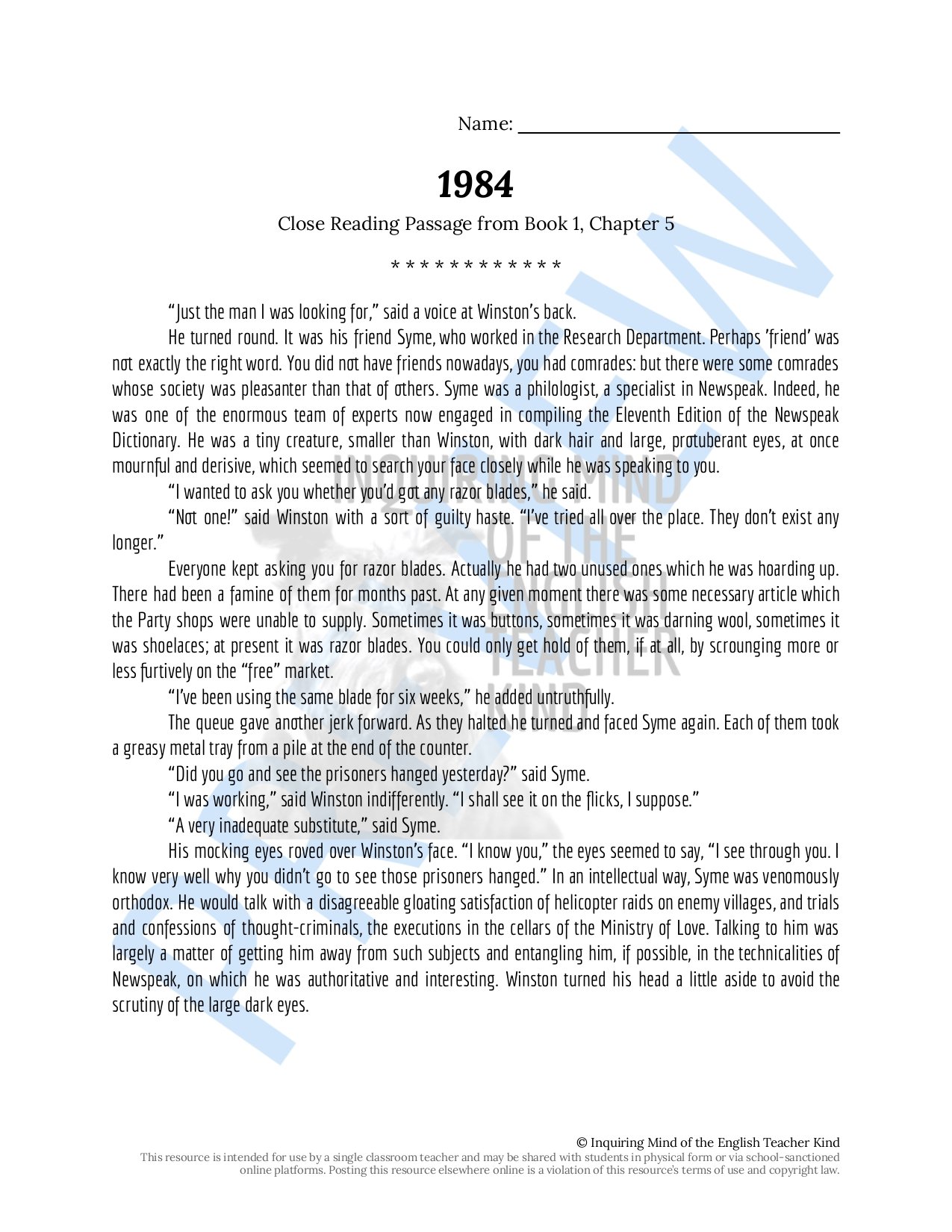
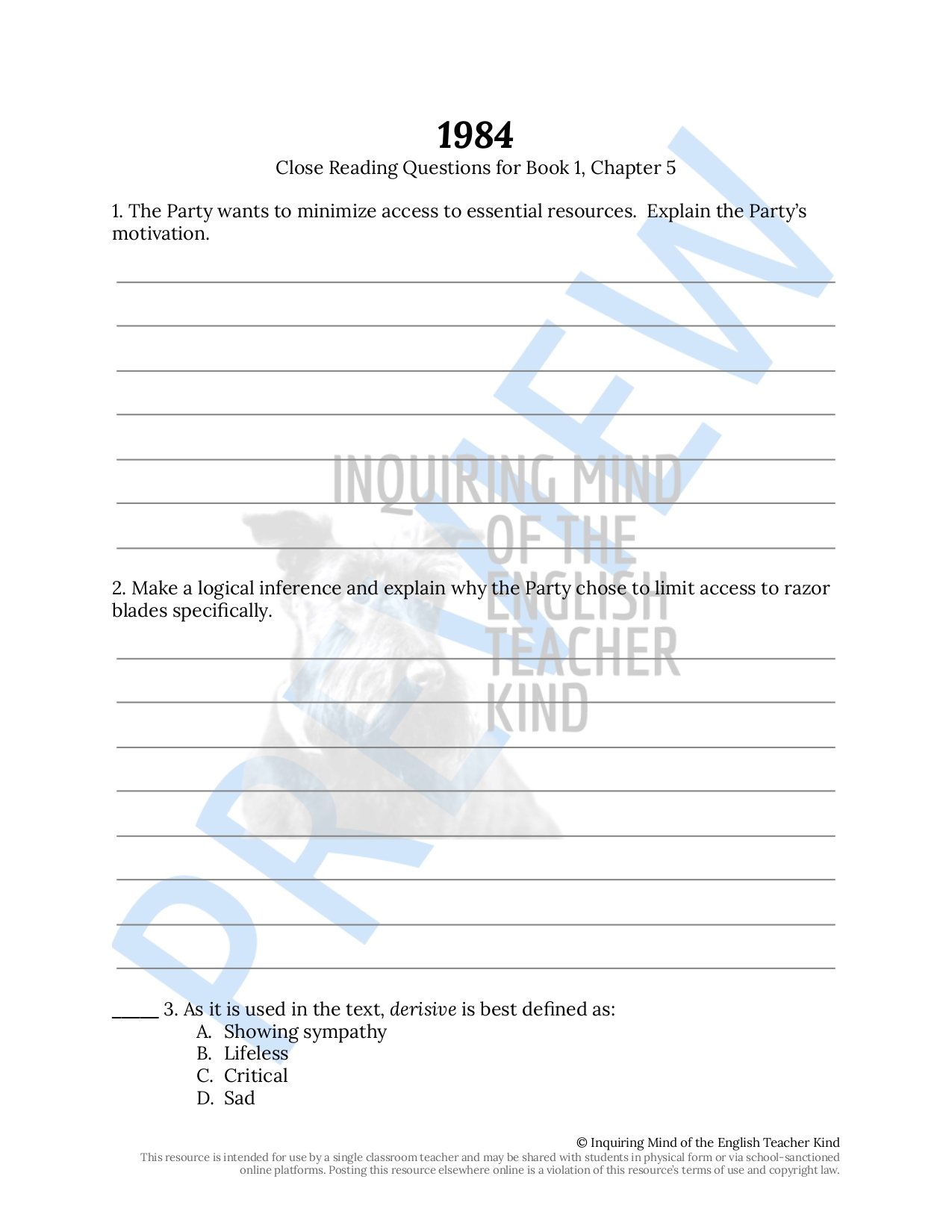
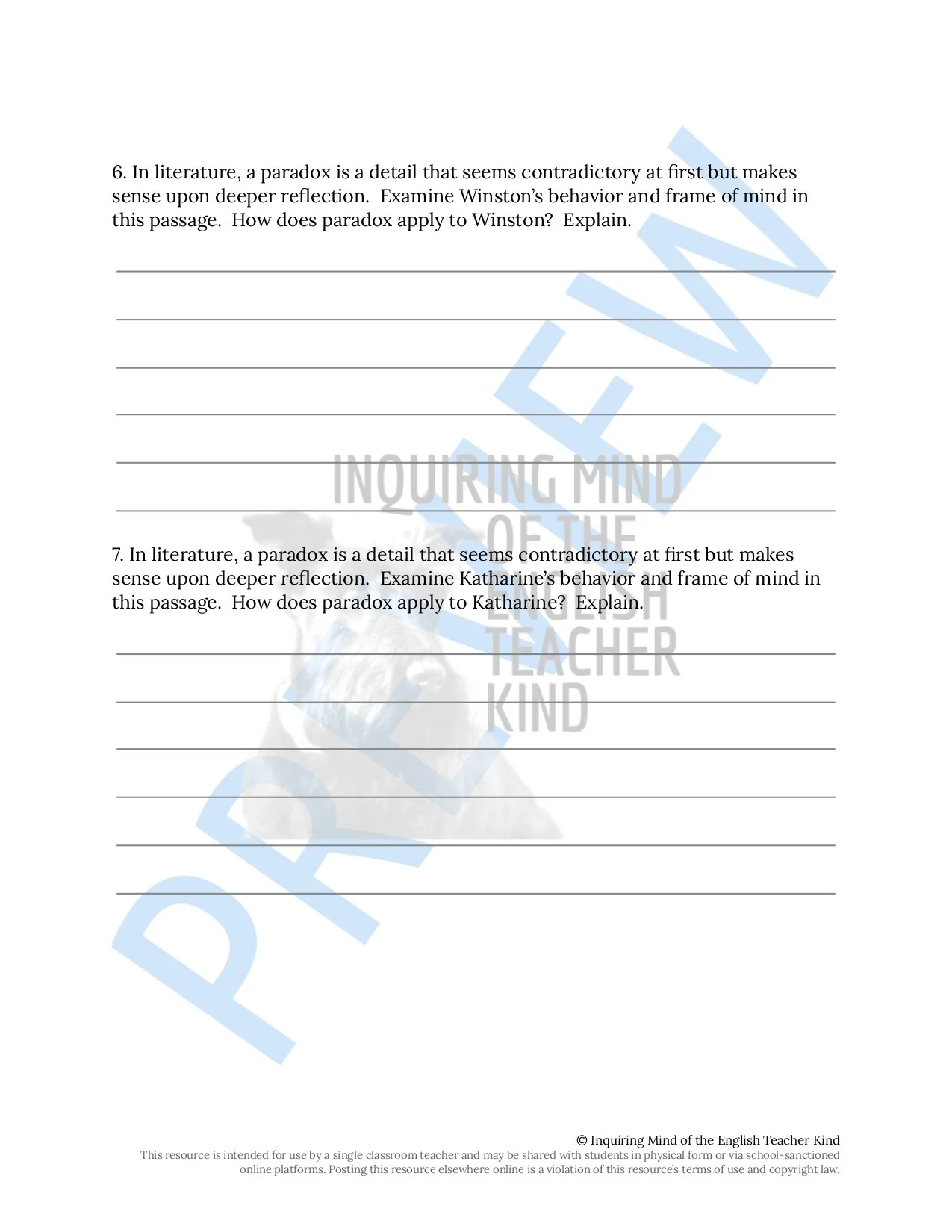
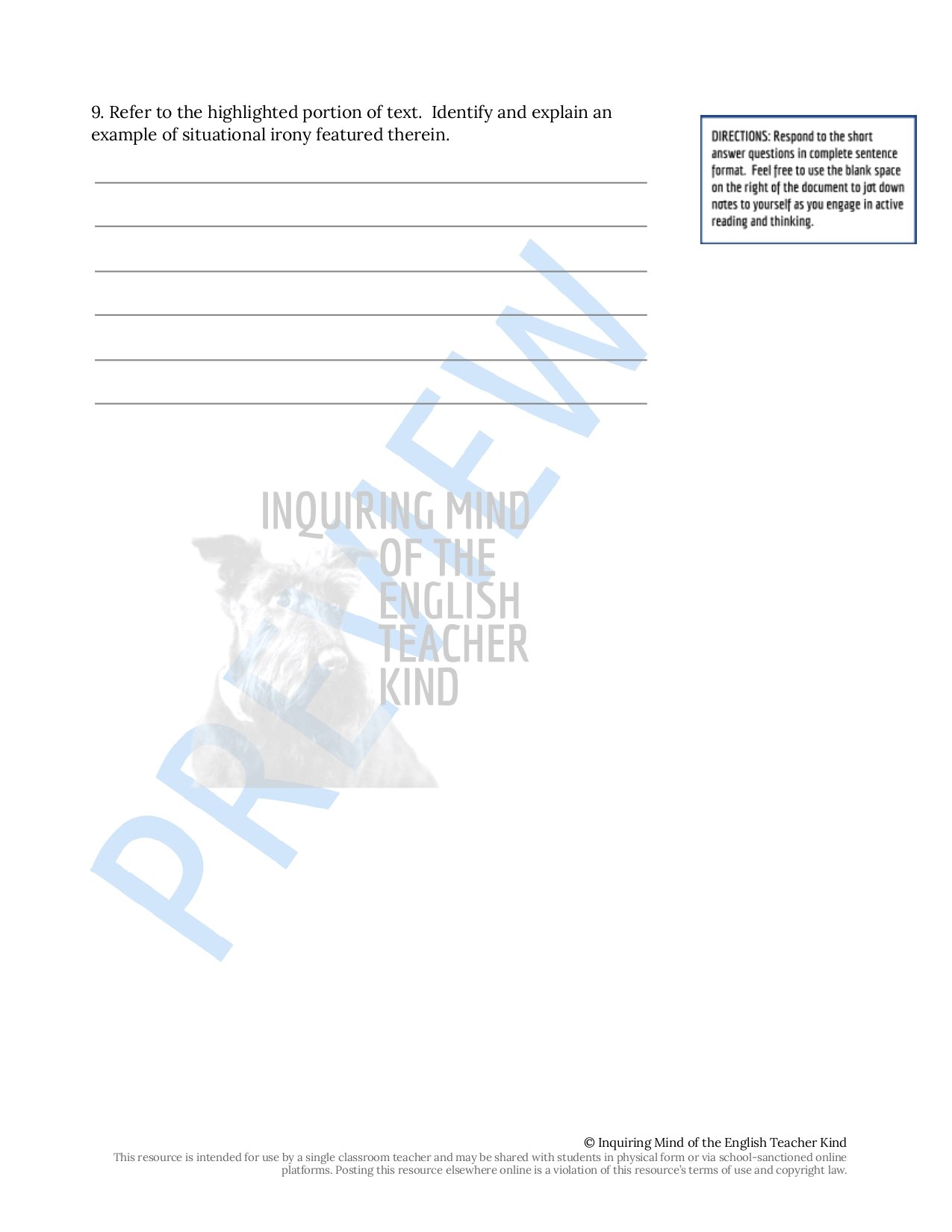
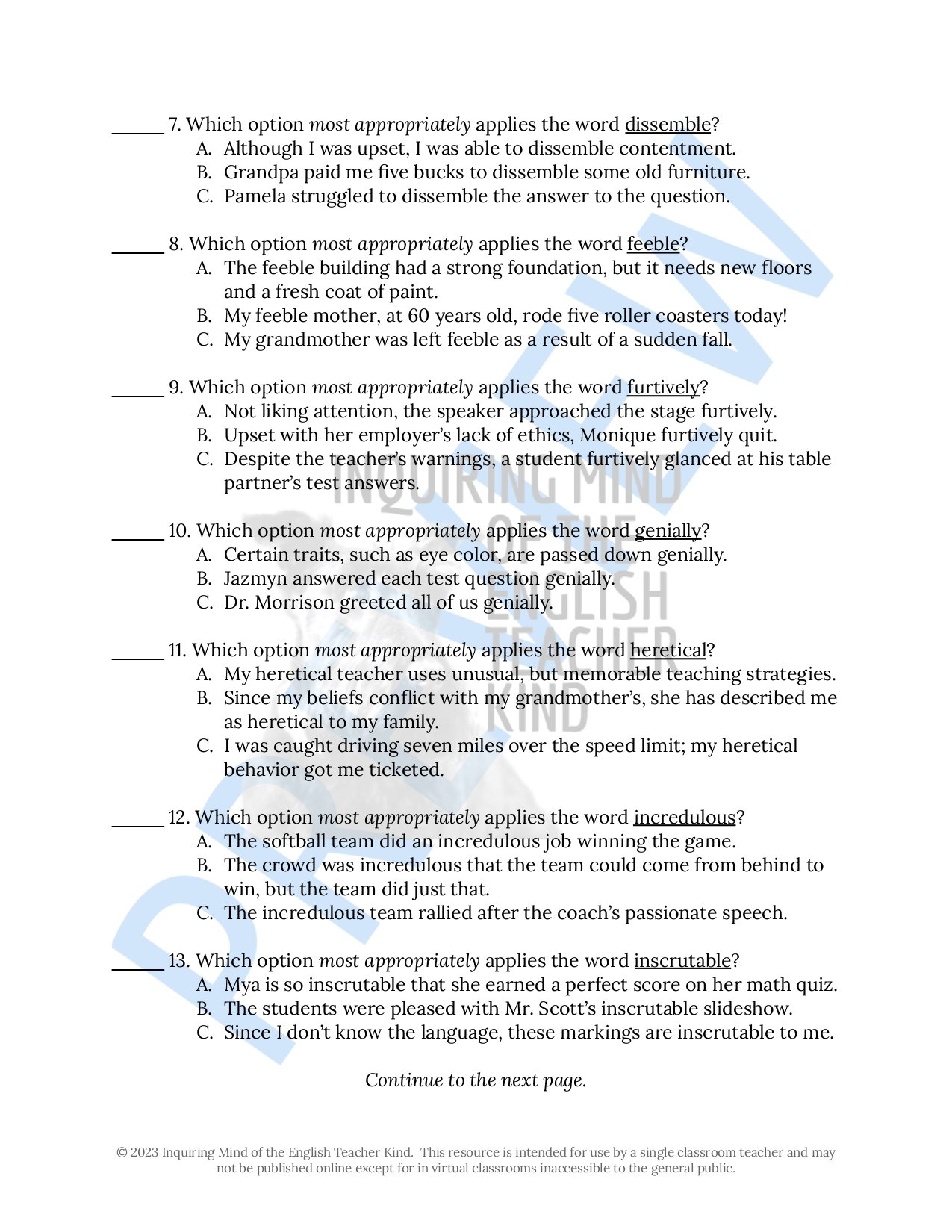
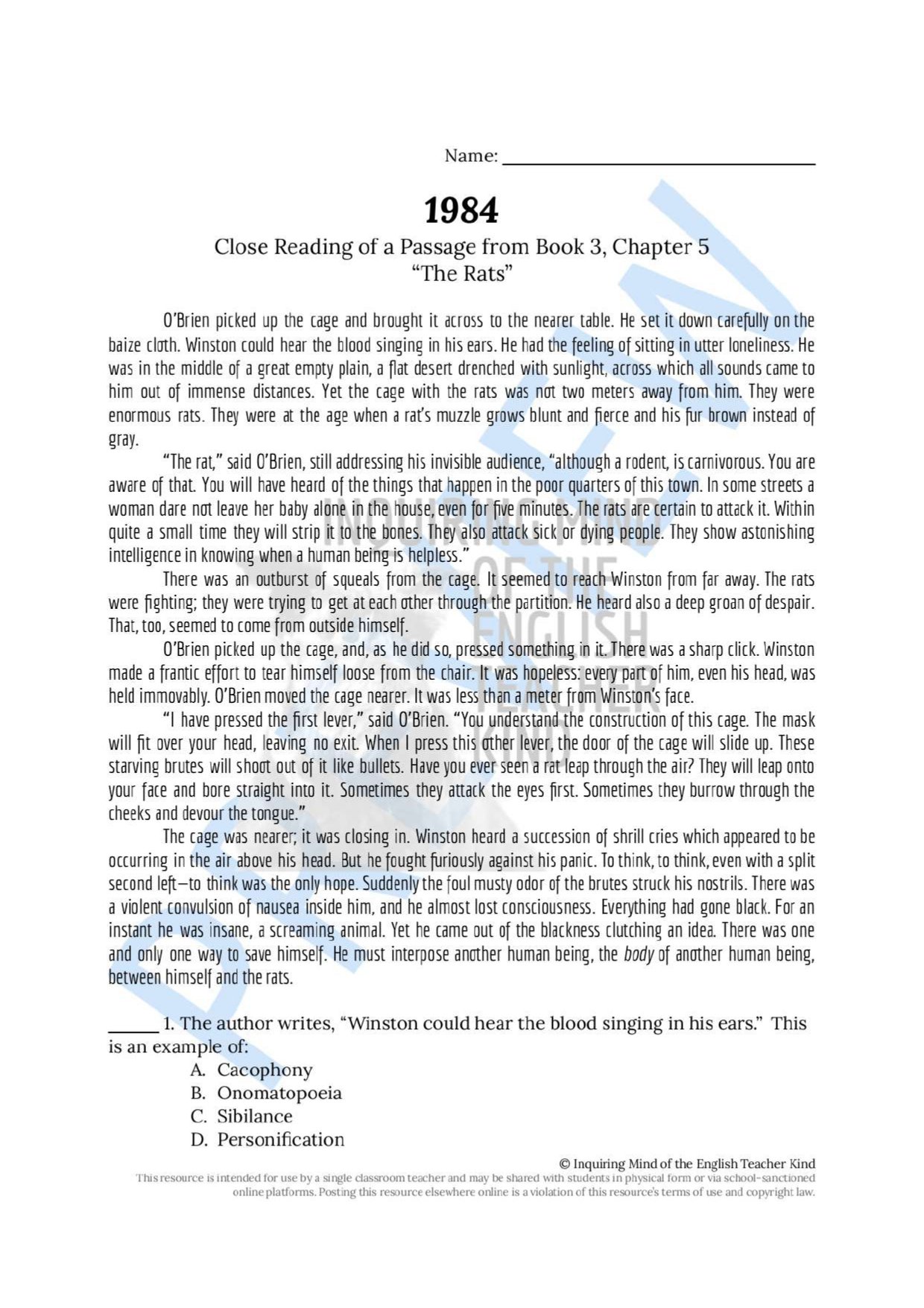
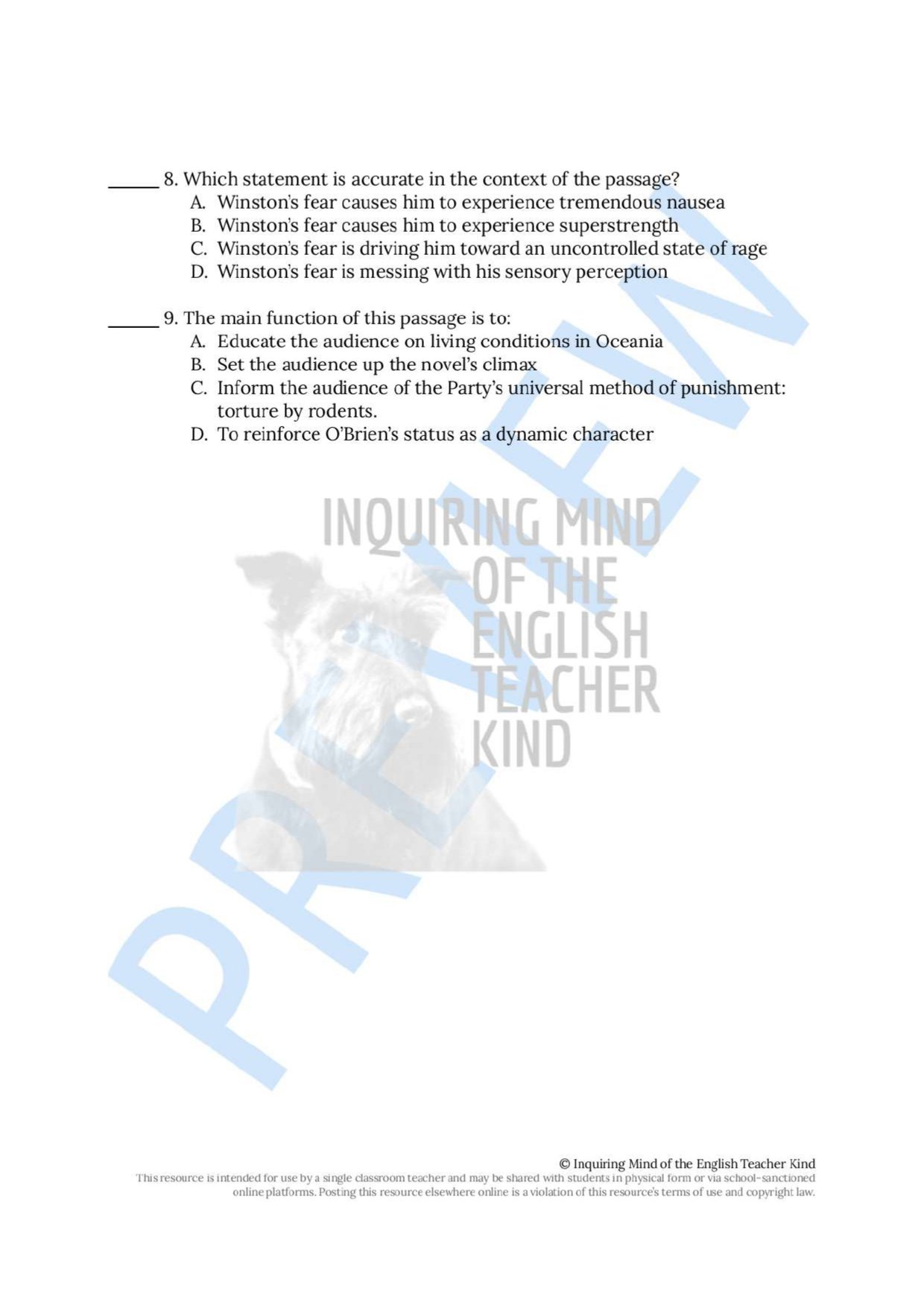
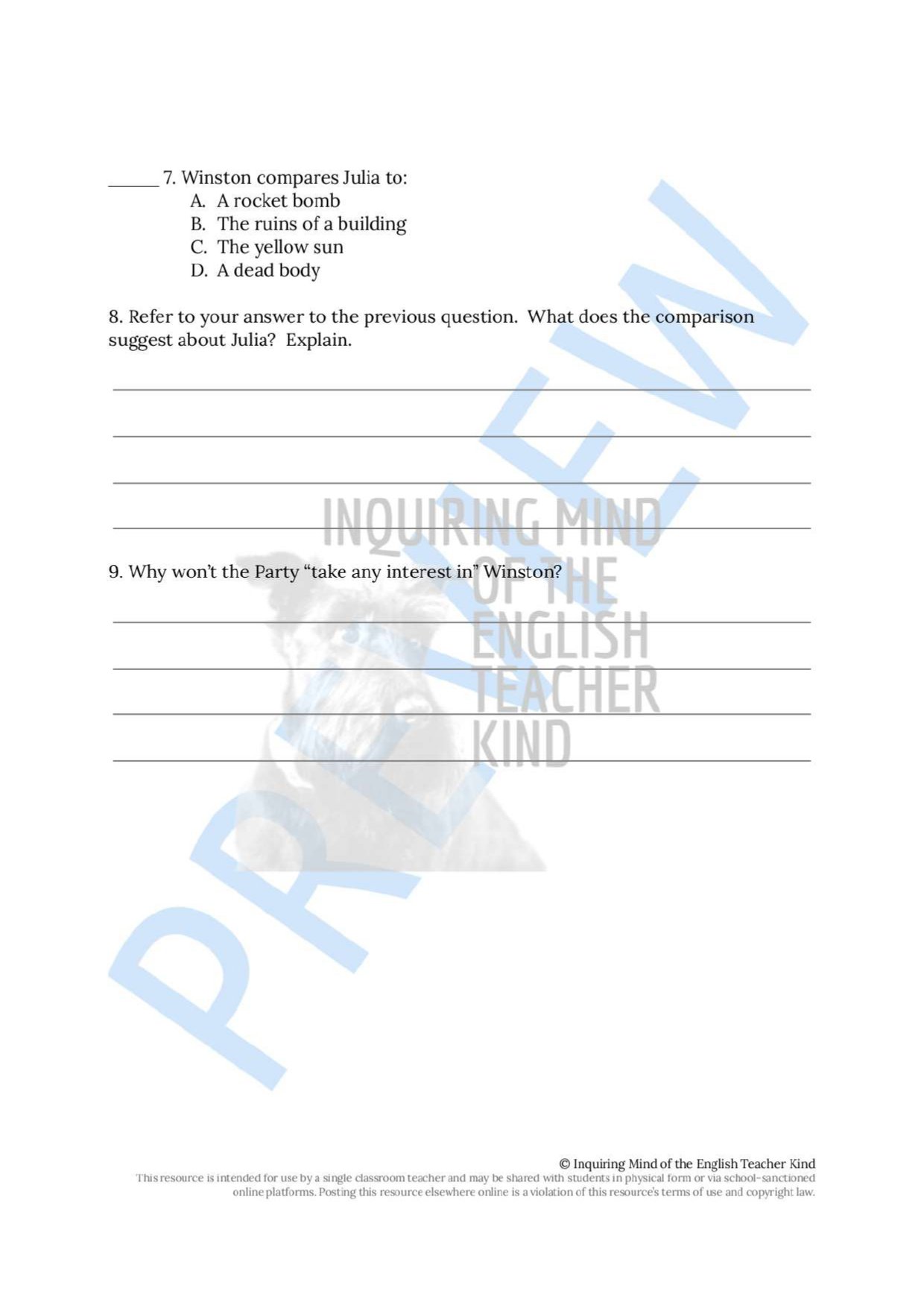
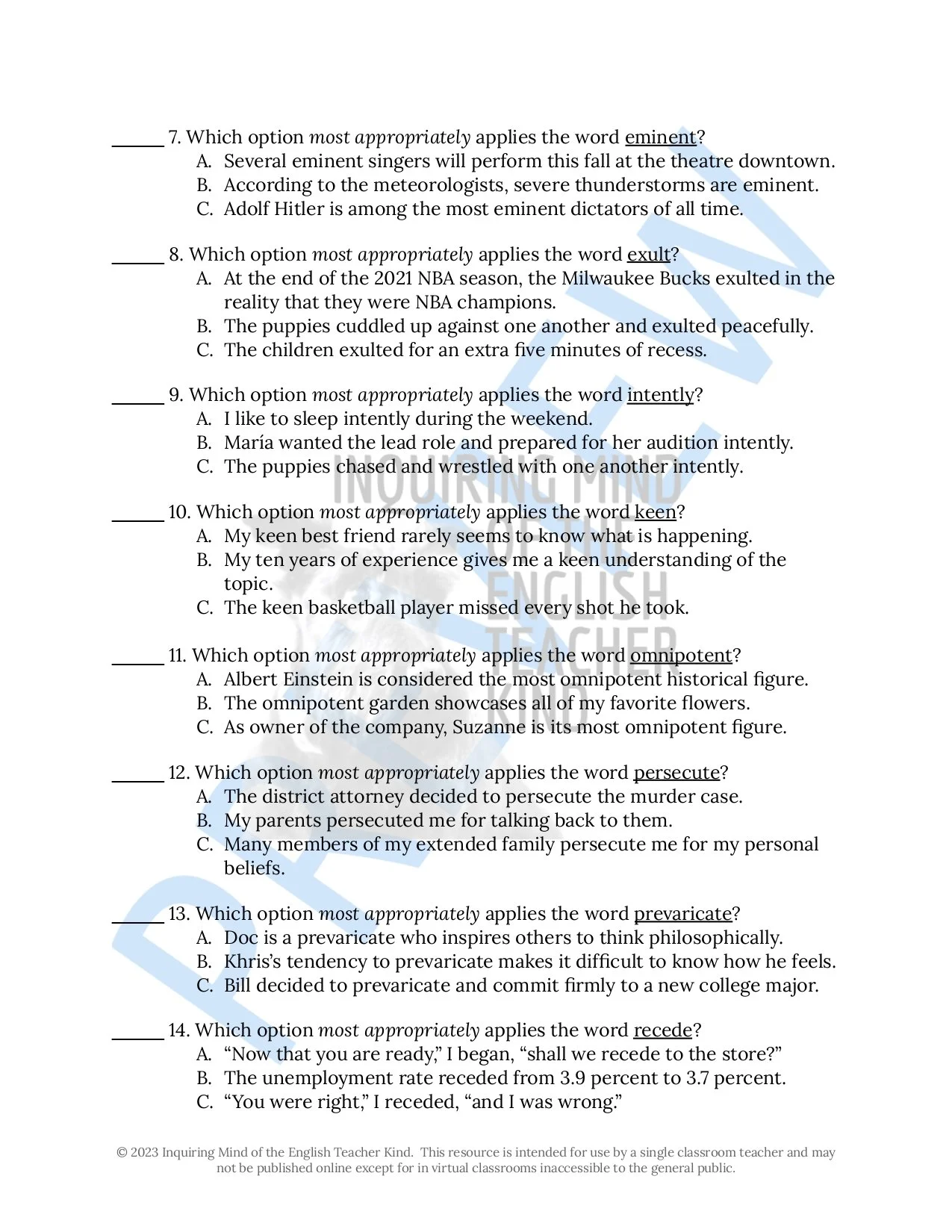
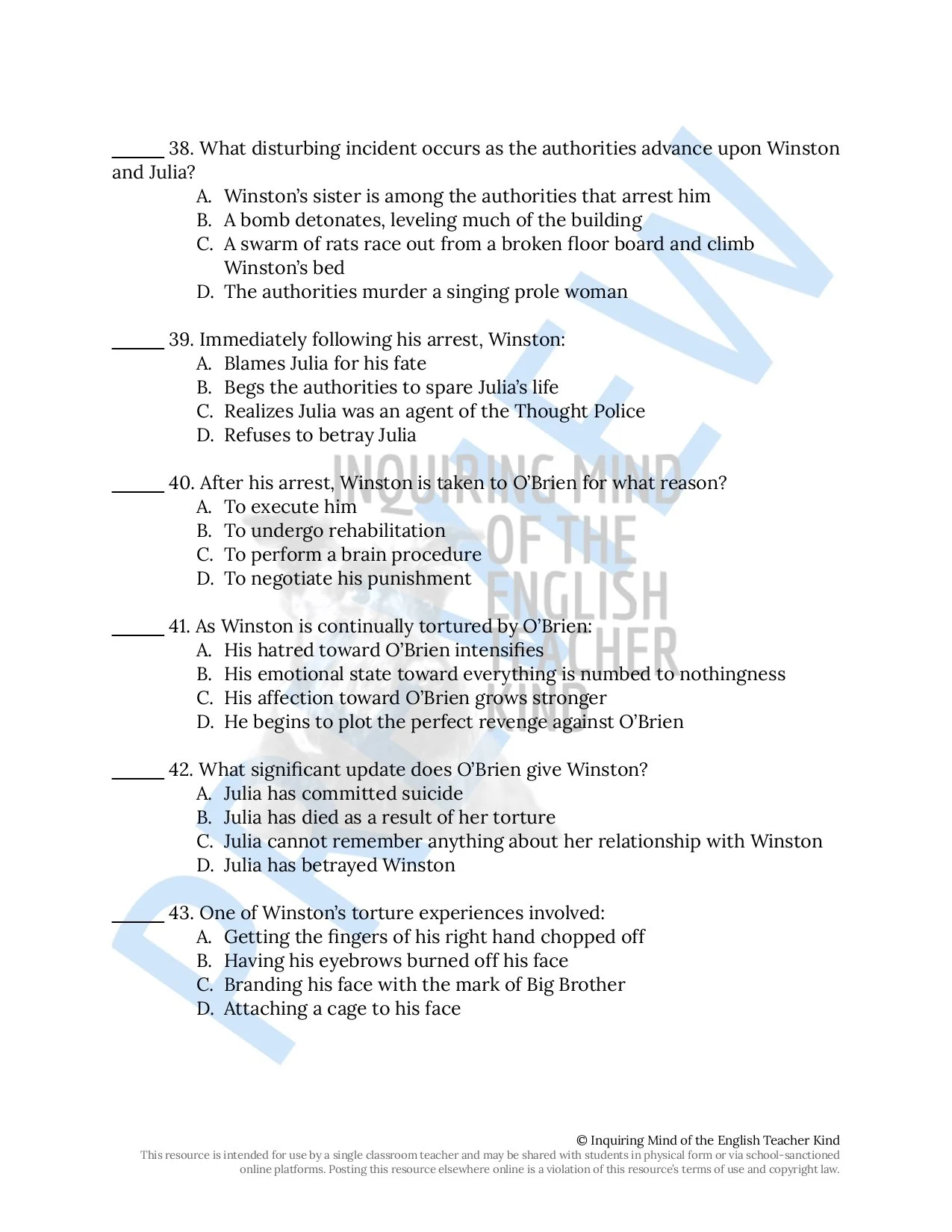
Evaluate reading comprehension, support vocabulary development, and promote critical thinking skills with this bundle of formative assessments covering Book 2 of George Orwell's dystopian novel 1984. Plot-based quizzes, close reading analysis worksheets, crossword puzzles, word search games, a vocabulary application activity, and answer keys are provided. Materials are delivered in Word Document and PDF formats. (Alternatively, a Google Drive bundle option is available.) By engaging with these materials, students will do the following:
Identify what the text states explicitly as well as implicitly
Define words and phrases as they are used in the text
Explore nuances in synonymous words
Compare aspects of the Party's inner-workings to aspects of the Brotherhood's inner-workings
Analyze the intended effects of the author's diction and stylistic choices
Consider the significance of weather conditions in terms of the Party's goals for Hate Week
Make logical inferences about the author's attitude toward rebellions against dictatorships
Discern the function of given passages
Describe the tone of a given passage
Examine how characters think, behave, develop, and interact
Apply knowledge of literary devices including situational irony, dramatic irony, metaphor, simile, euphemism, foreshadowing, and more
Support claims and inferences with sound reasoning and relevant evidence
Write about literature with clarity, accuracy, and precision
These resources may facilitate small-group discussions in which students decode language and pose/respond to questions relating to plot, broad topics, and character development. Using these activities for structured guidance, students will improve their ability to present information, conclusions, and supporting textual evidence clearly and convincingly.
Materials are available for a range of dystopian and science fiction texts:
Evaluate reading comprehension, support vocabulary development, and promote critical thinking skills with this bundle of formative assessments covering Book 2 of George Orwell's dystopian novel 1984. Plot-based quizzes, close reading analysis worksheets, crossword puzzles, word search games, a vocabulary application activity, and answer keys are provided. Materials are delivered in Word Document and PDF formats. (Alternatively, a Google Drive bundle option is available.) By engaging with these materials, students will do the following:
Identify what the text states explicitly as well as implicitly
Define words and phrases as they are used in the text
Explore nuances in synonymous words
Compare aspects of the Party's inner-workings to aspects of the Brotherhood's inner-workings
Analyze the intended effects of the author's diction and stylistic choices
Consider the significance of weather conditions in terms of the Party's goals for Hate Week
Make logical inferences about the author's attitude toward rebellions against dictatorships
Discern the function of given passages
Describe the tone of a given passage
Examine how characters think, behave, develop, and interact
Apply knowledge of literary devices including situational irony, dramatic irony, metaphor, simile, euphemism, foreshadowing, and more
Support claims and inferences with sound reasoning and relevant evidence
Write about literature with clarity, accuracy, and precision
These resources may facilitate small-group discussions in which students decode language and pose/respond to questions relating to plot, broad topics, and character development. Using these activities for structured guidance, students will improve their ability to present information, conclusions, and supporting textual evidence clearly and convincingly.
Materials are available for a range of dystopian and science fiction texts:
Preview these resources.